Глава 1
When Women Rise, Humanity Soars
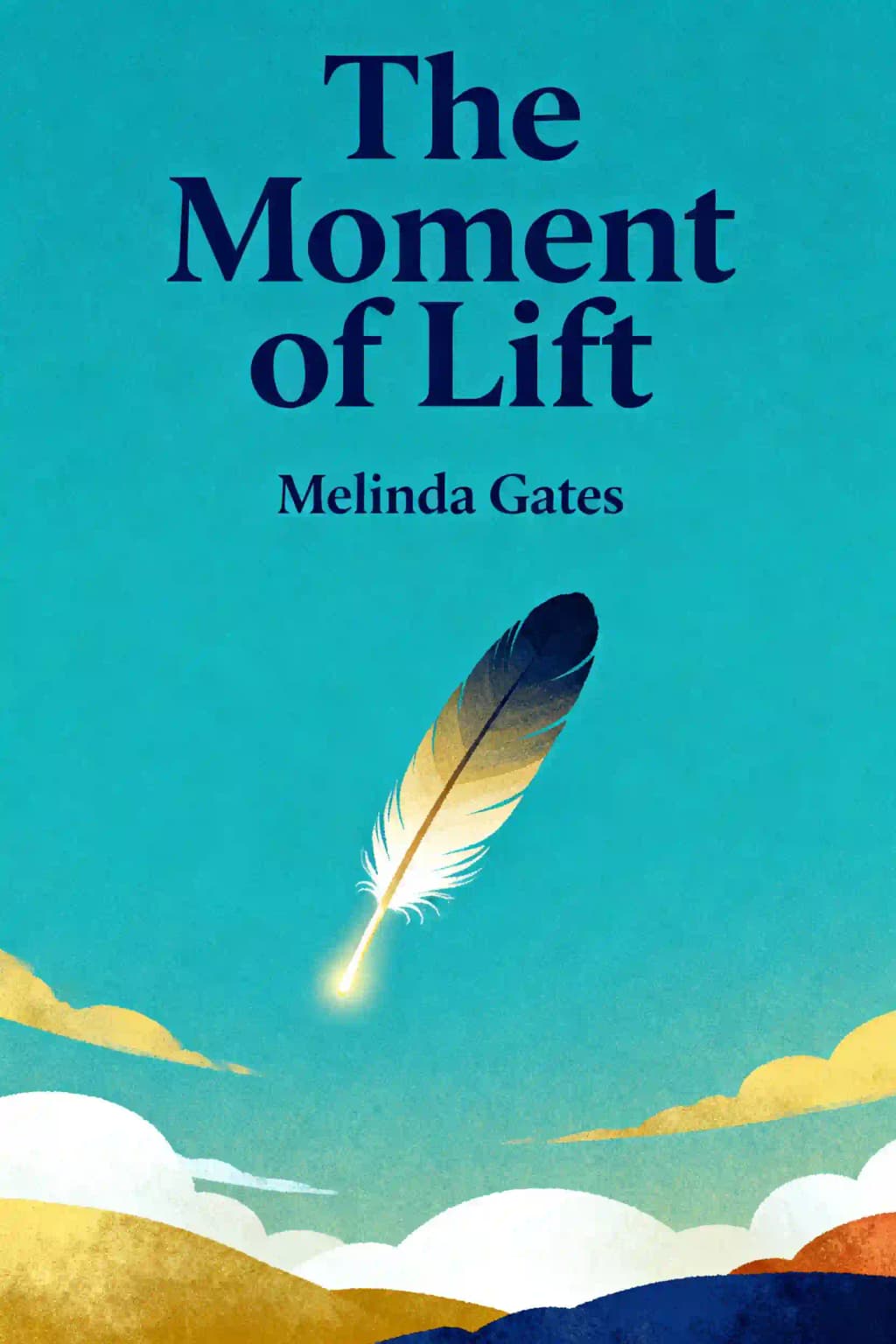
In the quiet suburbs of Dallas, a young girl watches with wide eyes as Apollo rockets pierce the sky. The countdown, the ignition, the earth-shaking rumble-these moments of lift captivated Melinda Gates as a child, planting seeds of wonder that would later bloom into a profound metaphor for human potential. Today, this book stands as a cultural touchstone, praised by Barack Obama and Oprah Winfrey alike for its honest exploration of what happens when we lift women up. As Malala Yousafzai noted, it's "a beautiful and concise mission statement on what we need to do to move society forward." Through intimate stories and global insights, Gates invites us to imagine what might happen if we removed the barriers holding women down. What if the most powerful engines of change aren't technological but human-specifically, the untapped potential of half our population? The moment of lift isn't just about rockets ascending-it's about humanity rising together.
Глава 2
Finding Purpose Through Women's Voices
My journey toward women's empowerment began with a deeply personal choice. In 1995, pregnant before our trip to China, I decided not to return to Microsoft after having our baby. When I told Bill, he was stunned: "What do you mean, you're not going back?" I explained that while we were fortunate enough not to need my income, I couldn't see how to excel at both work and motherhood when he wouldn't be downshifting his career.
At that time, I didn't even identify as a feminist. Twenty-two years later, I am an ardent one, believing every woman should use her voice and pursue her potential. This conviction emerged after years of listening to women's stories about inequality and human flourishing.
Bill and I established the Bill & Melinda Gates Foundation in 2000, merging two existing foundations. Though I took a significant role while Bill was still at Microsoft, I initially worked behind the scenes to protect our family's privacy and because I wasn't ready to be a public voice.
From the beginning, we sought problems that markets and governments weren't addressing. Our 1993 trip to Africa planted seeds-seeing women carrying heavy burdens while men walked unburdened affected me deeply. Later, we learned about children dying from preventable conditions in poor countries, deaths that received almost no attention in wealthy nations. This shocking disparity launched our global health work.
On foundation trips, I was moved seeing mothers walking miles in the heat to get vaccines for their children. But these women kept changing the conversation to their own needs-specifically for contraceptives. In Malawi, a young mother asked why she had to walk twenty kilometers for her Depo-Provera shot. In Niger, Sadi Seyni with six children told me she couldn't afford to feed another. In Nairobi's Korogocho slum, Mary made backpacks while caring for two children, using contraceptives because "life is tough."
The data confirmed what women were telling me: in 2012, in the world's 69 poorest countries, 260 million women used contraceptives while 200 million more wanted but couldn't access them. Studies showed that proper birth spacing increased child survival by nearly 35 percent through age five.
Despite being part of our early giving, we hadn't fully prioritized contraceptives-the greatest life-saving, poverty-ending, women-empowering innovation ever created. When advocates urged me to become a public voice for family planning, I hesitated, knowing the political controversy and my Catholic background would draw criticism. But seeing this injustice-that no woman I knew went without contraceptives while hundreds of millions elsewhere couldn't access them-I couldn't look away.
I decided to face my fears and co-sponsor a family planning summit in London with the UK government. The summit exceeded my highest hopes-together we pledged to make contraceptives available to 120 million more women by 2020 through the FP2020 movement, the largest commitment ever made for contraceptive access.
Глава 3
Breaking Barriers Through Maternal Empowerment
In rural India, I witnessed a transformation that would forever change my understanding of empowerment. A young community health worker named Ruchi encountered a mother who had just given birth and fallen unconscious, leaving her newborn dangerously cold. When the baby's aunt refused to provide skin-to-skin care-fearing evil spirits-Ruchi made a courageous choice that defied social norms.
Despite risking ridicule from her high-caste relatives for such intimate contact with a low-caste infant, Ruchi opened her sari, placed the newborn against her bare skin, and covered both their heads for modesty and warmth. Within minutes, the baby's temperature rose, his skin turned pink, he began moving, and finally cried. When the mother regained consciousness, Ruchi taught her the technique and helped initiate breastfeeding.
This simple act of courage spread rapidly through nearby villages, transforming attitudes overnight. Women went from skepticism to enthusiasm about the practice. The transparency and effectiveness of this intervention got everyone talking and showed mothers they could be life-savers-an immensely empowering realization.
What I learned in Shivgarh was that beyond technological advances, understanding human needs is essential for effective delivery. While our foundation emphasizes scientific research and product development, this program showed how sharing simple, widely-known practices can achieve remarkable results.
Effective delivery systems overcome barriers of poverty, distance, stigma, and bias by listening to people and understanding their lives. As program leader Vishwajeet explained, "Their cup is not empty; you can't just pour your ideas into it." Without understanding existing beliefs, new ideas won't be heard.
I've met remarkable healthcare providers like Ati Pujiastuti, who at 19 joined Indonesia's "Midwife in Every Village" program. Initially unwelcome in her assigned village, she built trust through persistence and community engagement. After successfully delivering a visitor's baby, villagers began requesting her services, which she provided despite dangerous river crossings and treacherous mountain paths.
Equally important are women in positions of power, like Dr. Agnes Binagwaho, Rwanda's former health minister. After the 1994 genocide devastated Rwanda's healthcare system, Agnes returned from France to help rebuild. Despite initial shock at conditions, she implemented programs including community health workers dedicated to maternal health. The results were dramatic: newborn mortality dropped 64% and maternal mortality 77%. Rwanda's health system, once considered hopeless, is now studied as a model.
These examples show how delivering services can ease poverty's effects. When people lack healthcare others receive, it's fundamentally a delivery problem-they're marginalized, not receiving benefits of human knowledge. The more we understand how people live, the more we see that many barriers to advancement stem from limits placed on women.
Глава 4
Changing the Conversation About Family Planning
The conversation around contraception has been challenging because it's deeply rooted in historical biases. Margaret Sanger, who opened America's first contraceptive clinic in 1916, was promptly arrested for breaking laws that prohibited distributing, prescribing, advertising, or even discussing contraceptives.
Sanger, whose own mother had eighteen pregnancies before dying at 50, became a nurse working with poor immigrant mothers. After witnessing a woman die from a self-induced abortion, she dedicated herself to making contraception accessible to working women.
Over two decades, more than a million desperate women wrote to Sanger pleading for help. Their letters, published in "Motherhood in Bondage," echo the same struggles I hear today from women in developing countries-separated by time and place but united in their fight to be heard.
The opposition to contraceptives has consistently revealed an underlying hostility toward women's autonomy. The judge who convicted Sanger declared women didn't have "the right to copulate with a feeling of security that there will be no resulting conception." Anthony Comstock, whose 1873 laws criminalized contraceptive information, openly crusaded against what he called "lust" and found women in makeup "disgusting to every lover of pure, noble, modest woman."
This view-that women exist primarily to serve men and bear children-persisted remarkably late in American history. Even after some contraceptive restrictions were lifted in 1936, the Supreme Court's 1965 Griswold ruling only protected married couples' right to contraception. Single women weren't legally guaranteed access until 1972.
After our London summit, I faced criticism in L'Osservatore Romano, the Vatican newspaper. The article claimed I had "gone astray" and was being manipulated by corporations selling contraceptives. Though it stung to be called a "former Catholic" or "so-called Catholic," I understood the Church's position even while disagreeing with it.
I've since met with high-ranking Church officials, focusing not on our differences but on what we can do together for the poor. We share concerns about coercing women to limit family size or imposing cultural preferences on traditional societies. I respect women who reject contraceptives based on faith, as our work supports voluntary family planning.
My conscience, informed by Church teachings about loving one's neighbor, tells me to support women who want to keep their children alive. When a mother of six who can't bear another child asks for help, love becomes more urgent than doctrine.
Глава 5
Education: The Ultimate Empowerment Tool
Ten-year-old Sona from Kanpur, India became my teacher about education's importance. Living among trash that her low-caste community sorted for a living, she approached foundation colleague Gary Darmstadt with a handmade parrot toy and a persistent request: "I want a teacher." While Gary had come to discuss family planning with the mothers, Sona's courage to ask for education-repeating her request fifty times during their visit-revealed what the women truly wanted for their children.
One mother explained that while family planning helped, their children would still end up "picking trash" without education. This bold request from a girl with no leverage but "the moral power of a girl saying 'Please help me grow'" led our partners to help register the community's land, qualifying them for government services including schools. Sona's persistence secured education not just for herself but for every child in her village.
The benefits of educating girls extend far beyond the individual, advancing every public good from health to economic gain, gender equity, and national prosperity. Girls' education leads to greater literacy, higher wages, faster income growth, and more productive farming. It reduces early marriage, delays first births, and helps with family planning. Mothers with education are better at nutrition and healthcare, with half of child survival gains in recent decades attributed to maternal education.
Great schools transform students by challenging limiting beliefs about themselves. In Floyd County, Kentucky-one of America's most economically challenged regions-student achievement climbed from 145th to 12th in the state despite devastating economic decline. This transformation reflects the power of educators who refuse to accept limitations for their students.
Vicki Phillips, who grew up in rural Kentucky with dirt floors and an outhouse, faced fierce family resistance when pursuing college education, with her stepfather saying "you will not be my daughter" if she left. Principal Cassandra Akers of Betsy Layne High School, herself the only college graduate among seven siblings, ensures students receive whatever support they need-academic, material, or emotional. The most profound lesson these students learn isn't just academic content but a new self-concept: "We ARE the smart kids."
Despite education's empowering potential, Malala Yousafzai exemplifies the power of education activism. Rather than focusing on her own story as a Nobel Peace Prize winner, she supports local education activists worldwide. Her foundation invests in activist-educators across the globe-from those educating Brazilian teachers about gender equality to campaigners ending school fees in Nigeria.
Mexico's revolutionary Oportunidades program treated education as employment, paying families to send children to school based on potential earnings-$10 monthly for third-graders, $60 for high schoolers. Payments went directly to mothers, with girls receiving more than boys to counter dropout trends. The results were remarkable: girls in the program had a 20% higher chance of attending school and stayed enrolled longer. Within twenty years, Mexico achieved gender parity across all education levels.
The most transformative aspect of girls' education is how it changes a girl's self-image. When girls learn self-defense through karate at Sister Sudha's Prerna school, they gain not just physical protection but a profound sense of self-worth. This internal transformation is crucial because "a low self-image and oppressive social customs are inner and outer versions of the same force." Love becomes the catalyst for change-not abstract love, but the practical, transformative love demonstrated by teachers and mentors who lift girls up.
Глава 6
The Hidden Burden: Unpaid Work and Gender Equality
Women worldwide spend more than twice as many hours as men on unpaid work-cooking, cleaning, childcare, and gathering resources. This disparity varies by country: in India, women spend 6 hours daily on unpaid work while men spend less than 1; in the US, it's 4 hours versus 2.5; and even in progressive Norway, women average 3.5 hours to men's 3.
This inequality means women spend approximately seven years more of their lives on unpaid labor than men-equivalent to completing both bachelor's and master's degrees. When women reduce unpaid work hours, they increase participation in paid work by about 20%, which is crucial because paid work provides the independence and power needed for empowerment.
Marilyn Waring, elected to New Zealand's Parliament at just 23, revolutionized economic thinking by exposing the invisible value of women's unpaid work. When she couldn't find research on the topic, she traveled globally to study it, calculating that unpaid women's work would be the largest sector of the global economy if properly valued. Her 1988 book "If Women Counted" awakened economists to this blind spot, accelerating UN efforts to count women's unpaid labor.
Exposing gender bias around unpaid work creates profound revelations across cultures. In rural Malawi, I witnessed transformative dialogues where men confronted their unconscious biases. When women mapped out their daily schedules alongside men's, the stark disparity became undeniable-women's days were packed with cooking, fetching water, childcare, and fieldwork while men had considerable leisure time.
Both women and men possess natural caregiving abilities, but when women exclusively handle these duties, men never develop nurturing skills while women's other talents remain untapped. Doubling the number of capable caregivers creates stronger parent-child bonds and diminishes harmful hierarchies.
The gender imbalance in unpaid work resonates deeply because it represents a universal burden that connects women worldwide. Unlike problems with technical solutions, this issue requires fundamentally renegotiating relationships. The essential question becomes whether your primary relationship contains love, respect, reciprocity, teamwork, belonging and mutual growth-one of life's greatest longings.
I share my journey toward equal partnership with Bill, from feeling invisible early in our marriage to finding my voice. We made deliberate choices that strengthened our partnership: deciding I would step up publicly as co-founder, refusing to split our foundation roles, and committing to share everything we learn. Despite Bill's intense personality, his humility about the role of luck in his success and his deep belief that all lives have equal value made him suited for equality. Even so, I had to prioritize and sometimes push for true partnership.
At the press conference announcing Warren Buffett's gift, I realized how passionate I truly was about our foundation's work. This moment sparked my growth and clarified that we needed an equal partnership. Though initially uncomfortable with public speaking, I gradually gained confidence with Bill's support. Our partnership faced tests, like when we disagreed about writing the Annual Letter together. After heated discussions, the letter evolved from "Bill Gates" to "Bill and Melinda Gates" over several years, reflecting our growing equal partnership.
Глава 7
Breaking the Silence: Child Marriage and Female Genital Cutting
In 2013, I visited a remote Ethiopian village to meet child brides with the Population Council. Inside a dimly lit church, I found ten tiny girls who looked even younger than their 10-11 years-half already married, half still in school. The married girls spoke in barely audible whispers, sharing heartbreaking stories. Selam described being tricked at age 11, thinking she was helping prepare for a party until her father announced it was her wedding. Despite her desperate attempt to escape, she was forced to stand beside her husband during the ceremony before being taken to his village.
The married girls appeared as shells of themselves, defeated and voiceless, while those still in school spoke with confidence and even defiance. The contrast was striking-marriage had robbed these children of something essential, as if their growth ended when their marriages began.
Molly Melching became one of my most important teachers after we met in 2012. When I joined her in Senegal, she explained how she had come as an exchange student in the 1970s but stayed after falling in love with the culture. Working as a translator for development programs, she witnessed the empathy barrier between outsiders and locals-foreigners failed to understand why certain practices existed and lacked patience to explain why change might be beneficial.
This insight led Molly to create Tostan, an organization with a revolutionary approach to social change. Rather than condemning practices like female genital cutting, she recognized that outrage might save individual girls, but only empathy could transform entire systems.
Tostan's approach involves trained facilitators living in villages for three years, guiding community-wide conversations without outside judgment. The process begins by asking villagers to envision their ideal future-their "Island of Tomorrow." Facilitators teach health, hygiene, reading, math, and the concept that every person has fundamental rights to learn, work, health, voice opinions, and freedom from discrimination and violence.
In one village, after months of intense debate, the midwife courageously spoke about witnessing difficult births in cut women, prompting others to share their painful experiences. The community ultimately decided to abandon the practice, but faced a challenge: their village couldn't change alone when they intermarried with surrounding communities. An imam took on this challenge, walking to all neighboring villages until he convinced them to collectively abandon cutting. This approach has spread to 8,500 communities across eight nations, with over 3 million people pledging to end female genital cutting and child marriage.
After witnessing Tostan's work, I struggled with two questions: What makes Tostan work? And what gives me the right as a wealthy, Western-educated outsider to get involved? I believe in universal values-that all lives have equal value, all people deserve to flourish, and that when those bound by rules have no role in shaping them, moral blind spots become law.
The change comes from inside through community conversations about commonly accepted but rarely discussed practices. Conversation accelerates change when people are getting better at being human. Empathy is the starting point-it allows for listening, understanding, and seeing what others see. When communities challenge their own social norms, those who bore the pain of harmful practices have their needs recognized.
Глава 8
Cultivating Gender Equality in Agriculture and Beyond
In rural Malawi, I met Patricia, a dedicated farmer who planted groundnuts on Christmas Day because "that's when the rains came." Despite her extraordinary work ethic, Patricia struggled for years to provide basics for her family. As a woman farmer, she faced barriers to all five things farmers need to succeed: good land, good seeds, farming supplies, time, and know-how.
My understanding of gender barriers in farming began when Warren Buffett gave his fortune to our foundation. We discovered that over 70% of the world's poorest people earn their income from small-plot farming. At a World Food Prize symposium in 2006, Catherine Bertini delivered a pointed message: "If you don't pay attention to gender differences in agriculture, you will waste your money."
When Catherine joined a meeting with Bill and me, Bill initially pushed back, concerned that focusing on gender would distract from our goal of growing more food. Catherine responded firmly: "This is completely about effectiveness. Next time you're in Africa driving in a rural area, look out the window and see who's working in the fields. They're almost all women."
The fact that most farmers in Malawi are women matters precisely because of the gender inequalities that make it harder for them to grow the crops they need. Gender rules dictate who does what tasks, and women farmers achieve 20-30% lower yields than men solely because they lack the same resources and information. If women had equal access, they could feed 100-150 million more undernourished people worldwide.
Initially, I saw empowering women not as a separate goal but as essential to increasing food production and reducing poverty. But within our foundation, this approach faced resistance. Some executives insisted "We don't do gender" or worried "We are not becoming a social justice organization!"
Patricia joined CARE Pathways, which teaches both farming and equality. When her husband agreed to join sessions, they role-played switching places-she ordered him around while he had to comply without complaint. This opened his eyes to how he'd been treating her. Their new partnership led to Patricia becoming a seed multiplier, a prestigious role requiring exceptional farming skill. With her husband's support, they took a loan for improved seeds, and her half-acre plot produced enough to supply other farmers and plant four times more land the following season.
Gender discrimination is encoded in law worldwide. In Russia, 456 jobs are off-limits to women; in Yemen, women need husband's permission to leave home; in Sri Lanka, women can't work in shops after 10 PM. In many countries, women need husband's permission to sign contracts or open bank accounts. Inheritance laws favor sons over daughters in 39 countries, while 113 countries lack equal pay laws. The US has no guaranteed paid maternity leave.
Disrespect for women often stems from male-dominated religions. Jimmy Carter, a devout Baptist, calls discrimination against women "the most serious and unaddressed worldwide challenge," blaming men's distortion of sacred texts to claim female inferiority. Women challenging religious male monopolies deserve support, as do male allies working for reform from within.
Глава 9
Creating Workplace Cultures Where Women Thrive
During Melinda's final year at Duke, she visited IBM where she had worked summers during college. When mentioning her upcoming Microsoft interview, her potential IBM manager surprisingly encouraged her to take any Microsoft offer, predicting "meteoric" advancement opportunities for women at the growing company. This pivotal moment inspired her later advocacy for women in tech.
Melinda found that connecting with like-minded colleagues transformed her Microsoft experience. Her friendship with John Neilson proved especially valuable-he was a "male ally" who shared her sensitivity and empathy. Building a support network yielded unexpected personal rewards, including lifelong friendships and a spiritual group that's met monthly for nearly twenty years.
The most transformative professional relationship came when Patty Stonesifer became Melinda's boss, mentor and role model. Under Patty's leadership, Melinda found space to develop her authentic management style, emphasizing honesty about strengths and weaknesses. This approach attracted top talent, with developers wanting to work for her team.
Melinda contrasts her Microsoft experience with Susan Fowler's far more challenging journey at Uber. Despite her remarkable background-teaching herself college-level math and physics after being homeschooled in rural Arizona-Susan faced systematic harassment at Uber. When her manager propositioned her, HR protected him as a "high performer" and threatened her with poor reviews. After transferring departments, she discovered hidden negative performance reviews blocking her promotion opportunities. After leaving Uber, Susan published a 3,000-word blog post exposing the toxic culture, triggering an investigation that led to the CEO's resignation and twenty firings.
Melinda laments women's exclusion from the tech industry, which is not just about missing exciting, well-paying jobs but about power-tech is shaping our future. The percentage of women computing graduates has plummeted from 35% in 1987 to 19% today. Venture capital shows even starker disparities-only 2% of partners are women and only 2% of funding goes to women-founded ventures. This homogeneity is economically irrational, as diverse perspectives identify different market opportunities.
Creating workplace cultures that empower women faces a challenging barrier: women's tendency toward self-doubt. Melinda confesses her struggle with perfectionism manifests as obsessive preparation driven by feelings of inadequacy. This perfectionism ultimately means hiding her authentic self, preventing her from being present and responsive in the moment. Creating a culture where everyone can bring their authentic selves-respecting each other's quirks and flaws-would release impossible burdens and lift everyone up.
Workplaces must accommodate our most profound human need: caring for one another. Today's workplaces were designed for employees with stay-at-home partners-a reality that no longer exists for most workers. With nearly half of US employees being women and 70% of mothers in the workforce, this outdated model creates impossible tensions between work and family. Paid family leave reduces infant mortality, increases breastfeeding rates, decreases postpartum depression, keeps women in the workforce, and encourages more equal household labor distribution.
Глава 10
The Power of Connection: From Margins to Center
Hans Rosling's parting wisdom was profound: "Remember that you have to go to the people on the margins." Using a simple drawing, he illustrated how those living away from crossroads and rivers-the flow of travel and trade-are forgotten by the world. His tearful plea was for Melinda to continue his life's passion of reaching these marginalized populations.
The Avahan program in India proved remarkably successful, with sex workers becoming one of only two groups worldwide to successfully adopt preventative HIV medication. Studies showed an astonishing 94% of Indian sex workers took the drugs faithfully-a compliance rate "unheard of in global health"-attributed to the strong networks created through the program. These empowered women, once marginalized by society, became essential partners in a national plan that saved millions of lives.
Melinda recounts meeting Nobel Peace Prize winner Leymah Gbowee, who helped end Liberia's civil war through a women's peace movement. Leymah gathered thousands of Muslim and Christian women who demonstrated for peace, eventually pressuring warring factions to negotiate. When peace talks stalled, two hundred women blocked the meeting hall entrance until an agreement was reached. Leymah shared a powerful story of a Muslim woman in their movement who continued caring for a wounded fighter even after learning he had killed her daughter. This exemplified how the women succeeded where men failed-they could absorb pain without passing it on, breaking the cycle of vengeance that fueled the war.
Melinda emphasizes that every issue in her book represents barriers women must overcome to become full contributors in society-from family planning to education to workplace advancement. For women trapped in poverty or intimidated by powerful men, the solution begins when women meet, talk, organize, and lead. She reflects on her lifelong involvement in women's groups, from her all-girls high school to professional and personal connections as an adult.
She argues that including women isn't about excluding men but bringing everyone in together. Progress requires women to leave the margins and take their rightful place beside men. Lasting change will come not from power struggles but moral appeals that expose gender bias. True transformation means including everyone-even those who want to exclude us-because "we can't just add one more warring faction. We have to end factions. It's the only way we become whole."
While equality has been her stated goal throughout the book, it's merely a milestone toward the ultimate destination: connection. She observes that people can be equal yet isolated, missing the essential bonds that tie humanity together. True connection blurs borders between people, allowing love to flow freely. "Love is what makes us one," she writes. The real goal isn't equality but belonging and universal love that lifts everyone up together.
Melinda shares a powerful story about Anna, a Tanzanian woman who challenged gender norms by demanding her husband Sanare help fetch water so she could nurse their child. Despite community mockery, Sanare persisted, eventually inspiring other men to join him and ultimately build water catchment systems near their village. This intimate exchange between women from different worlds wasn't about Melinda helping Anna but about mutual inspiration-"two women from different worlds, meeting on the margins, and summoning a moment of lift."