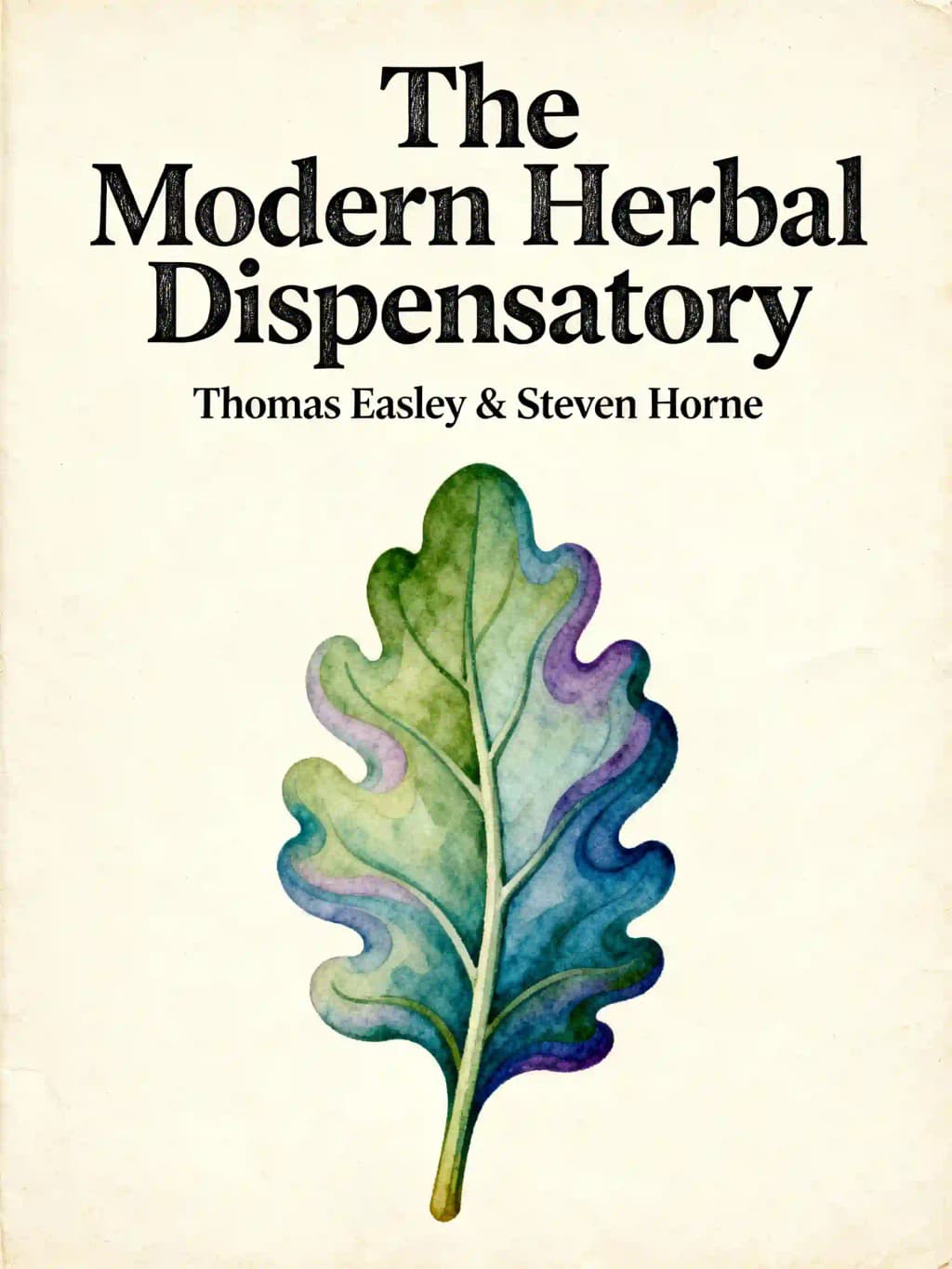
The modern herbal dispensatory
a medicine-making guide
Обзор книги The modern herbal dispensatory
Unlock nature's pharmacy with this beloved herbalism classic that teaches crafting 250 DIY remedies. Considered the ultimate survival guide by practitioners, it's transformed holistic healthcare with techniques once reserved for professional herbalists. What ancient healing wisdom are you missing?

Ключевые темы в The modern herbal dispensatory
- herbal energetics
- plant medicine preparation
- tissue state matching
- botanical pharmacology
- natural remedy formulation
Цитаты из The modern herbal dispensatory
Herbal medicine has sustained us throughout history.
Medicinal plants offer affordable alternatives.
Herbs' energetic properties blend to create unique medicinal profiles.
Professional herbalists examine overall health patterns to identify root causes.
This renewed interest represents a return to our roots rather than a new trend.
Персонажи в The modern herbal dispensatory
- Thomas EasleyAuthor and herbalist
- Steven HorneAuthor and herbalist
Об авторе
Об авторе книги The modern herbal dispensatory
Thomas Easley and Steven Horne, authors of the bestselling herbalism guide The Modern Herbal Dispensatory, are renowned clinical herbalists and educators specializing in Western herbal traditions.
Easley is the founder of the Eclectic School of Herbal Medicine and co-author of Modern Herbal Medicine. He integrates 19th-century Eclectic medicine with modern clinical practice, supported by his 14-year career assisting over 10,000 clients.
Horne is the former president of the American Herbalists Guild, bringing decades of experience formulating herbal products and co-founding four herbal companies.
Their collaborative work reflects a shared commitment to evidence-based, accessible herbal care, emphasizing practical medicine-making techniques and formula development. The book, hailed as a modern classic, provides detailed instructions for 250+ remedies and has become a foundational text in herbalism education. Praised by experts like Matthew Wood and Paul Bergner, it remains a top resource for DIY herbal practitioners worldwide.
Скачать резюме книги «The modern herbal dispensatory»
Получите резюме книги «The modern herbal dispensatory» в формате PDF или EPUB бесплатно. Распечатайте или читайте офлайн в любое время.
Часто задаваемые вопросы об этой книге
The Modern Herbal Dispensatory is a comprehensive guide to creating 250+ herbal medicines at home, offering step-by-step instructions for extracts, tinctures, salves, and more. It blends traditional herbalism with modern science, covering harvesting, preparation methods, and formulas for 100+ health conditions. Authors Thomas Easley and Steven Horne emphasize cost-effective, natural remedies while explaining how extraction techniques impact efficacy.
This book is ideal for herbalists, DIY enthusiasts, and natural health practitioners seeking to craft affordable herbal remedies. Beginners benefit from clear guidance on basics like teas and capsules, while advanced users gain insights into percolation extracts and advanced formulations. It’s also valuable for educators and clinicians referencing herbal materia medica.
The book details 12+ preparation methods, including alcohol/water extracts, glycerites, essential oils, poultices, and hydrotherapy. It explains why capsules, tinctures, or teas of the same herb yield different effects and provides advanced techniques like soxhlet extraction. Charts and photos simplify solvent ratios, drying herbs, and calculating dosages.
It warns about herbs that are toxic when fresh but safe dried, recommends dosage guidelines, and stresses formulation over single-herb use for beginners. Safety tips include solvent selection (e.g., avoiding certain alcohols) and recognizing contraindications for specific health conditions.
Unlike most guides, it combines folk traditions with scientific rigor, offering definitive extraction protocols based on plant chemistry. Unique features include a 12-category herb classification (aromatic to sweet), oil-based extraction tutorials, and comparisons of fresh vs. dried herb potency.
Yes—the authors prioritize accessibility with basics like drying herbs, making teas, and simple salves. Beginners learn to create formulas for common issues (e.g., stress, digestion), while avoiding advanced methods until foundational skills are mastered.
Tested formulas address insomnia, immune support, skin conditions, and chronic pain. Examples include anti-inflammatory salves, adaptogenic tinctures, and digestive bitters. The book also teaches readers to design custom blends using energetics (e.g., cooling vs. warming herbs).
By teaching readers to forage, grow, or bulk-purchase herbs, then transform them into medicines costing 80-90% less than commercial products. It includes budget-friendly alternatives to expensive equipment.
Advanced chapters detail percolation tinctures, fluid extracts, and standardized extracts. Methods like vacuum distillation and pressurized infusions are explained with diagrams, ideal for professional herbalists or small-scale producers.
Unlike recipe-focused books, this emphasizes why methods work, merging Matthew Wood’s energetics with Guido Masé’s scientific rigor. It’s often called the “gold standard” for medicine-making depth, surpassing Rosemary Gladstar’s beginner-oriented guides.
This reference catalogs 100+ herbs with Latin names, therapeutic actions, and preferred preparations. Each entry notes safety, synergies with other herbs, and dosage ranges, serving as a quick consult for practitioners.
It bridges traditional knowledge (e.g., Traditional Chinese Medicine techniques) with 21st-century science, addressing topics like solvent polarity and biomarker standardization. Updated 2025 editions include cannabis/CBD preparations and digital resources.