Глава 1
When Science Meets Love: A Laboratory of Emotions
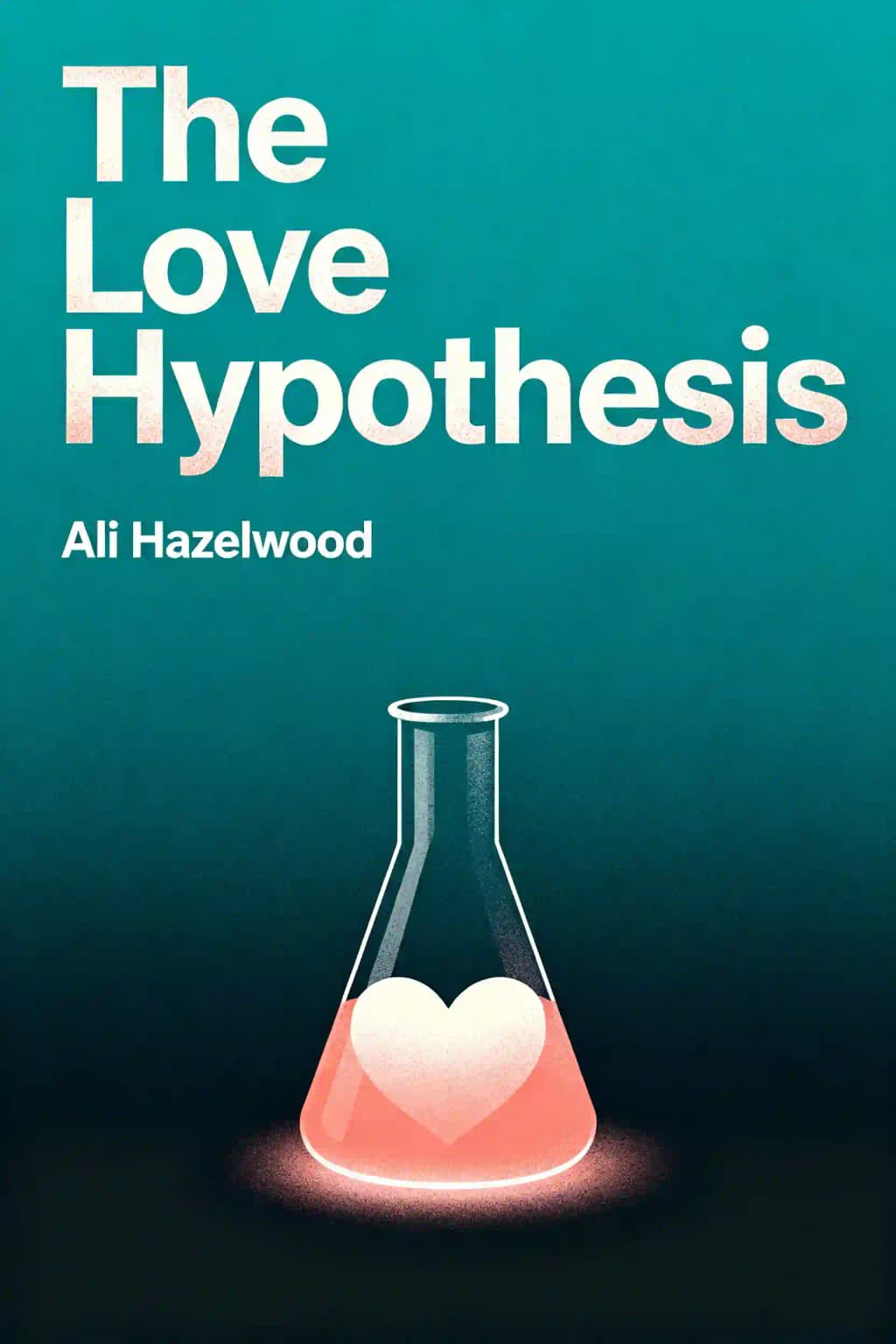
The Love Hypothesis has taken the literary world by storm, becoming not just a BookTok sensation but a cultural phenomenon that's captured the hearts of readers across generations. This enemies-to-lovers academic romance has sold over 3 million copies worldwide and been translated into 38 languages since its 2021 release. What began as Ali Hazelwood's Star Wars fan fiction has transformed into a beloved contemporary romance that even caught Taylor Swift's attention, who reportedly recommended it to her inner circle. The story's perfect blend of STEM authenticity (drawn from Hazelwood's own neuroscience background) and heart-melting romance offers a rare glimpse into the high-pressure world of academia through the lens of an unexpected love story. As we dive into this tale of fake dating and real feelings, prepare to discover why readers everywhere can't stop talking about the chemistry between Olive Smith and Adam Carlsen.
Глава 2
The Accidental Kiss That Started It All
When third-year PhD candidate Olive Smith impulsively kisses a random man in the biology department hallway to convince her friend Anh she's dating someone, she has no idea she's just planted her lips on the most feared professor in the department. Dr. Adam Carlsen is notorious for his harsh criticism and for crushing students' academic dreams. Tall, intimidatingly brilliant, and perpetually scowling, he's the last person Olive would choose for a spontaneous kiss. Yet there they are, lips locked in a moment of pure panic.
The kiss itself is brief, awkward, and entirely one-sided. When Adam threatens a Title IX complaint for sexual misconduct, Olive's mortification is complete. She flees the scene, certain her academic career is over before it's truly begun. This disastrous encounter perfectly encapsulates Olive's self-proclaimed tendency to choose the "colossal shitshow with devastating consequences" over the slightly inconvenient option in any given situation.
What makes this opening scene so compelling is how it immediately establishes the power dynamics at play. In academia, reputation and professional standing are everything. Olive, already struggling with imposter syndrome as a woman in STEM, has just potentially jeopardized her entire future with one impulsive act. Adam, meanwhile, holds all the cards-he could report her, humiliate her, or make her remaining years at Stanford unbearable.
But beneath this catastrophic beginning lies a subtle hint of something more. Adam's reaction, while stern, isn't as devastating as it could be. There's a trace of curiosity in his response, a flicker of interest that neither character fully recognizes yet. This moment sets the stage for their unusual arrangement: a fake relationship that will benefit them both in unexpected ways. For Olive, it maintains her lie to Anh (who wants to set her up with her ex). For Adam, it convinces the department chair he's settled enough to stay at Stanford, unfreezing his research funds.
What begins as a mutually beneficial arrangement soon becomes something neither of them anticipated-a connection that challenges their preconceptions and forces them to confront their deepest fears about vulnerability, trust, and what it means to truly let someone in.
Глава 3
The Science of Fake Dating: An Unexpected Experiment
The fake dating arrangement between Olive and Adam begins as a simple transaction: she needs to maintain her lie to Anh, and he needs to convince the department that he's settled enough to unfreeze his research funds. Their weekly coffee "dates" at Starbucks start awkwardly, with Olive fumbling through basic get-to-know-you questions like "What's your favorite color?" (Adam's answer: "Blue. No, green. Wait-blue-green.")
What makes their arrangement so compelling is how it subverts the typical academic power dynamic. Outside their pretense, Adam is Olive's academic superior-a renowned faculty member whose opinion could make or break careers. Within their fake relationship, however, they're equals navigating unfamiliar territory together. This creates a unique space where they can interact authentically, free from the constraints of their professional roles.
Their coffee dates reveal surprising commonalities beneath their apparent differences. Adam pays for Olive's extravagant coffee order not because he's "a dude" but because he understands the financial struggles of graduate students. He was born in The Hague where his mother served as a U.S. ambassador, while Olive hails from Toronto but has no desire to return to Canada. These small revelations humanize them to each other, chipping away at their preconceptions.
The fake relationship also forces them into situations that accelerate intimacy. When Olive ends up sitting on Adam's lap during a crowded scientific talk, she discovers with surprise that "Adam Carlsen's lap will be rated in the top fifth percentile for comfort, coziness, and enjoyment." This physical proximity breaks down barriers between them, creating moments of genuine connection amid their pretense.
Perhaps most significantly, their arrangement provides a safe framework for emotional vulnerability. When Adam confides his frustration about his frozen research funds, Olive sees beyond his intimidating exterior to the passionate scientist underneath. When she struggles to articulate her research to a visiting professor, Adam translates vague questions into specific scientific inquiries that help her organize her thoughts.
Through these interactions, what begins as a clinical arrangement transforms into something neither of them anticipated. Their fake relationship becomes a controlled experiment in human connection-one where the variables keep changing, the hypothesis requires constant revision, and the results defy all expectations. As Olive notes in one of her hypotheses: "Approximately two out of three fake-dating situations will eventually involve room-sharing; 50 percent of room-sharing situations will be further complicated by the presence of only one bed." Science, it seems, has a sense of humor.
Глава 4
Beneath the Lab Coat: Olive's Journey Through Grief and Purpose
Beneath Olive's quick wit and scientific brilliance lies a profound journey of loss and resilience. At fifteen, she lost her mother to pancreatic cancer-a devastating event that shaped both her personal and professional trajectory. After her mother's death, Olive entered the foster care system, an experience that left her with deep-seated fears of abandonment and a reluctance to form close attachments.
These early losses manifest in Olive's approach to relationships. As she confides to Malcolm, "Everyone I've ever loved has disappeared from my life." This fear of loss becomes her primary reason for avoiding genuine romantic connections. It's safer to maintain a fake relationship with clear boundaries than to risk her heart on something real that could disappear.
Yet the same traumatic loss that makes Olive guard her heart also fuels her academic passion. Her research focuses on early detection methods for pancreatic cancer-work that's deeply personal. As she reveals to Adam during their late-night conversation in the break room, "I want to find a way to detect pancreatic cancer early enough that people have a fighting chance." This mission gives purpose to her pain, transforming personal tragedy into scientific determination.
What makes Olive's character so compelling is how her vulnerability coexists with her strength. Despite her insecurities, she pursues her research with unwavering dedication. When faced with setbacks in the lab, she persists. When her advisor becomes less involved due to personal circumstances, she adapts. Even when confronted with the predatory behavior of a senior researcher who threatens to steal her work, she finds ways to protect her research rather than abandoning it.
Adam recognizes this resilience in Olive long before she sees it in herself. During a moment of self-doubt after her conference presentation, he tells her: "You're brilliant. I wish you could see yourself the way I see you." His belief in her scientific abilities helps Olive reclaim her confidence when it's most threatened.
Through her journey, Olive learns that vulnerability isn't weakness but courage. The same openness that makes her fear loss also allows her to form meaningful connections-with Adam, with her friends Malcolm and Anh, and with her scientific community. By the story's end, she's not just a more confident researcher but a more complete person-someone who can acknowledge her fears while refusing to be limited by them.
In one of the story's most poignant moments, Olive realizes she's been so focused on avoiding Type I errors (seeing something that isn't there) that she's committed a Type II error (failing to see what is there). This statistical metaphor perfectly captures her emotional journey from fear to acceptance, from isolation to connection.
Глава 5
Adam Carlsen: The Misunderstood Mentor
Adam Carlsen initially appears as the archetypal academic villain-brilliant but brutal, feared throughout the department for his harsh critiques and exacting standards. Students whisper about careers he's ruined and tears he's caused. Yet as the layers of his character are peeled back, a far more complex individual emerges.
Behind Adam's intimidating exterior lies a deeply principled scientist shaped by his own traumatic academic experiences. During his PhD, he endured an abusive advisor who publicly humiliated students and pitted them against each other. When Adam and his friend Holden chose to collaborate rather than compete as instructed, they were both denied funding and their work was published without credit. This formative experience taught Adam the importance of integrity in science-a value he upholds rigorously, even when it makes him unpopular.
What others perceive as unnecessary harshness, Adam sees as maintaining essential standards. He pushes his students because he believes in their potential and understands the competitive reality of academic science. As Olive comes to realize, "while Adam is demanding, he's fair and principled in ways his former advisor never was."
Adam's personal life reveals additional dimensions of his character. Raised by emotionally distant parents-his mother a U.S. ambassador, his father a diplomat-he grew up in various countries, fluent in multiple languages but lacking stable connections. This background explains both his self-sufficiency and his difficulty expressing emotions directly. It also illuminates why he values honesty and clarity so highly-they were often absent in his childhood.
Perhaps most surprising is Adam's long-standing interest in Olive, which predates their fake relationship by years. As Holden later reveals, Adam has been aware of Olive since her interview visit, remembering specific details like her Star Trek "turbolift pitch" reference in her first seminar and how she played freeze tag with a professor's children at a department picnic. This quiet attentiveness contradicts his reputation for cold detachment.
Adam's evolution throughout the story isn't about becoming a different person but about revealing who he truly is beneath the protective layers he's built. With Olive, he shows patience, humor, and vulnerability that surprise even those who know him best. When she struggles to articulate her research to a visiting professor, Adam translates vague questions into specific inquiries that help her organize her thoughts. When she's devastated by criticism at the conference, he takes her to a sushi train restaurant she excitedly chooses, despite his complaints about the quality.
These moments of tenderness reveal Adam's fundamental character-someone who values excellence but never at the expense of kindness, who maintains high standards while offering support, who can be both demanding and deeply compassionate. In academia's often toxic environment, he represents a different model of mentorship-rigorous yet humane, challenging yet nurturing.
Глава 6
The Academic Pressure Cooker: STEM Culture and Gender Politics
The Love Hypothesis offers an unflinching look at the intense pressures of academic science, particularly for women and underrepresented groups. Through Olive's experiences, readers glimpse the complex intersection of gender politics, professional ambition, and institutional power dynamics that shape scientific careers.
The novel portrays academia as a pressure cooker where self-worth becomes inextricably tied to publications, grants, and professional recognition. As Olive and Anh discuss over beers and s'mores, the sacrifices are substantial-working weekends, accepting meager stipends, postponing life milestones-all for the uncertain promise of future academic positions. They fantasize about leaving for industry jobs with better pay and more free time, including luxuries like "sleeping in on Sundays and buying a wireless vacuum cleaner."
Yet beneath this lighthearted banter lies a serious examination of why people persist in such demanding careers. For Anh, it's about creating "a better environment for women in science," even as her boyfriend Jeremy can make "blood money" in industry to fund her appliance wishes. For Olive, it's the deeply personal mission of advancing pancreatic cancer detection methods after losing her mother to the disease.
Gender dynamics add another layer of complexity to this already challenging environment. When Dr. Aslan encourages Olive before her conference presentation, she advises her to "carry herself with the confidence of a mediocre white man"-a sardonic acknowledgment of the different standards applied to women in professional settings. This isn't just clever dialogue; it reflects the documented confidence gap between equally qualified men and women in STEM fields.
The novel's darkest exploration of academic power dynamics comes through Tom Benton, the Harvard professor who initially seems to offer Olive a promising research opportunity. His predatory behavior-attempting to kiss her, threatening to steal her research, and suggesting sexual favors in exchange for professional advancement-represents the abuse of power that remains all too common in academic hierarchies. When he dismisses Olive's work as "mediocre and derivative" while simultaneously threatening to steal it, the contradiction reveals his true motives.
What makes the novel's portrayal of academic culture particularly nuanced is its acknowledgment that toxic behaviors often persist because they're embedded in systems that reward them. Tom's prestigious position at Harvard shields him from consequences, while Olive initially hesitates to report his behavior for fear of damaging her career prospects. This reflects the real dilemmas faced by many who experience harassment in academic settings.
Yet the story also offers hopeful counterexamples through characters like Dr. Aslan, who supports Olive by connecting her with other researchers, and through Anh's outreach efforts to establish peer-to-peer mentoring organizations. These positive models suggest that while academic culture can be toxic, it can also be transformed through intentional effort and institutional change.
Глава 7
The Heart of Research: Finding Purpose in Scientific Pursuit
Beyond its romantic storyline, The Love Hypothesis offers a thoughtful exploration of what drives scientific passion and the personal meaning researchers find in their work. For both Olive and Adam, science isn't merely a career but a calling that provides purpose and identity.
The novel opens with a flashback to Olive's interview at Stanford, where she confides her doubts about pursuing a PhD to a stranger (later revealed to be Adam). When asked why she wants a doctorate, she reveals she has a specific research question that's deeply personal-something she fears no one else will discover if she doesn't pursue it. The stranger tells her this is "the best reason" to pursue graduate school, establishing early that authentic scientific motivation comes from genuine curiosity and purpose rather than external validation.
Olive's research on pancreatic cancer detection methods is directly connected to her personal loss-her mother died from the disease when Olive was fifteen. This connection between personal experience and scientific inquiry gives her work emotional resonance beyond academic achievement. As she explains to Adam during their late-night conversation in the break room, "I want to find a way to detect pancreatic cancer early enough that people have a fighting chance." Her research isn't just intellectually stimulating; it's potentially life-saving.
Adam's scientific passion is equally evident, though differently motivated. When Olive asks if academia improves after graduate school, he emphatically denies it, though he admits the science makes it worthwhile "when it works." For Adam, the pursuit of knowledge itself provides sufficient reward to justify the professional challenges. His willingness to jeopardize his collaboration with Tom Benton-a partnership that could advance his career-to stand up for Olive demonstrates that he values scientific integrity above personal advancement.
The novel also explores how scientific work shapes identity and self-worth. When Tom threatens to steal Olive's research, her devastation goes beyond professional concerns-her work represents years of dedication and personal investment. Similarly, when Adam's research funds are frozen, his frustration stems not just from practical limitations but from feeling his work is undervalued.
What makes the portrayal of scientific passion in the novel particularly compelling is how it acknowledges both the struggles and the joys of research. Failed experiments, funding challenges, and competitive pressures exist alongside moments of discovery, collaboration, and breakthrough. When Olive's Western blot fails repeatedly, Adam offers practical advice and access to his lab's resources-a small moment that captures how scientific progress often depends on community support rather than individual genius.
Through these portrayals, the novel suggests that the most meaningful scientific work emerges from authentic personal engagement rather than external metrics of success. Both Olive and Adam find purpose not in publications or prestige but in the fundamental human desire to understand the world and make it better.
Глава 8
The Chemistry of Connection: Building Trust Through Vulnerability
At its core, The Love Hypothesis explores how genuine connection develops through moments of vulnerability, particularly in environments where professional masks are the norm. Olive and Adam's journey from awkward fake-dating partners to authentic lovers traces a path of gradually increasing emotional risk and reward.
Their relationship begins with clear boundaries-weekly coffee dates with minimal personal disclosure. Yet even these controlled interactions create space for unexpected honesty. When Adam admits his frustration about his frozen research funds, he reveals the passionate scientist beneath his intimidating exterior. When Olive shares her financial struggles as a graduate student, Adam responds with understanding rather than judgment, paying for her extravagant coffee order not because he's "a dude" but because he recognizes her situation.
The pivotal moment in their relationship occurs during a late-night encounter in the break room, when Olive discovers Adam sitting alone with the last bag of salt-and-vinegar chips from the vending machine. Their conversation reveals the casual intimacy developing between them as they discuss their respective struggles-Olive finishing a report for Tom, Adam running analyses for a grant due Sunday. In this unguarded moment, Olive confides about losing her mother to cancer at fifteen, her time in foster care, and her academic insecurities. Adam responds not with pity but with practical support, offering his lab's resources for her failed Western blot.
This pattern of vulnerability met with acceptance accelerates during their conference trip to Boston. When Olive delivers her presentation despite her anxiety about public speaking, Adam supports her with a protein bar and reassurance. When she returns devastated after Tom's predatory behavior (though she initially hides the true cause of her distress), Adam abandons the department social to take her to a sushi train restaurant she excitedly chooses. Later, he carries her barefoot to their hotel room when her heels hurt-a gesture of care that transcends their fake relationship boundaries.
The hotel room becomes the setting for their most profound exchange of vulnerabilities. When Olive expresses insecurity after Tom's harsh criticism, Adam reveals his own painful academic past-his abusive PhD advisor who publicly humiliated students and pitted them against each other. This mutual disclosure creates the emotional intimacy that leads to their physical connection, as Olive realizes Adam truly sees and values her for who she is.
What makes their developing relationship particularly compelling is how it challenges both characters' defense mechanisms. Olive, who fears abandonment after losing everyone she's loved, must risk her heart on someone who matters. Adam, whose childhood with emotionally distant parents taught him self-sufficiency, must learn to express his feelings directly. Their journey isn't just about falling in love but about choosing vulnerability despite its risks.
The novel's climactic emotional moment comes when Olive realizes she's been so afraid of Type I errors (seeing something that isn't there) that she's committed a Type II error (failing to see what is there). This statistical metaphor perfectly captures how fear can blind us to genuine connection. When she finally tells Adam "Ik hou van jou" (I love you) in Dutch-his childhood language-she's not just declaring her feelings but acknowledging that love requires the courage to be fully seen.
Глава 9
When Hypothesis Becomes Theory: The Transformation of Doubt into Certainty
Throughout The Love Hypothesis, Olive frames her experiences as scientific hypotheses-tentative explanations to be tested against evidence. This framing reflects not just her scientific mindset but her fundamental uncertainty about relationships and her place in the world. As the story progresses, these hypotheses evolve from expressions of doubt to affirmations of discovered truth.
Olive's early hypotheses reveal her pessimistic expectations: "When given a choice between A (a slightly inconveniencing situation) and B (a colossal shitshow with devastating consequences), I will inevitably end up selecting B." This self-deprecating formula reflects her belief that disaster is her default state, particularly in relationships. Similarly, her hypothesis that "Adam Carlsen and I have absolutely nothing in common, and having coffee with him will be twice as painful as a root canal. Without anesthesia" reveals her initial assumption that their differences are insurmountable.
As evidence accumulates through their interactions, Olive's hypotheses begin to shift. When she ends up sitting on Adam's lap during a crowded scientific talk, she discovers "Adam Carlsen's lap will be rated in the top fifth percentile for comfort, coziness, and enjoyment"-a hypothesis that acknowledges unexpected pleasure in their physical proximity. This gradual revision of her assumptions mirrors the scientific process itself, where initial theories are modified in response to new data.
The most significant transformation occurs in Olive's fundamental hypothesis about love: "If I fall in love, things will invariably end poorly." This belief, rooted in her experience of loss and abandonment, has governed her approach to relationships throughout her adult life. It explains her willingness to engage in a fake relationship-the controlled conditions create an illusion of safety by preventing genuine emotional risk.
As her feelings for Adam deepen, this hypothesis is severely tested. The evidence increasingly suggests that love, while risky, might not inevitably lead to disaster. Adam's consistent support, his respect for her boundaries, and his belief in her abilities all contradict her expectation of inevitable pain. Yet Olive clings to her original hypothesis, even fabricating a lie about having feelings for someone else rather than admitting her growing love for Adam.
The novel's emotional climax comes when Olive finally rejects her flawed hypothesis in favor of a new understanding. Using statistical terminology, she explains to Adam that she was so afraid of Type I errors (seeing something that isn't there) that she committed a Type II error (failing to see what is there). This moment represents not just a personal breakthrough but a scientific one-the willingness to abandon a cherished theory when evidence contradicts it.
By the epilogue, set ten months later, Olive's tentative hypotheses have evolved into something closer to scientific theory-explanations supported by substantial evidence and predictive power. When she recreates their first kiss in the hallway, positioning Adam exactly where he stood that night, she does so with the confidence of someone who has thoroughly tested her understanding. Her question-"May I kiss you, Dr. Carlsen?"-echoes her first awkward request, but now carries the certainty of established knowledge rather than experimental risk.
Глава 10
From Experiment to Reality: When Fake Love Becomes Genuine
The transformation of Olive and Adam's fake relationship into authentic love forms the emotional core of The Love Hypothesis. What begins as a mutually beneficial arrangement evolves into something neither character anticipated, challenging their preconceptions and forcing them to confront their deepest fears about vulnerability and trust.
Their fake relationship starts with clear parameters: weekly coffee dates at Starbucks, minimal personal disclosure, and a predetermined endpoint. These boundaries create a safe experimental space where both characters can interact without the full emotional risk of genuine dating. For Olive, who fears abandonment after losing everyone she's loved, this controlled environment feels manageable. For Adam, whose childhood with emotionally distant parents taught him self-sufficiency, the arrangement allows connection without requiring immediate vulnerability.
What neither anticipates is how the performance of intimacy creates opportunities for authentic connection. Their coffee conversations reveal unexpected commonalities. Their public appearances as a couple-at the department picnic, during scientific talks-require physical proximity that breaks down emotional barriers. Even their playful banter about what fake-couple activities Anh might force on them next ("holding hands, feeding each other strawberries, even a fake wedding") inadvertently builds a shared language of intimacy.
The conference trip to Boston marks the crucial transition from fake to real. Forced to share a hotel room due to accommodation issues, they find themselves in a situation where the boundaries between performance and authenticity blur. When Olive returns devastated after Tom's predatory behavior, Adam abandons the department social to care for her, taking her to a sushi train restaurant and carrying her barefoot to their room when her heels hurt. These acts of tenderness transcend their arrangement, revealing genuine care rather than performed affection.
Their physical intimacy in the hotel room emerges naturally from this emotional connection. Adam's repeated checking that Olive is comfortable, his whispered words of adoration, and his attentiveness to her pleasure all demonstrate that their encounter is far from performative. When he admits how perfect she is and how long he's wanted this moment, the depth of his genuine feelings becomes undeniable.
What makes this transformation particularly poignant is how both characters initially resist acknowledging it. Olive convinces herself their night together is a temporary indulgence before they return to their separate lives. Adam, believing Olive has feelings for someone else, accepts her decision to end their arrangement despite his obvious pain. Their mutual misunderstanding reflects the fundamental challenge of distinguishing performance from reality after months of pretense.
The novel's resolution comes when both characters finally abandon pretense entirely. Holden's revelation that Adam has been interested in Olive since they first met years ago forces her to reconsider her assumptions. When she learns that Adam only agreed to interview at Harvard after discovering she would be working in Tom's lab, the extent of his genuine care becomes clear. Similarly, when Olive finally confesses that she lied about having feelings for someone else, she acknowledges the truth she's been hiding from herself.
Their reunion in the epilogue brings their journey full circle. By meticulously recreating the hallway where they first kissed, Olive transforms their accidental beginning into an intentional choice. Her question-"May I kiss you, Dr. Carlsen?"-echoes her first awkward request, but now carries the weight of genuine love rather than desperate improvisation. What began as an experiment has become their reality, proving that sometimes the most accurate hypotheses are the ones we're most afraid to test.