Глава 1
When Obsession Meets Love: The Hypnotist's Entanglement
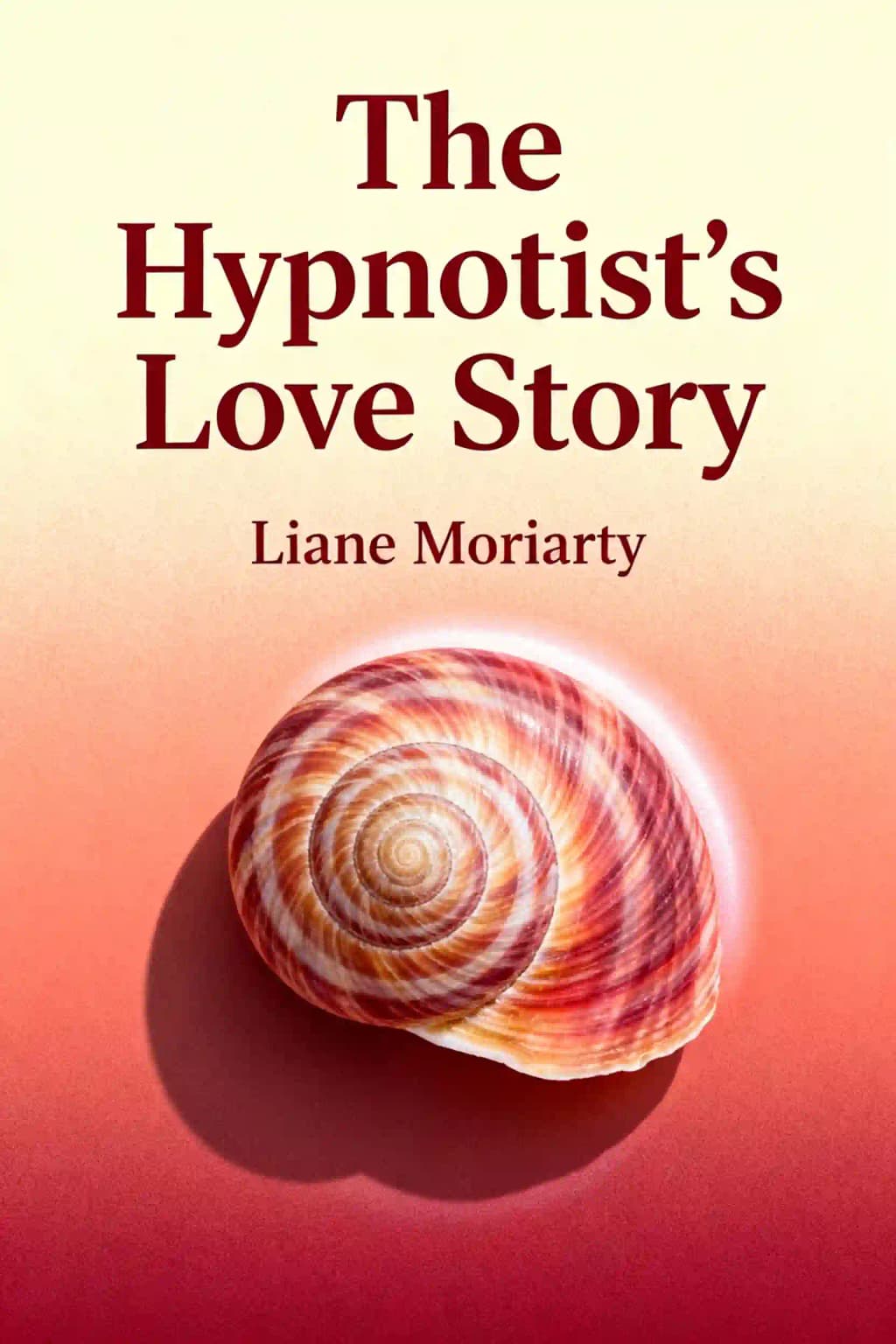
What happens when the boundaries between love, obsession, and professional ethics blur beyond recognition? Liane Moriarty's psychological thriller "The Hypnotist's Love Story" deftly explores this question through the intertwined lives of a hypnotherapist, her new boyfriend, and his stalker ex-girlfriend. The novel became an instant sensation upon its release, with celebrities like Reese Witherspoon and Nicole Kidman championing its nuanced portrayal of complicated relationships. Following the phenomenal success of "Big Little Lies," this earlier work by Moriarty demonstrates her uncanny ability to transform everyday situations into compelling psychological explorations. As one reviewer noted, "Moriarty doesn't just write about obsession-she makes her readers obsessed with her characters."
Глава 2
The Complicated Triangle: Ellen, Patrick, and Saskia
Ellen O'Farrell is a 35-year-old hypnotherapist practicing from her Victorian beachside home, who has finally met someone promising after a string of failed relationships that left her questioning her judgment in men. Patrick Scott, a widowed surveyor with an eight-year-old son named Jack, seems to embody everything she's been looking for - successful, stable, and genuinely kind. Their first few dates progress wonderfully, filled with easy conversation and growing chemistry, until their fourth date when he makes an unsettling confession over dinner: "I have a stalker." His ex-girlfriend Saskia has been following him for three years, showing up at his regular haunts, leaving detailed notes on his windshield about his daily activities, and even sending text messages analyzing Ellen's appearance, right down to her choice of shoes and the way she holds Patrick's hand.
Rather than being repelled by this revelation, Ellen feels a strange fascination that surprises even herself. "I find it sort of interesting," she admits to her horrified friend Julia over wine one evening. This unusual reaction stems partly from Ellen's professional curiosity as a therapist who regularly deals with complex human behavior, and partly from her own deep-seated insecurities about relationships. Having been raised by a single mother and two godmothers in a house full of women, without ever knowing her father who abandoned them before her birth, Ellen has always felt a certain void in her understanding of romantic relationships and male psychology.
Meanwhile, through carefully crafted flashbacks and internal monologues, we get glimpses into Saskia's perspective, revealing a woman who recognizes the destructiveness of her behavior but feels powerless to stop it. "It's like an addiction," she explains in her journal entries, comparing her stalking to alcoholism - a compulsion she knows is ruining her life but can't seem to break. Saskia isn't portrayed as a one-dimensional villain but as someone grieving multiple devastating losses - her three-year relationship with Patrick, her cherished role as Jack's stepmother during his formative years, and her recently deceased mother who served as her only emotional anchor. Her stalking becomes a desperate way to maintain connection to the family unit she once had, watching from a distance as life goes on without her.
The genius of Moriarty's narrative structure lies in how it creates genuine empathy for all three points of this triangle, weaving together their perspectives to create a tapestry of human vulnerability. We understand Ellen's fascination with the woman who preceded her, Patrick's frustration and fear for his son's safety, and even Saskia's desperate need to remain connected to her former life. When Ellen discovers that one of her hypnotherapy clients, "Deborah," is actually Saskia in disguise, the boundaries between stalker and stalked become even more intricately blurred. Rather than immediately exposing Saskia, Ellen continues treating her, drawn into a complex web of professional curiosity and personal investment, hoping to gain insight into both her boyfriend's ex and her own fears about relationships.
This complex dynamic sets the stage for a story that's as much about the psychology of obsession as it is about the nature of love and loss - exploring how past trauma shapes current behavior, and how the lines between love and fixation can become dangerously thin.
Глава 3
The Ghosts of Relationships Past
Every new relationship carries the weight of previous ones, but Patrick's past is particularly complicated. Not only does he have a stalker ex-girlfriend, but he's also a widower whose wife Colleen died of cancer, leaving him to raise their son alone. These two women - one dead, one refusing to disappear - haunt Patrick and Ellen's relationship in different but equally powerful ways, creating a complex emotional triangle that shapes their developing romance.
Colleen's presence permeates their daily life through photographs, memories, and most significantly through Jack, who matter-of-factly tells Ellen, "That's my mum. My mum is dead." The casual way children process loss contrasts sharply with the adults' careful navigation of the subject. Ellen reflects that "dying is an elegant way to leave a relationship - final and mysterious, giving you the last word forever." She finds herself competing with an idealized memory, a competition made more difficult by the natural human tendency to sanctify the dead. Patrick frequently mentions how Colleen had a perfect pregnancy with no morning sickness, while Ellen suffers terribly from nausea. These casual comparisons, though perhaps unintentional, create an impossible standard against which Ellen measures herself.
The visit to Colleen's grave becomes a pivotal moment in Ellen's understanding of her position in Patrick's life. The headstone reads "Life is not forever. Love is," listing Colleen as Patrick's "beloved wife" - words that hang heavily in the air. As Patrick and Jack kneel to kiss Colleen's photo on the headstone, Ellen feels increasingly uncomfortable, recognizing she can never replace this perfect, preserved memory. The scene illustrates how grief can create a kind of sacred space that new love struggles to enter.
Meanwhile, Saskia represents a different kind of ghost - one who refuses to be exorcised and actively disrupts their present. Her persistent presence manifests in unexpected ways: random appearances at their favorite cafes, mysterious packages left at doorsteps, and the constant tension of wondering where she might appear next. Her stalking forces Ellen to confront uncomfortable questions about her own relationship. What if Patrick still has feelings for Saskia? What if Ellen herself isn't as different from Saskia as she'd like to believe? The line between devoted love and obsession becomes increasingly blurry.
In one revealing moment, Ellen admits she finds Saskia's obsession "strangely validating," suggesting that being the object of such intense focus confirms her relationship's significance. This admission hints at Ellen's own insecurities and need for validation, blurring the line between healthy love and unhealthy obsession. The confession also reveals how past relationships can distort our perception of normal romantic behavior.
Through these complicated dynamics, Moriarty masterfully explores how past relationships shape current ones, and how the ghosts of former lovers - whether literally dead or figuratively refusing to disappear - continue to influence our romantic lives. The author shows how new relationships must not only navigate present challenges but also compete with idealized memories and unresolved emotional attachments. This creates a rich tapestry of psychological complexity that goes beyond simple romantic rivalry to explore deeper questions about love, loss, and the nature of healthy attachment.
Глава 4
The Psychology of Obsession
Moriarty delves deep into the psychology of obsession, presenting it not as a simple villain-victim narrative but as a complex human behavior with understandable (if not justifiable) roots. Through Saskia's first-person narrations, we gain insight into how her stalking behavior developed gradually after her relationship with Patrick ended.
"It's like an addiction," Saskia explains, describing how she initially just drove past Patrick's house occasionally, then progressed to following him, then to entering his home when he wasn't there. Each escalation brought momentary relief followed by increased anxiety, creating a cycle similar to substance addiction. Her behavior is further complicated by genuine grief-not just for the relationship, but for her role as Jack's stepmother and for her recently deceased mother.
The novel also explores how society views stalking differently based on gender. When Ellen's friend Julia confesses to making silent phone calls to an ex-boyfriend's new girlfriend as a teenager, it's treated as a youthful indiscretion rather than criminal behavior. This double standard highlights how women's obsessive behaviors are often minimized or romanticized in popular culture.
Ellen's professional knowledge of psychology adds another layer to this exploration. As a hypnotherapist, she understands how the unconscious mind can drive behavior despite conscious intentions. She recognizes in Saskia's behavior patterns similar to those she helps clients break through hypnotherapy-deeply ingrained thought patterns that resist rational intervention.
In one particularly insightful moment, Ellen's psychiatrist mother Anne suggests that Saskia might be suffering from "complicated grief"-grief that becomes "stuck" and prevents normal healing. This clinical perspective offers a compassionate framework for understanding Saskia's behavior without excusing it.
The novel also examines how obsession affects its object. Patrick displays symptoms of hypervigilance and anxiety from years of being stalked. He constantly scans environments for Saskia, has trouble sleeping, and experiences intense anger that sometimes spills over into his relationship with Ellen. His reluctance to pursue legal remedies stems partly from guilt-he knows Saskia's behavior began after he abruptly ended their relationship following his wife's death.
Through these nuanced portrayals, Moriarty invites readers to consider obsession not as an aberration but as an extreme manifestation of universal human needs for connection, meaning, and control.
Глава 5
The Power of Hypnosis and Suggestion
Hypnotherapy isn't just Ellen's profession-it's a central metaphor for the novel's exploration of how we influence and are influenced by others. Through Ellen's practice, Moriarty introduces readers to the science behind hypnosis, dispelling myths (you can't get "stuck" in hypnosis; all hypnosis is ultimately self-hypnosis) while highlighting its genuine therapeutic applications.
Ellen uses hypnosis to help clients quit smoking, lose weight, overcome phobias, and address deeper psychological issues. In one session, she helps an accountant with fear of public speaking by guiding him through age regression to discover the "Initial Sensitizing Event"-a humiliating preschool incident involving a snail, a crying girl, and destroyed Easter eggs. This detailed portrayal of hypnotherapy shows how adult behaviors often stem from childhood experiences we've consciously forgotten.
The novel also explores how hypnotic suggestion operates in everyday life, often without our awareness. Ellen notes that "everyone is in a trance from birth due to societal hypnosis," referring to the unconscious adoption of social norms and expectations. Patrick's relationship with Colleen, for instance, continues to "hypnotize" him years after her death, influencing his behavior with Ellen in ways he doesn't fully recognize.
When Patrick asks Ellen to hypnotize him to help with insomnia, she hesitates, recognizing the ethical complications of using her professional skills in a personal relationship. This boundary-crossing foreshadows a pivotal moment when, under hypnosis, Patrick reveals his deepest feelings about Colleen: "I will never love another woman like her... I look at Ellen and I think: It's not the same."
This devastating revelation demonstrates how hypnosis can bypass conscious filters to access raw emotional truths. It also raises questions about whether some truths are better left unspoken-would Ellen and Patrick's relationship have been stronger if she never heard these words?
The concept of suggestion extends beyond formal hypnosis to include the ways we unconsciously influence each other. Ellen plants a hypnotic trigger in Patrick-touching his shoulder to induce calm-which becomes significant during a crisis involving Saskia. Similarly, Ellen attempts to "unhypnotize" Saskia from her obsession with Patrick by suggesting she imagine closing and locking a door on her memories.
Through these explorations of hypnosis and suggestion, Moriarty invites readers to consider how much of our behavior stems from unconscious programming and how susceptible we all are to influence-whether from therapists, lovers, or our own past experiences.
Глава 6
Family Dynamics and the Search for Identity
At its heart, "The Hypnotist's Love Story" is about the search for identity within the context of family-both the families we're born into and those we create. Ellen, raised by a single mother and two godmothers without knowing her father, has always felt a certain incompleteness in her understanding of herself. Her teenage diary reveals this anxiety: "As a fatherless daughter, I lack a template and fear becoming promiscuous."
This fear has manifested in a series of failed relationships, including a significant one with Jon, an atheistic academic who subtly undermined her profession with his demands for "empirical evidence." Ellen's attraction to Patrick stems partly from his different approach-he respects her work and responds well to her hypnotic suggestions, symbolizing an acceptance of her complete self.
The novel takes a dramatic turn when Ellen's mother Anne reveals she has reconnected with Ellen's father, who has divorced and moved back to Sydney from the UK. This revelation forces Ellen to confront her assumptions about her origins and identity just as she's preparing to create a new family with Patrick and Jack.
Patrick's family dynamics are equally complex. His son Jack navigates relationships with multiple parental figures-his dead mother Colleen, whose photo he visits at the cemetery; his father Patrick; his former stepmother Saskia, who read "The Very Hungry Caterpillar" to him fifteen times in a row; and now Ellen, who struggles to find her place in this complicated history.
When Jack has a disturbing dream about "Armageddon" that continues "like a movie that went on forever," it symbolizes the apocalyptic changes in his young life-losing his mother, gaining and losing Saskia, and now adjusting to Ellen and a new sibling on the way.
Saskia's perspective adds another dimension to these family dynamics. She questions "when a caregiver crosses the line from babysitter to mother," lamenting that despite years of caring for Jack, she has no legal rights to maintain a relationship with him after her breakup with Patrick. Her grief over losing Jack is as intense as her grief over losing Patrick, highlighting how stepparents can form profound attachments without legal recognition.
Through these intertwined family stories, Moriarty explores how our sense of identity is shaped by our family relationships-and how creating new families inevitably involves reconciling with the patterns established in our original ones.
Глава 7
Pregnancy and New Beginnings
Ellen's unexpected pregnancy serves as both a complication and a catalyst in the novel. Discovered shortly after she begins dating Patrick, the pregnancy accelerates their relationship timeline and forces them to confront issues they might otherwise have avoided. It also creates a parallel between Ellen and Colleen, Patrick's late wife, while highlighting the contrast with Saskia, who desperately wanted children with Patrick but never conceived.
The physical experience of pregnancy becomes a metaphor for Ellen's emotional journey. Her morning sickness-which Colleen reportedly never experienced-represents the difficulties of integrating into Patrick's complicated life. When Ellen bursts into tears at Colleen's parents' home after seeing a photo of Colleen with baby Jack, her excuse of "hormones" masks deeper anxieties about replacing a dead woman in her family's affections.
For Saskia, Ellen's pregnancy represents a final loss-the child she might have had with Patrick. Finding Ellen's pregnancy test in the bathroom cabinet during a hypnotherapy session becomes a turning point in her obsession, triggering violent thoughts that frighten her with their intensity.
The pregnancy also forces Ellen to reconsider her professional boundaries. As a hypnotherapist, she's accustomed to maintaining emotional distance from clients' problems, but impending motherhood makes her more vulnerable. During a session with Luisa, who ironically is seeing Ellen for "unexplained infertility," Ellen feels guilty about her accidental pregnancy.
Patrick's reaction to the pregnancy reveals his complicated grief over Colleen. While externally supportive, he constantly compares Ellen's experience unfavorably to Colleen's "perfect" pregnancy. This pattern culminates in his hypnosis-induced confession that "I will never love another woman like her," suggesting he views Ellen and their child as a second-best replacement family.
Despite these complications, the pregnancy ultimately represents hope and renewal. When Luisa calls Ellen in tears to announce her own natural pregnancy after years of trying, exclaiming "You got me pregnant!" it symbolizes Ellen's power to facilitate new beginnings-both for her clients and herself.
The novel's conclusion, with Saskia glimpsing Ellen with her baby daughter in "a purple dress with little legs stuck straight out in front" at Circular Quay, suggests that new life can heal old wounds. Ellen has created the family she always wanted, while Saskia has found a different path forward, becoming godmother to her friend Kate's son.
Глава 8
The Road to Healing and Forgiveness
The novel's final act focuses on healing-not just from physical injuries after Saskia and Jack's accident on the stairs, but from the psychological wounds all the characters carry. This healing process requires both professional intervention and personal growth.
Saskia's recovery begins in the hospital, where her fractured pelvis and broken ankle force her to be physically still for the first time since her obsession began. This enforced stillness creates space for reflection and connection with others. Her work colleague Lance, his wife Kate, and her old friend Tammy form an impromptu support network, showing Saskia that relationships exist beyond her fixation on Patrick.
Ellen facilitates this healing by speaking to Saskia "in a professional voice," suggesting she has hit "rock bottom" like an addict and that this could be her turning point. Rather than condemning Saskia, Ellen acknowledges her own complicated feelings: "I was sort of addicted to you watching us. I found it strangely validating." This honesty creates space for Saskia to acknowledge her behavior without shame-inducing judgment.
The legal system provides external structure for Saskia's recovery. The Apprehended Violence Order prohibiting her from approaching Patrick, combined with court-mandated psychiatric treatment, creates boundaries she couldn't establish for herself. Her psychiatrist's direct questions-"How do you think Patrick felt when you kept ringing him?"-force her to develop empathy and recognize that "violence isn't just physical. You took away all his power."
Patrick's healing is less explicit but equally important. His initial reaction to Saskia's presence is rage-"I feel like I could kill her"-suggesting unprocessed trauma from years of stalking. His reluctance to pursue legal remedies earlier stems partly from guilt over how he ended their relationship shortly after Saskia's mother died. By finally establishing legal boundaries and focusing on his new family with Ellen, Patrick begins to move forward.
For Ellen, healing involves reconciling her professional and personal selves. Initially, she keeps her discovery of "Deborah's" true identity from Patrick, blurring ethical boundaries between therapist and partner. After the accident, she recognizes the limitations of her approach, berating herself for the "superficial nonsense" she told Saskia about "closing the door forever" on her past. This self-awareness represents growth in both her personal and professional understanding.
The novel's conclusion suggests healing doesn't require geographical separation (Saskia stays in Sydney despite Ellen's suggestion to leave) or complete resolution (Ellen never learns that Saskia's mysterious leg pain vanished after her accident). Instead, it comes through developing new connections and finding purpose beyond past wounds. Saskia becomes godmother to Kate's son, while Ellen creates the family she always wanted with Patrick, Jack, and their baby daughter.
Глава 9
The Transformative Power of Perspective
Throughout "The Hypnotist's Love Story," Moriarty masterfully shifts between different characters' viewpoints, demonstrating how the same events can appear radically different depending on perspective. This narrative technique isn't just stylistic-it's thematic, suggesting that understanding others' perspectives is essential for genuine connection and growth.
Ellen initially views Saskia as a fascinating case study-a real-life example of obsession she can observe with professional detachment. From Saskia's perspective, however, her behavior isn't clinical but deeply emotional, stemming from genuine love for Patrick and Jack combined with unprocessed grief over multiple losses. When Ellen admits she found Saskia's watching "strangely validating," it reveals how even "normal" relationships contain elements of performance and observation.
Patrick's perspective adds another layer of complexity. What Ellen sees as harmless curiosity about his ex, Patrick experiences as a violation of privacy that triggers traumatic memories. His reluctance to discuss Saskia stems not from secrecy but from a desire to protect his hard-won peace of mind.
The novel's most powerful perspective shifts occur around Jack. From Ellen's viewpoint, he's Patrick's son whom she must win over to secure her place in their family. From Saskia's perspective, he's the child she helped raise for years, reading "The Very Hungry Caterpillar" fifteen times in succession and caring for him during asthma attacks. From Patrick's view, Jack is Colleen's legacy-a living reminder of his first love who needs protection from emotional upheaval.
When Jack himself speaks, his perspective cuts through adult complications with childlike directness. Asked about gaining both a stepmother and a sibling, he simply hopes for "a baby brother he can teach stuff." His nightmare about "Armageddon" reveals how children absorb adults' emotional turmoil even when they can't articulate it.
The novel's structure reinforces this theme by alternating between Ellen's third-person narrative and Saskia's first-person sections. This technique creates empathy for Saskia despite her troubling behavior, making readers question the boundaries between "normal" attachment and unhealthy obsession.
In the final chapter, Saskia spots Ellen with her baby daughter at Circular Quay. For a moment, their perspectives almost converge-Saskia thinks Ellen is smiling at her and considers approaching to share that her mysterious leg pain has vanished. Then she realizes Ellen is smiling at someone else, possibly Patrick or Jack. Without turning to confirm, Saskia continues walking, "melting into the crowd." This ending suggests that healing comes not from forcing perspectives to align but from respecting their inevitable differences and finding peace within one's own.
Through these shifting viewpoints, Moriarty invites readers to consider how our limited perspectives shape our judgments of others-and how expanding those perspectives might lead to greater compassion and understanding.