Глава 1
The Surprising Psychology Behind Our Dishonest Decisions
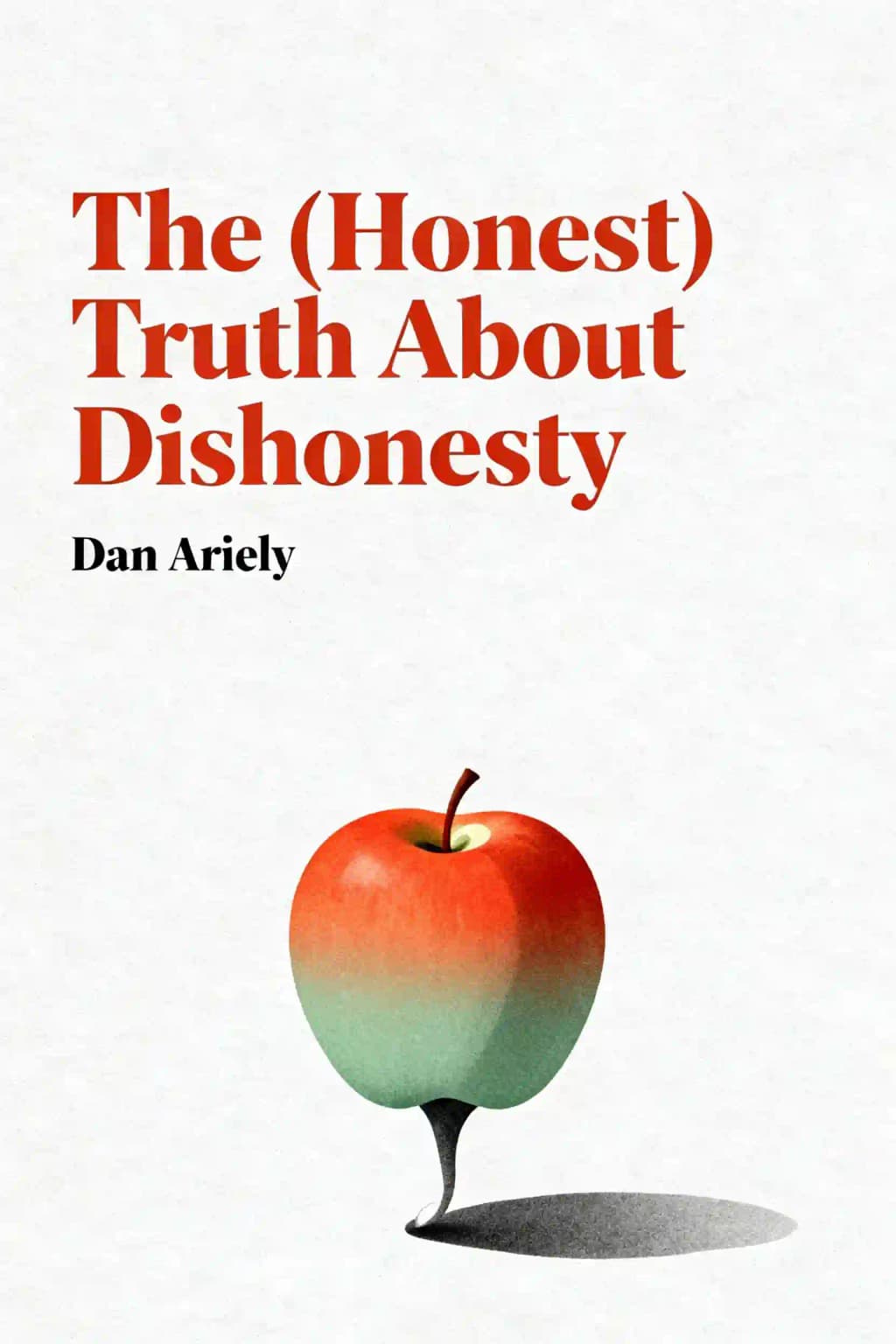
When Dan Ariely was badly burned in an accident, he experienced a curious phenomenon: the nurses would tell him removing bandages wouldn't hurt, even though the process was excruciating. This seemingly small deception sparked his fascination with dishonesty. Years later, as a behavioral economist, he encountered John Perry Barlow, a Grateful Dead lyricist who had consulted for Enron. Despite being close to the company's collapse, Barlow hadn't recognized the dishonesty-experiencing what Ariely calls "wishful blindness." These experiences led Ariely to question whether dishonesty extends beyond a few bad apples to include ordinary people like you and me.
"The Honest Truth About Dishonesty" became an instant New York Times bestseller and has been translated into over 30 languages. The book challenges traditional economic theories about dishonesty, offering a revolutionary perspective that has influenced policy discussions from corporate boardrooms to government ethics committees. Even Ariely himself couldn't have predicted the book's cultural impact, with its insights being referenced everywhere from Harvard Business Review to popular shows like "The Daily Show" and "Freakonomics Radio."
Глава 2
The Fudge Factor: How We Balance Honesty and Self-Interest
Traditional economic theory suggests we make dishonest decisions through pure cost-benefit analysis-weighing potential gains against the likelihood and severity of punishment. This Simple Model of Rational Crime (SMORC) implies that increasing surveillance and penalties should effectively curb dishonesty. But if this were true, we'd live in an unlivable world of constant suspicion and surveillance.
To test this theory, Ariely and his colleagues designed the matrix experiment: participants solved simple math problems for money, with some able to shred their answers before reporting their scores. Those who could shred claimed to solve six matrices on average, while the control group actually solved only four-revealing modest but widespread cheating.
Surprisingly, when they varied the monetary rewards from 25 to $10 per correct answer, the amount of cheating didn't increase with higher stakes. Participants consistently added about two matrices to their scores regardless of potential gain. Even more telling, when they manipulated the perceived risk of getting caught (by having participants shred half their worksheet, their entire worksheet, or pay themselves directly from cash), the level of cheating remained consistent.
"People don't simply maximize gains when they can get away with it," Ariely explains. "Something else constrains their dishonesty."
That "something else" is what Ariely calls the "fudge factor theory": our behavior is driven by two opposing motivations-wanting to view ourselves as honest people (ego motivation) while also benefiting from cheating (financial motivation). Our cognitive flexibility lets us cheat "just a little" while maintaining our positive self-image.
Think about it-have you ever taken office supplies home? Exaggerated a tax deduction? Called in "sick" when you weren't? Most of us have committed these small acts of dishonesty without considering ourselves dishonest people. This is the fudge factor at work.
Глава 3
The Psychology of Distance: Why Non-Cash Theft Feels Less Wrong
Have you ever noticed how taking a pen from work feels less wrong than taking the equivalent amount of money from the cash register? This psychological distance from actual currency significantly affects our dishonesty.
Ariely demonstrated this by placing Coca-Cola and dollar bills in MIT dorm refrigerators. While the sodas quickly disappeared, no one touched the money. To further test this "token effect," his team modified the matrix experiment to include a condition where participants received plastic chips instead of cash for their claimed correct answers, then walked twelve feet to exchange these tokens for money.
This simple psychological distance between the dishonest act and receiving actual money doubled the amount of cheating compared to those who lied directly for cash. People are significantly more dishonest when dealing with non-monetary objects than with actual currency.
"This worries me greatly as we move toward a cashless society," Ariely notes. "Could stealing a credit card number feel less morally wrong than stealing cash? As financial products become more obscure and less recognizably related to money, our moral compass may slip further."
Some companies intuitively understand and exploit this principle. A young economic consultant described to Ariely how his firm systematically encourages overstating billable hours. With no oversight on billing, no clear guidelines, and the threat of being fired for low billability, the environment breeds cheating. Unlike the thief who stole Ariely's GPS, these white-collar transgressors can think of themselves as highly moral because their actions are small and several steps removed from the victim's pocket.
The same principle applies in golf, where moving the ball with a club (the most distant method) was deemed most acceptable by players, with kicking the ball considered moderately acceptable, while directly picking up and moving the ball (the most direct method) was seen as least acceptable.
Глава 4
Moral Reminders: The Simple Solution to Complex Dishonesty
If psychological distance increases dishonesty, what might decrease it? Ariely's team discovered a surprisingly simple solution: moral reminders.
In one experiment, they asked half their participants to recall the Ten Commandments before completing the matrix task, while the other half recalled books they'd read in high school. The Ten Commandments group showed no cheating whatsoever, despite no one being able to recall all ten. Even atheists who swore on a Bible didn't cheat. Simply trying to recall moral standards was enough to improve behavior.
They tested this further with honor codes. MIT and Yale students who signed a statement about their university's honor code (though neither school actually has one) didn't cheat at all. Princeton students, despite their rigorous honor code training, cheated just as much as MIT and Yale students when not asked to sign the code.
"This suggests moral reminders work in the moment but don't create lasting ethical change," Ariely explains. "The good news is that people want to be honest, so incorporating moral reminders into tempting situations might be effective."
When testing moral reminders in a tax-reporting context, they found participants who signed at the top of a form (before filling it out) cheated significantly less than those who signed at the bottom. While those signing at the end claimed about four extra matrices solved, those signing first claimed only one extra. Similarly, travel expense claims were nearly half as much ($5.27 vs $9.62) when signatures came first.
Despite presenting this evidence to the IRS, they rejected the suggestion to move signatures to the top of tax forms, claiming it would be "illegal" and "confusing." They eventually tested their theory with an insurance company using odometer reading forms-customers who signed at the top reported driving 2,400 more miles annually than those signing at the bottom, suggesting less cheating.
Глава 5
Conflicts of Interest: The Invisible Corruption of Judgment
When professionals face conflicts between client welfare and financial interests, their judgment can become compromised-often without conscious awareness. This hidden influence affects decisions in ways we rarely recognize, creating a subtle but pervasive form of corruption that undermines professional integrity across industries.
Ariely experienced this firsthand when the head of a burn department eagerly proposed tattooing stubble-like dots on his scarred face. Despite his normally compassionate care, the doctor became uncharacteristically aggressive when Ariely hesitated, pushing hard for the procedure. His deputy later revealed the truth-the doctor needed just one more patient to complete a scientific paper for a leading journal. The incident highlighted how even well-intentioned professionals can lose perspective when personal ambitions compete with patient care.
"This showed how even excellent physicians can become blinded by competing interests," Ariely notes, "unable to see past their own agenda when it colors their worldview." The experience made him realize that conflicts of interest operate at both conscious and unconscious levels, making them particularly dangerous.
Our inherent inclination to return favors creates powerful conflicts of interest through the principle of reciprocity. In a groundbreaking study at Baylor College of Medicine, researchers found that participants consistently preferred artwork from galleries that had "sponsored" their payment for participating in the study. Brain scans revealed increased activity in pleasure centers when viewing these paintings, suggesting the bias operated at a neural level. Most telling, participants universally denied that sponsorship influenced their preferences, demonstrating how conflicts can operate outside our awareness.
Pharmaceutical representatives have mastered the art of creating conflicts of interest through strategic gift-giving and relationship building. They operate with military precision, using sophisticated databases tracking doctors' prescribing habits while personalizing approaches based on each physician's preferences and personalities. From small gifts like pens and notepads to elaborate "dine-and-dash" arrangements and paid speaking opportunities, pharma reps employ sophisticated psychological tactics to influence prescribing behavior. Studies show that even small gifts can significantly impact prescription patterns, though doctors consistently deny being influenced.
Even academics and experts, trained in objectivity, aren't immune to these influences. When Ariely first served as an expert witness for a law firm, he discovered how quickly he adopted the viewpoint of those paying him. The lawyers skillfully planted ideas by subtly questioning unfavorable research while praising favorable findings. They created an environment of intellectual agreement through careful curation of information and social reinforcement. Within weeks, he found himself aligned with their perspective-making him doubt whether true objectivity is possible when being paid for an opinion. This experience led him to establish personal guidelines for consulting work and to advocate for greater transparency in expert testimony.
The insidious nature of conflicts of interest lies in their ability to influence judgment while leaving the individual convinced of their continued objectivity. Whether in medicine, academia, law, or business, these hidden influences shape decisions in ways that can compromise professional integrity and public trust.
Глава 6
Depleted Willpower: Why Tired Minds Make Dishonest Choices
Have you ever noticed how your ability to resist temptation deteriorates as the day progresses? This isn't just your imagination-it's what researchers call "ego depletion," and it significantly affects our moral choices.
Our behavior stems from a constant struggle between our impulsive, emotional side and our rational, deliberative side. Researchers demonstrated this tension by testing how cognitive load affects decision-making. Participants asked to remember a seven-digit number (high cognitive load) were far more likely to choose chocolate cake over fruit than those remembering just two digits. When our deliberative reasoning is occupied, our impulsive system gains control.
Roy Baumeister's concept of "ego depletion" explains why willpower functions like a muscle-it gets tired with repeated use. Each time we resist temptation, we expend energy and gradually exhaust our self-control. This explains why evenings are particularly dangerous for failed self-control attempts; after a day of resisting temptations, our willpower is depleted.
This depletion effect extends to moral decisions. In one experiment, participants wrote essays with different constraints-some avoided common letters like "a" and "n" (highly depleting) while others avoided rare letters like "x" and "z" (minimally depleting). When later given opportunities to cheat on a math test, the more depleted participants cheated significantly more.
The implications are profound. Research by Danziger, Levav, and Avnaim-Pesso found that judges grant parole more frequently when they're refreshed-first thing in the morning or right after lunch breaks. As their cognitive burden builds throughout the day, they default to the easier decision of denying parole.
Why do students' grandmothers seem to die at alarming rates before exams? Research found grandmothers are ten times more likely to "die" before midterms and nineteen times more likely before finals. The risk increases dramatically for failing students. While one explanation might be that grandmothers worry themselves to death over their grandchildren's academic performance, the more likely reason is that depleted students, exhausted from studying, compromise their morality to buy more time.
Глава 7
The Counterfeit Self: How Fake Products Change Our Behavior
What happens when we wear counterfeit products? Does pretending to be something we're not affect our behavior? Ariely's research suggests it does-in profound and troubling ways.
Throughout history, clothing has served as external signaling-communicating social status and identity. From ancient Roman sumptuary laws dictating who could wear certain fabrics to Renaissance England's strict clothing hierarchies, fashion has long differentiated social classes. Today, designer labels serve the same signaling function.
To test whether wearing fake products affects behavior, Ariely and colleagues conducted experiments using authentic Chloe sunglasses. Female MBA students were told they were wearing either authentic, counterfeit, or unspecified Chloe sunglasses (though all were genuine). When later given the matrix task, 74% of those in the "fake" condition cheated, compared to only 30% in the "authentic" condition and 42% in the "no information" condition.
"The results suggested that knowingly wearing counterfeit products loosens moral constraints," Ariely explains, "making dishonesty easier, while authentic products don't necessarily increase honesty above baseline levels."
In another experiment using a dot-counting task, those wearing "counterfeit" sunglasses cheated significantly more than those wearing "authentic" ones. More importantly, cheating increased over time, with fake-wearers more likely to abandon moral constraints entirely and cheat at every opportunity-demonstrating the "what-the-hell effect." Once we start violating our standards, we're much more likely to abandon further attempts at control.
Wearing counterfeits doesn't just change how we behave-it changes how we view others. Participants wearing "fake" sunglasses consistently judged others as more likely to behave dishonestly, viewed common excuses as probable lies, and expected people to choose shadier options in ethical scenarios.
Beyond harming fashion companies, counterfeits damage our own moral currency through self-signaling. A single dishonest act-especially one with built-in reminders like fake designer logos-can permanently alter our self-image and behavior.
Глава 8
The Creative Edge of Dishonesty: Why Imaginative People Cheat More
We celebrate creativity as a personal virtue and engine of societal progress. It enhances our problem-solving abilities and has enabled mankind's greatest achievements. However, creativity also has a darker application-it helps us develop original paths around rules and reinterpret information in self-serving ways.
Research by Yaling Yang found that pathological liars have 14% less gray matter in their prefrontal cortex (making moral judgments harder) but 22-26% more white matter (creating more neural connections). This increased connectivity might enable both greater deception ability and better rationalization of dishonest acts.
Ariely's experiments revealed that participants who scored higher on creativity measures were more likely to cheat in ambiguous situations. The connection between creativity and dishonesty appears linked to creative people's enhanced ability to construct convincing stories that justify self-serving behaviors while maintaining their moral self-image.
To test whether intelligence rather than creativity might predict dishonesty, they measured participants' intelligence using logic problems. After measuring both intelligence and creativity, participants completed three tasks where they could cheat. The results showed that creative individuals cheated more across all tasks, while intelligence showed no correlation with dishonesty.
When people feel annoyed or mistreated, they find it easier to justify dishonesty as retribution. In an experiment at coffee shops, customers who were rudely interrupted by a researcher's fake phone call were much more likely to keep extra money they were accidentally given (86% kept it) compared to those who weren't annoyed (55% kept it).
As teenagers backpacking through Europe, Ariely and his cousin had money stolen that was hidden in sneakers. Feeling wronged, they creatively modified their train passes by drawing additional routes on their photocopied maps with a ballpoint pen. They justified this dishonesty through multiple rationalizations: being in a foreign country made new rules seem acceptable, they deserved compensation for their loss, they were on an adventure, nobody was really being harmed, and the flimsy nature of the ticket itself made modifications seem trivial.
Глава 9
Contagious Corruption: How Dishonesty Spreads Through Social Groups
Drawing parallels between spreading illness and dishonesty, Ariely wondered if immoral behavior might be contagious. After observing corporate scandals from Enron to Madoff, he questioned whether dishonesty spreads like bacteria-requiring only exposure through observation or direct contact.
To test how cheating spreads socially, his team designed experiments using the matrix task with self-payment. The critical test came when they introduced "David," an actor who blatantly cheated by claiming to solve all matrices within seconds. After witnessing this, participants cheated dramatically more, claiming to solve 15 matrices on average-double what they actually solved.
To determine whether this was due to cost-benefit analysis (realizing cheating had no consequences) or social influence, they created a "question condition" where David merely asked if he could cheat without demonstrating it. Surprisingly, participants in this condition cheated less than in the standard condition, suggesting that merely highlighting moral choices makes people more honest.
To further test whether cheating spreads through social identification, they dressed their actor in a University of Pittsburgh sweatshirt when performing the experiment at Carnegie Mellon University-creating an "outsider-Madoff condition." The results were striking: when David appeared to be from their rival school, CMU students cheated significantly less than when he seemed to be one of their own.
"This pattern reveals that dishonesty spreads primarily through social group identification," Ariely explains. "When the cheater belongs to our in-group, we recalibrate our moral compass to match their behavior. When they're an outsider, we distance ourselves by becoming more ethical."
This social contagion of dishonesty explains how institutional corruption spreads. Congress exemplifies this pattern, where PAC funds meant for election support are regularly diverted to personal expenses. As one congressman put it when questioned about spending thousands at a Las Vegas club, "It's hard for me to know what is normal or regular anymore."
Since dishonesty spreads like a virus from person to person, we must approach ethical violations differently. Minor infractions may seem trivial, but as they accumulate across many people, they signal that larger misbehavior is acceptable. The Broken Windows Theory offers guidance: fix problems when they're small.
Глава 10
Collaborative Cheating: When Good Teams Do Bad Things
When people work together in organizations, teams account for much of their time and productivity. Most U.S. companies rely on group-based work, with more than half of employees spending at least part of their day collaborating. People generally believe collaboration improves outcomes and decision quality, creating camaraderie and motivation. But could teamwork actually increase dishonesty?
Work environments contain complex social dynamics that can transform collaborations into opportunities for dishonesty. When we genuinely care about our teammates, we might cheat not for selfish reasons but out of concern for their wellbeing. This impulse stems from what social scientists call "social utility"-our wonderfully human tendency to care about others and help them even at personal cost.
To understand how dishonesty operates in collaborative environments, Ariely designed experiments using the matrix task with three conditions: a control condition (no cheating possible), a shredder condition (individual cheating possible), and a new "distant-group" condition introducing collaboration without personal connection.
The results? When participants knew someone else would benefit from their dishonesty, they cheated significantly more-claiming to have solved three additional matrices beyond what individuals cheating only for themselves reported.
They then tested whether supervision might counteract this tendency. When participants silently observed each other completing the matrices before shredding their worksheets, cheating disappeared completely. However, when they added social interaction-allowing participants to chat and become friendly before taking turns monitoring each other-cheating returned with participants claiming about four extra matrices.
"This suggests that while supervision can decrease dishonesty," Ariely notes, "the altruistic motivation to help people we've connected with ultimately overpowers the monitoring effect."
Most people believe that longer relationships with service providers like doctors and accountants lead to better care as these professionals develop deeper concern for our wellbeing. But Ariely's research suggests the opposite might occur. Analyzing millions of dental procedures over twelve years, they found that dentists were more likely to recommend expensive procedures that benefited themselves over patients the longer the relationship lasted.
Глава 11
Resetting Our Moral Compass: How to Combat Dishonesty
We're surrounded by dishonesty, as poet Apoth E. Cary noted in 1873. We all cheat and tell ourselves stories justifying why we aren't being dishonest. Worse, we "catch" cheating from others and continue misbehaving. To combat dishonesty effectively, we must understand its psychological drivers rather than relying on ineffective Band-Aid approaches like ethics classes and codes of conduct.
Many social mechanisms already exist for resetting our moral compass and overcoming the "what-the-hell" effect. Religious rituals like confession, Yom Kippur, Ramadan, and Sabbath provide opportunities to stop moral deterioration and start anew. Experiments with non-religious versions of confession show they can successfully reverse the what-the-hell effect.
"Religion has evolved ways to help society counteract dishonesty through moral reminders like prayer beads, daily prayers, and confessions," Ariely explains. "Similar secular mechanisms might help businesspeople and public servants increase moral adherence."
Experiments with self-administered electric shocks revealed that people feeling guilty (but not those feeling sad or neutral) were willing to endure more pain. This suggests that purification through self-punishment might tap into a basic way we deal with guilt.
On a broader scale, South Africa's Truth and Reconciliation Commission exemplifies how acknowledging bad behavior and asking forgiveness can enable social transition and new beginnings.
Dishonesty exemplifies our irrational tendencies-it's pervasive, we don't understand how it affects us, and we don't see it in ourselves. The good news is we're not helpless. By understanding what causes our less-than-optimal behavior, we can discover ways to control it and improve outcomes.
Despite strong cultural perceptions about varying levels of dishonesty across countries, Ariely's experiments showed remarkably consistent levels of cheating across Israel, China, Italy, Turkey, Canada, England, and America. This suggests that our basic capacity for dishonesty is universal, though cultural contexts determine which behaviors fall within the moral domain and what magnitude of dishonesty is acceptable.
The most encouraging finding from all of Ariely's research is that people genuinely want to be honest. We don't cheat to the maximum extent possible-we cheat just enough to benefit while maintaining our self-image as good people. This suggests that with the right structures and reminders in place, we can harness our better nature and build more honest societies.