Глава 1
The Warrior's Path: Where Courage Meets Compassion
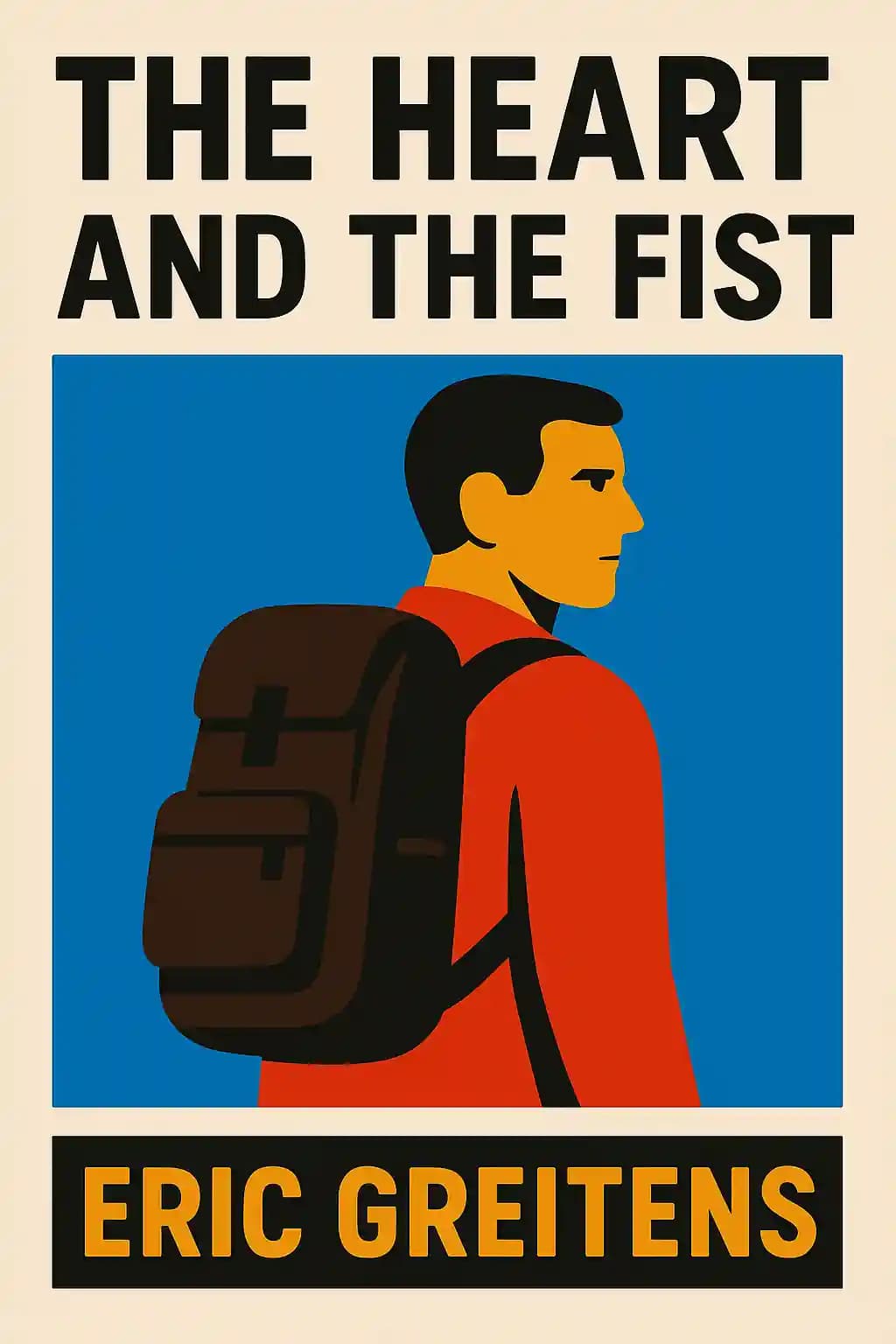
In the heart of Fallujah, as mortar rounds landed near our barracks and chlorine gas filled the air from a suicide truck bomb, I found myself covered in blood that wasn't mine. This moment would become one of countless tests that shaped my understanding of what it means to be both strong and good in a world that desperately needs both qualities. Eric Greitens' journey from humanitarian worker to Navy SEAL represents a rare synthesis of seemingly opposing values-compassion and courage, heart and fist-that offers profound wisdom for anyone seeking to make a meaningful impact in today's complex world.
"The Heart and the Fist" has resonated deeply with readers across the spectrum, from military leaders to humanitarian workers, becoming required reading in many leadership courses. The book has been praised by figures ranging from humanitarian Dr. Paul Farmer to former Secretary of Defense Robert Gates for its nuanced exploration of service and strength. In a cultural landscape often divided between those who emphasize compassion without strength and those who value strength without compassion, Greitens offers a compelling third way-one that has inspired thousands of wounded veterans through his nonprofit, The Mission Continues.
Глава 2
Frontlines of Humanitarian Crisis: Learning the Limits of Compassion
My journey began far from the battlefields where I would later serve. In Bosnia, I worked with refugee children who had fled ethnic cleansing, witnessing firsthand the devastating consequences when violence goes unchecked. At Puntizela refugee camp near Croatia's Adriatic coast, I organized soccer games and listened to horrific stories from families who had escaped Serbian death squads. One man showed me grenade scars while his children listened silently from the corner. During a camp party, frustrated teenagers smashed beer bottles on the floor, one explaining, "We drink this shit beer and party in this shit place."
The older teenagers struggled most-trapped between childhood and adulthood with no prospects for jobs, education, or marriage. I played chess with fifteen-year-old Denis who described everything as "shit" and avoided questions about his past or future. At Gasinci camp near Osijek, conditions were even harsher-prefabricated shelters in military-style rows, with artillery practice nearby. I witnessed the UN's powerlessness when Croatian soldiers shot puppies near the kindergarten and officials could only write a letter in protest.
This foreshadowed the 1995 Srebrenica massacre when UN peacekeepers stood by as Serbian forces murdered over 8,000 Bosnian men and boys. I realized then the profound limitation of good intentions without the capacity to protect the vulnerable. When a Bosnian woman confronted me on a train asking, "Why isn't America doing anything to stop the ethnic cleansing?" I had no answer.
Rwanda deepened this understanding. Arriving just a year after the genocide that claimed nearly a million lives in 100 days, I found a country still reeling from unimaginable horror. At Goma refugee camp, 1.2 million survivors packed an arid volcanic plain, facing cholera outbreaks, food scarcity, and continued violence. The camp lacked central organization despite numerous aid organizations being present. Most aid workers retreated to secured houses at night as the camp often turned violent.
One day, a Rwandan volunteer led me to a group of boys living under tarps. One had a severely infected ankle wound. When I carried him to a medical tent, nurses cleaned and bandaged his wound. His friends celebrated his return with singing and dancing, grateful for treatment they had previously been denied. The oldest boy, about sixteen, led this group of fifteen "unaccompanied" children, describing each as "powerful" in some way-with making fire, with singing, with the Zairian soldiers.
As I left Rwanda, I reflected on how the international community had watched the genocide without intervention. Only the military victory of the Rwandan Patriotic Front ended the killing. I had done some good, but knew I had far more to learn about what it truly means to help those in desperate circumstances.
Глава 3
Finding Strength Through Discipline: The Boxer's Education
Returning to Duke University after my experiences abroad, college life felt empty and artificial. I craved something real to test myself, something that would build the strength I now understood was necessary to protect the vulnerable. I found E.D. Mickle gym in a rough part of town, where I was initially the only white person training. My first sparring attempt was humiliating-my opponent toyed with me, landing punches at will while smiling. I returned daily despite the chuckles until gym manager Bob Pugh connected me with trainers Earl Blair and Derrick Humphrey.
Earl, a 66-year-old former Army man with farm-boy strength, became more than a coach-he was a teacher of life. "A coach makes you more skilled... but what's the point?" he explained. "You learn to fight, you can go fight in the street. I teach my boxers not just skills, but a way of living." We began each session with prayer, and Earl approached boxing with ritual solemnity. Unlike Duke's emphasis on reading and talking, Earl's teaching was demonstration-based: "Watch Derrick. Do as he does."
For Earl, every action had moral significance. Not washing your glove strings meant you didn't care about your equipment, which meant you didn't train properly, which meant you shouldn't be there. The gym silenced braggarts: "You got something to say? Say it in the ring." Earl carried painful memories of those he couldn't protect, like Beaver, his first student who was shot dead after winning a fight. This tragedy reinforced Earl's belief that strength must serve virtue-a boxer who hurt the weak was "less than a dog."
When our gym closed, we trained on North Carolina Central University's track, running through rain and snow, ignoring taunts from passersby. After three years, I prepared for the Golden Gloves tournament, cutting to exactly 156 pounds. Though I ended up "unopposed" in my weight class and received a trophy without fighting, Earl later arranged a sparring session with professional fighter Mo "Too Sweet." Despite Mo's experience, I landed solid punches, even knocking him back with a combination Earl had taught me.
That night, Earl called me to his house and presented me with a nameplate for my Golden Gloves trophy. After I pressed it into place, he told me to take it home, adding "See you tomorrow night if the Lord spares me." Through boxing, I learned that strength without purpose is hollow, but strength in service of protecting others gives meaning to power.
Глава 4
The Crucible of Character: Navy SEAL Training
At twenty-six, with the cutoff age of twenty-eight approaching, I made the decision to join the Navy SEALs. Despite having no childhood military aspirations, my experiences in Croatia and Rwanda showed me that sometimes talking, negotiating, and volunteering weren't enough. Protection required courage and action. The SEALs offered physical challenges, camaraderie, leadership opportunities, and a chance to serve my country.
Basic Underwater Demolition/SEAL training (BUD/S) is universally recognized as the world's hardest military training. The grueling six-month program pushes candidates to their physical and mental limits, with only about 10 percent graduating with their original class. Our first day began at 0500 on the beautiful beach with a four-mile soft sand run in boots and camouflage. The instructors' bullhorn announced, "It pays to be a winner"-a phrase we'd hear thousands of times.
My classmates defied Hollywood stereotypes of SEALs. They weren't flashy, just tough. Andrejus Babachinas from Lithuanian Special Forces could pull his 250-pound frame up a rope using only his arms. Drew Bolton, a logger's son from California, was both unbreakable and an Emerson enthusiast. Unlike the "diverse" but similarly-backgrounded elites at Oxford or Fortune 500 companies, these men came from truly varied backgrounds. They didn't see themselves as cosmopolitans or global citizens-just Americans.
Much of our training occurred in the combat training tank. One crucial test involved tying knots underwater at fifteen feet depth-a skill dating back to the original frogmen at Normandy. What seemed simple on land became enormously challenging underwater. The dangers were real. One classmate nearly drowned and suffered brain damage after losing consciousness underwater.
Drown-proofing tested our mental focus as much as physical ability. With hands tied behind our backs and feet bound together, we had to swim fifty meters, float for five minutes, and then "bob"-sinking to the bottom, pushing off, grabbing a quick breath at the surface, and repeating. We also had to perform underwater flips and retrieve a mask from the pool bottom using only our teeth. I learned that mental distractions were often more challenging than physical ones, and that absolute focus on the immediate task is essential during dangerous operations.
Глава 5
Hell Week: Finding the Limits of Human Endurance
Every Hell Week story follows the same pattern: A man enters a new world aiming to become something greater than he once was. He faces increasingly difficult tests, culminating in the hardest challenge of his life. By week's end, he emerges transformed, having either passed or failed.
We arrived at the base early, nervously waiting in packed tents on the beach. We shared food-protein bars, sports drinks, pizza, homemade cookies-knowing we'd burn 8,500 calories daily in the frigid water. When the Mark-43 weapon fire jolted me awake, I smiled-the wait was over. The test had begun.
We carried our hundred-pound inflatable boats on our heads as we ran through soft sand. As an officer at BUD/S with a white stripe painted on my helmet, I discovered that leadership actually made Hell Week easier. With my mind focused on my men-checking who was limping, who needed encouragement, who needed challenge-there was no room for self-pity.
The instructors tortured us with surf torture-standing chest-deep in frigid ocean water until we shivered uncontrollably. Then whistle drills had us crawling through sand until we warmed just past hypothermia, only to be sent back into the ocean. Men quit early, overwhelmed by fear rather than physical pain. We performed endless "up boat, down boat" drills, pressing our 100-pound inflatable boats overhead until our arms shook. This wasn't physical training but "spiritual training by physical means," with muscles that didn't just burn but seared with pain.
As the sun set on Monday, the instructors psychologically tortured us about the infamous Monday night ahead. "Say goodnight to the sun, gentlemen" they taunted, offering hot coffee and doughnuts to anyone who quit immediately. Something broke in our class-men began running to ring the bell. More quit at that moment than any other time in BUD/S training. The paradox was striking: after enduring countless physical challenges, the hardest thing was simply standing on the beach watching the sunset while fear of future suffering overwhelmed them.
As sleep deprivation intensified, instructors toyed with our deteriorating mental faculties. We played Simon Says and the Hokey Pokey, with instructors barking absurd threats. When I couldn't control my laughter, an instructor called me forward to perform "the best damn Hokey Pokey I've ever seen." I led the class through the motions, ending each turn with everyone shouting "AND THAT'S WHAT IT'S ALL ABOUT!" The greatest lesson was discovering that after five days without sleep, when we thought we could barely stand, we could still function as a team.
Friday morning, thinking we'd made it to the last day, we paddled to the notorious demo pits-a huge hole pumped full of seawater creating a muddy slurry. After more surf torture and pathetic attempts at pushups, we turned to find every instructor standing on the sand berm. The commanding officer called out, "BUD/S Class 237, you are secured from Hell Week!" After confirming it wasn't a trick, we erupted in celebration, shook hands with every instructor, and were rewarded with pizza and sports drinks-the most delicious meal of my life.
Глава 6
The Heart of Service: Finding Purpose in Helping Others
Between deployments as a SEAL, I continued humanitarian work that complemented my military service. In Bolivia, I volunteered at Mano Amiga, a home for street children run by an American couple. Unlike refugee children I'd worked with who had otherwise whole lives with loving parents to return to, many of Bolivia's street children had abuse woven into the fabric of their lives from birth.
Walking through Santa Cruz's poor neighborhoods, I encountered hovels pressed together like animals in a storm, with mud-caked walls and rusted steel roofs forming homes no bigger than one-car garages. Despite the squalor outside, I found immaculate interiors with carefully divided living spaces and religious icons on the walls.
At night, I joined American volunteers bringing bandages, hot tea, and bread to street children. These kids-some reading newspapers while huffing glue-accepted food slowly, their brains damaged by drugs, the light in their spirits barely flickering. Back at Mano Amiga, however, Caroline taught art alongside basic education, explaining: "It lets them see that there are beautiful things in the world, and that they can create them."
In Varanasi, India, I volunteered at Mother Teresa's Missionaries of Charity home for the destitute and dying. The sisters, who owned just three saris and a pair of sandals, performed the most difficult tasks with remarkable joy. Among the patients was a mentally disabled boy who could only say "namaste" and a recovering taxi driver who spent his days helping others.
This taxi driver embodied selfless generosity-when given a single cracker, he immediately split it in half to share with me, despite owning nothing, not even the clothes on his back. The sisters lived their faith through action rather than words. Their work showed me that self-righteousness often stems from self-doubt and self-hatred, while those who truly accept and love themselves have no need to criticize or compare others. Instead, they focus on loving their neighbors.
Глава 7
Warrior Diplomacy: Building Peace Through Strength
In Kenya, I learned that our greatest victories come when we win battles without fighting. As Sun Tzu wrote, "supreme excellence consists in breaking the enemy's resistance without fighting." I arrived as the new commander of Naval Special Warfare Task Unit Manda Bay, replacing a commander who'd damaged relations with locals, the Kenyan Navy, and his own men through an aggressive, isolationist approach that created barriers rather than bridges.
Kenya's strategic importance stemmed from the devastating 1998 embassy bombing that killed 224 people, ongoing terrorist activity seeping across the border from Somalia, and broader regional instability in the Horn of Africa. Our mission in Manda Bay was multifaceted: to work alongside Kenyan forces for counterterror training and operations, while pursuing not outright military victory but rather "persistent strategic progress" in the fight against terrorism through sustainable partnerships.
We built strategic progress through multiple carefully coordinated avenues. We trained Kenyan naval forces in advanced maritime interdiction techniques, teaching them to track suspect craft using both traditional methods and modern technology. We helped them develop effective team combat tactics and enhanced their special operations capabilities. Our teams conducted special reconnaissance missions in previously inaccessible areas along the coast and inland, gathering crucial intelligence while building trust with local communities. We established meaningful relationships with local mayors, village elders, and community leaders, creating networks of cooperation that proved invaluable for regional security.
Every morning I maintained a personal routine of running along a road frequented by baboons and local schoolchildren. The kids would call "Mzungu, mzungu" (white man) and join me for stretches of my run - a simple act that humanized our presence and built genuine connections with the community. These informal interactions proved as valuable as formal meetings in building trust.
Despite our military's typically risk-averse "force protection" mindset that often kept personnel isolated behind base walls, I initiated regular visits to the local village markets. Using my own money, our team would buy fresh fruit and local goods, engaging in casual conversation with vendors and residents. This simple act transformed how villagers perceived us - no longer just anonymous men in vehicles with sunglasses and rifles, but real people with families and stories. As George Marshall wisely noted: "Never fight unless you have to, never fight alone, never fight for long." Building friends and allies proved to be the most effective force protection and the key to lasting success.
In Southeast Asia, our mission exemplified this dual approach of military capability and diplomatic engagement. We visited remote ports in Borneo that had never before hosted American naval vessels, continuing the proud tradition of the Navy serving as "one part war machine, one part diplomatic mission." Through port calls, joint exercises, and community engagement, we demonstrated both strength and friendship. As Theodore Roosevelt once observed, "A good Navy is not a provocation to war. It is the surest guaranty of peace." Our experiences proved that military power, when combined with genuine diplomatic engagement, creates the most effective path to lasting security and peace.
Глава 8
The Ultimate Test: Combat and Its Aftermath
In March 2007, I arrived in Iraq three and a half years after the American invasion, witnessing the beginning of General Petraeus's surge strategy. The reality was stark and immediate: Americans could never control Iraq alone without Iraqi involvement. We didn't speak Arabic or understand the nuanced cultural dynamics, and controlling a country the size of California with 28 million people was impossible without local allies. The complexities of tribal relationships, religious divisions, and historical grievances made every interaction a potential diplomatic incident.
Patrolling Fallujah's industrial sector was a nerve-wracking experience that engaged all senses. The streets were covered in trash and dog feces, with the acrid smell of burning plastic mixing with the sweet-sour stench of rotting garbage. We faced constant threats - from hidden IEDs to rooftop snipers to seemingly innocent vehicles that could be packed with explosives. During one particularly tense patrol, we received news of two Iraqi soldiers killed by an IED on Route Michigan, followed within hours by a grenade attack on our sister column that left three Marines wounded. The Iraqi troops required constant supervision and correction - they bunched together creating easy targets, failed to watch their sectors properly, and sometimes carelessly pointed weapons at each other during moments of confusion. Yet despite their tactical weaknesses, they possessed invaluable cultural intelligence, able to read Iraqi households and communicate with locals in ways Americans never could. They could spot out-of-place details: whose cousin belonged where, which shops should be open or closed, and when something just didn't feel right.
After each patrol, we followed a ritual that became almost sacred: cleaning our weapons meticulously, conducting detailed debriefings to learn from the day's events, and sharing simple meals with our Iraqi counterparts. These meals - usually consisting of cucumbers, tomatoes, beans and lamb soup served on worn plastic tables - became a bridge between cultures. Despite bone-deep exhaustion and significant language barriers, breaking bread together seemed to repair the day's tensions and remind us of our shared humanity. That final night in the city, as I lay on my cot reviewing the day's events, I had no idea that an Iraqi man was already gathering materials and planning his suicide attack against our position before morning.
Three weeks after returning home to apparent safety, I received the news that shattered my world: Travis Manion had been killed in Fallujah. The memory hit me like a physical blow - Travis had been the first to join me on the roof during the truck bombing months earlier, telling me with characteristic steadiness, "I got your back, sir" when I had to leave with the wounded. His death forced me to confront the ongoing cost of war and the permanent bonds forged in combat. After meeting with the Manion family in their time of grief, I came to a profound realization: the military principle of "take care of your people" shouldn't end when deployment does. This responsibility extends far beyond the battlefield, encompassing the families left behind and the long-term welfare of those who served alongside us.
Глава 9
The Mission Continues: Finding Purpose Through Service
At Bethesda Naval Hospital, I visited wounded servicemen, including a Marine who'd lost both legs but maintained his spirit, wanting to help other wounded Marines recover. Another injured Marine expressed interest in becoming a teacher. These encounters revealed a crucial insight-beyond hearing "thank you," these veterans needed to hear "we still need you." They needed to be seen not as problems but as assets, not as weak but as strong.
I founded The Mission Continues with my combat pay and contributions from friends' disability checks. Our mission: to offer fellowships for wounded veterans to serve at nonprofit organizations, providing stipends, mentors, and most importantly, the challenge to rebuild meaningful lives through continued service. Our first fellow, Chris Marvin, who had been severely injured in a Black Hawk crash in Afghanistan, went on to lead service projects and help other wounded veterans. Our second fellow, Mathew Trotter, a Navy veteran with debilitating injuries who had been labeled "unserviceable," found new purpose working with disabled children at an equitherapy center.
I've learned that courage and compassion are two sides of the same coin-every warrior, humanitarian, and citizen must be both good and strong. Life's meaning comes through our work, relationships, and how we face unavoidable suffering. Recently while on reserve duty at Special Operations Command, another SEAL and I found ourselves at a memorial wall, touching the names of our fallen classmates. We stood in humble gratitude for having known worthy people and for the gift of continued life.
Life is short and uncertain, but we have today and each other. For each of us, there is a place on the frontlines where our unique combination of strength and compassion can make a difference. The question is not whether we are called to serve, but how we will answer that call with both heart and fist.