Глава 1
The Digital Prison We Choose: How Personalization Shapes Our Reality
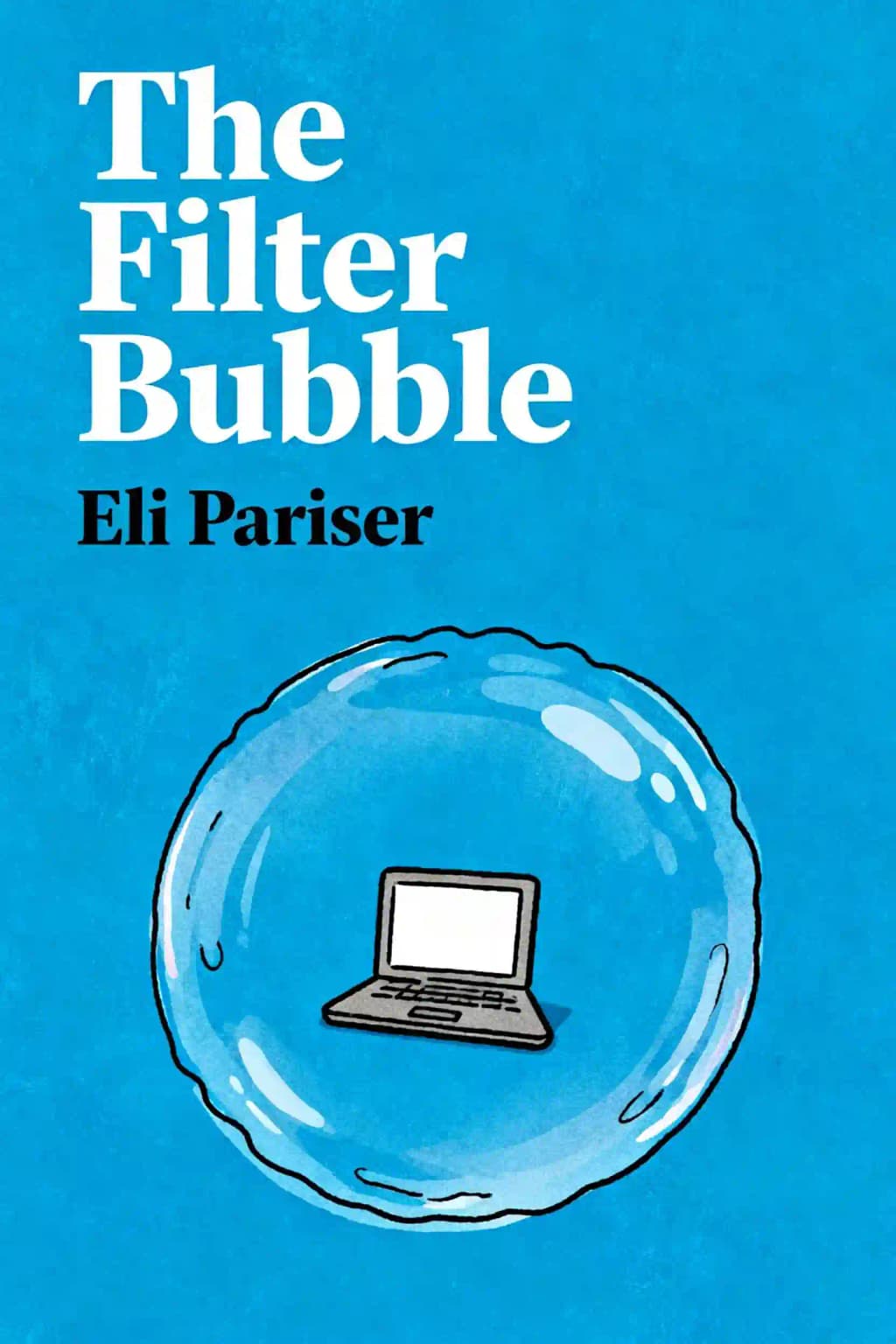
When two friends searched for "BP" during the 2010 Deepwater Horizon oil spill, one saw investment information while the other saw environmental disaster news. The difference? Over 40 million results. This wasn't a glitch-it was Google's personalization algorithm at work, silently curating different realities for each user. In his groundbreaking book "The Filter Bubble," Eli Pariser exposed this hidden transformation of the internet that has since become even more pervasive. Time magazine named it one of the best books of 2011, and Mark Zuckerberg reportedly asked all Facebook executives to read it as the company grappled with its growing influence. The book's warnings about algorithmic curation have proven prophetic, with tech ethicists, psychologists, and political scientists regularly citing Pariser's work when examining how personalization technologies have reshaped our society, politics, and minds.
Глава 2
The Invisible Editors Shaping Your Reality
Few noticed Google's December 4, 2009 blog post announcing "Personalized search for everyone," but search expert Danny Sullivan recognized it as "the biggest change that has ever happened in search engines." Google would now use fifty-seven signals-from location and browser type to search history-to customize results for each user, even when logged out. This invisible personalization extends far beyond Google to nearly every major website.
The race to know everything about users has become the central battle for internet giants. Free services like Gmail and Facebook are actually sophisticated extraction engines for our most intimate details. Your iPhone tracks your movements, communications, and reading habits. Data brokers like Acxiom have accumulated around 1,500 pieces of information on nearly every American. Every click is now a commodity that can be auctioned to commercial bidders within microseconds.
Personalization is the core strategy for major websites. Amazon's product recommendations, Netflix's movie suggestions, and Google's search predictions are just the beginning. Facebook COO Sheryl Sandberg predicted that non-customized websites would soon seem quaint, while Google's CEO aimed to "tell users what they should be doing next."
This personalization creates what I call a "filter bubble"-a unique universe of information for each person that fundamentally alters how we encounter ideas. The filter bubble introduces three unprecedented dynamics: you're alone in it (unlike shared media experiences), it's invisible (you don't know why you see what you see), and you don't choose to enter it (unlike deliberately selecting Fox News or The Nation).
As we're overwhelmed by information-900,000 blog posts, 50 million tweets, 60 million Facebook updates daily-personalized filters seem helpful, promising a custom-tailored world. But this convenience comes at significant personal and cultural costs. Like an unhealthy information diet, filter bubbles serve "invisible autopropaganda" that indoctrinates us with our own ideas, reduces serendipitous encounters that spark creativity, enables companies to make consequential decisions about us without our knowledge, and undermines the "bridging capital" that connects diverse groups.
Глава 3
The Architects of Relevance
The race for relevance began in the mid-1990s when Nicholas Negroponte envisioned intelligent agents as the solution to information overflow-personalized digital butlers that would filter content to match individual preferences, creating what he called "the Daily Me." Meanwhile, Jaron Lanier warned these agents would present "cartoon versions" of the world and likely have divided loyalties between users and advertisers.
Though early intelligent agent products failed spectacularly, their underlying concept survived. Today, these agents exist invisibly, working beneath every website we visit, growing smarter by accumulating information about our interests. As Lanier predicted, they don't work solely for us-they also serve the companies that deploy them.
Jeff Bezos pioneered profitable personalization at Amazon by recreating the small bookseller experience online-someone who knows your tastes and makes recommendations. Books proved ideal for Amazon's first venture: the industry was decentralized, people were comfortable buying books remotely, and physical stores couldn't possibly stock all 3 million titles available in 1994.
Amazon built its recommendation engine on collaborative filtering techniques developed at Xerox PARC, tracking user behavior to make increasingly refined suggestions. As more people bought books, the system grew smarter. By 2001, Amazon had reported its first quarterly profit, proving personalization's commercial viability.
Amazon's hunger for user data is insatiable-they track how Kindle users read books, which phrases they highlight, and which pages they turn. Publishers can now pay for algorithmic promotion, making it impossible for most customers to distinguish paid recommendations from genuine ones.
While Amazon was taking off, Larry Page and Sergey Brin were developing PageRank at Stanford, treating links between webpages as "votes" to determine relevance. Initially housed at google.stanford.edu, the founders believed search engines should be nonprofit and ad-free, arguing that advertising would bias results away from consumers' needs. But when their beta site launched, traffic skyrocketed-Google simply worked better than any competitor, making commercialization irresistible.
Though PageRank dominates Google's origin story, what Brin and Page truly discovered was that relevance required massive data collection. They tracked everything: link positions, page age, and especially user behavior. When someone searches and clicks the second result instead of the first, that "click signal" votes for the second link's relevance. Google became voracious about data, storing every webpage and every user click.
Глава 4
The Hidden Data Market Behind Your Screen
In the aftermath of 9/11, help in tracking accomplices came from an unexpected source: Acxiom, a data broker with five acres of servers in Conway, Arkansas. Within hours of the FBI releasing the hijackers' names, Acxiom discovered it knew more about eleven of the nineteen perpetrators than the entire U.S. government-including addresses and housemates.
Acxiom maintains profiles on 96% of American households and half a billion people worldwide, tracking roughly 1,500 data points per person-from family members and addresses to medication usage and pet ownership. Despite its deliberately low profile, it serves America's largest companies.
The modern data market enables "behavioral retargeting"-where your online behavior becomes a commodity. When you search for flights on Kayak, a cookie tracks your interest, and Kayak can sell this data to brokers like Acxiom or BlueKai, who auction it to advertisers. This explains why products you browse follow you across websites.
Mobile location services extend this personalization to physical spaces, enabling stores to recognize repeat customers through their phones. Companies like TargusInfo process "62 billion real-time attributes yearly" while Rubicon Project claims a database of over half a billion internet users.
This integration means your online behavior is shared between businesses, allowing sites to whisper about you behind your back. At Microsoft's Social Graph Symposium, data executives discussed how advertisers no longer need premium publishers to reach premium audiences-they can now track those readers anywhere online. Publishers who once received most advertising dollars now get just 20 cents of each dollar, with data brokers capturing the difference.
This fundamental shift threatens the traditional news business model, already devastated by Craigslist's free classifieds, measurable online advertising revealing inefficiencies, and free content from bloggers. Unless newspapers reinvent themselves as behavioral data companies, they face extinction in the personalized, filter-bubble world.
Глава 5
When Algorithms Decide What's News
News provides our shared understanding of societal problems-the foundation of democratic action. As Walter Lippmann noted, democracy requires "a steady supply of trustworthy and relevant news" to avoid "incompetence, corruption, and ultimate disaster."
Though most Americans get news from television, newspaper journalists create most original reporting. Even in 2010, 99% of stories linked by blogs came from newspapers and broadcasters, with the New York Times and Washington Post alone accounting for nearly half of all blog links.
But this landscape is rapidly changing as internet forces transform news production. Three key trends are emerging: media production and distribution costs are approaching zero; overwhelming choice creates "attention crash," making content curators increasingly important; and since professional editors are expensive while code is cheap, we'll increasingly rely on non-professional curators (friends) and personalization algorithms rather than traditional editors.
The concept of "public opinion" emerged only in the mid-1700s when politics expanded beyond palace walls. The printing press revolutionized information sharing by creating the possibility of a general audience, allowing complex ideas to spread with precision across distances. American colonies developed newspapers at unprecedented rates, providing common language for dissent.
After World War I, Walter Lippmann criticized newspapers for becoming propaganda tools, arguing that private media standards threatened democracy. He concluded public opinion was too malleable and advocated governance by expert insiders. John Dewey countered that while Lippmann's critiques had merit, abandoning democratic ideals wasn't the solution. Dewey believed journalists could cultivate citizenship by reminding people of their stake in society.
Despite their differences, both agreed news-making was fundamentally political and ethical. This led to the separation of business and reporting in newspapers, establishing the ethical model of objective reporting that has guided journalism for half a century-however imperfectly implemented.
Глава 6
The Myth of Disintermediation
The 2000s have been called the "disintermediation decade"-a time when the internet supposedly eliminated middlemen across industries. This narrative suggests we've moved from newspaper editors deciding what we should think to direct access to information sources, promising a more democratic and efficient flow of information. The initial excitement around blogs, social media, and citizen journalism seemed to confirm this transformation.
But this story of efficiency and democracy obscures a crucial truth: disintermediation is largely mythology. As law professor Tim Wu notes, "The rise of networking did not eliminate intermediaries, but rather changed who they are." We've simply replaced old gatekeepers with new ones-craigslist, Amazon, Google, and Facebook-platforms wielding immense power that has received little scrutiny compared to traditional media. These tech giants now control not just what we see, but how we see it, through complex algorithms and content moderation policies that remain largely opaque to the public.
Google News exemplifies this shift. Launched after 9/11 to monitor global coverage, it's now among the top news portals worldwide, processing over 50,000 news sources in multiple languages. While Google's Krishna Bharat suggests journalists should focus on content creation while technology handles distribution through personalization, the system remains a hybrid model. Traditional editorial judgment still matters-what newspapers choose to cover and where they place stories significantly influences Google News rankings. The algorithm heavily weights factors like publication authority, article freshness, and geographic relevance, creating a new form of editorial control.
At Gawker Media's SoHo offices, a flat-screen TV called "The Big Board" hovers over the newsroom, displaying article titles and their view counts in real-time. Writers who make the board might get raises; those consistently absent may lose their jobs. This metrics-driven approach represents one extreme of modern digital journalism, where success is measured in clicks and shares. This contrasts sharply with the New York Times, where reporters are deliberately shielded from their traffic statistics. Times editor Bill Keller explains: "We don't let metrics dictate our assignments and play because we believe readers come to us for our judgment, not the judgment of the crowd."
The tension between these approaches reflects a broader struggle in digital media: balancing traditional journalistic values with the demands of online engagement. Even as new intermediaries emerge, the fundamental questions about who controls information flow, and how that control shapes public discourse, remain as relevant as ever. The promise of disintermediation has given way to a more complex reality where new gatekeepers exercise different but equally significant forms of control over what we read, watch, and discuss.
Глава 7
The Adderall Society: How Personalization Narrows Our Minds
Just as Adderall narrows focus at the expense of creativity, personalized filters promote an intense, narrow concentration that limits serendipitous discovery. The drug allows overscheduled students to focus for hours on single tasks by increasing norepinephrine levels and reducing sensitivity to new stimuli. Similarly, personalized filters create an information environment that pushes us toward hyperfocus and away from the creative juxtapositions that drive innovation.
While perfect relevance might seem ideal, creativity requires the collision of distant ideas-what Arthur Koestler called "bisociation." The filter bubble artificially constrains our "solution horizon," the mental space where we search for answers, while encouraging passive consumption rather than active exploration. When your digital doorstep is already crowded with seemingly perfect content, there's little motivation to venture further into the unknown.
Steven Johnson argues that creative environments rely on "liquid networks" where diverse ideas can collide in unexpected ways. The early web was perfect for this-a place of exploration and serendipity. But the filter bubble has fundamentally changed this dynamic. While the old web encouraged divergent thinking and discovery, personalization emphasizes convergent thinking-finding exactly what we already know we want.
For centuries, European maps depicted California as an island despite mounting evidence to the contrary. This cartographic error persisted partly because maps had no symbol for "don't know"-blurring speculation with verified fact. This illustrates how personalized filters distort our mental maps of information. Traditional media provided some sense of representativeness-even skipping articles, you'd notice headlines about events outside your interests. But in the filter bubble, you don't even glimpse what doesn't interest you. Without a "zoom out" function, it's easy to believe your world is a narrow island rather than an immense continent.
Глава 8
The You Loop: When Algorithms Define Your Identity
Mark Zuckerberg believes we each have "one identity"-a view that shapes Facebook's approach to personalization. While traditional internet culture celebrated anonymity and identity fluidity, today's web increasingly demands real identities. Companies like PeekYou, Phorm, and BlueCava are working to deanonymize online activity.
This shift creates a new dynamic: our identity shapes our media, but media also shapes our identity, potentially creating self-fulfilling identities where the internet's distorted picture becomes who we really are. Different personalization systems rely on dramatically different theories of identity. Google's filtering primarily uses your private click history to determine who you are-"you are what you click." Facebook, meanwhile, bases personalization on what you share publicly-"you are what you share."
Both approaches fail to capture human complexity. We don't have "one identity" as Zuckerberg claims-psychologists call this misconception "fundamental attribution error." Our characteristics are fluid and context-dependent, as Stanley Milgram's experiments demonstrated. Privacy helps us maintain necessary separations between our different selves.
Personalization is evolving from simple product recommendations to sophisticated "persuasion profiling" that identifies which types of arguments influence you most effectively. Stanford researcher Dean Eckles found that people respond differently to various persuasion styles-some trust expert reviews, others prefer popularity metrics, deals, or familiar brands. By eliminating persuasion approaches that don't work for specific individuals, marketing effectiveness can increase 30-40%.
Unlike product preferences, these persuasion profiles transfer across different domains-someone responsive to urgent discount offers for travel will likely respond similarly for electronics. This makes persuasion profiles extremely valuable to companies. Combined with "sentiment analysis" that detects your mood, companies could target you when you're most susceptible, like compulsive shoppers when they're stressed or drunk.
Глава 9
When Democracy Disappears from Your Feed
Modern political marketing has adopted business philosophy focused on driving loyalty rather than building consensus. This approach aligns with what Professor Ron Inglehart calls "postmaterialism"-when basic needs are met, people prioritize self-expression and identity over material concerns. In postmaterial societies, voters increasingly evaluate candidates based on whether they represent an aspirational version of themselves.
This leads to political brand fragmentation similar to what happened with Pabst Blue Ribbon beer. PBR simultaneously represents authentic working-class values to some drinkers, ironic hipster culture to others, and luxury to wealthy Chinese consumers. Similarly, politicians like Obama become "blank screens" on which different constituencies project their values.
When George W. Bush underperformed in the 2000 election, Karl Rove launched microtargeting experiments in Georgia, analyzing consumer preferences to predict voting behavior and identify persuadable voters. These methods reportedly became central to Republican get-out-the-vote strategies. On the left, firms like Catalist built databases of voter profiles to help progressive groups target their outreach. The trend is clear: we're moving from swing states to swing voters.
By 2016, this could create a scenario where only certain voters experience campaigns intensely. If data suggests you're persuadable, you'll be bombarded with messages. If you're a reliable partisan or unengaged voter, campaigns might ignore you entirely, and your personalized news feeds would reflect your other interests instead of election coverage.
This personalized political targeting makes public discourse increasingly difficult. Campaigns can microtarget messages to specific demographic slices without accountability, making it harder for journalists to monitor claims or for opponents to respond to attacks. Unlike broadcast-era political ads that established common parameters for debate, personalized politics fragments the national conversation about our collective future.
Глава 10
The Future Is Already Here: When Reality Itself Gets Personalized
The economics driving personalization are becoming increasingly compelling as the cost of collecting and processing personal data plummets. Signals about our behavior - from location data and browsing history to biometric information and social connections - are now gathered continuously through smartphones, wearables, and IoT devices. The computing power needed to analyze these vast data streams grows more affordable each year, following Moore's Law, while machine learning algorithms become more sophisticated.
Facial recognition technology exemplifies this rapid advancement. Police departments now use $3,000 iPhone apps to identify suspects in real-time, while consumer applications like Google Photos can find images of specific individuals with 95% accuracy using just 14 reference photos. Facebook's DeepFace algorithm achieves human-level accuracy in facial recognition across millions of photos. This technology is already disrupting fundamental cultural assumptions about privacy and anonymity in public spaces. In China, facial recognition is used for everything from paying for groceries to tracking citizen movements, offering a preview of possible futures elsewhere.
The future of personalization extends far beyond content recommendations to reshape the very architecture of our online environments. Web site morphing, pioneered by MIT's John Hauser, uses sophisticated algorithms to analyze users' clicking patterns, navigation preferences, and interaction styles. The system then automatically adjusts layout, imagery, and information density to match each user's cognitive style. Studies show this can increase purchase intentions by 21% and conversion rates by up to 40%. However, this creates an uncanny digital world that constantly rearranges itself behind our backs, making shared experiences and common reference points increasingly rare.
Augmented reality technologies are rapidly moving from specialized industrial applications to mainstream consumer use. Yelp's Monocle feature overlays restaurant ratings and reviews when viewing storefronts through smartphone cameras. Advanced noise-canceling headphones like the Bose NC 700 can selectively amplify human voices while blocking background noise. Sports stadiums use AR to overlay real-time statistics, replay angles, and player data for fans. DARPA's revolutionary augmented cognition research employs real-time brain imaging to optimize information delivery, with clinical trials showing 100% improvement in recall and a stunning 500% increase in working memory capacity.
These technologies are converging to enable unprecedented personalization of physical reality itself. OkCupid co-founder Chris Coyne envisions a near future where AR glasses could instantly identify compatible romantic matches in social spaces, overlaying compatibility scores and shared interests. While this technology offers transformative potential for professionals like surgeons accessing patient data during procedures or soldiers maintaining situational awareness in combat, it also heralds what some call "the end of naive empiricism" - a world where objective, shared reality becomes increasingly filtered through personalized technological lenses that may be difficult or impossible to escape.
The social implications are profound: as our individual realities become more personalized, our collective experience fragments. This could accelerate political polarization, weaken social cohesion, and make it harder to maintain the shared understanding necessary for democratic discourse and cultural continuity.
Глава 11
Breaking Free: How to Escape Your Filter Bubble
Architect Christopher Alexander's influential 1975 work "A Pattern Language" explored why some spaces thrive while others fail. Alexander contrasted two city models: the "heterogeneous city" where diversity is uniform throughout, and the "city of ghettos" where people are trapped in isolated subcultures. His ideal alternative-the "mosaic of subcultures"-features distinct but accessible neighborhoods where people can find communities that support their identities while still exploring others.
This framework applies perfectly to the Internet. Online communities are vital incubators for new ideas and identities, but excessive personalization risks creating isolated information ghettos. We need digital urban planners who balance relevance with serendipity, familiarity with novelty, and cozy niches with open spaces.
To combat the "psychological equivalent of obesity" we must first stop being predictable as mice. Most of us follow mouselike patterns online, visiting the same few websites repeatedly. By varying our paths and stretching our interests in new directions, we give personalizing algorithms more breadth to work with and enlarge our worldview.
Companies should recognize their public responsibilities. Transparency is essential-they need to make their filtering systems visible to enable meaningful discussion about their impact. They should let users see who these sites think they are and download their complete data. Algorithms should be designed to disprove their assumptions about users rather than reinforcing identity loops.
While companies can mitigate personalization's negative effects, some problems are too important to leave to profit-seeking entities. The best approach centers on giving users real control over personal information. Personal data should be treated as property with corresponding rights. The current system disadvantages consumers who can't calculate the true value of their data, especially when companies reserve the right to change privacy policies retroactively.
The Internet theoretically offers unprecedented potential for understanding and managing our world collectively. Yet as Tim Berners-Lee warns, this potential is threatened as successful platforms "wall off information" and governments monitor online behavior, potentially breaking the Web into "fragmented islands." Though services like Pandora, Netflix, and Google offer genuine benefits, what's troubling about this shift is its invisibility and our resulting lack of control. Technology designed to give us more control is actually taking it away.