Глава 1
When Truth Dies: Democracy's Final Warning Bell
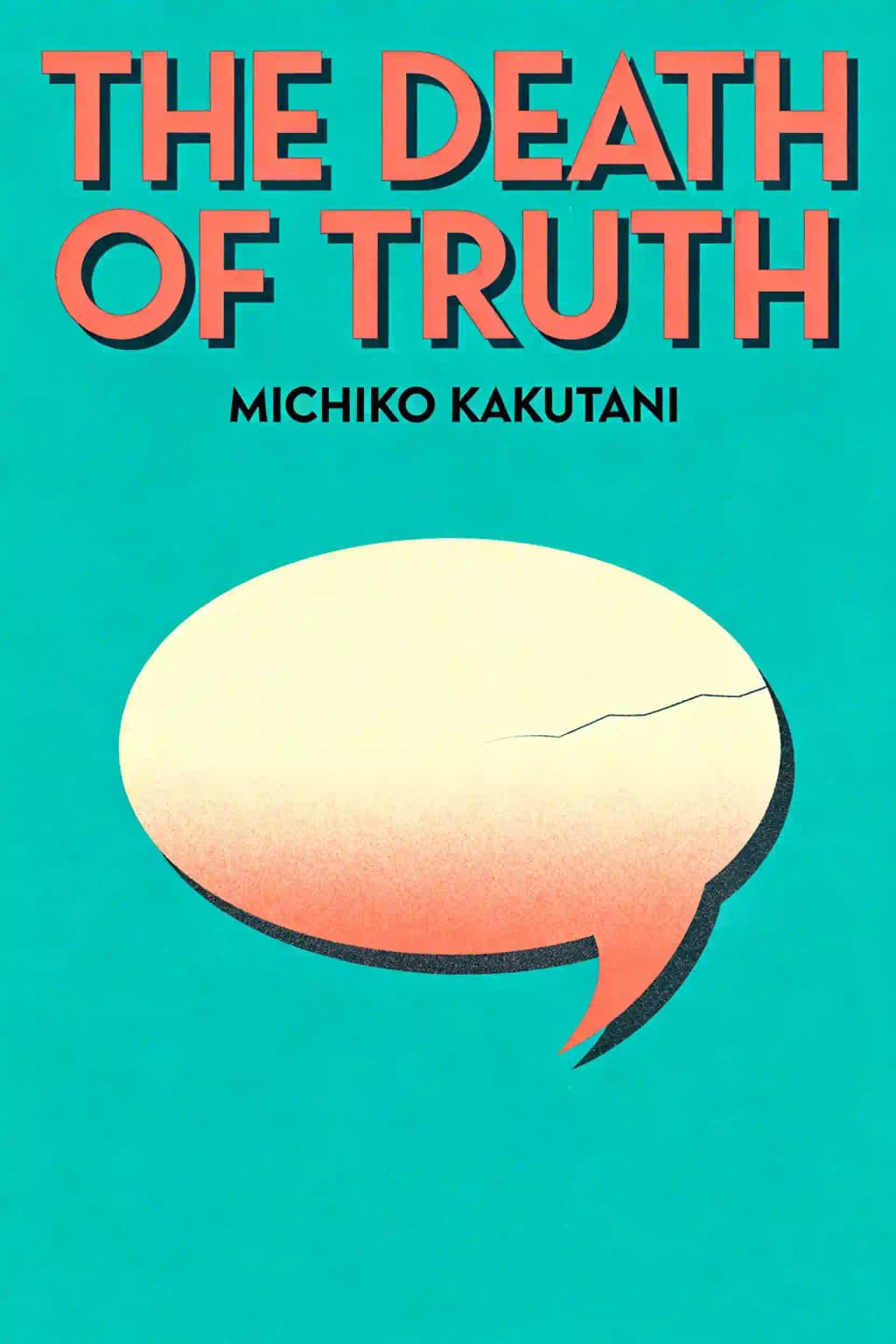
What happens when facts no longer matter? When a society can no longer distinguish between truth and lies? Michiko Kakutani's "The Death of Truth" couldn't be more timely or urgent. This New York Times bestseller has become required reading in university political science departments and sparked intense debate among public intellectuals like Noam Chomsky and Francis Fukuyama. The book traces how we arrived at our post-truth reality, connecting historical patterns of totalitarianism with contemporary developments in media, technology, and politics. Former President Obama cited it as one of the works that helped him understand America's political fracturing, while celebrities from Meryl Streep to LeBron James have recommended it for its clear-eyed diagnosis of our cultural crisis. As fake news and alternative facts dominate headlines, Kakutani's warning resonates: when truth dies, democracy follows close behind.
Глава 2
The Totalitarian Playbook: History's Darkest Warning
History's most monstrous regimes-Nazi Germany and Soviet Russia-rose to power through the systematic destruction of truth. Hannah Arendt observed that totalitarianism thrives where distinctions between fact and fiction no longer exist, creating a world where people become susceptible to lies and false promises. While our current situation isn't directly analogous to those horrors, similar warning signs have emerged: widespread disregard for facts, emotional reasoning displacing logic, and corrupted language diminishing truth's value.
Abraham Lincoln warned in 1838 that America's greatest threats would come from within-from the abandonment of "cold, calculating, unimpassioned reason" in favor of mob rule and demagoguery. The founders established our republic on Enlightenment principles precisely to guard against unprincipled populists who might "throw things into confusion" to "direct the whirlwind." Though imperfect, this system has endured for over two centuries, with leaders viewing America as a work in progress constantly perfecting itself through dedicated struggle.
Running counter to this optimistic vision has always been what Philip Roth called "the indigenous American berserk"-an irrational strain in our politics that historian Richard Hofstadter famously described as "the paranoid style." This mindset, characterized by "heated exaggeration, suspiciousness, and conspiratorial fantasy," emerges in "episodic waves" throughout American history. The Know-Nothing Party peaked in 1855 before quickly dissipating, while McCarthyism eventually met its match when Army lawyer Joseph Welch famously asked, "Have you no sense of decency?"
Today's resurgence of the paranoid style has been fueled by legitimate grievances-changing demographics, growing income inequality, and economic disruption from globalization and technology. Rather than addressing these complex challenges, demagogues offer scapegoats and simplistic solutions. As William Butler Yeats warned in "The Second Coming," a poem experiencing renewed popularity: "Things fall apart; the centre cannot hold; / Mere anarchy is loosed upon the world."
Глава 3
The Mainstreaming of Extremism
The assault on truth that reached fever pitch during Trump's presidency had been incubating for years on the political fringes. Clinton conspiracy theorists and Tea Party activists merged with Breitbart bloggers and alt-right trolls, gradually pushing extremist views-racial intolerance, government hatred, and embrace of misinformation-into the mainstream.
The consequences are stark: a 2017 Washington Post survey revealed that 47 percent of Republicans erroneously believed Trump won the popular vote and 68 percent believed millions voted illegally. Over half would accept postponing the 2020 election to address these imaginary problems. University of Chicago research found that 25 percent of Americans believed the 2008 financial crash was orchestrated by bankers, while 19 percent thought the government was involved in 9/11.
Trump's administration embodied anti-Enlightenment principles-rejecting rationalism, tolerance, and empiricism. He made no effort to rectify his policy ignorance after taking office, preferring information from Fox News, Breitbart, and the National Enquirer over intelligence briefings. According to Steve Bannon, Trump "reads to reinforce" existing beliefs and resisted intelligence about Russian election interference. His self-proclaimed approach-"I'm the only one that matters" in policymaking-created an administration that frequently ignored cabinet members and agencies.
This dysfunction validated his supporters' distrust of Washington while widening the disconnect between public opinion and government policy. Despite overwhelming public support for background checks (90%), DACA protection (87%), and net neutrality (83%), these policies remained blocked or reversed. The Trump White House prioritized loyalty over competence throughout government, appointing unqualified judges and agency heads while sidelining experts who raised inconvenient questions about climate change, fiscal policy, or national security.
Stefan Zweig's 1942 memoir offers a harrowing parallel of how quickly "the rule of raison" can give way to "terror and mass emotion." He described how people were slow to recognize Hitler's danger, with newspapers reassuring readers the Nazi movement would collapse, while ominous signs accumulated. The Nazis carefully implemented their agenda gradually-"only a small pill at a time"-while people couldn't believe how rapidly their freedoms were disappearing.
Глава 4
When Postmodernism Meets Politics
In a strange twist of intellectual history, the populist Right has appropriated postmodernist arguments once associated with the academic Left. Even alt-right troll Mike Cernovich invoked postmodernism, saying, "If everything is a narrative, then we need alternatives to the dominant narrative." This unlikely marriage has profound implications for our public discourse.
Since the 1960s, there's been a growing loss of faith in institutions and official narratives. While some skepticism served as necessary correction to historical injustices and governmental failures, the internet's democratization of information has led to both innovation and a cascade of misinformation and relativism.
Postmodernist theories-which deny objective reality existing independently from human perception and view knowledge as filtered through prisms of class, race, and gender-have migrated from academia to mainstream culture. While postmodernism proved emancipating in arts and literature, its application to social sciences and history created profound philosophical implications. By rejecting objective reality and emphasizing subjectivity, postmodernism dismissed consensus, linear historical narratives, and universal meta-narratives-whether Enlightenment ideals, Christian redemption, or Marxist utopianism.
The culture wars of the 1980s and 1990s have mutated in unexpected ways. After 9/11 and the 2008 financial crisis, these debates seemed to be waning, with many Americans believing the country was set on a progressive path. However, this optimism proved premature. The hard-core Republican base mobilized against Obama, and Trump exploited partisan divides by appealing to white working-class fears while providing scapegoats.
Postmodernism's academic ideas about the relativity of truth have had dangerous real-world consequences. While multiculturalism valuably opened historical narratives to previously marginalized voices, radical postmodernists argued that knowledge is merely ideological construction serving particular interests. Science too came under attack as "socially constructed," paving the way for today's anti-vaxxers and climate deniers. As Orwell presciently warned in 1943, abandoning the idea that history can be truthfully written creates a path for totalitarian leaders to dictate what's to be believed.
Глава 5
The Narcissism Epidemic
The 1970s saw the emergence of what Christopher Lasch called "the culture of narcissism" and Tom Wolfe dubbed the "Me Decade." While Lasch viewed narcissism as a defensive reaction to social instability, Wolfe saw it as a hedonistic class liberation enabled by postwar prosperity. This self-absorption persisted into the "selfie age," accelerated by social media's celebration of what Tim Wu called "the preening self."
With this embrace of subjectivity came the diminution of objective truth, as feelings trumped facts. When asked about his net worth, Trump claimed it fluctuated with his "feelings" and "general attitude." Similarly, when confronted with FBI crime statistics contradicting his dark portrayal of America, Newt Gingrich dismissed them, stating, "As a political candidate, I'll go with how people feel and I'll let you go with the theoreticians."
De Tocqueville noted Americans' tendency to withdraw into small private societies and focus on self-pursuits at the expense of civic responsibility. He worried this self-absorption would diminish duty to the larger community, enabling a soft despotism where citizens become "a flock of timid and industrious animals" with government as "shepherd." By mid-twentieth century, self-fulfillment doctrines exploded in both counterculture and establishment, with influential figures like Norman Vincent Peale and Ayn Rand promoting self-realization. Trump admired both-internalizing Peale's teachings that "optimistic thought patterns" could overcome facts, and resonating with Rand's view that "selfishness is a moral imperative."
Personal testimony became fashionable in academia as objective truth fell out of favor. Scholars began prefacing papers with their own "positioning"-race, gender, background-that might inform their analysis. Some wrote full academic autobiographies, with the trend spreading through feminist consciousness-raising, multicultural studies, and queer theory.
The postmodernist argument that all truths are partial has been exploited by those promoting debunked theories. Climate deniers, anti-vaxxers and other groups without scientific backing use phrases like "many sides," "different perspectives," and "uncertainties"-language reminiscent of college deconstruction classes. Media outlets often enable this by confusing balance with accuracy, giving minority views undue credibility.
Глава 6
Reality Distortion Field
In an era where "surreal" and "chaos" have become journalistic staples, Trump's presidency represents the climax of reality's warping. This disorientation traces back to the 1960s when society began fragmenting and official narratives broke down. Philip Roth observed in 1961 that American reality "stupefies, it sickens, it infuriates"-a sentiment echoed by contemporary writers struggling to capture our confounding world.
While politicians have always manipulated reality, television and the internet provided new platforms for deception. Lee Atwater's 1980s observation that "perception is reality" reflected an ancient insight about human psychology, but his cold-blooded application of this principle through wedge issues injected American politics with win-at-all-costs Machiavellianism.
Trump weaponized lies as a business tool long before entering politics-falsely claiming Trump Tower had 68 floors instead of 58 and creating PR sock puppets to praise himself. As a developer and reality TV star who branded everything from hotels to vodka, he mastered what historian Daniel Boorstin called "pseudo-events"-occurrences staged primarily to be reported. Boorstin's 1962 book "The Image" eerily anticipated reality TV and someone like Trump: a celebrity known for his "well-knownness" who, like P.T. Barnum, discovered "how much the public enjoyed being deceived" as long as they were entertained.
French philosopher Jean Baudrillard suggested people now prefer the "hyperreal"-fabricated realities like Disneyland-to the boring "desert of the real." Artists like Jorge Luis Borges, William Gibson and Philip K. Dick explored these themes in works where reality's boundaries blur. In Borges' "Tlon, Uqbar, Orbis Tertius," a fictional world gradually replaces reality, paralleling how political ideologies based on lies can infect nations by providing consistent narratives for those seeking order.
Adam Curtis's 2016 documentary "HyperNormalisation" borrowed a term describing life in the Soviet Union's final years, when citizens both recognized government propaganda's absurdity yet couldn't envision alternatives. Curtis argued Western citizens had similarly stopped believing political narratives, and Trump realized he could "play with reality" to "further undermine and weaken the old forms of power."
Глава 7
Language as a Weapon
Language is what humans swim in-our medium of thought and existence. This is why George Orwell connected political chaos with language decay, and why authoritarian regimes throughout history have manipulated language to control not just communication but thought itself.
Authoritarian regimes have long weaponized language as a control mechanism. Orwell's fictional "Newspeak" mirrored the "wooden language" of Communist authorities, characterized by abstraction, tautologies, poor metaphors, and Manichean worldviews. Mao's Communist Party implemented linguistic engineering after taking power in 1949, creating a new political vocabulary by suppressing certain words, injecting new meanings into others, and drilling party slogans into citizens' minds through constant repetition.
Victor Klemperer's studies of Nazi Germany documented how the Reich "permeated the flesh and blood of the people" through language, transforming words like "fanatical" from negative to complimentary. Hitler bypassed politicians to reach people directly, staging grand spectacles that conflated him with state grandeur, while the Nazi obsession with superlatives and exaggerated numbers eventually became so extreme it lost effectiveness.
Trump's mendacity extends beyond falsehoods to his chaotic communication style-a jumble of insults, boasts, digressions, and non sequiturs that intimidate and gaslight. He cares little for precision, viewing his appearances without sound to assess visual impact rather than content. His notorious spelling errors ("covfefe," "unpresidented," "honered") reflect his impulsive nature and have infected White House communications, with official documents misspelling names of ambassadors and foreign leaders.
His tweets, now official presidential pronouncements, have real-world consequences-escalating tensions with North Korea, alienating allies, and emboldening authoritarian regimes who dismiss human rights abuses as "fake news." Trump's rhetoric echoes fascist patterns identified by Umberto Eco-appealing to nationalism, rejecting rational discourse, equating disagreement with treason, and employing simplified language to limit critical thinking. Most tellingly, he positions himself as "the Voice of the People," bypassing democratic institutions to claim he alone represents the popular will.
Глава 8
The Tribal Information Landscape
The political divide in America has grown into impermeable silos where citizens increasingly view opposing parties as threats to national well-being. Pew surveys reveal Democrats view Republicans as close-minded while Republicans see Democrats as immoral and lazy-animosity extending beyond policy to personal character. This partisanship is amplified by Russian trolls and inflammatory rhetoric, replacing the national motto "E pluribus unum" with divisive tribalism.
Beginning around 1980, Americans started self-segregating based on values, tastes and beliefs. As traditional institutions lost trust, people sought community by surrounding themselves with like-minded neighbors in churches, social clubs and organizations. The internet accelerated this sorting through ideologically-targeted news sites and social media, creating divisions not just about politics but lifestyle choices-from shopping habits to views on higher education. The middle ground of independents and swing voters has diminished as politicians increasingly focus on energizing their base rather than persuading moderates.
Political polarization has intensified over decades, with voters giving increasingly uniform ideological responses to policy questions. Those with the most consistent views wield disproportionate influence through voting, donations and contacting officials. Gerrymandering has exacerbated this trend, creating safe districts that tilt further right and discourage compromise. For committed partisans, party loyalty resembles sports team fandom-a core part of identity that overrides individual policy disagreements.
Since the FCC revoked the Fairness Doctrine and Fox News launched, right-wing media has developed into a self-reinforcing network that frames national debates through repetition and volume. A 2017 Harvard study found pro-Trump audiences relied on this "insulated knowledge community" that reinforces shared worldviews while undermining trust in mainstream journalism. The result is tribal politics where partisan loyalty trumps facts, morality, and self-interest.
Tribal politics has created a landscape where voters reflexively reject information challenging their beliefs, regardless of evidence. Confirmation bias-our tendency to embrace supporting information while rejecting contradictory facts-becomes amplified in group settings. As Cass Sunstein explains in "Going to Extremes," insularity limits information input and creates peer pressure toward conformity, especially when leaders discourage dissent. Once psychologically walled off, outside views become easily discredited, accelerating polarization and potentially breeding extremism.
Глава 9
The Digital Disinformation Machine
Technology has become a powerful accelerant for spreading misinformation and undermining belief in objectivity. Tim Berners-Lee's vision of the World Wide Web as a universal information system fostering creativity and problem-solving has been corrupted. While the early internet demonstrated remarkable human cooperation without commercial motives, the web has since turned "sour" as Jaron Lanier observes.
The web's overwhelming volume of information encourages cherry-picking facts to support predetermined views rather than examining evidence to reach rational conclusions. Nicholas Carr notes we "don't see the forest" or even "the trees" when searching the web-just "twigs and leaves." In an environment where clicks reign supreme and entertainment blurs with news, sensational and outrageous content rises to prominence, appealing to our primitive emotions.
While public trust in media declined, social media became many Americans' primary news source, creating fertile ground for fake news. During the 2016 election's final months, top-performing fake news stories on Facebook generated more engagement than legitimate journalism from major outlets, with most false stories favoring Trump or attacking Clinton. Oxford University researchers found Trump supporters circulated more junk news than any other political group, while a Politico analysis revealed voters in "news deserts" with few independent media sources disproportionately supported Trump.
As social media's role in spreading fake news and enabling Russian election interference became clear, Silicon Valley insiders faced an existential crisis. Facebook revealed that data from up to 87 million users was improperly shared with Cambridge Analytica, which used it to create voter persuasion tools. The Trump campaign's digital director described micro-targeting potential supporters with 50-60,000 customized ads daily, while also launching voter suppression operations targeting Bernie Sanders supporters, young women, and African Americans through "dark posts" visible only to recipients.
Russia's manipulation of social media during the 2016 election served both long-term goals-eroding voters' faith in democracy-and short-term aims of helping Trump. Russian operatives published 80,000 Facebook posts potentially seen by 126 million Americans, promoting divisive content on race, immigration, and gun rights. They created fake groups like "South United" with Confederate imagery and "Blacktivist" memorializing Black Panthers. As Senator Angus King noted, "The strategy is to take a crack in our society and turn it into a chasm."
Глава 10
The Firehose Strategy: Drowning Truth in Noise
Russia's sophisticated propaganda machine, refined since the Cold War and now weaponized through cyber warfare, has become central to political discourse in America and Europe. Two Russian figures-Vladimir Lenin and Vladislav Surkov (described as "Putin's Rasputin")-have profoundly influenced today's post-truth dynamics.
Almost a century after his death, Lenin's revolutionary model remains frighteningly influential among twenty-first-century populists. His tactics-using confusion and chaos to rally masses, making simplistic utopian promises, and employing violent rhetoric against the status quo-have been widely adopted. Lenin's language was deliberately "calculated to evoke hatred, aversion and contempt" and "to destroy" opponents rather than convince them.
Nazi Germany and Soviet Russia perfected propaganda techniques that have influenced generations of autocrats. Lenin specialized in empty promises and simple solutions to complex problems, while identifying scapegoats he labeled "enemies of the people." Hitler devoted chapters of Mein Kampf to propaganda, advising appeals to emotion rather than intellect and repetition of "stereotyped formulas."
Russia still employs propaganda to exhaust its citizens and increasingly foreign populations, wearing them down through a profusion of lies until they retreat into private life. The Putin model, dubbed "the firehose of falsehood" by a Rand Corporation report, delivers an unremitting, high-intensity stream of lies and partial truths with tireless aggression to obfuscate reality. Russian propaganda makes no commitment to objective truth, using manufactured sources and evidence like faked photographs and staged footage.
The sheer volume of dezinformatsiya from Russia-similar to Trump's stream of lies and scandals-overwhelms and numbs people while normalizing the unacceptable. Outrage gives way to fatigue, then to cynicism that empowers those spreading lies. As chess champion Garry Kasparov noted, modern propaganda aims to exhaust critical thinking and annihilate truth. This tactic creates news exhaustion perfect for our ADD, information-overloaded age-"this twittering world" where people are "distracted from distraction by distraction."
Vladislav Surkov, "the real genius of the Putin era," has engineered Putin's rise to power through sophisticated propaganda techniques. As Peter Pomerantsev described in "Nothing Is True and Everything Is Possible," Surkov created a new authoritarianism that manipulates interest groups from inside rather than crushing opposition from above. He simultaneously supported human rights groups and organized pro-Kremlin youth groups accusing those same rights leaders of being Western tools.
Глава 11
When Nihilism Goes Mainstream
America has been developing its own cynicism, calcifying into a homegrown nihilism in the early twenty-first century. This stems from disillusionment with a dysfunctional political system, technological dislocation, and middle-class economic anxiety after the 2008 crash. While banks faced few consequences, working people struggled to recover amid rising inequality, exploding education costs, and unaffordable housing.
Trump's worldview is relentlessly dark, shaped by his domineering father Fred's zero-sum perspective and mentor Roy Cohn's advice to "Attack, attack, attack." In his book "Think Big," Trump declared "The world is a horrible place" where people "annihilate you just for fun." He defines himself through his attacks on enemies and constantly seeks scapegoats. His agenda is driven by negativity, undoing Obama's legacy and dismantling post-1960s safety nets and civil liberties.
The nihilism in Washington reflects a broader societal loss of faith in institutions, civility, and respect for norms. It manifests as a carelessness about consequences, like the Buchanans in The Great Gatsby who "smashed up things and creatures" then retreated into their privilege. This nihilism appears in WikiLeaks endangering Afghan civilians, fake news creators earning thousands through online ads, and Michael Anton comparing the 2016 election to Flight 93.
Trump embodies trolling through his tweets and taunts-the lies, scorn, invective and trash talk of an aggrieved adolescent craving attention through outrage. He proudly accepted being called "the most superior troll on the whole of twitter." Steve Bannon recruited alienated gamers to Breitbart who saw Trump as a kindred spirit, especially after he retweeted Pepe the Frog and white nationalist content.
While postmodernism began as an anti-authoritarian doctrine in the 1960s, its irony and sarcasm have leaked into popular culture with toxic effects. As David Foster Wallace observed, postmodern irony is "critical and destructive" but "unuseful when it comes to constructing anything." It breeds cynicism and shields "the heaper of scorn from scorn." The trickle-down legacy is a culture of "sarcasm, cynicism, suspicion of all authority" that has "permeated the culture" and become our language-the water in which we swim.
Глава 12
Defending Truth in a Post-Truth World
Neil Postman's 1985 book Amusing Ourselves to Death warned that "technological distractions" were turning our cultural discourse into "information packaged as entertainment." His observations apply even more to the internet age, where the loudest voice captures attention. Postman contrasted Huxley's Brave New World (where people are deadened by frivolous entertainments) with Orwell's 1984 (where Big Brother crushes freedom). He believed Huxley's vision was materializing as Western populations became "narcotized by undisguised trivialities."
Trump embodies an Aesop-like fable with simple morals like "those who lie down with dogs will get up with fleas." But as president, his actions aren't mere lessons-they're toxic tsunamis affecting millions. The damage to American institutions and foreign policy will take years to repair. Philip Roth observed he could never have imagined that "the 21st-century catastrophe to befall the U.S.A." would appear as "the ominously ridiculous commedia dell'arte figure of the boastful buffoon."
George Washington's eerily prescient 1796 Farewell Address warned about precisely the dangers America now faces. He cautioned against "cunning, ambitious, and unprincipled men" who might "usurp for themselves the reins of government," against "the insidious wiles of foreign influence," and about "ambitious, corrupted, or deluded citizens" who might sacrifice American interests to foreign nations. Washington also warned about partisan factionalism creating strife through "ill-founded jealousies and false alarms."
Citizens must defy the cynicism autocrats depend on to subvert resistance. The Parkland shooting survivors exemplify this by rejecting fatalism and turning grief into action to change the national dialogue on gun control. Simultaneously, we must protect the institutions the founders established as democracy's pillars: the three branches of government serving as "reciprocal checks" on each other, plus education and a free press.
Jefferson wrote that because the republic was based on "that man may be governed by reason and truth," our "first object should therefore be, to leave open to him all the avenues to truth. The most effectual hitherto found, is the freedom of the press." Madison put it succinctly: "A popular Government, without popular information, or the means of acquiring it, is but a Prologue to a Farce or a Tragedy; or perhaps both."
Without commonly agreed-upon facts-not partisan "alternative facts"-rational debate, candidate evaluation, and official accountability become impossible. Without truth, democracy is hobbled. The battle for truth isn't merely academic-it's existential for the American experiment and democracies worldwide. We must reclaim the common ground of factual reality before it's too late.