Глава 1
Unlocking the Knowledge Vault: How Organizations Thrive by Managing What They Know
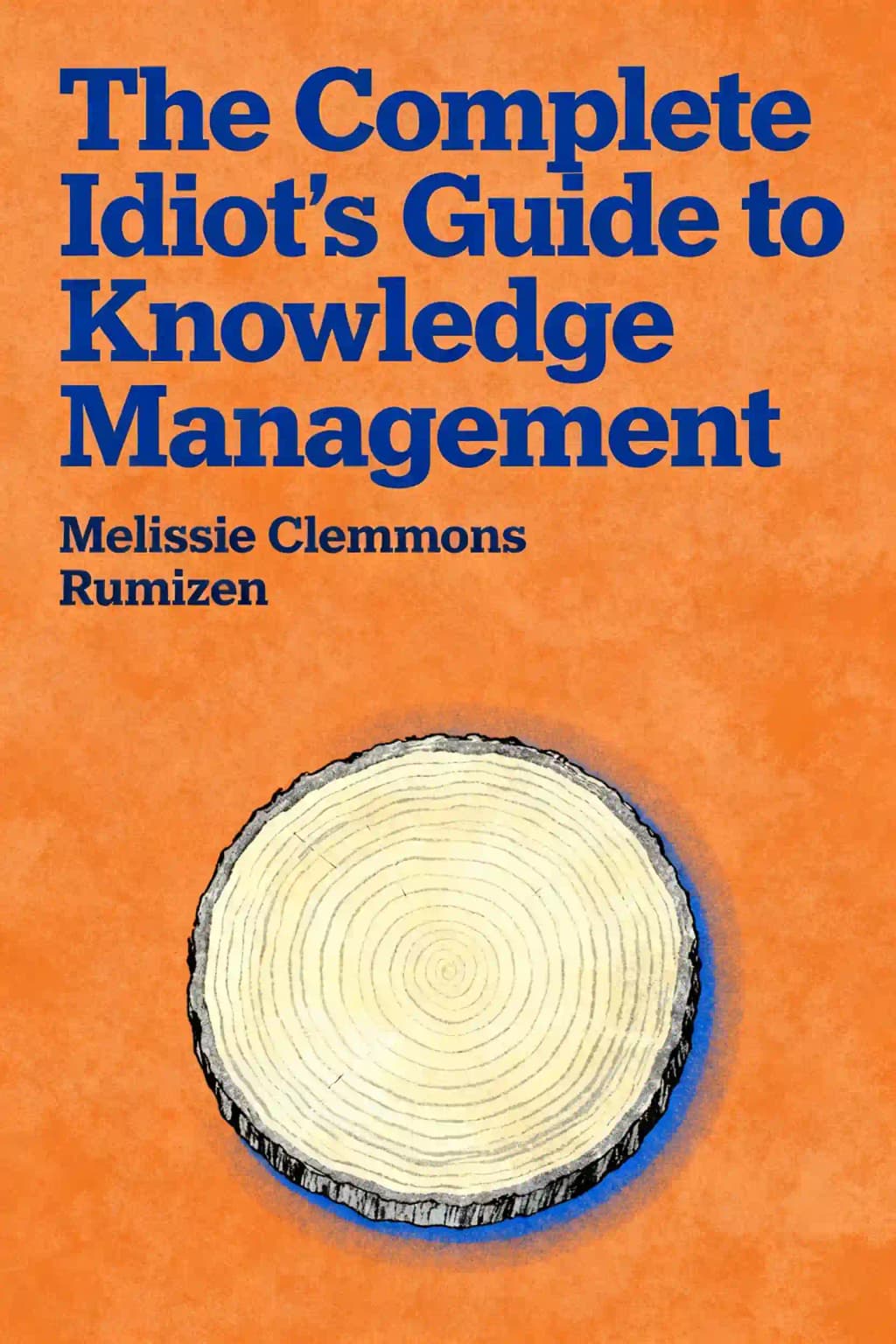
Imagine your company's most valuable asset walking out the door every evening. Not your products, equipment, or facilities-but the collective knowledge inside your employees' heads. In today's economy, this scenario isn't hypothetical; it's the daily reality organizations face. "The Complete Idiot's Guide to Knowledge Management" by Melissie Clemmons Rumizen tackles this fundamental challenge of the information age.
The book has become a cult favorite among Silicon Valley executives and forward-thinking managers worldwide. When Microsoft CEO Satya Nadella took over in 2014, this was reportedly one of the first books he recommended to his leadership team. The principles outlined here have influenced knowledge-driven organizations from Google to NASA, with the latter crediting knowledge management practices for preventing critical expertise loss during workforce transitions. With over 70% of Fortune 500 companies now employing Chief Knowledge Officers or equivalent roles, Rumizen's practical framework has proven remarkably prescient in anticipating how organizations would evolve to protect their most precious asset-what they collectively know.
Глава 2
The Knowledge Revolution: From Industrial to Intellectual Capital
For centuries, business success depended on tangible assets-land, factories, equipment. Today, the game has fundamentally changed. Peter Drucker recognized this shift decades ago when he began writing about "knowledge workers," but only recently has brainpower become widely acknowledged as the true organizational engine.
This transformation became starkly evident in 1979 when Karl-Erik Sveiby, working at a small publishing company, noticed something peculiar: their well-known brand was valued at just one krona on the books, while typewriters and desks were considered the "real" assets. This discovery launched his pioneering work on managing intangible assets-what we now call knowledge management.
Knowledge builds upon data (raw facts) and information (organized data), becoming actionable understanding within specific contexts. The critical distinction lies between explicit knowledge (documented, easily shared information) and tacit knowledge (experience, intuition, know-how residing in people's minds). Organizations pursue knowledge management when facing challenges like experts scattered globally, redundant work because teams don't know what others have accomplished, single points of failure when only one person knows critical information, knowledge loss during mergers, and information overload making relevant knowledge difficult to find.
The business impact can be substantial. Ford Motor Company saved over $160,000 in one year by sharing methods to reduce brake installation time. Texas Instruments dramatically improved semiconductor plant performance by bringing all facilities up to the level of top performers, generating $1.5 million in savings. Most impressively, Chevron launched a knowledge-sharing initiative in 1992 that reduced annual operating costs by an estimated $2 billion by 2000.
The intellectual foundation for knowledge management draws from multiple theoretical frameworks. Peter Drucker identified the fundamental workforce shift from industrial to knowledge workers, noting that knowledge workers essentially own the most important means of production-the knowledge in their brains. This transforms the management relationship, as knowledge workers can take their assets to competitors. Drucker recommends that managers make clear demands with goals, give workers responsibility to achieve those goals their own way, provide education and training, place them where they can be productive, and ensure meaningful rewards and recognition.
Глава 3
The Chief Knowledge Officer: Evangelizing a Knowledge Culture
As organizations recognize the value of managing knowledge, many have created executive positions to lead these efforts. Chief Knowledge Officers (CKOs) are approachable, enthusiastic professionals who readily share insights while taking time to understand organizational challenges. They're firmly grounded in business needs, linking their work directly to organizational goals and demonstrating returns through both numbers and stories.
While some CKOs (about 25%) create their own positions, most are appointed by CEOs frustrated by knowledge not being captured or shared across their corporations. CEOs recognize that poor knowledge management causes numerous problems-from reorganization confusion to inability to address customer demands. Though ideally everyone should practice knowledge management, appointing a CKO puts teeth into the decision by creating accountability and securing resources.
Most CKOs are hired internally-typically seasoned managers in their 40s with about nine years in the organization. Internal hires bring credibility, business knowledge, connections, and cultural understanding. However, they may share organizational blind spots or carry baggage from past conflicts. External hires offer fresh perspectives and possibly previous CKO experience, but lack internal connections.
Effective CKOs share common characteristics regardless of their background. They're passionate evangelists spreading knowledge management throughout the organization, seeking followers and sponsors. They're entrepreneurs who translate vague CEO directives into concrete programs, taking risks to create new capabilities and change how people work. CKOs are persuasive relationship-builders who listen more than they dictate, give credit to others, and continuously learn about their organization and field.
Though lacking a CIO's technical expertise, CKOs understand IT capabilities and can identify infrastructure gaps. They're IT literate in information retrieval, content management, integrated systems, and collaborative tools. They maintain healthy skepticism about vendor claims and understand IT's limitations-recognizing it's a necessary tool for knowledge management, but users remain paramount.
Глава 4
Knowledge Management Success Stories: Learning from the Best
Success stories from respected companies demonstrate that knowledge management isn't just theoretical-it's essential for survival and competitive advantage. Hewlett-Packard Consulting (HPC) developed one of the most impressive knowledge management programs, recognized with multiple awards. Their vision is clear: consultants should have the entire organization's knowledge at their fingertips, know exactly where to find information, eagerly share and leverage collective experience, and be recognized for these knowledge-sharing behaviors.
HPC's journey began in 1995 when leadership recognized the need to better leverage organizational knowledge to meet customer demands for innovation and rapid execution. Customer interviews revealed they wanted access to HPC's collective knowledge, not just individual consultants' expertise. The business case positioned knowledge as HPC's currency, with three objectives: balancing knowledge reuse with innovation, promoting pervasive knowledge sharing, and integrating knowledge sharing into daily work practices.
They wisely started with a pilot project called "Project Owl" (Orchestrating Wisdom and Learning) with their North American SAP consulting group. This group was highly visible, had clear business needs for knowledge sharing, and was led by someone committed to success. The pilot produced impressive results-implementation cycles dropped from 18 to 6 months-leading senior leadership to approve a full global KM program with a phased approach.
The first phase focused on building the foundation by creating key knowledge processes. HPC defined specific knowledge management structures including learning communities (informal cross-organizational groups discussing best practices), project snapshots (sessions collecting reusable lessons and materials), and knowledge maps (processes identifying knowledge and skills needed to deliver solutions)-focusing exclusively on knowledge that delivered business value.
The second phase aimed to build and launch the knowledge environment by implementing a knowledge-based system with broader scope including measures, new roles, and enabling technology. The KM team integrated the project snapshot process into HPC's project management methodology, created specific knowledge roles (including a central KM group and community coordinators), and launched K-Net, their knowledge portal with structured solution knowledge, project workspaces, document management, and discussion forums.
British Petroleum's knowledge management initiatives emerged from the high-stakes "upstream" oil exploration business, where drilling costs reach $25 million daily and knowledge about finding oil efficiently can make or break investments. After reorganizing into 42 autonomous business units in 1994, BP needed these scattered global operations to share knowledge effectively. They invested $13 million in a virtual teamwork pilot using videoconferencing, shared whiteboards, multimedia email and groupware to connect teams across distances.
BP developed a comprehensive approach to learning at every stage of work. "Learning before" involved searching the corporate intranet, querying communities of practice, using corporate yellow pages to find expertise, and employing the "peer assist" process where outside experts help teams with specific challenges. "Learning during" adapted the U.S. Army's After Action Review to reflect on what was supposed to happen versus what actually happened. "Learning after" involved more extensive project reviews with recommendations for future teams.
Despite their different approaches-HPC starting with vision and strategy while BP began with a specific pilot-both organizations shared critical success factors: clear vision and strategy, strong leadership support, focus on business results, clear business drivers, multiple approaches and tools, communities of practice, external consultants when needed, recognition of IT as a key enabler, multi-year implementation, and ultimately making KM part of everyday work.
Глава 5
Getting Started: Developing a Strategic Approach
Knowledge management may seem appealing in concept, but implementation requires careful strategic planning. A strong KM strategy provides actionable plans with clear timelines and investment requirements. Key considerations include supporting infrastructure (people), expanding IT capabilities, understanding corporate culture, developing specific implementation approaches, and establishing measurement systems.
Your KM strategy must serve your organization's broader goals. Ask key questions about your business nature, vision, goals, implementation plans, and industry environment. Remember that KM exists to support organizational strategy, not as an end itself. Sometimes, the KM conversation may even reveal needs to reshape corporate strategy by uncovering overlooked capabilities or strengths.
Identify organizational pain points and problems-these represent opportunities for improvement where KM can demonstrate value. Similarly, look for significant opportunities like new business lines, market changes, restructuring, or mergers. Assess knowledge gaps by consulting customers and suppliers about their experience doing business with you. Knowledge mapping helps establish what information exists, how it can be found, where expertise resides, and what critical knowledge might be missing.
A good executive sponsor provides more than just funding-they open doors to senior management, advocate for KM at high-level meetings, and provide strategic guidance. They can coach your communication strategy, help with funding, and provide encouragement. Finding the right sponsor requires seeking someone who intuitively understands knowledge's value (the "Tinker Bell factor"), is respected by peers, and is known for innovation.
When developing your KM strategy, you must decide between the "big gorilla" approach (organization-wide implementation) or "lots of monkeys" approach (smaller, isolated projects). The big gorilla strategy transforms how the entire organization works, while the surgical approach with smaller, focused projects has fewer headaches but more limited reach. Your choice depends on your organizational strategies and gaps-sometimes a well-executed small project delivers as much value as a larger initiative.
Глава 6
Communities of Practice: The Killer Application
Communities of practice have become acknowledged as the "killer application" for knowledge management. Unlike traditional organizational structures, these communities are distinct from teams or work groups. While teams are formed by management for specific goals with assigned members, and work groups perform specific organizational functions, communities of practice are voluntary associations bound by shared passion and interest rather than deliverables or schedules.
A community of practice has three essential dimensions that define its structure and purpose. First, what members care about-their domain of knowledge. This could be a skill like equipment repair, a professional discipline, or a topic like creativity. This shared passion serves as the catalyst drawing people together. Second, who the members are-the community itself. These relationships form an intricate web where people know and trust each other through both social and work activities. Third, how the community works-their practice. As they collaborate, they create tools, documents, processes, vocabulary, and shared approaches.
Communities of practice develop through five distinct stages. Planning: Initially, people with similar interests exist in loose networks but may not see value in formalizing. This stage requires finding these people, discussing the potential community, defining their shared knowledge domain, and engaging management support. Start-Up: Some communities launch dramatically while others begin with informal sharing. Members must learn what to share and how to work together while developing relationships. Growth: As good work happens and relationships deepen, the community becomes more visible. However, adding new members can be disruptive and requires careful management. Sustainment: The community must balance sustaining itself while continuing to grow to avoid stagnation. Closure: Communities can fade away or lose their practice focus, becoming merely social clubs.
The community coordinator is the most crucial factor in a community of practice's success. While members have passion for their domain, the coordinator must have passion for the people. This role typically requires 15-25% of a person's work time and involves helping develop the practice (monitoring the big picture, identifying gaps, securing needed tools and resources) and helping develop the community (scheduling events for community interaction, engaging members before events, facilitating during events, and following up afterward).
Глава 7
Technology's Role: Enabling Knowledge Management
Modern knowledge workers have become so dependent on information technology that without it, some find no point in coming to work. Successfully implementing knowledge management requires partnership with the IT department. Rather than being another demanding supplicant, knowledge management professionals should become allies working toward common organizational goals.
Corporate intranets are essential for knowledge management implementation, providing connectivity, simplicity and common interfaces that enable organizations to create, share, capture and leverage knowledge effectively. An intranet is essentially a private Internet-internal network services using TCP/IP protocol to provide web services, email, and file transfers between authorized users. Unlike the public WWW, intranets serve specific business needs of organizations and typically have someone in charge who must demonstrate return on investment.
Intranets enable numerous business functions including email, training delivery, information publishing, targeted information delivery, collaborative document management, workflow automation, discussion forums, collaboration tools like shared calendars, business opportunity identification, and database front-ends like corporate directories. The implementation scope depends on organizational priorities and available resources, with initial investments potentially as low as $4,000 for basic functionality.
Collaborative tools are essential for knowledge management, just as spreadsheets are for financial calculations or word processors for documents. These tools can be categorized along two dimensions: time (synchronous or asynchronous) and place (collocated or distance). Two other important characteristics are information richness (how much and what types of information a tool provides) and social presence (how well the tool helps people connect with each other).
Tools with high social presence work best for problem-solving, relationship building, and idea generation. However, low social presence tools can be advantageous when personal differences might interfere with collaboration or when handling routine information. No single tool is ideal for all situations-you must consider your KM goals, the user group, and available tool capabilities.
Organizations often face information overload rather than scarcity. Intranets grow rapidly, becoming data junkyards filled with diverse content types. Content management systems require three critical processes: collecting content from both internal and external sources; using technology to find, access and deliver content to users; and managing content organization. Taxonomies provide hierarchical structures for organizing knowledge, showing how information groups relate to each other. While manual taxonomies offer depth, they're time-consuming and become outdated; automated taxonomies update continuously. The best approach combines taxonomies with search engines to accommodate different user preferences.
Глава 8
The Cultural Challenge: Making Knowledge Management Work
Culture is "the way we do things around here"-a set of deeply held values, beliefs, and assumptions that influence organizational decisions and behaviors. Introducing any change creates friction, regardless of how minor it seems. Understanding organizational culture is essential before implementing knowledge management to avoid resistance that could derail your efforts.
The first level of organizational culture consists of artifacts-visible elements like bulletin boards, office decor, dress codes, and interaction patterns. The second level comprises espoused values-official statements like vision statements, mission statements, and policies that represent what the organization claims to believe. The third and most important level contains the tacit assumptions that truly drive behavior-these develop over time and often remain unspoken.
Culture represents tacit knowledge-unspoken assumptions behind actions that people follow without questioning. Such cultural norms reduce friction by establishing shared behavioral expectations. At their best, these learned cultural elements help organizations repeat successful behaviors and avoid past mistakes. Organizational culture is remarkably resistant to change. Even CEOs often fail when attempting to change deeply embedded cultural assumptions. Organizations may continue following outdated practices even when circumstances demand adaptation.
While many envision an ideal knowledge-sharing culture with free sharing, trust, no functional silos, learning from mistakes, and collaboration, no organization offers a perfect "knowledge management nirvana." Rather than attempting to transform the entire culture, focus on specific business issues and daily work practices. Define what behaviors would look like in your ideal state, then leverage existing cultural strengths to change how people work. By demonstrating that new ways of working lead to greater success and creating shared positive experiences, you gradually influence the underlying assumptions that drive behavior.
Beyond the formal organizational chart lies the "shadow organization"-the networks and communities where much actual work happens. Networks consist of people who know each other, provide mutual aid, and share information. They're who we call when we need knowledge, want to bypass bureaucracy, or require assistance. Trust is fundamental in these relationships, allowing people to lower their guard and share safely.
Leaders must demonstrate the behaviors they promote since they're constantly observed. Even small actions by leaders can have enormous impact as they spread through organizational grapevines. Middle managers are particularly crucial, as they directly affect employees' day-to-day work and job satisfaction. Unfortunately, middle managers evaluated solely on their section's performance may resist knowledge sharing activities. The solution is to coach middle management, court their support, and involve them in your KM efforts.
Глава 9
Measuring What Matters: Evaluating Knowledge Management
Knowledge management measurement remains underdeveloped compared to other aspects of the field. As the military training analogy illustrates, "what gets measured gets done"-when the instructor "thumped" to signal test material, students paid attention. Measurement is the Achilles heel of most knowledge management programs. Many rely on "serious anecdote management" rather than systematic measurement, which fails to justify resources and provide information for program evaluation.
Measurement without purpose wastes time. Knowledge management measures should provide information in context for actionable understanding-whether tracking ROI, identifying barriers to sharing, assessing customer knowledge gathering, evaluating knowledge sharing sentiment, measuring KM maturity, tracking progress toward goals, evaluating approach efficiency, identifying gaps, assessing intangible assets, or monitoring system health. Clear purpose drives measurement development, and while multiple purposes are possible, they must remain distinct.
Lagging indicators show past performance but don't predict future results-like looking in a rearview mirror while driving, as Dr. W. Edwards Deming noted. While valuable for confirming whether initiatives worked, relying solely on backward-looking measures is dangerous. Leading indicators, which Kaplan and Norton call "performance drivers," are predictive and allow for course correction before outcomes materialize.
Measuring everything bypasses a critical benefit of measurement: focus on what's important. Developing measures requires creativity to generate options, then convergent thinking to narrow choices to a critical few. Too many measures create confusion. The balanced scorecard approach recommends no more than two dozen measures for a single strategy.
The balanced scorecard stands out as an exceptional performance measurement system with four perspectives: financial, customers, internal business processes, and learning and growth. Its virtues include focusing on intangible assets (which roughly equate to human, structural, and customer capital), incorporating both leading and lagging measures, linking measurement to strategy, driving organizational alignment, and providing actionable context for organizational change.
Knowledge management projects face dual challenges: significant costs (IT investments, cross-organizational resources, cultural changes) and hard-to-measure benefits (increased knowledge sharing, faster learning, better decision making). Clare and Detore's methodology in "Knowledge Assets" offers a rigorous approach to showing return on knowledge assets. Their process includes six steps: identifying opportunities by determining what your organization knows and how to create value from it; scoping the project to identify affected areas; developing an operational model connecting knowledge assets to economic value; discovering value drivers to build causal models; developing a valuation framework to understand current value creation; and testing and refining scenarios to develop specific implementation plans.
Глава 10
Personal Knowledge Management: Taking Individual Responsibility
In 1996, the American Productivity and Quality Center identified "personal responsibility for knowledge" as one of six key knowledge management strategies. Surprisingly, this concept virtually disappeared from KM discourse until around 2000, when it resurfaced in publications. As knowledge workers and "free agents," we must manage our own knowledge capital rather than relying on lifetime employment or career stability.
Personal knowledge management means taking responsibility for what you know, who you know, and what they know. This includes acquiring, creating, and sharing knowledge while developing personal networks. Peer-to-peer (P2P) computing offers valuable support for individual knowledge management through file sharing, collaborative document work, and instant messaging.
Personal capital consists of three dimensions: knowledge stock (stored tacit and explicit knowledge), knowledge currency (ways of acquiring or selling knowledge), and knowledge flow (how we process knowledge). These elements combine to create a knowledge profile or K-Profile that helps assess and manage personal knowledge. Knowledge currency operates through head (thinking ability), heart (emotional skills), and hand (observable behaviors and actions). Knowledge flow involves five processes: discovery (enhancing knowledge), delay (storing knowledge), dispose (unlearning outdated knowledge), diffuse (sharing with others), and deliver (capitalizing on knowledge).
Just as organizations should prioritize connecting people to people over connecting people to information, individuals should follow the same principle. Networking brings numerous benefits including information, new ideas, problem solutions, relationships, support, encouragement, and opportunities. By connecting others to people or information, you become a trusted source and gain influence. The key to successful networking is giving without expectation of return-the paradox being that the less you focus on what you'll receive, the more benefits you'll ultimately gain.
Face-to-face connection remains the most effective networking approach. When connecting with others, pay attention to what excites them-people will reveal much about themselves verbally and non-verbally if you truly listen. Provide value to your connections by acting as a "personal shopper" for information they need, introducing them to helpful contacts, and passing on genuine compliments about their work. Keep in touch regularly to maintain these relationships.
Even as newcomers quickly progress to becoming experts in knowledge management, developing a mentor network is invaluable during your initial stage. Find mentors through professional associations, local connections, or internet groups. Though networking's golden rule is to give, initially you may feel you're only taking. Offer what you can, but remember that mentors genuinely enjoy helping others learn about their field. Show appreciation by sharing specific examples of how their advice helped you. The ultimate reward for mentors is seeing their proteges transform into peers who can eventually offer valuable insights in return.