Глава 1
The Knowing-Doing Paradox: Why Smart People Don't Apply What They Learn
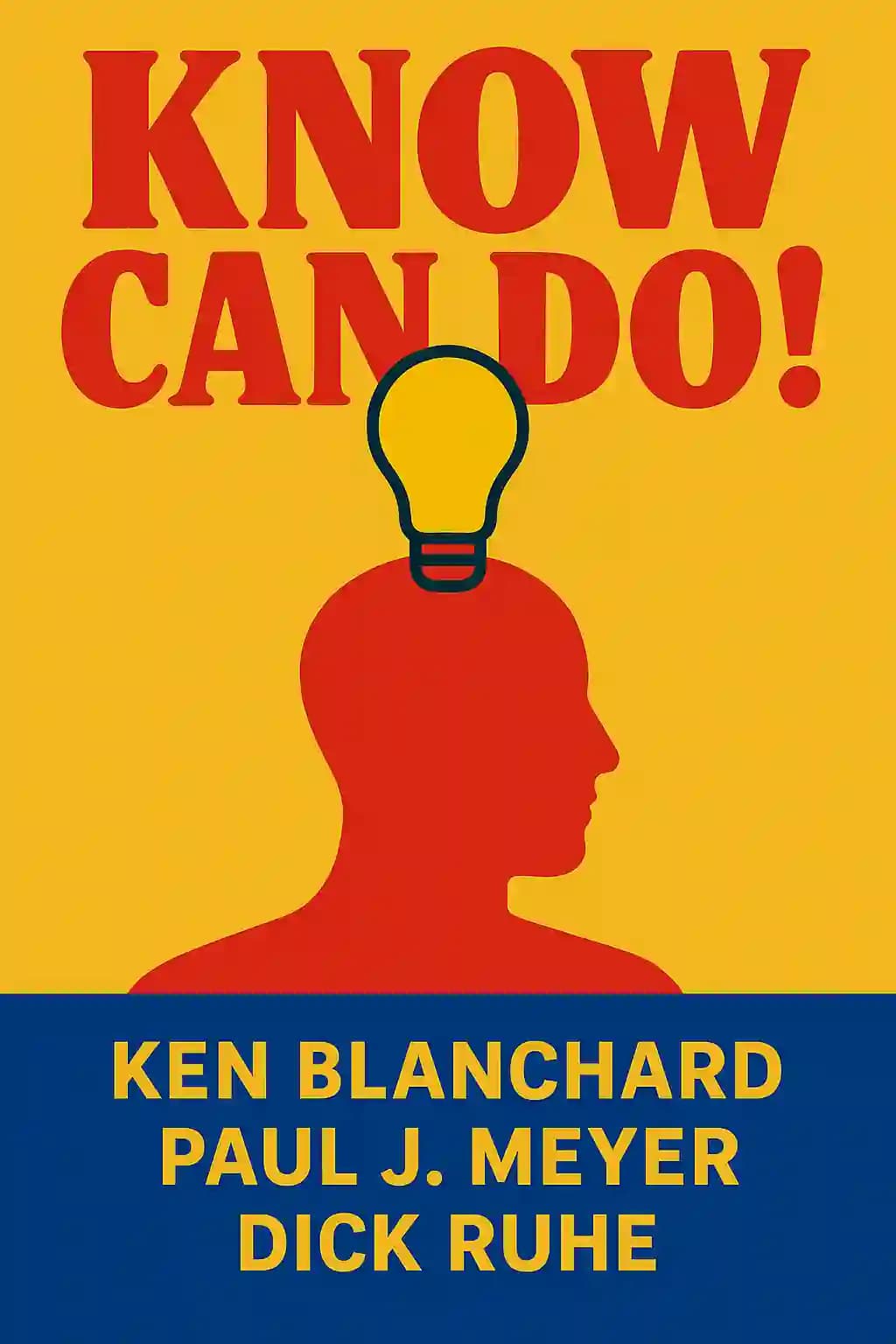
Have you ever read a life-changing book, attended an inspiring seminar, or learned a valuable skill-only to find yourself doing absolutely nothing with that knowledge months later? You're not alone. This frustrating gap between knowing and doing has troubled even Ken Blanchard, one of the most successful business authors of all time. Despite selling over 18 million books (including the 13-million-copy bestseller "The One Minute Manager"), Blanchard discovered his biggest career disappointment: many readers weren't actually implementing his ideas. The book "Know Can Do" emerged from this realization, offering a solution to what might be the most common learning problem in modern society. Beloved by executives at companies like Southwest Airlines and The Ritz-Carlton, this book has become required reading in leadership development programs worldwide. Its principles have been endorsed by everyone from Stephen Covey to Tony Robbins, who called it "the missing manual for turning knowledge into action."
Глава 2
The Knowing-Doing Gap: A Universal Human Challenge
The fundamental problem is both simple and profound: we consume information voraciously but struggle to apply it consistently. This isn't just about business books or professional development-it affects nearly every area of life. Think about the health advice you know but don't follow (like the importance of eight hours of sleep), the financial principles you understand but don't implement (such as maintaining an emergency fund), or the relationship wisdom you've acquired but rarely practice (like active listening during conflicts).
When Blanchard investigated this phenomenon, he discovered something startling. Upon asking readers how his concepts had changed their behavior, most struggled to provide concrete examples. The knowledge was there, but the application wasn't. In one particularly telling workshop, participants could perfectly recite his leadership principles but couldn't cite a single instance where they'd applied them in the previous month. This pattern repeated itself in his seminars, where participants would enthusiastically take notes, nod in agreement, and leave inspired-only to return to their old habits once back at work.
Blanchard tried various approaches to help people become true learners. He emphasized note-taking (since pure listeners forget 95% of material within a month), encouraged reviewing notes within 24 hours to identify key insights, and suggested teaching the material to others within a week. He even implemented follow-up systems, including accountability partners and weekly check-ins. Despite these sound strategies, few followed through. The typical excuse? "I got too busy when I returned to work." Further investigation revealed that even those who intended to implement changes often felt overwhelmed by workplace pressures and defaulted to familiar behaviors.
This pattern isn't unique to Blanchard's work. Studies show that companies in America spend over $100 billion annually on training and development, yet only about 10-20% of that learning translates into actual behavioral change or performance improvement. In fact, research from major consulting firms indicates that traditional corporate training yields a mere 5-10% retention rate after three months. We're investing enormous resources in acquiring knowledge that largely goes unused, creating what economists call "dead learning"-information that sits dormant without practical application.
The breakthrough came when Blanchard connected with Paul J. Meyer, a pioneer in behavior change whose personal development programs had demonstrably changed people's lives over nearly five decades. Meyer's programs showed consistent success rates of 60-70% in behavioral change, far exceeding industry norms. Meyer had identified what he called "the missing link" in the learning process-the key elements that bridge the gap between knowing and doing. These elements included immediate application, accountability structures, and environmental support systems. This discovery would transform Blanchard's understanding of how learning actually works and lead to the development of more effective training methodologies.
Глава 3
Information Overload: Drowning in a Sea of Knowledge
The first reason people don't apply what they know is surprisingly counterintuitive: they know too much. We live in an era of unprecedented information abundance, where acquiring new knowledge is far easier than implementing what we already have. The result is cognitive overload that actually prevents effective action.
This phenomenon manifests as "paralysis by analysis"-a state where having too many options or too much information creates decision paralysis. Blanchard experienced this firsthand at a golf school where instructors bombarded him with so many technical tips that his game actually deteriorated. His mind became so cluttered with swing mechanics that he couldn't execute the natural motion he'd developed over years of playing.
The same pattern repeats in professional settings. Managers attend multiple leadership seminars, read dozens of business books, and subscribe to countless industry newsletters-all while struggling to implement even the most basic effective practices. They become "brain cluttered," constantly chasing new ideas without mastering fundamental ones.
Meyer's solution is elegantly simple yet profound: "Learn less more, not more less." Rather than constantly seeking new information, we should deeply immerse ourselves in a focused amount of high-quality knowledge. Like fish who take only what they need from water, we must become selective about what we consume and deliberate about how we process it.
This approach runs counter to our cultural obsession with novelty and "hacks." We're conditioned to believe that the next book, podcast, or seminar will provide the breakthrough we need, when in reality, the answers often lie in more thoroughly implementing what we already know. The most successful organizations understand this principle. They don't chase management fads or constantly reinvent their approach. Instead, they identify core principles and reinforce them consistently through repetition and focused application.
Consider how differently we approach professional knowledge versus physical skills. No one expects to become a skilled pianist by reading about different playing techniques without practicing the same pieces repeatedly. Yet in business and personal development, we often expect transformation through passive consumption of information without dedicated practice.
Глава 4
The Power of Spaced Repetition: Making Knowledge Stick
The antidote to information overload is not willpower but a learning technique called "spaced repetition"-exposure to information periodically over time rather than in a single concentrated dose. This approach leverages how our brains naturally form long-term memories and develop mastery.
Advertisers have understood this principle for decades. They know that consumers need multiple exposures to a message-typically 6-20 "impressions"-before they identify with a product and take action. The same principle applies to learning. Reading a book once, no matter how carefully, simply isn't enough for most people to internalize and apply its concepts.
Spaced repetition works because it aligns with how our brains naturally process information. The initial exposure to a concept creates a neural pathway, but that pathway is weak and temporary. Each subsequent exposure strengthens the connection, making the knowledge more accessible and actionable. Over time, the concept becomes so deeply integrated that applying it requires little conscious effort.
This explains why cramming for exams produces short-term recall but poor long-term retention. Without spaced repetition, we develop what Meyer calls "the habit of forgetting"-a pattern where we temporarily absorb information only to lose it within days or weeks.
Organizations that understand this principle transform their approach to learning and development. Rather than treating training as a one-time event, they create systems for continuous reinforcement. For example, one company described in the book abandoned the common practice of declaring a single "Year of the Customer" in favor of continuously reinforcing service principles year after year. Employees read the same few customer service books multiple times and attended annual training that built upon previous learning rather than introducing entirely new concepts.
This approach produces remarkable results. When people deeply master core principles through repetition, their minds become free to create extraordinary applications of those principles. The book shares the story of Stephanie, a receptionist who had so thoroughly internalized customer service concepts that she brilliantly defused an angry caller who began with "I'm your worst nightmare!" Her response-"Is that you, Alex?" (referring to her ex-husband)-transformed hostility into laughter and connection. This level of creative application only becomes possible when knowledge is so deeply internalized that it can be accessed and applied spontaneously in challenging situations.
Глава 5
Negative Filtering: The Enemy Within
The second major obstacle to implementing knowledge is what Meyer calls "negative filtering"-a dysfunctional mental processing system that discounts positive information and amplifies negative thoughts. This "stinkin' thinkin'" creates an internal resistance that prevents us from fully accepting and applying valuable knowledge, even when we consciously want to change.
Most people are programmed with negative thinking patterns from childhood. Well-meaning parents and teachers often emphasize what's wrong rather than what's right, creating deep-seated patterns of doubt and fear. By adulthood, many people have developed a mental "traffic jam" where only about 10% of new information gets through to the subconscious mind where it can be accepted, believed, and used.
This negative filtering manifests in predictable ways when we encounter new ideas:
"That won't work here."
"We've tried something like that before."
"That's not practical in our situation."
"Sounds good in theory, but..."
These automatic responses aren't rational evaluations-they're defensive mechanisms that protect us from the discomfort of change. They create a self-fulfilling prophecy: because we believe something won't work, we never fully commit to implementing it, which ensures its failure and reinforces our negative belief.
The solution is developing what Meyer calls "Green Light Thinking"-a positive mindset that listens without prejudice, approaches new information with excitement, maintains positive expectancy, and constantly asks "How can I use this?" This open stance clears mental traffic jams and creates new pathways of possibility thinking.
The book shares the story of Suzanne Alcott, a COO who transformed from a negative thinker to a positive one through a simple but powerful structure. She was assigned to be in charge of "Green Light Thinking" in meetings, requiring her to start discussions by highlighting why new ideas should be pursued before any criticism was allowed. Though initially resistant, this forced focus on possibilities eventually rewired her entire thinking pattern. Interestingly, her new positive approach actually gave her more credibility when she did offer cautionary feedback during the "Yellow Light Thinking" phase of discussions.
Research shows that 62% of ideas are only accepted after being presented six times. The process typically moves through predictable stages:
1. Rejection (first exposure)
2. Resistance (second exposure)
3. Partial acceptance (third exposure)
4. Full acceptance (fourth exposure)
5. Partial assimilation through personal use (fifth exposure)
6. Full assimilation by owning and sharing with others (sixth exposure)
With repeated positive exposures, this process becomes more efficient, and creative applications begin to emerge almost instantaneously. Eventually, positive thinkers become what Meyer calls "inverted paranoids"-people who believe the world has conspired to do only good for them.
Глава 6
The Mindset Transformation: From Closed to Open
Changing from a closed, negative mindset to an open, positive one requires more than just good intentions-it demands a specific reinforcement strategy. Self-doubt causes us to filter information through a judgmental lens that limits our potential and prevents us from fully implementing what we learn.
The consequences of negative filtering are severe: we learn only a fraction of what we see and hear, achieve less than we could, and accept too little too soon. We become our own worst enemies in the learning process, sabotaging our growth through automatic negative responses to new information.
The transformation begins with awareness. Most people don't realize how their mental filters distort incoming information. By becoming conscious of our automatic negative responses, we can begin to challenge and replace them. The book suggests a simple but powerful practice: whenever you encounter new information, consciously look for what's valuable before identifying potential problems.
This "Green Light Thinking" approach doesn't mean abandoning critical thinking-it simply changes the sequence. By seeking value first, we open ourselves to possibilities that might otherwise be dismissed by our initial negative reactions. Only after fully exploring potential benefits do we move to "Yellow Light Thinking" (considering cautions and modifications) and finally "Red Light Thinking" (identifying genuine obstacles).
The author demonstrates this principle through a personal example of applying positive thinking during a golf game. Rather than focusing on his fear of sand traps (his usual pattern), he verbally affirmed his skill at sand shots. This simple shift in focus produced immediate improvement in his performance-not through any change in technique, but through removing the mental interference that had been hampering his natural abilities.
Organizations can institutionalize positive thinking by creating structures that encourage it. The book describes how one company required all meeting participants to spend the first portion of discussions identifying potential benefits of new ideas before raising any concerns. This simple procedural change gradually transformed the organization's culture from one of reflexive criticism to creative possibility thinking.
The mindset shift from negative to positive filtering doesn't happen overnight. Like any significant change, it requires conscious effort and repetition until the new pattern becomes automatic. But the payoff is enormous: people who master positive filtering typically outperform negative thinkers not just by double but by factors of 100 to 1 in terms of creativity, problem-solving, and implementation of new ideas.
Глава 7
The Follow-Up Factor: Structure, Support, and Accountability
The third and most challenging obstacle to implementing knowledge is lack of follow-up. Even when people overcome information overload and negative filtering, they often fail to change their behavior because they lack the structure, support, and accountability needed to establish new habits.
This explains why New Year's resolutions typically fail by February-good intentions without systematic follow-up rarely produce lasting change. As Meyer observes, "Without structure, support, and accountability, people revert to old habits." Behavior change cannot be left to chance; it requires deliberate systems that reinforce new patterns until they become automatic.
Meyer learned this principle from his father, a master cabinetmaker who used a simple but effective teaching system:
1. Tell me (explain the concept)
2. Show me (demonstrate the skill)
3. Let me (provide guided practice)
4. Correct me (offer feedback)
This sequence, repeated until mastery, ensures proper learning from the start. The key insight is that practicing new skills immediately is crucial, but with an important caveat: "Practice Doesn't Make Perfect. Perfect Practice Makes Perfect." Without proper guidance and correction, practice can actually reinforce incorrect patterns.
The book describes how one company improved this system by adding "observe me" (where managers directly witness performance) and changing "correct me" to "praise my progress and/or redirect me." This modification recognizes that effective feedback begins with acknowledgment of what's working before addressing what needs improvement. Over time, the teaching style evolves from directive to self-directed, where learners eventually become masters who can coach others.
To overcome the lack of follow-up, organizations can implement multiple reinforcement systems. The book highlights two particularly effective approaches:
First, biweekly one-on-one meetings between managers and direct reports, where the employee sets the agenda. These 15-30 minute sessions provide ongoing structure, support, and accountability, eliminating surprises in annual reviews and creating regular opportunities to reinforce new behaviors.
Second, external telephone coaches assigned to training participants for six weeks after major programs. These coaches provide unbiased support through weekly 50-minute sessions, helping participants work through challenges in implementing new skills. This "outside perspective" often proves more effective than internal coaching because it's free from organizational politics and existing relationships.
This "one-two follow-up punch" ensures people actually apply what they've learned, helping everyone reach their goals. The investment in follow-up systems typically yields returns far exceeding the initial cost of training, as implementation-not information-is what ultimately creates value.
Глава 8
The Three Levels of Change: Knowledge, Attitude, and Behavior
Closing the knowing-doing gap requires understanding that meaningful change happens at three distinct levels, each more difficult than the previous:
1. Knowledge Change (easiest): Acquiring new information and concepts
2. Attitudinal Change (harder): Shifting beliefs and emotional responses
3. Behavioral Change (most difficult): Altering actual habits and actions
Most learning initiatives focus almost exclusively on the first level while neglecting the deeper changes required for implementation. This explains why traditional training often fails to produce lasting results-it addresses only the easiest part of the change process.
Knowledge change happens relatively quickly through reading, listening, or observing. A person can intellectually grasp a new concept in minutes or hours. But knowing something intellectually doesn't automatically change attitudes or behaviors.
Attitudinal change requires addressing emotional resistance and existing belief systems. This is where negative filtering becomes a major obstacle. Even when people intellectually understand a concept, they may emotionally reject it because it conflicts with existing beliefs or triggers fear of change. Overcoming this resistance requires repetition of the new idea with positive framing until it becomes emotionally acceptable.
Behavioral change-the ultimate goal-is the most challenging level because it requires breaking existing habits and establishing new ones. Habits are deeply ingrained patterns that operate largely below conscious awareness. Changing them requires consistent practice with feedback over extended periods-typically at least 21 days of focused effort to establish a new pattern, and much longer for it to become automatic.
The book emphasizes that all three levels must be addressed for successful implementation. Knowledge provides the what, attitude change creates the want to, and behavioral systems establish the how. Without addressing all three, the knowing-doing gap persists despite good intentions.
This three-level model explains why information alone rarely changes behavior. Reading a book about exercise doesn't make you fit; understanding nutrition doesn't automatically improve your diet; knowing effective leadership principles doesn't make you a better manager. Implementation requires a comprehensive approach that addresses knowledge, attitudes, and behaviors simultaneously through focused repetition, positive reinforcement, and structured follow-up.
Глава 9
From Knowing to Doing: The Complete Implementation System
The complete system for closing the knowing-doing gap integrates all the elements discussed into a cohesive approach. By addressing information overload, negative filtering, and lack of follow-up simultaneously, organizations and individuals can dramatically improve their implementation rates.
The process begins with focus-selecting a limited number of high-value concepts to master rather than attempting to implement everything at once. This "learn less more" approach prevents cognitive overload and creates the mental space needed for deep implementation.
Next comes repetition-encountering the same core concepts multiple times through different modalities. Reading a book once isn't enough; the key ideas must be revisited through discussions, applications, and regular review. This spaced repetition strengthens neural pathways and prevents the "habit of forgetting."
The third element is positive filtering-approaching new information with an open mind focused on possibilities rather than problems. This "Green Light Thinking" creates receptivity to change and prevents the automatic rejection that comes from negative filtering.
Finally, structured follow-up provides the support and accountability needed to establish new habits. This includes regular one-on-one meetings, external coaching, and deliberate practice with feedback. Without this follow-up system, even the best intentions typically fade within weeks.
When all these elements work together, the transformation can be remarkable. The book shares numerous examples of individuals and organizations that achieved breakthrough results by applying these principles. From dramatic improvements in customer service to revolutionary product innovations, the consistent pattern is that implementation-not just information-creates value.
Perhaps the most powerful aspect of this system is that it becomes self-reinforcing over time. As people experience success through implementation, their confidence grows, positive filtering becomes more natural, and they develop what Meyer calls "possibility thinking"-a creative mindset that sees opportunities where others see obstacles.
The final principle emphasized in the book is the importance of teaching others. Once you've successfully implemented what you've learned, sharing your knowledge and experience with others completes the cycle. This teaching reinforces your own mastery while helping others bridge their knowing-doing gaps. As the ancient wisdom says, "To teach is to learn twice."
Глава 10
Transforming Knowledge into Action: Your Personal Implementation Plan
The principles in "Know Can Do" apply to every domain of life-from professional development to personal growth, from health habits to financial management. The key is creating your own implementation system that addresses all three obstacles to putting knowledge into action.
Start by identifying your highest-value knowledge-the 20% of what you know that would create 80% of the results if fully implemented. This might be core leadership principles, fundamental health practices, or essential relationship skills. Focus on mastering these vital few areas rather than chasing endless new information.
Next, create a repetition system that ensures regular exposure to these key concepts. This might include rereading important books, reviewing notes weekly, discussing ideas with others, or teaching the concepts to colleagues. The specific method matters less than the consistency of repetition over time.
Address your negative filtering by consciously practicing "Green Light Thinking" whenever you encounter new information or challenges. Before identifying problems or limitations, ask yourself: "What's valuable here? How could this work? What possibilities does this create?" This simple shift in sequence-possibilities before problems-can dramatically improve your receptivity to change.
Finally, establish your personal follow-up system with clear structure, support, and accountability. This might include regular meetings with a mentor, working with a coach, joining a mastermind group, or creating specific implementation metrics that you track daily. The key is having external structure that keeps you focused when motivation inevitably wanes.
Remember that implementation is ultimately about habits, not heroics. Small, consistent actions repeated over time create far more lasting change than occasional bursts of intense effort. As the ancient Chinese proverb reminds us, "To know and not to do is not yet to know." True knowledge is demonstrated through action, not just understanding.
By addressing the three fundamental obstacles-information overload, negative filtering, and lack of follow-up-you can close your personal knowing-doing gap and transform potential into performance. The result isn't just better outcomes; it's the profound satisfaction that comes from actually living what you know to be true.