Business of Belonging
How to Make Community Your Competitive Advantage
Обзор книги Business of Belonging
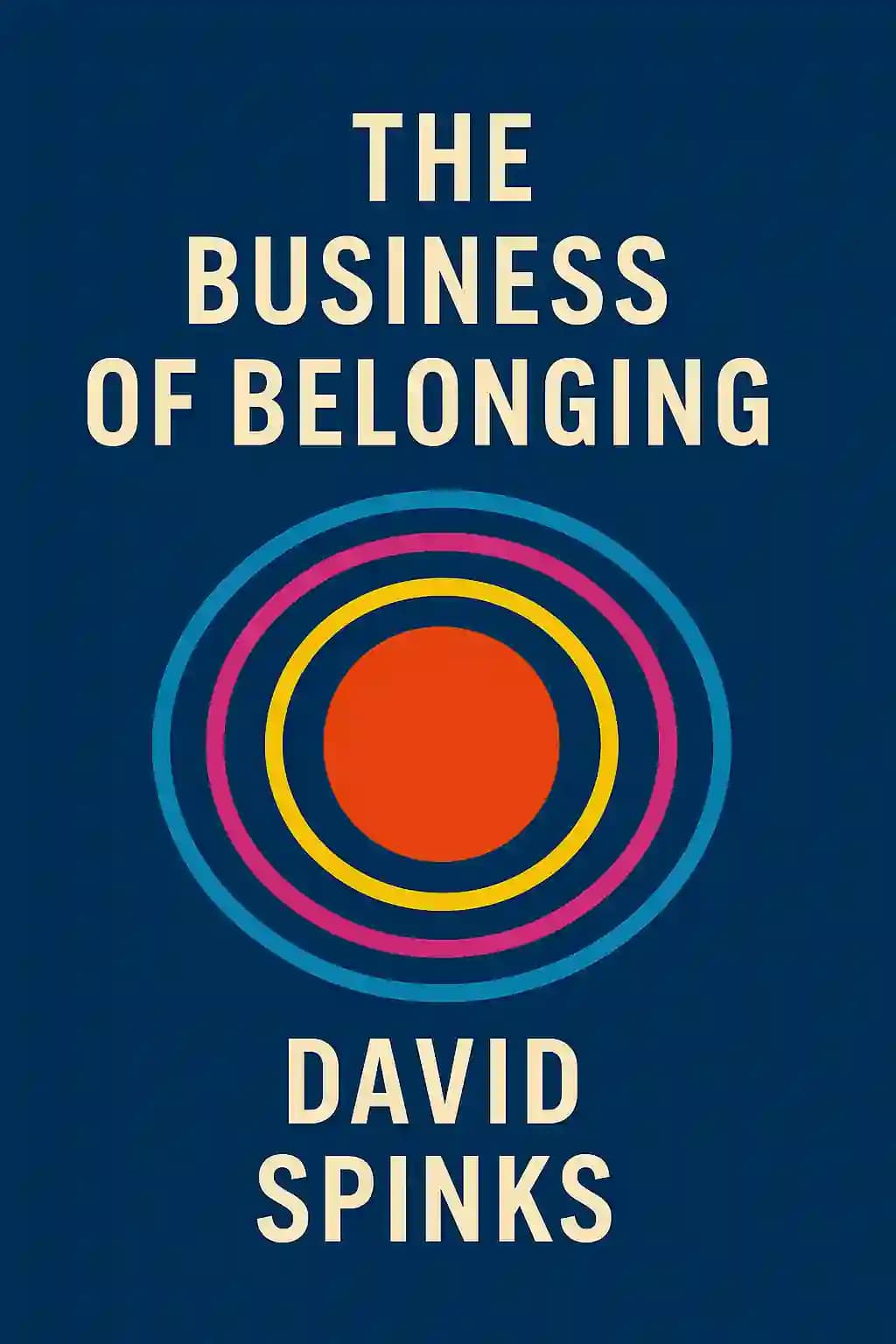
In "The Business of Belonging," community architect David Spinks reveals how companies like Google and Airbnb transform customers into advocates. Seth Godin calls it "a tactical primer" while introducing the SPACES Model that turned community-building from buzzword to billion-dollar competitive advantage.

Ключевые темы в Business of Belonging
- community led growth
- customer retention strategy
- spaces model
- peer support systems
- brand advocacy
Цитаты из Business of Belonging
Community isn't just a feel-good initiative but a powerful competitive advantage that can't be copied.
A single negative experience could go viral within hours.
From seeing customers as passive consumers to viewing them as active co-creators of value.
It's better to own the conversation than have it happen elsewhere without your input.
New community programs often try to tackle all six objectives simultaneously, setting themselves up for failure.
Персонажи в Business of Belonging
- David SpinksAuthor and community building expert
- McMillanCo-creator of an influential community framework
- ChavisCo-creator of an influential community framework
Об авторе
Об авторе книги Business of Belonging
David Spinks, author of The Business of Belonging: How to Make Community Your Competitive Advantage, is a pioneering community strategist and co-founder of CMX, a global network for community professionals acquired by event platform Bevy.
With over a decade of experience, Spinks has shaped modern community-building practices, blending business acumen with insights into human connection. His work focuses on helping organizations harness belonging as a growth engine, drawing from his leadership roles, including VP of Community at Bevy, and his widely read newsletter documenting his journey toward "enoughness."
The book distills his proven frameworks for aligning community strategy with measurable business outcomes, emphasizing trust, engagement, and shared identity. A sought-after speaker featured on platforms like Mixergy and Village Global’s podcast, Spinks combines tactical advice with philosophical depth.
The Business of Belonging has become essential reading for startups and enterprises alike, establishing Spinks as the definitive voice in the $1.5 trillion community-driven economy.
Скачать резюме книги «Business of Belonging»
Получите резюме книги «Business of Belonging» в формате PDF или EPUB бесплатно. Распечатайте или читайте офлайн в любое время.
Часто задаваемые вопросы об этой книге
The Business of Belonging by David Spinks explores how businesses can leverage community-building strategies to drive growth, customer loyalty, and competitive advantage. It provides actionable frameworks for designing communities that align with business goals, emphasizing metrics like engagement, retention, and ROI. The book combines case studies, psychological insights, and practical steps to transform communities into scalable business assets.
This book is ideal for business leaders, marketers, and community professionals seeking to harness the power of community-driven growth. Entrepreneurs, startup founders, and corporate strategists will benefit from its insights on fostering authentic connections, measuring community impact, and integrating belonging into brand identity.
Key concepts include the “Community Strategy Canvas” for aligning communities with business objectives, the role of shared identity in fostering loyalty, and the “Five Pillars of Community Value” (support, product feedback, acquisition, engagement, and success). Spinks also emphasizes quantifying community ROI through metrics like customer lifetime value.
Unlike generic guides, Spinks’ work focuses on actionable business outcomes, blending psychological principles with tactical strategies like event-driven community programs. It uniquely addresses post-acquisition challenges (e.g., merging communities after corporate buyouts) and offers tools for scaling engagement sustainably.
The Community Strategy Canvas is a framework for designing communities that directly support business goals. It helps leaders define their community’s purpose, target audience, key metrics, and activation strategies. The model emphasizes aligning community initiatives with revenue drivers like customer retention and product innovation.
Yes, Spinks provides methods to quantify community impact, such as tracking reduced customer churn, increased referral rates, and higher product adoption. He argues that communities should be evaluated through both qualitative (engagement, sentiment) and quantitative (LTV, NPS) lenses.
Some critics note the book focuses heavily on B2B and tech-oriented case studies, with fewer examples from traditional industries. Others suggest it could delve deeper into mitigating toxic dynamics within large communities.
Spinks draws on his experience co-founding CMX (a 20,000-member community for professionals) and advising companies like Google and Airbnb. His insights stem from real-world challenges, including scaling communities post-acquisition and balancing monetization with member trust.
Absolutely. The book’s principles are relevant to remote teams, emphasizing virtual events, asynchronous engagement, and digital tools to foster connection. Spinks highlights strategies for maintaining inclusivity and momentum in distributed communities.
Notable quotes include:
- “Community is the ultimate moat in today’s marketplace.”
- “Belonging isn’t a feature—it’s the product.”
These underscore the book’s thesis that emotional connection drives sustainable growth.
While Hooked focuses on habit-forming products, The Business of Belonging prioritizes relational depth over transactional engagement. Spinks argues communities outlast viral trends by cultivating loyalty through shared identity and mutual support.
Yes. With remote work and AI-driven interactions rising, the book’s emphasis on human-centric community design remains critical. Updated strategies for leveraging AI moderation tools and hybrid event models keep its frameworks applicable.