Глава 1
The Business of Consciousness: How Mindful Leadership Creates Extraordinary Results
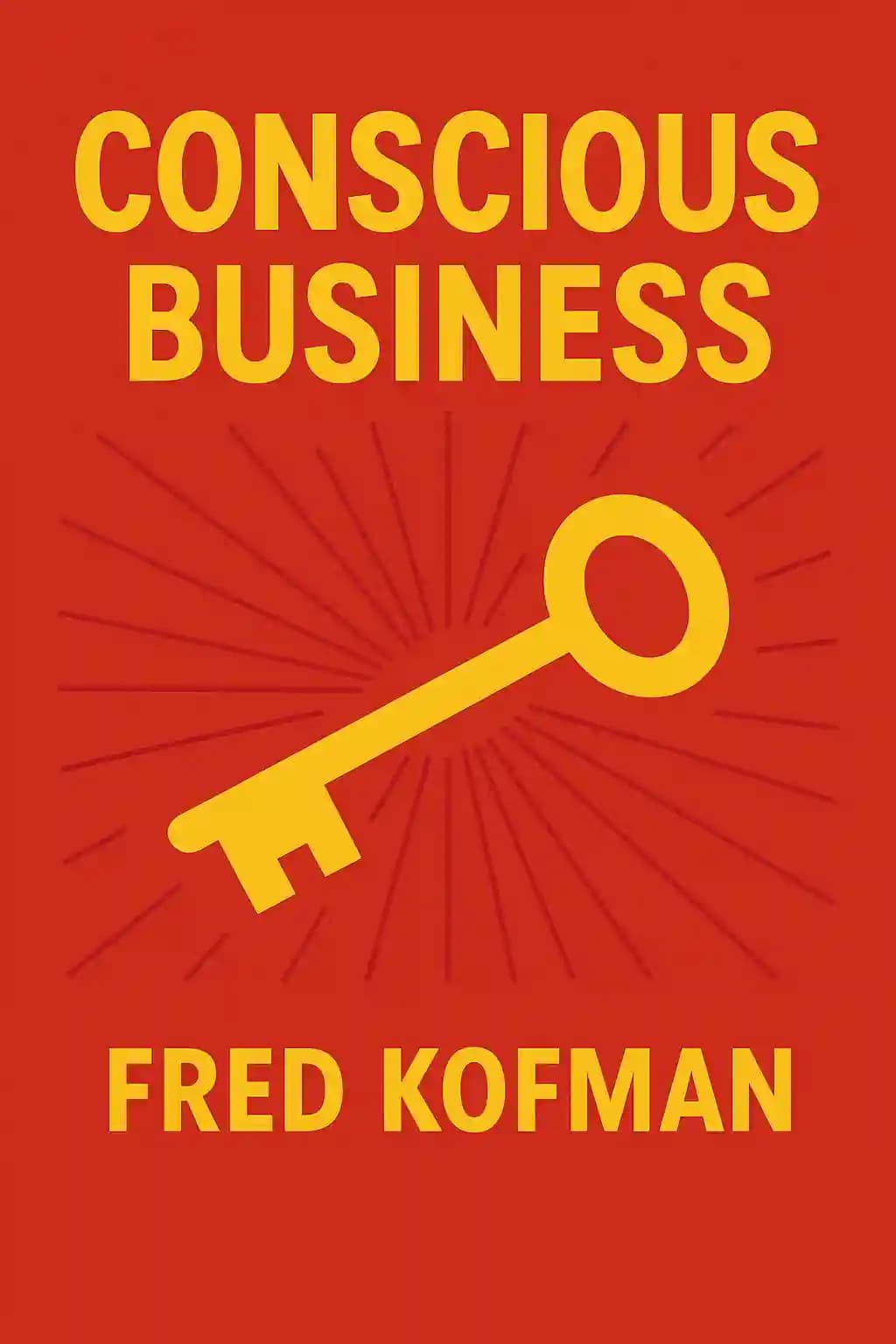
Have you ever wondered why some companies thrive while others with equally talented people struggle? The secret might not be what you think. When Fred Kofman's "Conscious Business" was first published, it quickly became the guidebook for Silicon Valley's elite. Google's co-founder Larry Page called it "the best integral business book" he'd ever read, while LinkedIn CEO Jeff Weiner made it required reading for his executive team. This transformative work doesn't just offer another set of management techniques-it presents a fundamentally different way of approaching business through mindfulness, integrity, and authentic human connection. Drawing from his experiences as an MIT professor and consultant to Fortune 500 companies, Kofman reveals how consciousness transforms not just business results but the lives of everyone involved.
Глава 2
The Conscious Alternative to Business as Usual
In today's high-pressure business environment, many leaders operate on autopilot-responding to challenges through conditioned reactions rather than conscious choices. Fred Kofman defines consciousness as our ability to experience reality and be aware of both our inner and outer worlds. Unlike other living beings, humans possess unique self-awareness that must be developed through intentional practice.
Living consciously means perceiving our circumstances clearly and responding in alignment with our values and goals, rather than operating through instincts and habits. This consciousness includes three distinct capacities: self-awareness (examining our own thoughts and motivations), other-awareness (recognizing others as conscious beings with their own reasoning), and abstraction (transcending concrete experiences through intellectual understanding).
Conscious business applies these principles to the workplace, creating environments where people can bring their full humanity to their work. The approach recognizes that business exists in three dimensions: the impersonal "It" (tasks and effectiveness), the interpersonal "We" (relationships and solidarity), and the personal "I" (individual well-being and meaning). While most organizations focus exclusively on the "It" dimension, conscious businesses understand that sustainable success requires equal attention to all three.
This isn't just philosophical theory-it's practical business strategy. Companies like Google, Microsoft, and Yahoo have embraced conscious business principles precisely because they work. When people feel seen, respected, and connected to meaningful purpose, they bring extraordinary energy and creativity to their work. The result is not just better financial outcomes but healthier, more sustainable organizations where people can thrive personally and professionally.
Глава 3
Unconditional Responsibility: The Foundation of Empowerment
Imagine two sales managers facing the same challenge: a delayed shipment that will disappoint a key customer. The first manager explains, "The shipping company messed up, there's nothing I could do." The second says, "I failed to build enough buffer time into our schedule, and I didn't communicate proactively when I first learned about potential delays. Here's what I'm doing to fix it." Which manager would you rather have on your team?
The difference between these responses illustrates the concept of unconditional responsibility-perhaps the most fundamental principle of conscious business. This approach distinguishes between "victims" who focus exclusively on external causes beyond their control and "players" who focus on factors they can influence.
Victims maintain self-esteem by claiming innocence, never acknowledging their contribution to problems. Their explanations always place blame elsewhere: "The market changed," "My boss is unreasonable," "The client is impossible." While these statements may be factually accurate, they're ultimately disempowering because they offer no path forward.
Players, by contrast, derive self-esteem from doing their best in any circumstance. They acknowledge external challenges but focus on their response: "I didn't anticipate the market shift, but here's how I'm adjusting our strategy," or "I haven't found an effective way to communicate with this client yet, but I'm trying a new approach." Players understand that acknowledging their role in creating problems is the first step toward solving them.
This doesn't mean blaming yourself for everything or denying external realities. Response-ability isn't about guilt but about recognizing your power to respond to circumstances. Like a card player who can't control the hand they're dealt but can play those cards strategically, the conscious businessperson focuses on what they can influence rather than what they cannot.
The victim's stance may seem easier-it protects our ego and avoids uncomfortable accountability. But this protection comes at a devastating cost: it robs us of our power to effect change. By choosing the player's stance, we reclaim our agency and discover that we have far more influence over outcomes than we initially believed.
Глава 4
Essential Integrity: Aligning Actions with Values
When asked to identify admirable character traits, people consistently choose qualities like courage, dignity, kindness, and compassion rather than power, wealth, beauty, or fame. Yet in business, we often unconsciously pursue things that mean little while sacrificing our highest values. Essential integrity addresses this disconnect by aligning our behavior with our core human values.
Every action serves two purposes: moving toward a desired result (success) and expressing values (integrity). While success measures alignment between intended and actual outcomes, integrity measures alignment between behavior and values. When they align, we feel pride; when they don't, we feel guilt. This distinction creates two types of attributes: outcome attributes (dependent on results, like winning) and process attributes (qualities revealed through behavior regardless of outcome).
Consider the marshmallow experiment conducted at Stanford, where four-year-olds who could delay eating one marshmallow to receive two later showed significantly better life outcomes fourteen years later. They scored 210 points higher on SATs and demonstrated better relationship skills, intellectual capacity, and self-control. This illustrates how discipline-the ability to regulate energy toward goals aligned with values-creates long-term success.
Some executives worry that focusing on integrity removes the drive for success, fearing complacency will follow. However, integrity doesn't diminish the importance of success-it enhances it. Integrity implies excellence and full dedication to winning, while providing a wider perspective that prevents short-term thinking. Success tends to focus on local subsystems and immediate outcomes, while integrity considers long-term systemic consequences.
When we examine what we truly want, we discover that all desires lead to the same universal values: truth, happiness, fullness, freedom, peace, and love. Success itself is merely an intermediate goal toward these deeper values. This becomes clear when we ask, "If I got what I want, what would I get that's even more important?" and continue this inquiry until reaching fundamental values.
Essential integrity provides what Kofman calls "success beyond success"-the ability to express your highest values regardless of external outcomes. This creates unconditional power and a safety net of peace and dignity when things don't work out as planned. As Joseph Campbell discovered in his study of world mythology, the "hero's journey" involves separation, initiation, and return-a universal pattern showing how extraordinary growth comes through confronting adversity with integrity.
Глава 5
Ontological Humility: The Power of Multiple Perspectives
Have you ever been absolutely certain you were right about something, only to discover later you were missing crucial information? Ontological humility-the recognition that our perspective is limited and partial-prevents this common trap.
This concept is beautifully illustrated through Piaget's psychological experiment with children. When shown a block with different colors on each side, children under five couldn't grasp that someone facing them would see a different color-they lacked perspective-taking ability. Many executives behave similarly, assuming their perspective is the only valid one.
Our mental models-deeply ingrained assumptions, beliefs, and values-shape how we interpret and respond to the world. These models are formed through four filters: biological (our physiological limitations), linguistic (we see only what we can talk about), cultural (shared practices that become established ways of interpreting reality), and personal circumstance (our unique blend of experiences and history).
These filters are transparent to us-like colored glasses we don't realize we're wearing-yet they dramatically affect how we experience reality. Controllers equate being right with being effective, failing to recognize that in interpersonal situations, effectiveness comes from understanding multiple perspectives rather than proving one's rightness.
Kofman presents two opposing mental models: the "mutual learning" model based on ontological humility and the "unilateral control" model based on ontological arrogance. The mutual learning model helps people stop fighting to prove they hold ultimate truth and start integrating everyone's perspectives. This model rests on three core assumptions: my rationality is limited, other perspectives are complementary, and errors are learning opportunities.
Despite the obvious benefits of mutual learning, most people cling to unilateral control because its defense mechanisms suppress contradictory information. Controllers manipulate others while believing themselves open and curious. Our culture conditions us to feel worthy only when winning, making us push harder when facing opposition.
The toxicity of ontological arrogance comes when we experience our opinions as true descriptions of reality rather than personal interpretations. Whether expressing or withholding these toxic opinions, we create problems-speaking them damages relationships, while keeping them hidden makes relationships superficial and hypocritical.
Humor serves as the most powerful antidote to ontological arrogance. When a joke's unexpected turn destroys your assumptions, your laughter acknowledges that what seemed like fact was merely inference. This shift from arrogance to humility allows you to observe your mental models without attachment, undermining your conceit and opening you to curiosity.
Глава 6
Authentic Communication: Speaking Your Truth with Skill
Every conversation has three dimensions: the task (It), the relationship (We), and the self (I). Difficult conversations become challenging because we feel threatened in all three aspects. On the task level, we believe we understand the situation fully when we don't. On the relationship level, unspoken assumptions create resentment. On the self level, we fall into polarized thinking where any criticism threatens our entire identity.
This creates a common but destructive pattern where our actual dialogue (what we say) differs dramatically from our internal dialogue (what we think). Consider Sharon, an HR director who strongly disagrees with her boss Patricia's proposed benefits policy change but fails to express her concerns during their meeting. The result? The issue remains unaddressed, their relationship deteriorates to a "polite front," and Sharon feels angry at both Patricia and herself for her cowardice.
Our unspoken thoughts typically contain harsh judgments, broad generalizations, and intense emotions like fear and anger-but sometimes also unexpressed positive feelings like gratitude and affection. We all carry these thoughts, yet pretend they don't exist. This creates a "quatrilemma": we can't control these toxic thoughts, expressing them raw causes damage, suppressing them harms us physically and psychologically, and they inevitably leak out anyway.
The solution isn't to dump or swallow this toxic waste, but to refine it through awareness, responsibility, and mutual learning. Like transforming a poisonous tree's fruit into medicine, we can refine our left-hand column thoughts through three steps: awareness (objectively examining our thoughts), unconditional responsibility (acknowledging our contribution to problems), and mutual learning (expressing our views humbly rather than trying to "win").
Authentic communication requires two fundamental skills: productive expression (presenting opinions, feelings and needs respectfully) and inquiry (helping others express their perspectives). Productive expression means presenting your viewpoint effectively without trying to convince others you're right, but rather helping them understand your thinking process. This creates opportunities for others to contribute to your thought process rather than just discussing its final product.
Equally important is productive inquiry-the often overlooked art of truly listening to others. This requires a profound openness and receptivity that stems from genuinely wanting to understand the other person's world. Effective inquiry involves staying physically open with relaxed posture and eye contact; being quiet without interrupting; summarizing what you've heard; acknowledging and validating others' feelings; asking questions to understand rather than to prosecute; and requesting permission before counter-arguing.
Research shows that couples who communicate honestly and respectfully about difficult topics have significantly higher relationship success rates than those who resort to threats, name-calling, or silent fuming. The same principle applies in business-authentic communication transforms conflicts into opportunities for deeper understanding and creative solutions.
Глава 7
Constructive Negotiation: Finding the Win-Win Path
Conflicts that appear destructive can be channeled constructively when approached with the right mindset. Most people handle conflicts poorly because they don't know how to resolve them effectively. Common dysfunctional approaches include denial (pretending conflicts don't exist), avoidance (steering clear of tensions), surrender (giving up one's needs, breeding resentment), domination (imposing solutions at relationship cost), escalation (lobbying authority figures behind others' backs), majority rule (gaining votes rather than finding best solutions), and compromise (meeting halfway but breeding mediocrity).
All these methods take possible solutions as given rather than creating new possibilities together. Constructive negotiation, by contrast, allows people to express needs, create novel solutions, and focus on winning with rather than over others.
Three elements create conflict: disagreement (difference of opinion), scarcity (limitations preventing both parties from getting what they want independently), and disputed property rights (unclear decision-making authority). Conflicts become challenging when approached from narcissistic perspectives-when people can't distinguish between their ideas and themselves, disagreements feel like personal attacks.
Behind every conflict lies a vast space for collaboration-if parties didn't share common interests, they wouldn't be talking. The key is distinguishing between positions (explicit demands) and interests (underlying needs). When you want a glass of water, your real interest isn't the water itself but quenching your thirst. Similarly, in budget conflicts, the position might be "buying new computers" while the interest is "running new software."
The transformative question is: "What would you get through X that's even more important than X itself?" By repeatedly asking this question, you uncover deeper interests-from external needs (like funding children's education) to internal ones (peace, happiness, truth). This creates flexibility where none existed before. If someone wants a raise to fund their children's education, perhaps tuition support would satisfy their interest better than the raise itself-the foundation of win-win negotiations.
When facing operational disagreements, constructive negotiation follows a step-by-step process: find underlying interests, brainstorm alternatives without criticism, negotiate and select from these options, implement an agreed-upon decision-making process if no consensus is reached, make necessary commitments, evaluate and learn from the process, and celebrate successful collaboration.
Working constructively during conflict requires perspective and discipline to move beyond advocating for immediate positions and instead explore deeper interests. This approach not only fosters creative solutions but builds foundations for future cooperation. At a fundamental level, constructive negotiation reveals that beneath apparent resource scarcity lies an abundance of possibilities.
Глава 8
Impeccable Coordination: The Power of Promises
Human coordination through networks of commitments is more fundamental to civilization than technological innovations, and an organization's success correlates strongly with how impeccably its members honor their commitments. When commitments are honored impeccably, people feel secure, trust develops, and actions unfold in coordination. When commitments go awry, productivity plummets and trust turns to resentment.
Many professionals avoid making clear requests due to fear of exposing vulnerability or risking rejection. This indirect approach prevents frank discussion of trade-offs and leads to misinterpretation. Clear requests require several elements: expression that can be understood, identified requester and receiver, measurable standards for satisfaction, underlying need, and explicit agreement. A well-formed request follows the formula: "In order to accomplish W (need), I ask you to do X (specific action) by Y (specific time). Can you commit to that?"
Similarly, people often provide unclear responses to avoid constraints or disappointing others. Before making a commitment, one should consider four questions: Do I understand what's being asked? Do I have the skills and resources? Am I convinced dependents will deliver? Am I willing to be held accountable for anticipating breakdowns? There are six clear responses to requests: "Yes, I promise" (accepting unconditional responsibility); "No, I do not commit" (declining without ambiguity); "I need clarification" (seeking more information); "I commit to respond by (date)" (when verification is needed); "I accept conditionally" (commitment dependent on observable conditions); and "Let me make a counteroffer" (proposing an alternative).
When commitments are broken, a productive complaint transforms the situation into an opportunity for learning and relationship strengthening. Unlike unproductive complaints that vent emotions to third parties, productive complaints address issues directly with the commitment-maker, are made promptly and only once, end with requests that address concerns, help restore impeccability, and encourage learning.
Similarly, effective apologies require more than simply saying "I'm sorry." HP demonstrated this by immediately contacting clients when delivery dates couldn't be met, transforming potential problems into opportunities by taking responsibility and making alternative arrangements. This proactive approach earned them a reputation for reliability despite having similar delivery statistics to competitors.
Leaders communicate cultural standards through their actions, not just words. When they don't live their espoused values or hold others accountable, their words become meaningless. Mission statements and training sessions are insufficient without corresponding leadership behaviors; inconsistency breeds cynicism. Cultural change requires both self-accountability and establishing real consequences for those who violate commitments.
Глава 9
Emotional Mastery: The Heart of Conscious Leadership
While intellectual understanding of conscious business principles allows most people to apply them in normal situations, emotional triggers can derail even our best intentions. Just as a car needs balanced wheels to move smoothly, individuals need balanced emotions to act skillfully, especially under pressure. The faster the periphery rotates, the more still the center must be.
Contrary to popular belief, emotions don't oppose rational thought-they enable it. Neurobiologist Antonio Damasio found that patients who lost emotional capacity through brain damage retained intelligence but became incapable of making decisions. His patient Elliot, who had lost connection between his thinking and feeling centers, could analyze options endlessly but couldn't choose between them without emotional preference. While emotions can overwhelm reasoning, without them there is no reasoning at all.
Emotional mastery requires five basic competencies: self-awareness, self-acceptance, self-regulation, self-inquiry, and self-expression. Self-awareness means knowing what's happening within yourself-not just experiencing emotions but reflecting on them. When you say "I feel fear," part of you is afraid while another part notices the fear. This awareness requires separating from emotions to gain perspective-looking at them rather than through them.
Accepting your emotions without judgment is essential for emotional mastery. Emotions arise automatically beyond your control, so there can be no moral judgment about what you feel-judging yourself for an emotion is like judging yourself for feeling hungry. Self-regulation means controlling and directing emotional energy rather than succumbing to impulses. As Daniel Goleman states, "resisting impulse" is the foundation of all emotional self-control.
To master emotions, you must find their root stories and separate useful information from neurosis. Every emotion grows from an interpretation and creates an impulse. Common emotions have distinct patterns: happiness comes from believing something good happened and calls for celebration; sadness arises from perceived loss and calls for grieving; fear emerges from potential loss and calls for risk mitigation; anger appears when boundaries are violated and calls for productive complaints.
Mastering others' emotions means helping them achieve emotional mastery, not dominating them. Like tuning forks that resonate with each other, people transmit emotional waves that can either escalate or dampen depending on how they're received. A centered person can bring equanimity to relationships by staying grounded during emotional situations.
Forgiveness is essential for emotional mastery but often misunderstood. It is not absolving bad behavior, pretending everything is fine, or adopting superiority. Rather, forgiveness is choosing to let go of resentment-a self-destructive clinging to past pain. As Robin Casarjian notes, "Resentment has been compared to holding onto a burning ember with the intention of throwing it at another, all the while burning yourself."
Глава 10
Business as a Path to Meaning and Fulfillment
The real purpose of business transcends mere profit-making to become a vehicle for self-knowledge, self-actualization, and self-transcendence. Since we spend most of our adult lives working, treating work as merely an economic necessity means consigning the majority of our lives to "wasted," "dead," or "unconscious" time. Instead, work environments that respect, value, and challenge employees create opportunities for self-actualization.
Drawing on Mihaly Csikszentmihalyi's concept of "soul" in business, Kofman explains that extraordinary organizations direct energy beyond self-preservation to care for others. Soulful leaders make a convincing case that working for their organization provides relevance and meaning beyond material existence, connecting workers to something greater and more permanent. This transcendent purpose generates power that naturally attracts people to the company.
Though many businesspeople consider "love" inappropriate in corporate settings, it forms the foundation of all human interactions. Kofman specifically refers to agape-not romantic love but a commitment to others' well-being. This transcendent love is the core of conscious business-the "secret ingredient" that allows business leaders to "return to the marketplace with helping hands."
Business becomes most fulfilling when approached as a game that creates "flow"-a state of total absorption where self-consciousness dissolves and boundaries between self and world disappear. The game's power comes from simultaneously mattering and not mattering-playing to win while knowing that losing isn't catastrophic. Two attitudes can ruin this balance: taking the game too seriously (forgetting the larger context of safety) or not seriously enough (never fully engaging).
The seven qualities of conscious business-unconditional responsibility, essential integrity, ontological humility, authentic communication, constructive negotiation, impeccable coordination, and emotional mastery-are simple concepts but difficult practices because they require a fundamental shift in consciousness. Rather than seeing work as unavoidable hardship, conscious business views work as "love made visible."
As Kofman concludes, implementing these disciplines demands profound commitment and continuous practice. The transformation is irreversible-once you begin seeing clearly, you can never return to unconsciousness. While challenges may seem insurmountable, taking one step at a time with community support allows what is "indestructible to arise within you."