Глава 1
Reclaiming Black Expertise: The Movement to Center Black Voices
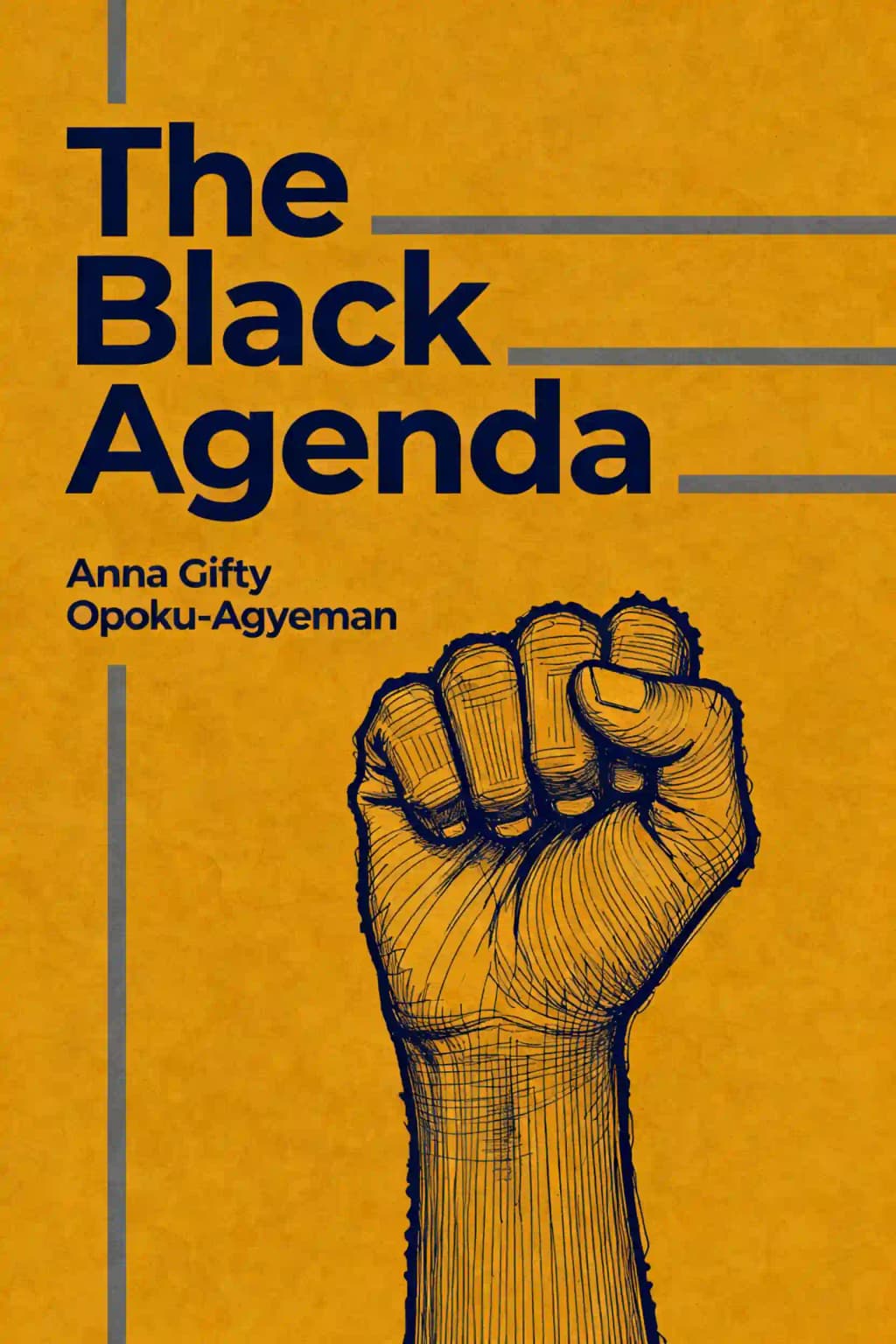
In the summer of 2020, as the COVID-19 pandemic disproportionately devastated Black communities and the murders of George Floyd and Breonna Taylor ignited nationwide protests, a glaring question emerged: Why weren't Black experts leading the conversation on issues affecting Black Americans? This question became the catalyst for "The Black Agenda," a groundbreaking collection that brings together Black scholars, scientists, economists, and public health experts to address America's most pressing challenges. The book quickly gained recognition as a vital resource, with figures from Ibram X. Kendi to Roxane Gay praising its transformative approach. What makes this collection revolutionary isn't just its content but its fundamental premise: Black expertise matters because it combines rigorous academic knowledge with lived experience of racial inequality. As editor Anna Gifty Opoku-Agyeman notes, this isn't merely a book about problems-it's a blueprint for solutions that center Black humanity and ultimately benefit everyone.
Глава 2
The Environmental Justice Gap: Climate Crisis as a Civil Rights Issue
Climate change represents a profound civil rights issue that disproportionately impacts Black communities while being frequently mischaracterized as a concern primarily for affluent white environmentalists. Dr. Marshall Shepherd identifies what he calls the "weather-climate gap"-while all Americans face the same storms, Black communities experience dramatically different outcomes due to historical disinvestment, discriminatory housing practices, and economic disparities.
Hurricane Katrina provided a devastating illustration of this gap. Though everyone in New Orleans faced the same storm, the consequences varied dramatically based on race and class. Similar patterns emerged with Hurricane Harvey in Houston, the Chicago Heat Wave, and Hurricane Maria in Puerto Rico. Black Americans typically live in urban heat islands and flood-prone areas, partly due to historical redlining practices that forced them into environmentally vulnerable neighborhoods.
The South, where most Black Americans reside, experiences the full spectrum of climate hazards. Yet many in these communities view climate change as theoretical compared to immediate concerns like healthcare access and paying bills. This perception gap must be bridged by showing how climate issues directly affect these daily struggles.
Intersectional environmentalism offers a framework for addressing these challenges by recognizing how environmental problems connect to systems of oppression. As Abigail Abhaer Adekunbi Thomas explains, environmental justice leaders like Robert Bullard have long demonstrated that addressing climate change requires dismantling the oppressive systems that perpetuate harm. Success stories like the termination of the Keystone XL pipeline and the Mombasa settlement compensation show how intersectional approaches can simultaneously address environmental degradation and human rights.
Mary Annaise Heglar powerfully argues that climate change is not the "Great Equalizer" but rather the "Great Multiplier," amplifying existing inequalities. For Black communities already living under chronic crisis, climate change adds another layer of threat. The climate movement must recognize climate as a Black issue-understanding how extreme heat interacts with police violence, how prisons lack temperature control during heat waves, and how climate gentrification displaces vulnerable communities.
Глава 3
The Healthcare Crisis: Structural Racism as a Public Health Emergency
The COVID-19 pandemic brutally exposed what many Black health professionals had long known: structural racism creates and sustains health disparities that cost Black lives. These inequities aren't accidental but result from systems designed to privilege white Americans at the expense of Black communities.
Dr. Dara Mendez and Dr. Jewel Scott advocate for using frameworks like public health critical race praxis (PHCRP) to address racial health inequities. This approach emphasizes four core elements: race consciousness, understanding contemporary mechanisms of racism, centering marginalized voices, and maintaining an iterative process of learning and reflection. They propose the R4P framework for actionable steps: Remove power imbalances, Repair historical traumas through measures like reparations, Restructure existing policies, Remediate immediate community needs, and Provide interventions enabling affected communities to access resources.
The healthcare workforce itself reflects these structural inequities. Monica McLemore traces how the 1910 Flexner Report led to the closure of Black medical schools, creating a legacy of underrepresentation that persists today-only 4% of physicians are Black, while the nursing and midwifery workforces remain overwhelmingly white (83.2% and 90% respectively). McLemore proposes three simultaneous strategies: new models that flatten healthcare hierarchy, theoretical frameworks connecting clinical care to social determinants of health, and healthcare reparations including significant investments in HBCUs.
The burden of care work represents another dimension of healthcare inequality. As Yolonda Wilson explains, health justice requires centering care work and supporting those who disproportionately perform it-primarily women of color, especially Black women. This work, often unpaid or underpaid, contributes to persistent wealth gaps, with Black women earning just 61.8 cents for every dollar earned by white men. The unpaid caregiving work women perform is valued at approximately $470 billion annually, with Black women bearing the heaviest burden.
Глава 4
Beyond Medical Care: Wellness as Liberation for Black Communities
The wellness agenda extends beyond traditional healthcare to address how racism affects Black Americans' physical and mental wellbeing across multiple dimensions. Dr. Jaime Slaughter-Acey examines how colorism compounds racism in driving maternal health disparities. Black women in the U.S. are two to three times more likely to experience pregnancy-related complications or death compared to other racial groups, with one in seven Black infants born prematurely. Colorism-a system that privileges lighter skin tones and Eurocentric features-operates across social contexts and modifies exposure to systemic racism, potentially impacting Black women's health more severely than men's.
Disability creates additional layers of vulnerability. As Tinu Abayomi-Paul describes, being a Black disabled woman in America means being "unwillingly invisible in your greatest time of need." Racism compounds disability discrimination, with studies showing Black people's pain isn't taken seriously and some medical devices work less effectively on darker skin. Disabled people lack both upward economic mobility and proper healthcare access, with bureaucratic systems creating numerous barriers from paperwork delays to coordinating appointments and transportation.
Mental health represents another critical dimension of wellness. While 51.5 million U.S. adults experienced mental illness in 2019, half of white adults received treatment compared to just one-third of Black adults. Despite the Affordable Care Act's inclusion of behavioral health as an essential benefit, access remains limited for Black Americans, particularly in the fourteen states that haven't expanded Medicaid-seven of which are overrepresented by Black residents. The contrast between the compassionate response to the opioid epidemic versus the criminalization approach during the crack epidemic highlights how racism shapes even addiction treatment.
Technology offers potential solutions for wellness disparities but must be developed with equity at its core. Black women entrepreneurs like Ashlee Wisdom are creating platforms designed specifically for Black women's needs, recognizing that technology must consider lived experiences and social context to be effective.
Глава 5
Education: The Systemic Theft of Black Opportunity
Education has long been promoted as the great equalizer, yet America's education system continues to perpetuate racial inequality at every level. Before the pandemic, students in predominantly white school districts received over $2,200 in funding for every $1 received by students in nonwhite districts. COVID-19 exposed these long-standing disparities as Black and Brown students often lacked dedicated study space, devices, and high-speed internet for remote learning.
Black girls face particularly harsh treatment in educational settings. Lauren Mims recounts how participants in her after-school program for Black girls initially believed they were selected because they were "bad students" or "loud and ghetto"-revealing how they had internalized harmful stereotypes. Black girls are often perceived as troublemakers rather than scholars, with their assertiveness labeled as aggression. School policies, including dress codes targeting Black hairstyles, further marginalize them, resulting in overrepresentation in disciplinary actions and underrepresentation in gifted programs.
Children's literature serves as a powerful tool for empowerment, helping Black children recognize their value while developing cultural consciousness. Like mirrors, these books reflect what children understand about themselves and their cultural backgrounds, while also serving as windows into different experiences. Quality Black children's literature affirms African American youth by showing their lives are worthy of being celebrated.
Higher education presents additional challenges. HBCUs face unique obstacles in preparing students for an increasingly automated workforce, especially as the pandemic accelerates technological adoption. Despite lower funding opportunities and smaller operating budgets compared to predominantly white institutions, HBCUs must adapt to equip students for the Fourth Industrial Revolution. Black workers are overrepresented in five of the top ten jobs most at risk of automation: cashiers, laborers, cooks, office clerks, and receptionists.
Student loan debt further compounds educational inequality. The Black-white student loan debt disparity increases over young adulthood at about 7.2% annually, with Black borrowers paying down debt at only 2.09% compared to white borrowers' 9.5% rate. Income-driven repayment plans fail to address the crisis, with the median Black borrower still owing 95% of their original loan balance after twenty years.
Глава 6
Technology's Double Edge: Innovation and Algorithmic Assault
The technology industry's treatment of Black voices reveals deep systemic issues despite highly publicized diversity efforts and inclusion initiatives. When prominent AI researcher Timnit Gebru was ousted by Google after raising concerns about research transparency and ethical AI development, it highlighted the precarious position of Black women who represent less than 0.5% of Silicon Valley's technology workforce. This incident sent shockwaves through the tech community and sparked widespread debate about corporate accountability and academic freedom in AI research.
Deborah Raji's groundbreaking experience challenging Amazon's facial recognition technology revealed disturbing disparities: the system was 30% less effective on darker female faces than lighter male faces, with error rates increasing dramatically for women with darker skin tones. When Amazon immediately dismissed her research as "false and misleading," despite rigorous peer review and methodology, it exemplified how Black women in tech face a double burden: first proving technological harm against their communities, then fighting to have their evidence taken seriously despite verification by multiple independent sources. Similar patterns emerged in studies of other major tech companies' facial recognition systems, showing consistent bias across platforms.
Artificial intelligence represents a new brand of social injustice through what Brandeis Marshall calls "algorithmic assault" on Black communities. This manifests in multiple ways: from facial recognition systems that misidentify Black individuals at higher rates, leading to false arrests, to hiring algorithms that systematically disadvantage Black applicants by replicating historical biases in training data. AI bias reflects and replicates existing prejudice, putting innocent Black people in danger through systems that fail to distinguish Black faces properly or make accurate predictions about Black individuals. Healthcare algorithms have been found to underestimate Black patients' needs for medical care, while criminal justice AI systems often overestimate their risk levels.
The white-dominated tech community builds technology without genuine collaboration with Black communities, resulting in applications that overlook Black needs while reinforcing harmful social constructs. This exclusion extends beyond mere representation to fundamental questions about who gets to define problems, propose solutions, and evaluate success in technological development.
The AI community faces a critical language problem that undermines both research integrity and ethical discourse. As Jordan Harrod explains, established researchers often reframe themselves as victims of "militant liberalism" while dismissing algorithmic fairness work as mere political advocacy rather than legitimate technical research. Terms like "bias" function as "suitcase words" with overlapping legal, statistical, and ethical meanings, creating confusion across disciplines and between researchers and the public. This semantic ambiguity allows tech companies to acknowledge "bias" while avoiding meaningful action on discrimination and fairness issues. The field needs standardized terminology and frameworks for discussing these issues that bridge technical and social understanding while maintaining scientific rigor.
Глава 7
Criminal Justice: Beyond Reform to Transformation
The American carceral system fundamentally fails to deliver justice to Black people. Despite the rare conviction of Derek Chauvin for murdering George Floyd, the system remains broken at its core-only 140 police officers were indicted for murder or manslaughter out of 17,500 police killings between 2005 and 2021, with just 44 convicted of any crime.
Black Americans face alarming disparities in police encounters, with Black men 2-3 times more likely to be killed by police than white men, and Black women 1.4 times more likely than white women. These killings stem from racial disparities in police contact, where Black residents face disproportionate rates of stops, searches, and arrests-despite being less likely to possess contraband.
Reform efforts mistakenly assume the system is fundamentally sound with just a few problems to fix. The reality is far more damning: America cages 2.15 million people-a rate nine times higher than Germany-while employing 800,000 police officers who kill over 1,000 people annually and hospitalize 80,000 more. This oppressive policing targets Black communities through stop-and-frisk, vehicle searches, asset forfeiture, and predatory ticketing, with victims having little recourse.
Black women remain largely invisible in conversations about mass incarceration, even though they bear extraordinary burdens from the system. Over half of Black women-nearly ten million-have had a family member incarcerated. When Black men are arrested or imprisoned, it is Black women who shoulder the financial costs of bail, legal fees, commissary accounts, phone bills, and travel for visits.
Black LGBTQ people face severe criminalization, with police violence disproportionately targeting transgender and nonbinary individuals. According to the National Center for Transgender Equality, 58% of transgender people who interacted with police experienced mistreatment, and those incarcerated faced alarming rates of physical and sexual assault.
Instead of continuing failed reform efforts, advocates call for reducing the size and scope of the carceral system entirely. Promising alternatives include shifting mental health crisis response and traffic enforcement away from police, developing violence interruption programs, implementing effective consent education to prevent sexual violence, and strengthening social safety nets to reduce economic insecurity.
Глава 8
Economic Justice: Centering Black Workers in Policy
The COVID-19 pandemic exposed and exacerbated economic disparities that have long plagued Black communities, revealing stark inequities in healthcare access, job security, and financial resilience. Karl David Boulware explains how the Federal Reserve's 2020 revision to its monetary policy framework now commits to reducing labor market disparities, marking a significant shift from its historical approach. This change acknowledges the deep-rooted relationship between workplace discrimination and economic growth, aiming for a recovery that is broad-based and inclusive. The Fed's new framework specifically considers factors like racial unemployment gaps and wage disparities when making monetary policy decisions, rather than focusing solely on aggregate employment numbers.
Kyle K. Moore presents stratification economics as a superior framework for understanding persistent racial economic disparities, offering a more comprehensive analysis than traditional economic models. While Black families own just thirteen cents for every dollar of white wealth and consistently face double the unemployment rate, mainstream economic theories often attribute these gaps to individual or cultural failures. This wealth gap manifests in numerous ways, from limited access to homeownership and business capital to reduced intergenerational wealth transfer. Stratification economics uniquely recognizes that maintaining group-based disparities is rational for dominant groups, providing social and material benefits across class lines. This framework explains how discrimination persists despite market forces that should theoretically eliminate it, highlighting how economic advantages are preserved through social networks, institutional practices, and policy decisions.
Angela Hanks and Janelle Jones argue that centering Black women in economic policy would create a stronger economy for everyone, introducing their "Black Women Best" framework. This approach posits that if policies can enable Black women to thrive economically, the economy must finally be working for everyone, given Black women's position at the intersection of multiple systemic barriers. This requires examining specific obstacles Black women face - from employment discrimination and occupational segregation to lack of bargaining power and limited access to quality childcare. Their framework advocates for developing targeted solutions like strengthening worker protections, making unionization easier (especially in care work and service industries where Black women are overrepresented), and ensuring living wage floors across industries. Additional policy recommendations include expanding paid family leave, increasing access to affordable childcare, and implementing fair scheduling practices that acknowledge caregiving responsibilities. The framework emphasizes that addressing these intersectional challenges creates positive ripple effects throughout the entire economy, benefiting workers across all demographic groups.
Глава 9
Public Policy: The Path to Structural Change
Securing Black voting rights remains a fundamental challenge, as voting rights activist Cliff Albright meticulously documents. Following the historic turnout in the 2020 election, Republican-controlled state legislatures launched an unprecedented wave of voter suppression efforts, introducing over 400 restrictive bills across 49 states. At least 18 states successfully enacted 30 laws that restrict voting access, including measures limiting mail-in voting, reducing early voting periods, implementing stricter ID requirements, and purging voter rolls. Two critical pieces of federal legislation-the John Lewis Voting Rights Act and the For the People Act-could provide vital protections against these restrictions, but Senate Republicans consistently employ the filibuster mechanism to prevent their passage, highlighting the ongoing struggle between federal voting protections and state-level restrictions.
Dania V. Francis presents a compelling analysis of how subtle discrimination operates through ostensibly neutral policies. While explicit racial antagonism draws media attention, she argues that the more insidious threat comes from policies that appear race-neutral but create disparate impacts. Francis draws parallels to historical mechanisms like poll taxes, literacy tests, and grandfather clauses that systematically excluded Black voters while maintaining a facade of racial neutrality. Modern examples include voter ID laws that disproportionately affect minority communities, redistricting practices that dilute minority voting power, and registration requirements that create barriers for low-income voters. She emphasizes the critical role of policy analysts and legislative experts in identifying and challenging these discriminatory measures before they become law.
Olugbenga Ajilore broadens the conversation beyond urban centers, revealing that rural Black America faces unique challenges often overlooked in policy discussions. The Black Belt-a crescent of counties stretching across the South with over 40% African American population-exemplifies these issues. These communities face multiple layers of disadvantage: persistent poverty rates exceeding 20%, median household incomes roughly 40% below national averages, and unemployment rates often double the national figure. The intersection of rural isolation and structural racism creates particularly challenging conditions, including limited access to healthcare, inadequate infrastructure, and declining economic opportunities. These areas, many historically dependent on agriculture and manufacturing, have struggled to adapt to economic changes, further entrenching poverty cycles.
William "Sandy" Darity Jr. provides a comprehensive framework for addressing racial economic inequality through both universal and targeted approaches. The Black-white wealth gap, he demonstrates, serves as the most accurate measure of accumulated racial inequality, reflecting centuries of systematic economic exclusion from slavery through Jim Crow to modern-day discrimination. His proposed Economic Bill of Rights would establish universal programs including a federal job guarantee paying at least $15 per hour, a public banking system to combat predatory lending practices, comprehensive national health insurance, and universal free broadband access to bridge the digital divide. However, Darity argues that these universal programs alone cannot address the specific harm done to Black Americans. His research shows that while Black Americans make up 12% of the population, they hold less than 2% of national wealth-a gap of approximately $840,900 per household that can only be addressed through a targeted reparations program estimated at $10-12 trillion.
Глава 10
The Path Forward: Centering Black Expertise in American Policy
"The Black Agenda" represents more than a collection of essays-it's a fundamental paradigm shift in how we approach America's most pressing challenges. By centering Black expertise across disciplines, the book demonstrates how policies designed with Black Americans in mind ultimately create better outcomes for everyone, from economic mobility to environmental justice to healthcare access.
The contributors' diverse backgrounds-from epidemiologists and economists to AI researchers and disability activists-highlight the breadth of Black intellectual contributions that have been systematically marginalized. Their perspectives combine rigorous academic knowledge with lived experience of navigating America's racial landscape. For instance, public health experts detail how community-based approaches developed in Black neighborhoods during the HIV crisis offer valuable lessons for pandemic response. AI researchers illuminate how diverse teams can identify and mitigate algorithmic bias in emerging technologies. Urban planners share insights on how transportation and housing policies shaped through a racial equity lens create more livable cities for all residents.
As editor Anna Gifty Opoku-Agyeman notes, this collection serves as both a love letter to Black experts and a direct challenge to institutions that claim to value diversity while excluding Black voices from decision-making. The book profiles over two dozen leading Black scholars and practitioners, documenting their methodologies, research findings, and policy recommendations. It eliminates the common excuse of not knowing where to find Black experts while providing a clear litmus test for genuine institutional commitment to racial equity through specific metrics and accountability measures.
The solutions proposed throughout the book offer concrete pathways toward addressing America's most intractable problems. Stratification economics provides frameworks for understanding how racial wealth gaps persist and how to close them. Intersectional environmentalism demonstrates how climate policies must account for historical patterns of environmental racism. The Black Women Best framework shows how centering the needs of Black women in economic policy creates broader prosperity. Public health critical race praxis offers tools for dismantling structural racism in healthcare delivery.
These approaches share a common thread: recognition that systems designed to work for those most marginalized will ultimately work better for everyone. The book provides detailed case studies of successful initiatives, from community land trusts that prevent displacement to cultural competency programs that improve medical outcomes. By documenting both theoretical frameworks and practical applications, "The Black Agenda" points toward a more just and equitable future that honors the full humanity of all Americans while providing actionable steps to achieve it.