Australia's financial bible that transformed 400,000+ lives with its simple "bucket system" for managing money. Scott Pape's no-nonsense approach earned him government advisory roles and made financial freedom accessible to everyone. What's your retirement number?
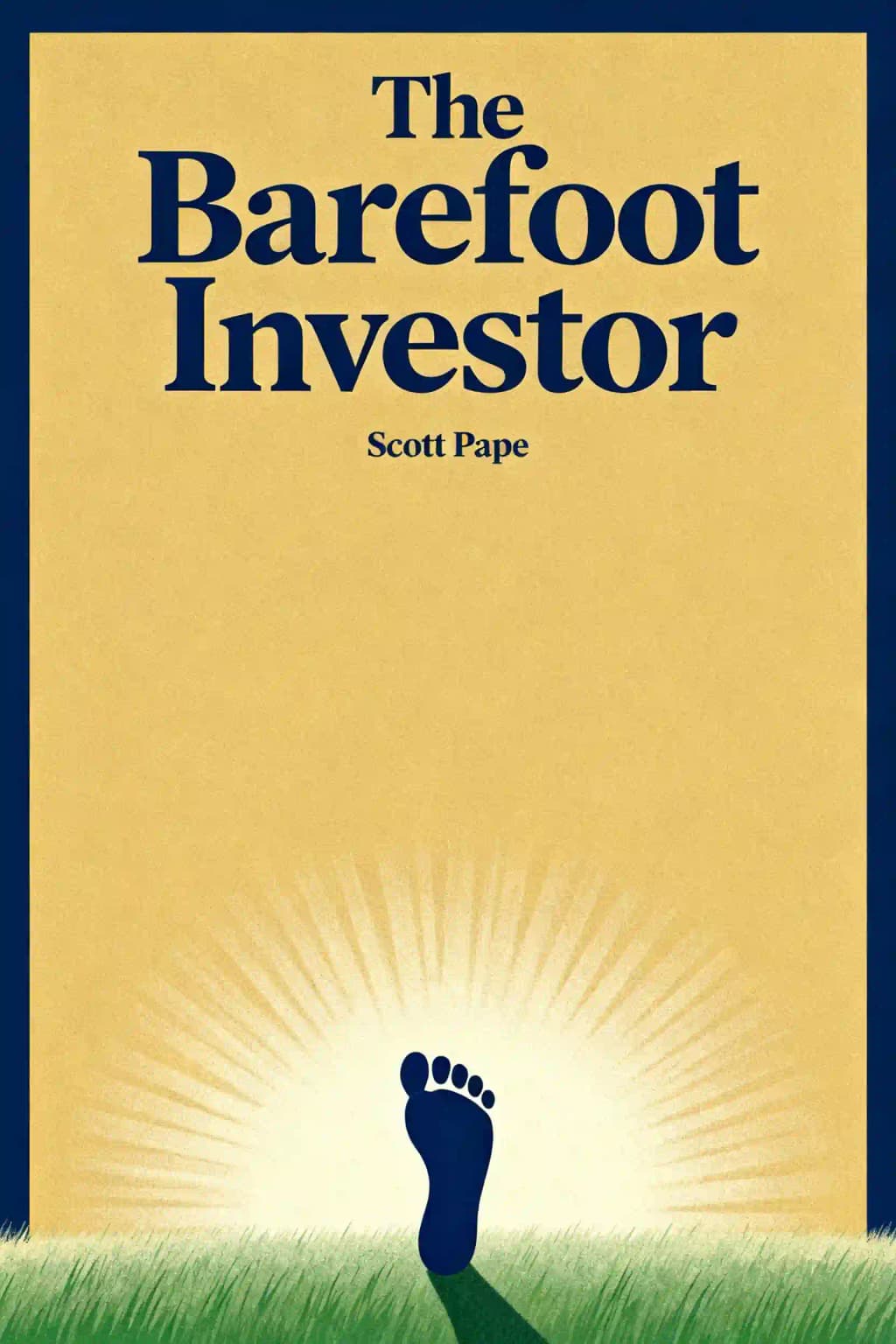
Scott Pape, author of The Barefoot Investor: The Only Money Guide You’ll Ever Need, is Australia’s most trusted personal finance expert and a record-breaking bestselling author. A country-raised financial advisor turned disruptor, Pape combines practical strategies with a relatable, no-nonsense voice to tackle themes like debt elimination, wealth-building, and family money management.
His critique of predatory financial practices, informed by frontline experience as a financial counselor, gained national relevance during Australia’s Banking Royal Commission.
Beyond his flagship book—which has sold over 1.3 million copies and dominated Australian bestseller lists for years—Pape authored The Barefoot Investor for Families and Barefoot Kids, extending his reach to intergenerational financial literacy. His weekly syndicated column in News Ltd publications, recurring radio segments on Triple M, and advisory role to the Australian Government on financial education underscore his authority.
Known for his “alpaca farm to prime-time” authenticity, Pape’s work is credited with transforming how everyday Australians manage money. The Barefoot Investor remains the highest-selling finance book in Australian history, with revised editions keeping its advice relevant since its 2016 debut.
The Barefoot Investor is a practical guide to financial freedom, focusing on debt elimination, automated money management, and building long-term wealth. Scott Pape simplifies complex financial concepts using a three-bucket system (Blow, Mojo, Grow) to allocate income toward daily expenses, emergency funds, and investments. The book emphasizes psychological shifts in handling money, with relatable anecdotes from individuals who transformed their finances.
This book targets individuals struggling with debt, poor savings habits, or financial overwhelm. It’s ideal for those seeking actionable steps to automate budgets, pay off mortgages, or optimize superannuation (retirement funds). While tailored for Australians, its core principles apply broadly to anyone wanting foundational money management skills.
Yes, particularly for beginners or those needing a debt-reduction roadmap. Readers praise its humor, relatable tone, and clear strategies like the "bucket" banking structure. However, advanced investors may find it too basic, and some critiques note its Australian-centric advice and oversimplified views on income vs. savings.
The system divides finances into three buckets:
Pape advocates aggressive debt repayment through automated payments, renegotiating lower interest rates, and avoiding new debt. He prioritizes "bad debt" (credit cards, personal loans) before targeting mortgages. The book combines psychological motivation with practical steps, like setting up separate bank accounts for specific goals.
Critics argue it oversimplifies financial planning, lacks nuance for high-income earners, and leans heavily on Australian-specific strategies (e.g., superannuation). Some readers find its tone classist, dismissing systemic barriers for low-income individuals.
Unlike detail-heavy guides (e.g., Rich Dad Poor Dad), Pape’s book focuses on behavior change with step-by-step banking setups. It’s less technical than The Total Money Makeover but shares similarities in debt prioritization. Ideal for readers preferring humor and simplicity over complex investing strategies.
Yes, particularly through its emphasis on superannuation (Australia’s retirement system). Pape advises contributing 15% of income to super and diversifying investments. The book stresses starting early, even with small amounts, to leverage compound growth.
Pape features anecdotes of readers who eliminated six-figure debts, saved emergency funds, and achieved mortgage freedom using his methods. These stories highlight reduced financial anxiety and improved habits, like automated savings and mindful spending.
Minimally—it prioritizes debt freedom and emergency savings before recommending low-cost index funds. The focus is on stability over high-risk strategies, making it better suited for beginners than experienced investors.
Pape uses casual humor, relatable metaphors (e.g., "financial firefighting"), and a motivational tone. His approachable language demystifies finance, avoiding jargon to appeal to readers intimidated by traditional money guides.
While some advice (e.g., superannuation) is Australia-specific, core principles—automating savings, debt repayment hierarchies, and emergency funds—translate globally. International readers may need to adapt banking product recommendations to local options.
Почувствуйте книгу через голос автора
Превратите знания в увлекательные, богатые примерами идеи
Захватите ключевые идеи мгновенно для быстрого обучения
Наслаждайтесь книгой в весёлой и увлекательной форме
"I've got this."
We must plant the seeds of wealth, nurture them patiently.
The first battle is with ourselves.
Spending time with loved ones directly predicts wellbeing.
Financial control doesn't mean being miserable.
Разбейте ключевые идеи Barefoot Investor на понятные тезисы, чтобы понять, как инновационные команды создают, сотрудничают и растут.
Погрузитесь в Barefoot Investor через яркие истории, превращающие уроки инноваций в запоминающиеся и применимые моменты.
Задавайте любые вопросы, выбирайте свой стиль обучения и создавайте идеи, которые действительно вам подходят.

Создано выпускниками Колумбийского университета в Сан-Франциско
"Instead of endless scrolling, I just hit play on BeFreed. It saves me so much time."
"I never knew where to start with nonfiction—BeFreed’s book lists turned into podcasts gave me a clear path."
"Perfect balance between learning and entertainment. Finished ‘Thinking, Fast and Slow’ on my commute this week."
"Crazy how much I learned while walking the dog. BeFreed = small habits → big gains."
"Reading used to feel like a chore. Now it’s just part of my lifestyle."
"Feels effortless compared to reading. I’ve finished 6 books this month already."
"BeFreed turned my guilty doomscrolling into something that feels productive and inspiring."
"BeFreed turned my commute into learning time. 20-min podcasts are perfect for finishing books I never had time for."
"BeFreed replaced my podcast queue. Imagine Spotify for books — that’s it. 🙌"
"It is great for me to learn something from the book without reading it."
"The themed book list podcasts help me connect ideas across authors—like a guided audio journey."
"Makes me feel smarter every time before going to work"
Создано выпускниками Колумбийского университета в Сан-Франциско

Получите резюме книги «Barefoot Investor» в формате PDF или EPUB бесплатно. Распечатайте или читайте офлайн в любое время.
Ever wondered why some people thrive financially while others constantly struggle? The Barefoot Investor isn't about complex financial wizardry or get-rich-quick schemes. It's a back-to-basics approach that has created what journalists call "The Biggest Finance Cult in Australia," with over a million readers carrying orange bank cards inscribed with financial mantras. What makes this approach so powerful is its fierce independence-no kickbacks or commissions influence the recommendations. When Scott Pape lost everything in a devastating bushfire, he made a pivotal decision while standing amid the rubble with his traumatized wife and crying baby: "I've got this." That moment crystallized his philosophy-because someday, we'll all face our own financial fires. The question is: will you confidently say "I've got this" when that happens?
After the fire destroyed their home, Pape and his wife planted an apple tree amid the chaos. This wasn't for immediate results-you don't plant on Saturday expecting apples on Sunday. You trust the process: plant, grow, harvest. This pattern applies perfectly to money. Most people approach finances like "groundhogs"-repeating the same behaviors while complaining nothing changes. The alternative is developing what Pape calls the "alpaca attitude"-taking responsibility, making tough decisions, and refusing excuses. He witnessed this when his alpacas circled protectively around traumatized sheep despite their badly burned hooves after the fire. The first battle is with our limiting beliefs formed in youth. These "teenage scripts" auto-play whenever we fail: "I'm not smart with money" (it's a learnable skill), "I don't earn enough" (it's about saving, not earning), "I've left it too late" (consider your remaining years), and "The economy sucks" (more millionaires were created during the Great Depression than any other time).
The foundation of financial transformation begins with weekly "Barefoot Date Nights" where you implement financial steps over dinner, garlic bread, and wine. This works whether coupled up or single-the latter can bring a friend or just the book. These dates boost happiness, unite you against financial challenges, and acknowledge that wealth-building takes time. During your first date night, establish a simple banking infrastructure to eliminate fees forever. Most Australians pay the highest bank fees worldwide ($477 per household annually). The solution: set up five accounts-"Daily Expenses" and "Splurge" for everyday use, plus "Smile" (savings goals), "Fire Extinguisher" (debt reduction or wealth building), and "Mojo" (a $2,000 emergency fund at a separate institution). Your second date tackles superannuation, potentially saving hundreds of thousands in just one hour. The finance industry's hidden truth is that you'll pay two-thirds of your super fees after retirement. For a 35-year-old with $50,000 in super contributing $5,000 annually over 30 years, the difference between a fund charging 1% versus 0.02% in fees amounts to $226,484!
After losing everything in a fire, Pape received a large insurance payout but bought almost nothing for a year - an experience that permanently changed his relationship with possessions. Despite Australians having incomes three times higher than in 1950, 62% still believe they can't afford everything they need. When asked how much more money would be enough, people invariably answer "more than I'm earning now." The solution isn't extreme frugality but "conscious spending" - splurging on things that genuinely improve life while ruthlessly cutting unconscious purchases. Pape's first major post-fire purchase was a high-quality pillow. Since we spend a third of our lives on pillows, this purchase delivers millionaire comfort affordably. Even billionaires use pillows - the difference lies in conscious choices, not income. Financial control means redirecting money from meaningless purchases to things that truly matter. Would you rather have leather seats in your car or enough money for experiences that create lasting memories?
The "Serviette Strategy" is a simple three-bucket system sketched on the back of a napkin that puts money management on autopilot. When Pape proposed combining finances with his fiancee Liz, she initially resisted, worried about micromanagement. Yet this approach helped them jointly manage investments, save $27,000 for their dream honeymoon, and pay off their mortgage years early. The system's power lies in its simplicity - if you can't explain your financial plan to a 10-year-old in 30 seconds, it's too complex to maintain. It rejects conventional budgeting that relies on willpower and detailed expense tracking, recognizing that willpower becomes fatigued from overuse. Here's how it works: All take-home pay goes into the Daily Expenses account, then automatically distributes following the "60-10-10-20 rule": 60% remains for basic living expenses, 10% transfers to Splurge for guilt-free discretionary spending, 10% goes to Smile for longer-term goals, and 20% flows to Fire Extinguisher for pressing "financial fires" like debt repayment or saving for a home deposit. Once set up, this system requires just 10 minutes of maintenance weekly - typically a Sunday evening check to ensure all transfers processed correctly. No spreadsheets, no constant monitoring, just financial peace of mind.
Debt is slavery controlling every aspect of your life. Most people learn about money from self-interested banks rather than financially savvy parents, perpetuating destructive debt cycles. Banks target children through school programs, creating databases that offer credit cards when they turn 18. Pape debunks common credit card justifications ("I pay it off monthly," "rewards points," "emergencies") and reveals how credit card interest becomes people's biggest purchase. His five-domino debt elimination method includes: Calculate (list all debts), Negotiate (call creditors for lower rates), Eliminate (cut up cards), Detonate (pay smallest debts first using Fire Extinguisher money), and Celebrate (burn paid statements as motivation). Rather than prioritizing highest-interest debts, Pape emphasizes building momentum through quick wins by tackling smallest debts first. This approach rebuilds confidence and develops financial discipline leading to true freedom. Imagine watching your last credit card statement burn as you declare independence from financial institutions that profit from your struggles.
Financial freedom isn't about mathematics or finance - it's about why you gained control of your money in the first place. At your funeral, people won't mention your luxury car. They'll talk about the good you did and the difference you made to those you loved. The Australian Unity Wellbeing Index reveals the 'golden triangle of happiness': purpose, strong relationships, and financial control. Financial security isn't about net worth but self-worth. Freedom begins the moment you commit to following a commonsense financial plan, not when you've paid off debts or saved enough for retirement. Professor Cummins' research found financial insecurity produces feelings similar to physical torture. Interestingly, low-income earners who felt in control of their finances were happier than higher earners who felt less control. One single mother with massive debt gained immediate confidence after finding a clear financial roadmap in the Barefoot plan. Whatever doubts you face - from others or your inner critic - following these Barefoot Steps will lead to success. Imagine how it will feel a year from now when you can confidently say: "I've got this!" Financial freedom creates space to live a meaningful life on your terms, leaving a legacy of love and wisdom rather than debt and stress.