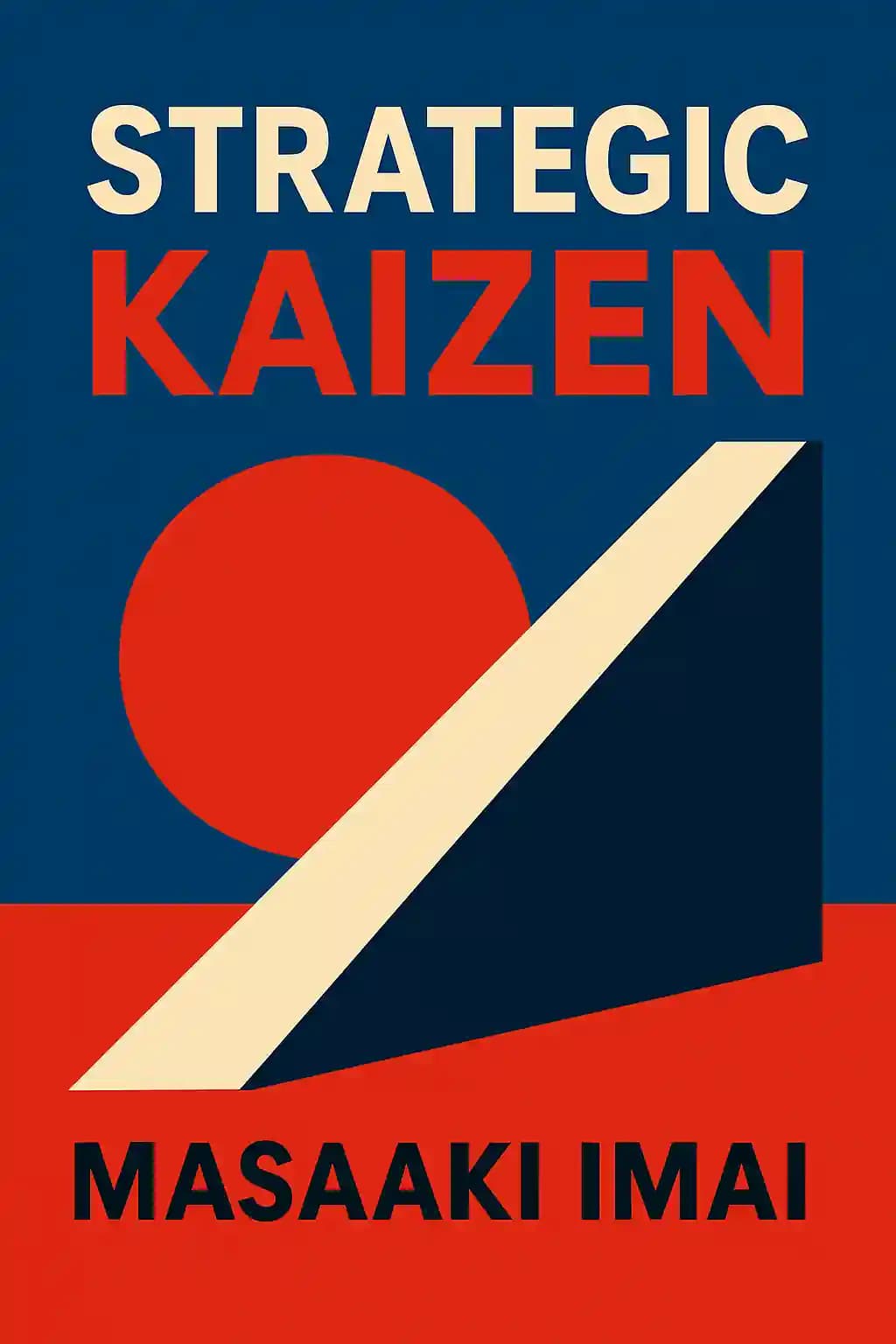
Masaaki Imai's "Strategic KAIZENTM" revolutionizes operational excellence through Flow, Synchronization, and Leveling. The culmination of his 40-year continuous improvement journey has transformed global industries from Toyota to tech giants. What competitive edge could you gain from the man who redefined business efficiency worldwide?
Masaaki Imai, author of Strategic Kaizen: Using Lean, Daily Management, and Toyota Production System Practices to Achieve Operational Excellence, is a globally recognized pioneer of continuous improvement methodologies. A Japanese management consultant and founder of the Kaizen Institute (1985), Imai revolutionized organizational efficiency through his development of the Kaizen philosophy, emphasizing low-cost, incremental process optimization.
His 1986 bestseller Kaizen: The Key to Japan’s Competitive Success introduced Lean Manufacturing principles to Western audiences, selling over 300,000 copies across 16 languages. His follow-up Gemba Kaizen (1997) further codified workplace-centric improvement strategies, now standard in industries worldwide.
Imai’s expertise stems from six decades advising Fortune 500 companies and institutions like Harvard Business School, where his frameworks influenced Lean adopters like Danaher Corporation. Through his institute, operating in 30+ countries, he trains leaders in blending Toyota Production System principles with cultural adaptation. Strategic Kaizen (2021) expands his legacy by integrating daily management systems with strategic objectives. Translated into 10+ languages, his works remain required reading in operational excellence programs globally.
Strategic Kaizen outlines a methodology for aligning continuous improvement (Kaizen) with long-term business strategy. It introduces Flow, Synchronization, and Leveling (FSL) as core pillars to eliminate waste, optimize resources, and enhance operational efficiency. The book emphasizes shifting from short-term fixes to systemic, sustainable improvements backed by case studies from Toyota and other lean enterprises.
This book is ideal for CEOs, operational managers, Lean practitioners, and professionals seeking to integrate Kaizen into strategic planning. It’s particularly valuable for manufacturing leaders but also offers insights for service industries aiming to reduce costs while improving quality and customer satisfaction.
Yes—it’s a critical resource for understanding how to operationalize Kaizen strategically. While some readers note its manufacturing-heavy examples, the principles apply broadly. The book’s focus on minimal resource investment for maximum output makes it a standout guide for achieving sustainable growth.
Traditional Kaizen focuses on incremental, bottom-up improvements, while Strategic Kaizen integrates these efforts with top-down organizational goals. It emphasizes systemic change over isolated fixes, using metrics to align daily tasks with broader business objectives.
These tools help bridge tactical improvements and strategic vision.
Some critics argue the book overlaps with Imai’s earlier works, offering limited new insights for Kaizen veterans. Others desire more non-manufacturing examples. However, its strategic focus and practical frameworks counterbalance these concerns.
These underscore the book’s emphasis on efficiency and cultural transformation.
Unlike Six Sigma’s defect-focused approach or TQM’s quality benchmarks, Strategic Kaizen prioritizes resource efficiency and strategic alignment. It complements these methodologies by embedding continuous improvement into daily operations rather than treating it as a standalone initiative.
Organizations report sustained cost reductions, faster response times, higher employee engagement, and improved customer satisfaction. Toyota’s success with these principles highlights their potential for decades-long competitiveness.
Yes. While manufacturing examples dominate, the FSL framework and waste-reduction principles adapt to healthcare, IT, and logistics. For instance, synchronizing workflows in hospitals or leveling project pipelines in tech teams can yield similar efficiency gains.
Почувствуйте книгу через голос автора
Превратите знания в увлекательные, богатые примерами идеи
Захватите ключевые идеи мгновенно для быстрого обучения
Наслаждайтесь книгой в весёлой и увлекательной форме
Traditional companies operate with maximum resources to produce minimum outputs.
Traditional companies cling to outdated myths like 'cheaper by the dozen'.
Lean operations treat flow as sacred.
Разбейте ключевые идеи Strategic Kaizen на понятные тезисы, чтобы понять, как инновационные команды создают, сотрудничают и растут.
Выделите из Strategic Kaizen быстрые подсказки для запоминания, подчёркивающие ключевые принципы открытости, командной работы и творческой устойчивости.

Погрузитесь в Strategic Kaizen через яркие истории, превращающие уроки инноваций в запоминающиеся и применимые моменты.
Задавайте любые вопросы, выбирайте голос и совместно создавайте идеи, которые действительно находят у вас отклик.

Создано выпускниками Колумбийского университета в Сан-Франциско
"Instead of endless scrolling, I just hit play on BeFreed. It saves me so much time."
"I never knew where to start with nonfiction—BeFreed’s book lists turned into podcasts gave me a clear path."
"Perfect balance between learning and entertainment. Finished ‘Thinking, Fast and Slow’ on my commute this week."
"Crazy how much I learned while walking the dog. BeFreed = small habits → big gains."
"Reading used to feel like a chore. Now it’s just part of my lifestyle."
"Feels effortless compared to reading. I’ve finished 6 books this month already."
"BeFreed turned my guilty doomscrolling into something that feels productive and inspiring."
"BeFreed turned my commute into learning time. 20-min podcasts are perfect for finishing books I never had time for."
"BeFreed replaced my podcast queue. Imagine Spotify for books — that’s it. 🙌"
"It is great for me to learn something from the book without reading it."
"The themed book list podcasts help me connect ideas across authors—like a guided audio journey."
"Makes me feel smarter every time before going to work"
Создано выпускниками Колумбийского университета в Сан-Франциско

Получите резюме книги «Strategic Kaizen» в формате PDF или EPUB бесплатно. Распечатайте или читайте офлайн в любое время.
Have you ever wondered why some companies consistently outperform their competitors despite similar resources? The answer lies in a concept so fundamental yet overlooked by 99% of businesses worldwide. In "Strategic Kaizen," management guru Masaaki Imai reveals the secret behind Toyota's legendary success-the pursuit of flow, synchronization, and leveling (FSL). This revolutionary approach transforms how businesses operate, creating extraordinary results with ordinary resources. Warren Buffett reportedly keeps Imai's work on his nightstand, while companies from Apple to Amazon have incorporated these principles. At its core lies a deceptively simple idea: business excellence comes not from maximizing resources but from optimizing flow-the smooth, continuous movement of materials, information, and processes throughout an organization.