Глава 1
Dreams That Choose the Dreamer
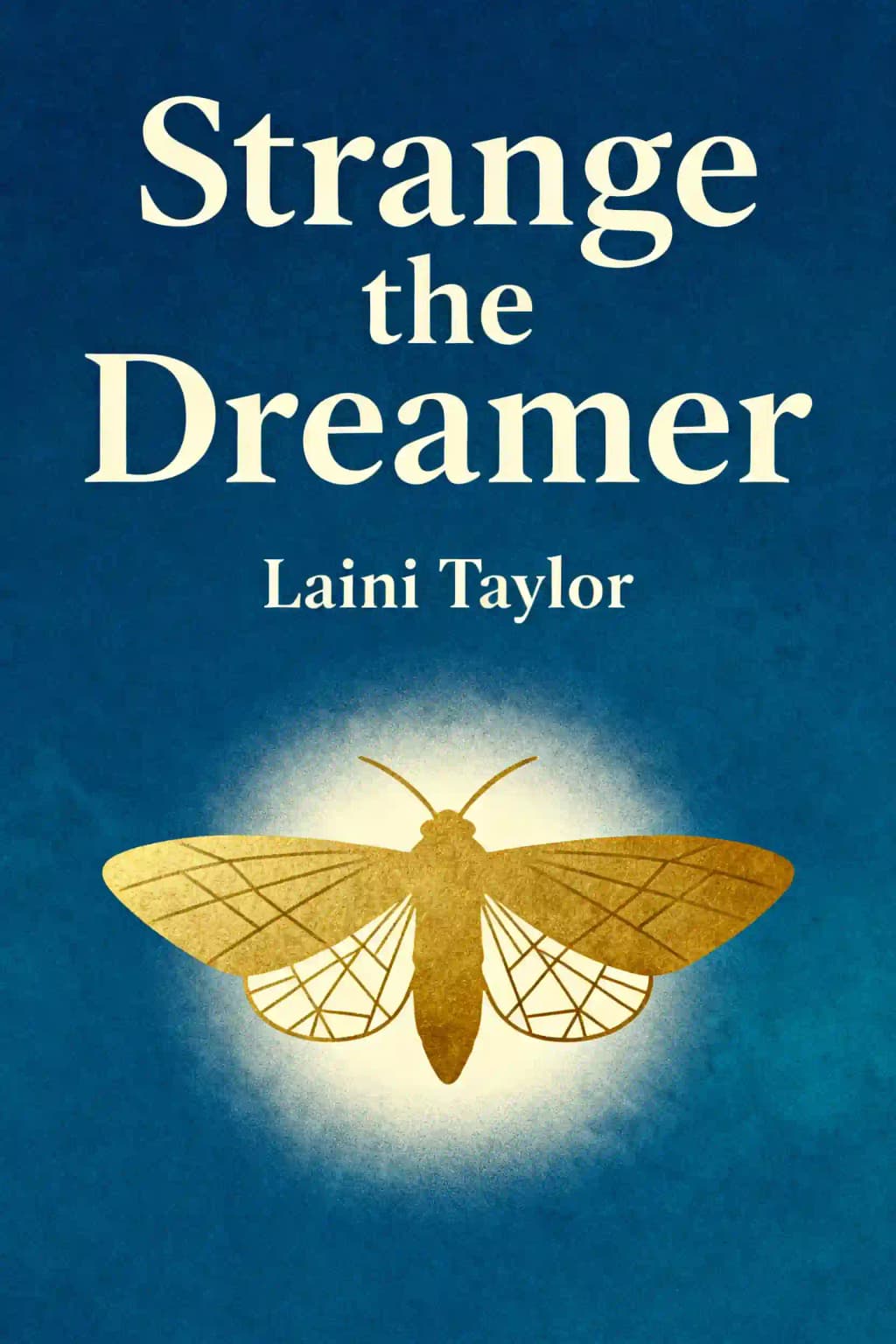
Have you ever dreamed so vividly of another world that waking felt like the true nightmare? Laini Taylor's "Strange the Dreamer" invites readers into a lush fantasy where dreams hold power, names can be stolen, and blue-skinned gods hover above a city shrouded in mystery. This New York Times bestseller captivated readers worldwide when published in 2017, earning Taylor her second Michael L. Printz Honor and cementing her reputation for lyrical worldbuilding. The novel became an instant favorite among fantasy lovers, including celebrities like Neil Gaiman who praised its "vivid, sensual, gloriously imaginative" storytelling. What makes this tale particularly resonant is how it explores trauma, identity, and the power of stories to bridge impossible divides-themes that have made it required reading in many university creative writing programs. As we dive into this mesmerizing tale of librarians and gods, prepare to have your definition of "dreamer" forever changed.
Глава 2
The Forgotten City of Weep
Lazlo Strange is no ordinary orphan. Abandoned at a monastery and named by indifferent monks, he escapes his harsh childhood through stories of a mysterious desert city whose true name has vanished from memory. When five-year-old Lazlo suddenly finds himself unable to speak the city's actual name-only "Weep" emerges from his lips-he becomes convinced that magic exists. This certainty costs him dearly; Brother Cyrus becomes so agitated he must be sedated, and Lazlo receives a severe beating with an apple bough.
Years later, a stroke of luck-the brothers falling ill from bad fish-sends Lazlo to deliver manuscripts to the Great Library of Zosma. Overwhelmed by the forty-foot shelves and floating ladders, he discovers a sublevel of dust-covered books containing folktales about Weep. The library "steals" him, as old Master Hyrrokkin explains, and he becomes an apprentice.
At twenty, Lazlo is known as "Strange the dreamer" for his perpetual absorption in books and myths. His colleagues see only a rough-hewn young man with a broken nose lost in fairy tales, missing his profound purpose. While they dismiss his obsession with the Unseen City, Lazlo nurtures what he calls his "magnificent dream"-one that chose him, not the other way around.
"The dream chooses the dreamer, not the other way around," he often reminds himself while examining ancient cargo manifests for traces of Weep. His impossible dream is to journey across the Elmuthaleth desert to discover what happened to the city two hundred years ago, what occurred fifteen years ago, and what power could erase a name from the world's minds.
This dream seems destined to remain unfulfilled until warriors from the forgotten city arrive at the Great Library, seeking scholars for a mysterious purpose. When their leader, Eril-Fane, addresses the assembled scholars, he explains that his city has been cut off from the world for two centuries but is now emerging from "a long, dark time." They need experts in mathematics, engineering, and metallurgy to solve one final problem haunting Weep.
Though Lazlo lacks these qualifications, he pleads his case in halting Unseen language, offering to serve as secretary or even just carry water. In a moment of vulnerability, he blurts, "I can tell stories. I know a lot of stories." To everyone's surprise, Eril-Fane accepts, saying, "It's been a very long time since we heard new stories." With nothing to gather and fearing this chance might vanish, Lazlo mounts a spectral stag called Lixxa, leaving behind his gray life for the adventure he's always dreamed of.
Глава 3
The Shadow Above the City
Six months later, Lazlo arrives at the edge of the Elmuthaleth desert, transformed by the arduous journey. His library pallor has browned to a deep tan, his once-soft muscles hardened from weeks of riding, his scholarly hands grown callused from handling reins and ropes. The caravan's approach to the Cusp - a towering formation of white rock that resembles a natural fortress protecting the nameless city - sends Lazlo's excitement soaring to unprecedented heights. Each step brings him closer to the dream that has consumed his thoughts since childhood.
When they finally navigate the treacherous, winding path through the Cusp, the world dramatically unfolds before them. The vast Elmuthaleth plateau abruptly falls away into a deep canyon, carved over millennia by a serpentine river that gleams like a silver ribbon in the distance. There, nestled in the valley below, lies the fabled city of Weep - but something immediately strikes Lazlo as terribly wrong. Despite the brilliant desert sun overhead, the entire city lies beneath an unnatural shadow, as if perpetually caught in twilight.
The source of this shadow defies all natural law - a massive structure hovers above the city like a suspended miracle or nightmare. It takes the form of a colossal seraph crafted from mesmerizing blue metal that seems to absorb and reflect light simultaneously. Its vast wings, spread in eternal flight, create a shadow canopy that engulfs the entire city below. Eril-Fane, his voice tight with barely contained emotion, identifies it as "the citadel of the Mesarthim" - a structure that served as palace, fortress, and prison all at once.
The citadel's origin story, as Eril-Fane recounts it, begins two hundred years ago during an otherworldly storm that split the sky. Many citizens initially celebrated its appearance, believing it fulfilled ancient prophecies of a Second Coming. Their holy texts spoke of seraphim descending from the heavens, and their temples were constructed with what they called "the bones of demons." But the Mesarthim proved to be neither angels nor saviors - merely six godlike beings, three male and three female, possessed of extraordinary magical abilities who turned the city's initial welcome into centuries of enslavement.
Though the Tizerkane warriors, led by Eril-Fane himself, managed to defeat the Mesarthim fifteen years ago, their empty citadel remains suspended above - a constant reminder of past horrors and present imprisonment from sunlight. Lazlo finally understands their true mission: to remove this massive structure and "give the city back its sky." Four immense metal anchors, each the size of a small palace, sit at the cardinal points of the city, having crushed sections of the ancient defensive walls when they were originally placed by the Mesarthim.
As the caravan winds its way down into the valley, Lazlo drinks in his first real view of Weep - a sprawling city of golden stone nestled between forest and river. While the golden domes and spires match his countless imagined versions, they don't gleam as they should, forever dimmed by the citadel's shadow. The city carries a profound melancholy, its architecture beautiful but subdued, its people moving through streets with the quiet wariness of those who have endured generations of trauma. The weight of two centuries of oppression hangs in the air as palpably as the shadow above.
What Lazlo doesn't yet know - what none of them suspect - is that the citadel isn't as empty as everyone believes. Above their heads, secrets stir in the seemingly abandoned halls of blue metal, waiting to reshape everything they think they know about Weep's past and future.
Глава 4
The Godspawn Above
High in the floating citadel made of blue mesarthium, seventeen-year-old Sarai listens to her companions Sparrow and Ruby arguing about whether one can kiss ghosts. Unlike her friends, Sarai drinks a draught called lull before sleeping to prevent herself from dreaming-something she doesn't dare to do. While the others feel trapped with only ghosts for company, Sarai spends her nights witnessing the people of Weep, an experience she considers torture rather than freedom.
The five inhabitants of the citadel-Sarai, Ruby, Sparrow, Feral, and Minya-live in a strange family unit, surrounded by orchids grown by Sparrow and ghosts controlled by Minya. All of them have blue skin, which Sarai describes as "blue as five murders waiting to happen." Ruby casually remarks they "won't live long enough to run out of dresses," revealing their shared belief that they have no future.
Each night, Sarai unleashes her gift-a silent scream that releases a cloud of darkness that fractures into a hundred moth-like fragments, carrying pieces of her mind down toward the city of Weep. These dark purple moths, the exact color of night with a shimmer like starlight on water, become extensions of her consciousness, allowing her to enter the dreams of sleeping humans.
For years, she used this power as Minya wished-as a weapon of vengeance, tormenting the people of Weep with horrific nightmares. She collected an arsenal of terrors within herself, becoming skilled at manipulating fear. In the waking world she might be a prisoner, but in dreams she was all-powerful-"sorceress and storyteller, puppeteer and dark enthraller."
When news arrives that strangers have come to Weep, Sarai sends her moths to investigate. Among thirteen sleepers in eleven rooms at the Merchants' Guildhall, she counts twelve outsiders-mostly musty old men, with only two women. Her attention fixes particularly on a young man with a broken nose sleeping in Eril-Fane's house. When she places a moth on his brow to glimpse his dreams, she falls into another world entirely.
Unlike any mind she's ever visited, this dreamer has created a vibrant, magical version of Weep-one with sunlight, golden domes, colored spices, and fantastical creatures living harmoniously alongside humans. The city pulses with colors and life. When she approaches to study him, something impossible happens-he sees her. Their eyes meet, and he whispers "Who are you?" Startled, Sarai snaps back to her physical body, leaving all her moths except one, which falls dead onto Lazlo's lap.
This unprecedented event-being seen by a human in a dream-shakes Sarai to her core. It also marks the beginning of a connection that will change everything.
Глава 5
Dreams That Bridge Worlds
As the delegation begins their work in Weep, testing various methods to move the citadel, Lazlo finds himself drawn to the mysterious blue girl from his dreams. Though he initially believes she's just a figment of his imagination, their dream encounters become increasingly real and intimate.
In their shared dreamscape, Lazlo creates wondrous environments-a vibrant market filled with butterflies and kites, a village where magical mist transforms people into gods or monsters. Sarai is captivated by his imagination and kindness, so different from the cruelty she associates with humans. For his part, Lazlo is enchanted by her beauty, intelligence, and the sadness that seems to haunt her.
"Do you trust me?" Lazlo asks one night, suggesting that Sarai could fall asleep while keeping her moth on him, perhaps remaining in his dream instead of facing her nightmares. Though neither speaks it aloud, the suggestion feels momentous and intimate. Despite her fears, Sarai agrees to try.
Their connection deepens with each dream meeting. When Sarai's nightmares invade Lazlo's dream-bringing visions of Skathis, the cruel blue-skinned god who tormented Weep for centuries-Lazlo doesn't flee. Instead, he helps her confront her fears, showing her how to transform terrors into fireflies and catch them in jars.
As they share kisses in the dreamworld, their relationship evolves from curiosity to deep affection. "I want to catch the sun in a jar and put it away with the fireflies," Lazlo says as he holds her. Their kiss transforms the dreamscape around them-filling it with color and life that reflects their growing love.
Yet their dream idyll is shadowed by harsh reality. When Lazlo naively suggests bringing Sarai down to Weep now that they know about her, her skin reverts to blue, the fantasy broken. She harshly explains that the people would kill her on sight: "When they slaughter thirty babies in their cradles, they call it necessary."
She reveals the terrible truth-that Eril-Fane's shock wasn't from discovering he had a child; it was because he thought he'd killed her fifteen years ago with all the other godspawn children. The man known as the Godslayer earned his title by slaughtering the blue-skinned offspring of the gods, including what he believed to be his own daughter.
Despite this devastating knowledge, Lazlo and Sarai cling to their connection, finding in each other's dreams the acceptance and love they've never known in the waking world.
Глава 6
The Muse of Nightmares
While Lazlo and Sarai build their dream sanctuary, tensions mount in the citadel. Minya, who appears to be a six-year-old child but is actually the eldest of them all, maintains a burning hatred for the humans of Weep. She was the one who saved the others fifteen years ago when they were babies, carrying them to safety while the rest of the godspawn children were slaughtered.
Minya's gift-the ability to bind ghosts to her will-has become increasingly disturbing. She reveals she's been secretly collecting and storing every ghost who died near the citadel for perhaps a decade, creating an army of the dead. When confronted, Minya is defiant, declaring, "Let the Godslayer come, and all his new friends, too. I'll teach them the meaning of 'carnage.'"
She accuses Sarai of being too weak to protect them, suggesting Sarai could have killed Eril-Fane by sending her moths down his throat to suffocate him while he slept. Minya's cruelty reaches new heights when she hisses that she "should have saved a different baby."
Meanwhile, Sarai struggles with her role as the Muse of Nightmares. Though she once used her gift to torment the people of Weep, she's grown increasingly uncomfortable with causing pain. She wonders if her feelings toward humans have changed over time and senses that Feral, Ruby, and Sparrow don't truly hate humans anymore either. Only Minya, who actually remembers the Carnage, maintains her burning hatred.
When Minya discovers Sarai's growing connection with Lazlo, she sabotages Sarai's lull potion through Great Ellen, forcing her to face her nightmares. Desperate to escape, Sarai sends her moths out and finds refuge in Lazlo's dream of Weep, not approaching him but simply curling up to feel safe for a while.
The dynamics among the godspawn grow more complex as Ruby and Feral begin a passionate relationship, leaving Sparrow feeling abandoned and jealous. Their small family unit, already strained by Minya's increasing control, begins to fracture just when they need unity most.
As the delegation prepares to test a silk sleigh to approach the citadel, Sarai warns Lazlo through their dream connection: "If they come, everyone will die." But her warning comes too late to prevent the confrontation between humans and godspawn that will change everything.
Глава 7
The Truth Beneath the Skin
As the silk sleigh approaches the citadel, Minya's ghost army attacks. The ghosts wield kitchen knives and household implements, revealing themselves as ordinary citizens of all ages who died near the citadel. The sleigh escapes the terrace, but the damage is done-now Eril-Fane knows the citadel isn't empty. Someone is alive up there.
Meanwhile, Thyon Nero, the golden godson-alchemist who has always treated Lazlo with contempt, makes a startling discovery. His alkahest-the universal solvent he's been developing-has no effect on mesarthium, except when made with Lazlo's blood. Something about Lazlo is different, special.
When Thyon confronts him, asking "Who are you?" Lazlo realizes he lacks the center of self-knowledge most people possess. He remembers Brother Argos's words that as a baby he was "gray as rain" but his color normalized, and notices the gray discoloration on his palm where he held the mesarthium shard. He wonders if his gray skin as an infant wasn't illness but something stranger.
Before he can fully process these revelations, disaster strikes. Drave, an explosives expert frustrated at being sidelined, detonates bombs near one of the anchors. Though the anchor itself remains undamaged, the bedrock beneath it fractures. With a soul-splitting roar, the anchor begins to sink, and overhead, the citadel comes loose from the sky.
Throughout the citadel, its inhabitants experience the terrifying moment when their home detaches from its anchor. Ruby, Sparrow, and Sarai become weightless on the garden terrace with nothing to catch them. They desperately clutch at metal and plum boughs as gravity seizes them, but one girl-Sarai-slips off the edge and falls toward Weep below.
As the citadel tilts dangerously toward the city, threatening to crush everyone below, Lazlo runs toward the sinking anchor, driven by instinct. Despite voices of doubt echoing in his mind, he places his hands against the mesarthium and feels it come alive beneath his touch. A new sense awakens within him-he can feel the energy patterns holding up the citadel and knows exactly how to restore balance.
He wills the seraph's wings to fold, redistributes the anchor's weight, and even reshapes one of the anchor beasts into something graceful. When the crisis ends, Lazlo pulls his hands from the metal and discovers they've turned vivid azure blue. The gathered crowd stares in shock at this revelation: their beloved outsider is godspawn.
Глава 8
Between God and Ghost
Lazlo confronts the shocked faces of Weep's citizens who struggle to reconcile their librarian friend with his newly revealed blue-skinned godspawn identity. Despite saving them all, he faces their deep-rooted fear and mistrust. Elated by his newfound powers, he looks to the citadel, eager to tell Sarai. "Don't you see what this means?" he asks the suspicious crowd. "I can move the citadel."
Then devastating news arrives: a blue girl has fallen from the sky. She is dead. Lazlo's wonder collapses into nothingness. He summons the reshaped anchor beast, now named Rasalas, and flies to Windfall where he finds Sarai's body arched over a garden gate, her blue skin and cinnamon hair unmistakable, an iron finial pierced through her chest.
Sarai experiences her own death with disbelief. She discovers herself hovering above her own corpse, a weightless ghost watching the horrified citizens of Weep gather around her body. Her remaining moths flutter frantically at her face, unable to carry her home. The terrible truth sinks in: she is dead, and soon her soul will disperse, taking with it all her memories and love.
When Lazlo arrives at the citadel with Sarai's body, he confronts Minya, defining himself only as "Sarai's"-unable to find a word for what they are to each other, yet perfectly true. Minya's fury mounts as she demands he leave Sarai's body and go. Lazlo refuses, his new power surging like a storm ready to burst through his skin.
Minya, shaped by trauma and sacrifice, has stunted her own growth to protect her family. She's barely a person-just a purpose who has given everything. When her ghosts attack Lazlo at her command, he instinctively creates a mesarthium barrier while Rasalas pins Minya down. Seeing her frail body beneath the metal beast's hoof, Lazlo's fury dissolves into shame.
Minya agrees to save Sarai, and Lazlo lays Sarai's body gently among the garden flowers, kissing her eyelids closed and her lips farewell. When Minya opens her eyes with triumph, Sarai appears-gathered from nothingness, whole again in her pink slip without wounds. Sarai embraces Minya with fierce gratitude before rushing to Lazlo.
Their reunion is sweet but brief. As they kiss, Sarai whispers in his ear-but the words are Minya's: "We're going to play a game... You do everything I say, or I'll let her soul go." Sarai's horror is complete as she realizes she's now Minya's puppet, unable to resist. Lazlo understands the threat but refuses to see this as a game. He nods to Minya, accepting her terms while knowing this story is far from over.
Глава 9
Dreams That Defy Gravity
"Strange the Dreamer" weaves a tapestry of impossible love, hidden identities, and the power of dreams to bridge seemingly insurmountable divides. At its heart, the novel explores how trauma shapes us-from Minya's stunted growth and vengeful spirit to Eril-Fane's inability to forgive himself for actions committed under duress. Each character carries wounds that define their choices, yet Taylor suggests that healing is possible through connection and understanding.
The relationship between Lazlo and Sarai embodies this possibility. Despite being separated by seemingly insurmountable barriers-human and godspawn, living and dreaming-they find common ground in their shared imagination and compassion. Their love develops not through physical proximity but through the intimate sharing of minds and dreams, suggesting that true connection transcends physical limitations.
The novel also examines the nature of identity and belonging. Lazlo's discovery of his godspawn heritage forces him to reconsider everything he thought he knew about himself. Is he defined by his blue skin, his newfound powers, or by the dreams and stories that have always been his true home? Similarly, Sarai must reconcile her role as the daughter of a goddess who caused immense suffering with her own desire for peace and connection.
Taylor's lush prose and intricate worldbuilding create a setting that feels both fantastical and emotionally authentic. The city of Weep, with its golden domes perpetually shadowed by the floating citadel, becomes a powerful metaphor for a society unable to move forward while the past literally looms overhead. The mesarthium metal that can only be shaped by thought reflects how our perceptions and beliefs shape our reality.
As the novel closes with Sarai trapped as Minya's ghost puppet and Lazlo discovering powers he never knew he possessed, we're left with questions about sacrifice, redemption, and the possibility of healing ancient wounds. Can Lazlo use his newfound abilities to save both Weep and the godspawn? Can Minya's heart, hardened by witnessing unspeakable horror, ever soften enough to allow peace? And can love-between blue and human, between dreamer and dream-truly transcend the gravity of history?
In a world where names can be stolen and dreams can bridge impossible distances, perhaps these questions aren't as unanswerable as they seem. After all, as Lazlo reminds us, "The dream chooses the dreamer, not the other way around."