Обзор книги Staring at the Sun
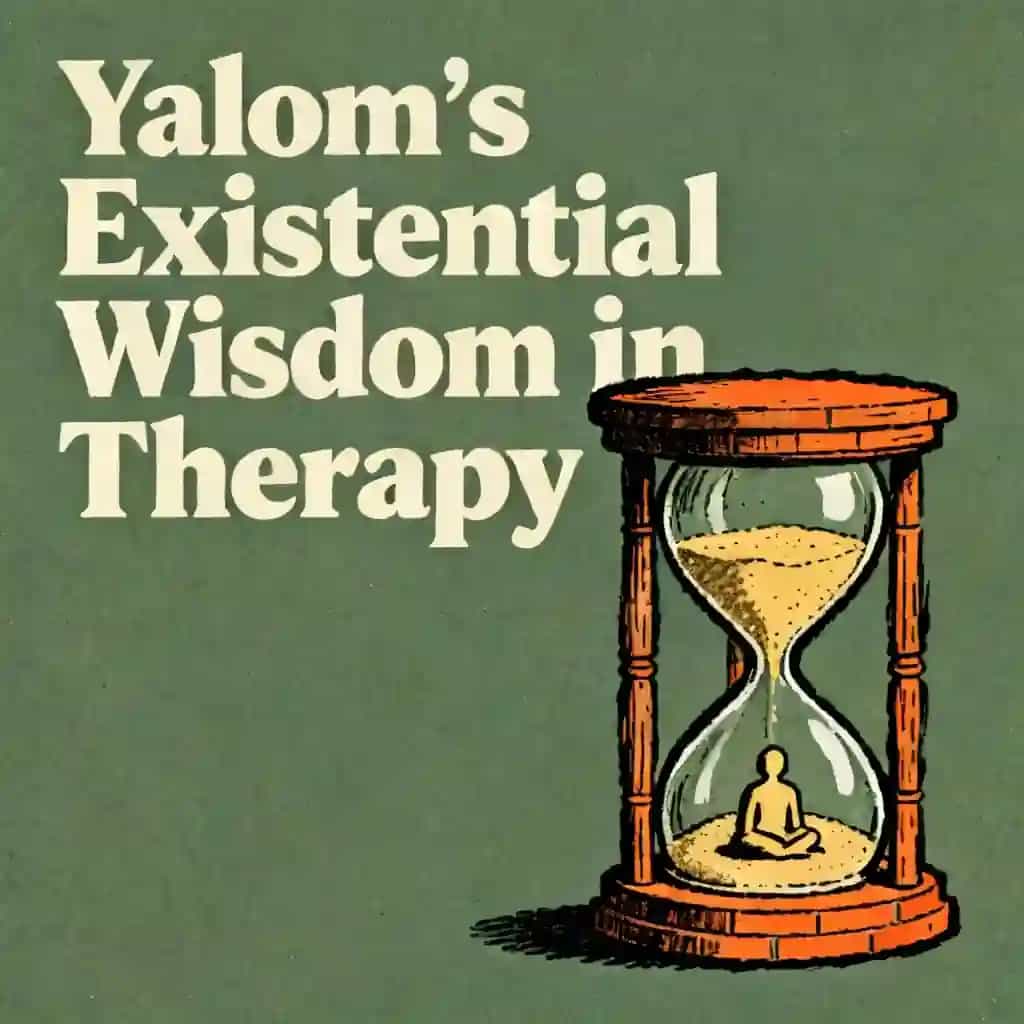
Confronting mortality with Yalom's "Staring at the Sun" - where existential psychology meets our deepest fear. What if facing death anxiety could transform your life? This landmark 2008 work has reshaped therapy approaches worldwide, using Epicurean wisdom to turn our greatest terror into profound awakening.
- Awakening experiences confront mortality to spark authentic living (Irvin Yalom)
- Death anxiety diminishes through philosophy, storytelling, and therapeutic connection
- Childhood encounters with loss shape lifelong death awareness strategies
- Embrace "ripple effect" legacy-building to transcend fear of oblivion
- Existential therapy uses death consciousness as transformative growth catalyst
- Schopenhauer's triad (being-having-representing) reframes mortality's psychological impact
- Therapeutic alliances dissolve death dread through shared human vulnerability
- Mortality meditation shifts focus from longevity to quality of presence
- Authentic relationships act as buffer against existential loneliness (Yalom)
- Recurrent death dreams reveal unconscious struggles with life's finitude
- Late-life vitality emerges from direct engagement with mortality themes
- Buddhist impermanence principles merge with Western psychotherapy techniques
Об авторе книги Staring at the Sun
Irvin D. Yalom, MD, bestselling author of Staring at the Sun: Overcoming the Terror of Death, is a Stanford University emeritus professor of psychiatry and a pioneering figure in existential psychotherapy. Born in Washington, D.C., to Russian immigrants, Yalom bridges clinical expertise with philosophical inquiry, specializing in themes of mortality, meaning, and human connection.
His 50-year career includes foundational textbooks like The Theory and Practice of Group Psychotherapy and acclaimed fiction such as When Nietzsche Wept—a Commonwealth Gold Medal winner translated into more than 20 languages.
Staring at the Sun reflects Yalom’s lifelong exploration of death anxiety, informed by his therapeutic work and existential framework. His other notable works, including Love’s Executioner and The Gift of Therapy, blend narrative depth with psychological insight, making complex concepts accessible to general readers. Honored with the Oskar Pfister Award for psychiatry, Yalom’s books have reached global audiences, with When Nietzsche Wept alone distributing 100,000 free copies in Vienna to promote public engagement with philosophy.
Часто задаваемые вопросы о Staring at the Sun
What is Staring at the Sun by Irvin D. Yalom about?
Staring at the Sun explores overcoming death anxiety through existential therapy, blending clinical case studies, philosophical insights, and personal stories. Yalom argues that confronting mortality fosters deeper connections, purpose, and appreciation for life. The book emphasizes "awakening experiences" (e.g., loss, aging) as catalysts for growth and recommends compassion-driven relationships to alleviate existential terror.
Who should read Staring at the Sun?
This book suits individuals grappling with existential fears, therapists seeking frameworks to address death anxiety, and readers interested in psychology or philosophy. Yalom’s accessible storytelling makes complex themes relatable, particularly for those navigating midlife crises, grief, or aging.
Is Staring at the Sun worth reading?
Yes. Praised as "life-affirming" by the New York Times, it combines scholarly rigor with relatable narratives. Readers gain practical strategies to reframe mortality, making it valuable for personal growth and clinical practice. Critics highlight its poignant blend of vulnerability and wisdom.
What are the main ideas in Staring at the Sun?
- Death Anxiety: Fear of mortality underlies many psychological struggles.
- Awakening Experiences: Trauma, loss, or aging can trigger transformative self-reflection.
- Human Connection: Compassionate relationships mitigate existential isolation.
How does Irvin D. Yalom suggest coping with death anxiety?
Yalom advocates:
- Engaging in creative projects (e.g., writing, art) to leave a legacy.
- Cultivating "ripple effects" through kindness to feel interconnected.
- Using group therapy or philosophical introspection to normalize fears.
What are memorable quotes from Staring at the Sun?
- “The cradle rocks above an abyss” (Nabokov): Highlights life’s fragility.
- “Compassionate connection transcends solitude”: Stresses empathy’s role in alleviating existential dread.
What criticisms exist about Staring at the Sun?
Some argue Yalom’s focus on personal anecdotes overshadows empirical data. Others note his secular approach may not resonate with spiritually inclined readers. A minority critique the lack of direct addressing of societal or systemic sources of anxiety.
How does Staring at the Sun compare to Yalom’s other works?
Unlike Love’s Executioner (therapy case studies) or When Nietzsche Wept (historical fiction), this book synthesizes existential theory with autobiographical reflections. It’s more introspective, targeting universal mortality rather than specific mental health issues.
Why is Staring at the Sun relevant in 2025?
Amid rising social isolation and digital detachment, its emphasis on human connection offers timely solutions. The post-pandemic era’s focus on mental health aligns with its themes of resilience and meaning-making.
What does the title Staring at the Sun symbolize?
The sun represents death’s inevitability—painful to confront directly, yet unavoidable. Yalom uses it as a metaphor for courageously facing mortality to achieve emotional liberation.
How does Yalom use case studies in Staring at the Sun?
Stories like “Jack,” who overcame isolation through community engagement, illustrate how confronting death anxiety reshapes priorities. These narratives provide relatable templates for readers.
Can Staring at the Sun help with daily life challenges?
Yes. Its lessons on mindfulness, volunteering, and nurturing relationships apply to career transitions, family dynamics, and personal setbacks. Practicing “ripple effects” fosters resilience.
What is Irvin D. Yalom’s background in existential therapy?
A Stanford psychiatrist and novelist, Yalom pioneered integrating existential philosophy into psychotherapy. His 50+ year career focuses on mortality, freedom, and isolation, informed by thinkers like Nietzsche and Sartre.
Are there books like Staring at the Sun?
For deeper exploration, consider:
- Man’s Search for Meaning (Viktor Frankl): Logotherapy and purpose.
- The Denial of Death (Ernest Becker): Cultural analysis of mortality.
Почувствуйте книгу через голос автора
Превратите знания в увлекательные, богатые примерами идеи
Захватите ключевые идеи мгновенно для быстрого обучения
Наслаждайтесь книгой в весёлой и увлекательной форме
Персонажи в Staring at the Sun
- Irvin D. YalomAuthor and psychiatrist at Stanford University
- Martin HeideggerPhilosopher who explored the human experience
- Rollo MayPsychologist who studied the nature of anxiety
- MontaigneThinker who suggested reflecting on mortality
Ключевые темы в Staring at the Sun
- death anxiety
- existential psychotherapy
- mortality awareness
- awakening experiences
- symbolic immortality
Цитаты из Staring at the Sun
Self-awareness is humanity's greatest gift and heaviest burden.
The terror of death has haunted humanity since we first developed the capacity to contemplate our own extinction.
Every nightmare contains death anxiety that has escaped its psychological corral.
Anxiety about nothing tries to become anxiety about something.
Though death physically destroys us, the idea of death can save us.
Исследуйте Свой Способ Обучения
 Режим Краткое резюме
Прочитайте или прослушайте краткое содержание Staring at the Sun за 9 минут
Разбейте ключевые идеи Staring at the Sun на понятные тезисы, чтобы понять, как инновационные команды создают, сотрудничают и растут.

 Режим Развлекательно
Уроки из Staring at the Sun в 24-минутных историях
Погрузитесь в Staring at the Sun через яркие истории, превращающие уроки инноваций в запоминающиеся и применимые моменты.
 Режим Персонализация
Изучайте Staring at the Sun в своем собственном стиле обучения
Задавайте любые вопросы, выбирайте свой стиль обучения и создавайте идеи, которые действительно вам подходят.
Создано выпускниками Колумбийского университета в Сан-Франциско
"Instead of endless scrolling, I just hit play on BeFreed. It saves me so much time."


"I never knew where to start with nonfiction—BeFreed’s book lists turned into podcasts gave me a clear path."


"Perfect balance between learning and entertainment. Finished ‘Thinking, Fast and Slow’ on my commute this week."
"Crazy how much I learned while walking the dog. BeFreed = small habits → big gains."
"Reading used to feel like a chore. Now it’s just part of my lifestyle."

"Feels effortless compared to reading. I’ve finished 6 books this month already."
"BeFreed turned my guilty doomscrolling into something that feels productive and inspiring."

"BeFreed turned my commute into learning time. 20-min podcasts are perfect for finishing books I never had time for."
"BeFreed replaced my podcast queue. Imagine Spotify for books — that’s it. 🙌"

"It is great for me to learn something from the book without reading it."
"The themed book list podcasts help me connect ideas across authors—like a guided audio journey."
"Makes me feel smarter every time before going to work"
Создано выпускниками Колумбийского университета в Сан-Франциско
"Instead of endless scrolling, I just hit play on BeFreed. It saves me so much time."
"I never knew where to start with nonfiction—BeFreed’s book lists turned into podcasts gave me a clear path."
"Perfect balance between learning and entertainment. Finished ‘Thinking, Fast and Slow’ on my commute this week."
"Crazy how much I learned while walking the dog. BeFreed = small habits → big gains."
"Reading used to feel like a chore. Now it’s just part of my lifestyle."
"Feels effortless compared to reading. I’ve finished 6 books this month already."
"BeFreed turned my guilty doomscrolling into something that feels productive and inspiring."
"BeFreed turned my commute into learning time. 20-min podcasts are perfect for finishing books I never had time for."
"BeFreed replaced my podcast queue. Imagine Spotify for books — that’s it. 🙌"
"It is great for me to learn something from the book without reading it."
"The themed book list podcasts help me connect ideas across authors—like a guided audio journey."
"Makes me feel smarter every time before going to work"
"Instead of endless scrolling, I just hit play on BeFreed. It saves me so much time."
"I never knew where to start with nonfiction—BeFreed’s book lists turned into podcasts gave me a clear path."
"Perfect balance between learning and entertainment. Finished ‘Thinking, Fast and Slow’ on my commute this week."
"Crazy how much I learned while walking the dog. BeFreed = small habits → big gains."
"Reading used to feel like a chore. Now it’s just part of my lifestyle."
"Feels effortless compared to reading. I’ve finished 6 books this month already."
"BeFreed turned my guilty doomscrolling into something that feels productive and inspiring."
"BeFreed turned my commute into learning time. 20-min podcasts are perfect for finishing books I never had time for."
"BeFreed replaced my podcast queue. Imagine Spotify for books — that’s it. 🙌"
"It is great for me to learn something from the book without reading it."
"The themed book list podcasts help me connect ideas across authors—like a guided audio journey."
"Makes me feel smarter every time before going to work"
"Instead of endless scrolling, I just hit play on BeFreed. It saves me so much time."
"I never knew where to start with nonfiction—BeFreed’s book lists turned into podcasts gave me a clear path."
"Perfect balance between learning and entertainment. Finished ‘Thinking, Fast and Slow’ on my commute this week."
"Crazy how much I learned while walking the dog. BeFreed = small habits → big gains."
"Reading used to feel like a chore. Now it’s just part of my lifestyle."
"Feels effortless compared to reading. I’ve finished 6 books this month already."
"BeFreed turned my guilty doomscrolling into something that feels productive and inspiring."
"BeFreed turned my commute into learning time. 20-min podcasts are perfect for finishing books I never had time for."
"BeFreed replaced my podcast queue. Imagine Spotify for books — that’s it. 🙌"
"It is great for me to learn something from the book without reading it."
"The themed book list podcasts help me connect ideas across authors—like a guided audio journey."
"Makes me feel smarter every time before going to work"

Скачать резюме книги «Staring at the Sun»
Получите резюме книги «Staring at the Sun» в формате PDF или EPUB бесплатно. Распечатайте или читайте офлайн в любое время.