Глава 1
The Sacred Art of Healing Through Prayer
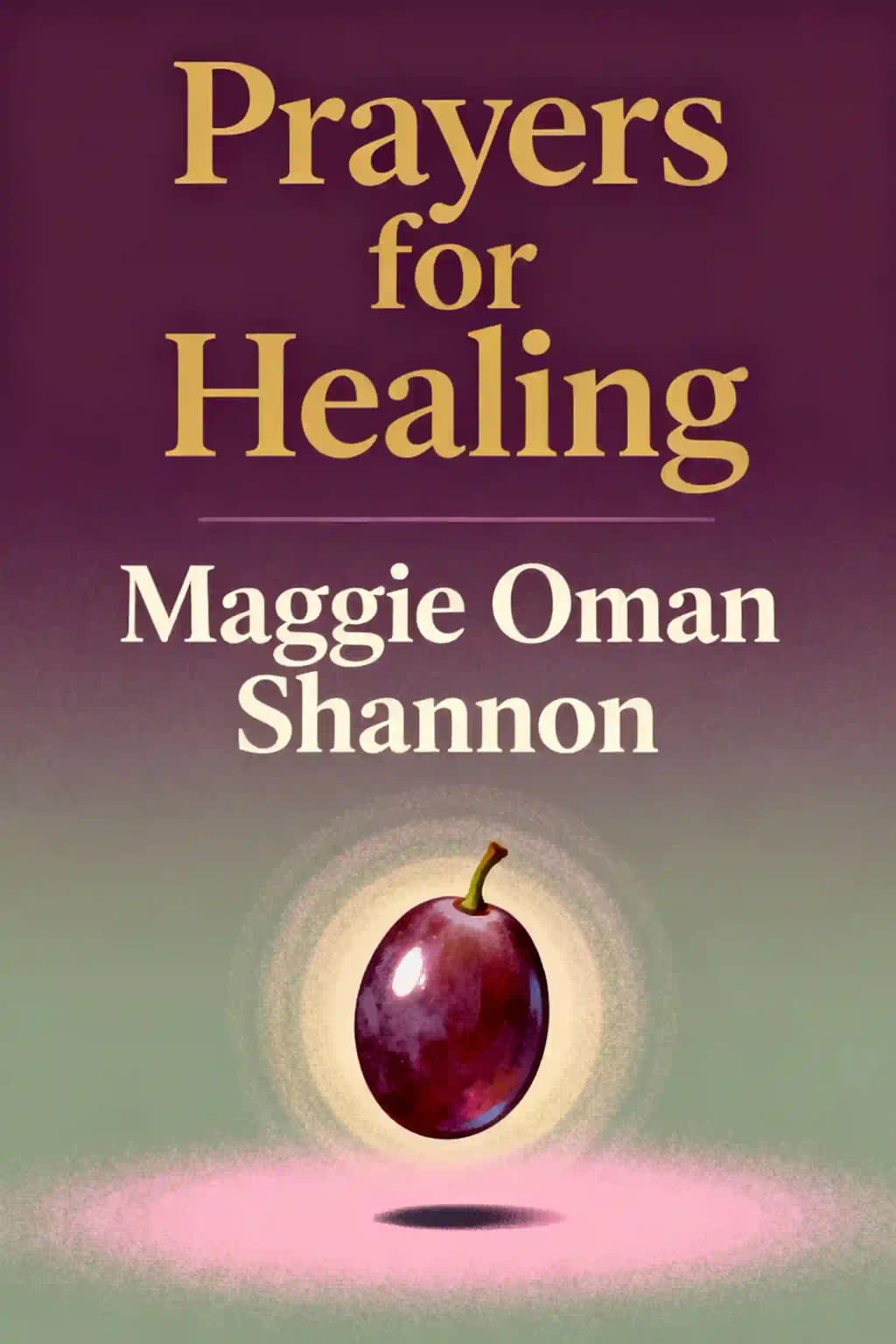
In a world increasingly dominated by technological solutions and pharmaceutical interventions, Maggie Oman Shannon's "Prayers for Healing" stands as a powerful reminder of humanity's eternal quest to reach beyond ourselves. This collection has become a touchstone for spiritual seekers across faiths, with celebrities like Oprah Winfrey and mindfulness pioneer Jon Kabat-Zinn praising its inclusive approach to spiritual healing. Since its publication, the book has sold over half a million copies worldwide and has been translated into 28 languages, reflecting our collective hunger for connection to something greater than ourselves. As we navigate an era of unprecedented global challenges, Shannon's anthology offers a timeless truth: that true healing begins not with costly procedures, but with the simple yet profound act of opening our hearts to divine presence.
Глава 2
The Universal Language of the Soul
Prayer transcends religious boundaries, speaking a universal language that connects us to our most authentic selves. When we pray, we strip away pretenses and stand naked before the divine, acknowledging an unseen realm of ultimate meaning. Shannon's collection honors this universal impulse by including diverse voices spanning centuries and traditions-from Thomas More's elegant 16th-century supplications to Marian Wright Edelman's direct contemporary appeals. The collection also features Buddhist mantras, Native American invocations, and Sufi mystical verses, demonstrating how the yearning for divine connection crosses cultural divides.
What makes prayer so powerful is its ability to transform both the one who prays and the world around them. As the Dalai Lama notes in the introduction, "Inner peace found through prayer and meditation should manifest in service to others." This connection between contemplation and action forms the foundation of nonviolence, extending beyond human relationships to our environment and fellow creatures. Prayer becomes a catalyst for social change, as demonstrated by figures like Martin Luther King Jr., whose spiritual practice fueled his civil rights work, and Dorothy Day, whose contemplative life inspired her service to the poor.
The collection organizes prayers according to the seasons, fostering healing not only within ourselves but in our relationship with the earth. This structure acknowledges the rhythmic nature of healing-how we move through periods of dormancy, growth, abundance, and release, mirroring the natural world's cycles. Spring prayers focus on renewal and hope, summer offerings celebrate abundance and joy, autumn prayers embrace change and letting go, while winter selections encourage introspection and rest. Whether used as daily meditation or random inspiration, these prayers speak to our whole existence, offering solace and strength for whatever season of life we find ourselves in.
What's most remarkable about prayer is its accessibility. Unlike many spiritual practices requiring special training or equipment, prayer requires only an open heart and willingness to connect. In our fragmented world, where technological distractions constantly pull us away from deeper awareness, prayer offers a path back to wholeness-a way to reconnect with ourselves, each other, and the divine presence that sustains all life. The practice can be as simple as a whispered word of gratitude or as elaborate as a formal ritual, adapting to individual needs and circumstances. Even in moments of doubt or spiritual dryness, the act of reaching out through prayer can create a bridge to meaning and purpose.
The collection emphasizes how prayer serves as both solitary refuge and communal bond. When we pray alone, we touch our deepest truths; when we pray together, we strengthen the fabric of human connection. This dual nature of prayer - personal and universal, intimate and cosmic - makes it an invaluable tool for navigating life's challenges and celebrating its joys. Through prayer, we participate in humanity's oldest conversation, joining countless voices across time and space in the eternal search for meaning and connection.
Глава 3
Winter's Wisdom: Finding Light in Darkness
Winter prayers reflect the season's introspective nature, beginning with the Winter Solstice and Lao-Tzu's meditation on finding peace by returning to the source. This darkest time of year invites us to embrace stillness and look inward, discovering inner resources that sustain us through difficult times.
December's prayers acknowledge both darkness and light-George Eliot aspires to be "the cup of strength" for others, while Rumi welcomes all emotions as honored guests in the guesthouse of our being. These winter voices remind us that healing often begins with acceptance of what is, rather than resistance to our current reality.
January opens with Anne Hillman's New Year's meditation on embracing uncertainty: "We must learn to live in the passive voice for a while, to be acted upon rather than to act." This surrender contradicts our culture's emphasis on control, yet paradoxically opens us to deeper healing. Fra Giovanni's Renaissance wisdom reminds us that joy exists within present darkness, not just beyond it: "The gloom of the world is but a shadow. Behind it, yet within reach, is joy."
February's prayers speak to the gradual awakening that precedes spring. Rumi invites us to return regardless of past failures, while Chief Seattle offers ecological wisdom that "we belong to the earth." The Celtic prayer for St. Brigid's Day asks that "the spark of God's love light the love in my heart," acknowledging how divine fire can rekindle our own. Thich Nhat Hanh provides a three-part loving-kindness meditation that extends compassion from self to others to all beings, demonstrating how healing expands in ever-widening circles.
Winter's prayers teach us that healing isn't always about dramatic transformation. Sometimes it's about finding small pockets of warmth in cold seasons, tiny flames of hope when darkness seems overwhelming. As Howard Thurman reassures us at winter's close: "upon the night view of the world, a day view must follow."
Глава 4
Spring's Renewal: Awakening to Life's Possibilities
Spring prayers celebrate nature's rebirth and our own capacity for renewal. The Vernal Equinox meditation observes the "green of new growth" appearing everywhere-in emerging grass, bright tips of evergreens, and blossoming trees. This prayer asks to be "touched by grace" and moved by creation, urging a deeper connection beyond merely observing nature to actually being transformed by it.
March's prayers contrast Bach's healing music with the violence of chainsaws, reminding us that how we perceive the world shapes how we treat it. Goethe's wisdom that "the way you see people is the way you treat them" speaks to the transformative power of perception. Freeman's protective affirmation "wherever I am, God is" offers comfort for anxious times, while Estes urges resilience with her powerful command to "refuse to fall down."
Mary Oliver's beloved poem "Wild Geese" reminds us that belonging doesn't require perfection: "You do not have to be good. You do not have to walk on your knees for a hundred miles through the desert, repenting. You only have to let the soft animal of your body love what it loves." These words liberate us from shame and self-judgment, opening space for authentic healing.
April's prayers connect personal healing with ecological renewal. Hildegard of Bingen implores the "budded, greening branch" to raise up frail ones, while Pat Mathes Cane's prayer unites us "with the Earth and with each other." Jim Cohn reminds that "You carry the cure within you," suggesting that healing resources already exist within us, waiting to be activated.
May's prayers address suffering directly. Augustine asks for light when burdens weigh heavy, while A Course in Miracles teaches that healing requires facing fears rather than avoiding them. Deena Metzger's powerful prayer for animals asks forgiveness for human harm, acknowledging that our healing is intertwined with the healing of all creation.
Spring's prayers teach us that renewal isn't just personal-it's communal and ecological. True healing reconnects us with the web of life, helping us recognize our place within a larger living system. As we align with spring's regenerative energies, we discover that healing isn't something we achieve alone but something we participate in alongside all growing things.
Глава 5
Summer's Abundance: Embracing Life's Fullness
Summer prayers celebrate vitality and connection, beginning with Meister Eckhart finding strength in the presence of children and animals. This season of abundance invites us to experience life's fullness-even as we acknowledge its impermanence.
William Styron reflects on recovery from depression as an ascent from darkness to "the capacity for serenity and joy," while Rumi speaks of transformative nights that "stay up till dawn" where "something opens our wings." These prayers remind us that healing often comes through surrender to forces greater than ourselves.
July opens with a Native American proverb comparing life to a wildflower "growing freely in beauty and joy." This simple image captures summer's essence-the spontaneous expression of life's inherent beauty. Teilhard de Chardin reminds us of our fundamental interconnection: "We are one, after all, you and I; together we suffer, together exist, and forever will recreate each other."
Lao-Tzu advises calming the mind by connecting with "subtle origin" until it becomes "vast and immeasurable as the night sky." This expansive awareness contrasts with our tendency toward contraction when in pain. Natalie Goldberg compares resilience to grass that "can be mowed and trampled, but it continues to grow," offering a powerful metaphor for human resilience.
Julian of Norwich's famous reassurance that "all shall be well, and all shall be well, and all manner of thing shall be well" speaks to summer's confidence-not naive optimism but deep trust in life's underlying goodness. Phil Cousineau shares a Marrakesh encounter with blind drummers who taught him about feeling through hands, reminding us that limitations often open unexpected pathways to perception.
August continues with the Buddha's verses calling for universal kindness toward all beings "whether they be frail or very strong." Joan Metzner offers a planetary prayer addressing militarization and pollution, asking God to "transform our fears" and "purify our vision." These prayers recognize that personal healing cannot be separated from planetary healing-that our individual wellness depends on collective wellbeing.
Summer's prayers teach us to embrace life's abundance while recognizing its transience. They invite us to experience the fullness of each moment without clinging to it, to love deeply while holding lightly. As Theodore Roethke reflects: "Being, not doing, is my first job."
Глава 6
Autumn's Harvest: Gathering Wisdom from Experience
Autumn prayers honor life's cycles of growth and release, beginning with Chris Van Cleave's equinox meditation: "The summer yields to the autumn winds blowing/While the cool burns the leaves golden red." This seasonal transition invites us to consider what we're harvesting from our experiences and what we need to release.
Late September prayers reflect on transition and acceptance. Wendell Berry's simple prayer seeks to "rise up joyful like a bird" and "fall without regret like a leaf," embracing both ascent and descent as natural movements. Saint Francis de Sales counsels patience with oneself, acknowledging that spiritual growth, like natural growth, cannot be rushed.
October begins with prayers seeking peace amid life's challenges. Saint Francis of Assisi's famous prayer asks to become an "instrument of Your peace," seeking to console rather than be consoled. A Ravensbruck concentration camp prisoner offers extraordinary forgiveness toward captors-perhaps the most radical healing prayer in the collection, showing how even the most severe wounds can become pathways to transcendence.
Hildegard of Bingen celebrates the Holy Spirit as "our true life, luminous, wonderful, awakening the heart," while Le Ly Hayslip reflects on forgiveness as abandoning revenge that would follow "into my next life." These autumn voices speak to the spiritual maturity that comes from fully processing life's experiences-both joyful and painful.
Mid-October prayers explore spiritual awareness and transformation. Lao-Tzu counsels to "do your work, then step back" as the path to serenity. Emerson celebrates beauty as "the favor of God" flooding "the whole system with tides of joy." Nietzsche urges faithfulness to earth, while Juan Ramon Jimenez acknowledges the deeper self "who remains standing when I die."
November opens with prayers for collective healing and social justice. Marian Wright Edelman offers a powerful Election Day lament, repeatedly asking God to "forgive our rich nation" where children suffer "quite legally" while we confuse legality with justice. This prayer reminds us that healing must address systemic injustice, not just individual suffering.
Rilke advises loving questions themselves "like locked rooms" rather than seeking premature answers. D.H. Lawrence envisions transformation where "we shall laugh, and institutions will curl up like burnt paper." These autumn prayers acknowledge that some forms of healing require patience and radical reimagining of social structures.
November concludes with expressions of gratitude, Brother David Steindl-Rast calling gratefulness "a celebration of the universal give-and-take of life." Nancy Wood's meditation on seasonal cycles reminds us that even death serves life: "You shall ask what good are dead leaves/And I will tell you/They nourish the sore earth."
Глава 7
Winter's Return: Finding Peace in Life's Cycles
As the wheel of the year completes its turn, December's prayers seek guidance through darkness. The African-American spiritual "Precious Lord" pleads "Take my hand... I am tired. I am weak. I am worn," acknowledging vulnerability as a starting point for healing. Wendell Berry invites us to "go dark" and discover how darkness "blooms and sings," suggesting that what appears as absence may contain its own fullness.
An Eskimo shaman teaches that wisdom "can be reached only through suffering," while Rilke urges transformation: "If drinking is bitter, change yourself to wine." These winter prayers acknowledge difficulty while pointing toward alchemical possibilities-how our challenges might become the very substances that transform us.
The Upanishads petition "From the unreal lead me to the real, from darkness lead me to light," expressing the universal human longing for truth and clarity. Gibran defines freedom not as absence of cares but rising above them "naked and unbound," suggesting that healing comes not from escaping life's difficulties but transcending them.
Basho finds unexpected beauty in a hated crow on a snowy morning-a perfect winter koan teaching us how to discover grace in what we've previously rejected. Ted Loder prays to be "gentled" into "an unclenched moment," recognizing how tension itself can become an obstacle to healing.
As winter deepens, Dhyani Ywahoo speaks of sensing the balance of Mother/Father within oneself as a way to "renew the Earth, to renew our hearts." A Chinese proverb offers hope with the wisdom that entering a dark forest means you're already halfway to emerging on the other side. Caitlin Matthews gives thanks for evergreen trees that teach how hearts can remain "growing through winters of doubt and darkness."
Paul Tillich describes grace as striking us when life becomes intolerable, arriving as a wave of light breaking into darkness with the message: "You are accepted." This profound insight captures the essence of spiritual healing-the recognition that we are embraced by love even in our brokenness, perhaps especially in our brokenness.
The collection concludes with A Course in Miracles affirming "This is the day when healing comes to us... when separation ends, and we remember Who we really are." This final prayer points to healing's ultimate purpose: not just alleviating symptoms but restoring our awareness of wholeness and connection to all that is.
Глава 8
The Healing Power of Diverse Spiritual Traditions
One of the collection's greatest strengths is its inclusion of prayers from diverse spiritual traditions-Christian, Jewish, Buddhist, Hindu, Muslim, Indigenous, and secular humanist voices all find expression here. This diversity reflects Shannon's understanding that healing wisdom belongs to all humanity, not just particular religious traditions.
Christian prayers range from ancient liturgical texts to modern contemplative voices. Teresa of Avila's famous "Let nothing disturb you" sits alongside contemporary theologians exploring ecological spirituality. Jewish prayers honor creation's beauty and seek tikkun olam-the repair of the world. Buddhist meditations cultivate compassion for all beings and mindful presence in each moment.
Hindu prayers invoke divine energies for protection and transformation, while Indigenous voices teach reverence for Earth and all her creatures. Muslim prayers seek surrender to divine will, and secular humanist reflections honor human resilience and interconnection without specific religious language.
This diversity invites readers to discover common threads across traditions while appreciating each tradition's unique contributions. We see how all authentic spiritual paths ultimately lead toward greater awareness, compassion, and connection-the essential ingredients for healing at individual and collective levels.
The collection also spans historical periods, from ancient Vedic hymns to contemporary ecological prayers. This temporal diversity reminds us that humans have always sought healing through spiritual connection, even as expressions of that impulse evolve with changing cultural contexts.
By bringing these diverse voices into conversation, Shannon creates a spiritual tapestry that transcends denominational boundaries. Readers discover that healing prayers across traditions share common elements: acknowledgment of suffering, surrender to greater wisdom, gratitude for life's gifts, and commitment to serving others. These universal themes remind us of our shared humanity and common spiritual heritage.
Глава 9
Integrating Prayer into Daily Life for Ongoing Healing
Shannon's seasonal organization offers a practical framework for integrating prayer into daily life, following the natural rhythms of spring's renewal, summer's abundance, autumn's release, and winter's rest. Rather than presenting prayer as an occasional emergency measure, the collection encourages regular spiritual practice that mirrors these natural cycles, making prayer a sustainable, organic part of daily living.
The book's versatile design allows for multiple approaches to practice. As a daily meditation companion, readers can follow its calendar progression, creating a structured year-long journey of spiritual growth. Those seeking specific support can utilize the comprehensive index to find prayers addressing particular concerns - from anxiety and grief to celebration and gratitude. The collection also serves as a spiritual oracle, allowing readers to trust their intuition in randomly selecting prayers that resonate with their current needs.
The effectiveness of these prayers transcends religious boundaries, focusing on the transformative power of sincere spiritual connection. When we pray, we create sacred pauses in our busy lives, interrupting stress patterns and reactive behaviors. This intentional pause opens channels to deeper wisdom, whether we conceive of it as divine guidance, inner knowing, or universal consciousness. The act of prayer itself generates healing frequencies that ripple through our being.
Regular prayer practice develops essential healing qualities through consistent engagement. Gratitude becomes a daily practice, training us to recognize blessings even in challenging circumstances. The practice of surrender helps release rigid control patterns and excessive worry, allowing natural healing processes to flow. Compassion expands through prayers that include others' wellbeing, creating healing ripples beyond our personal sphere. Trust deepens as we witness how life unfolds in unexpected but meaningful ways.
Shannon's collection emphasizes prayer as a practice of radical alignment with reality. Rather than using prayer to escape or deny difficult circumstances, these prayers encourage us to fully embrace our experience while opening to deeper sources of support and wisdom. This alignment itself becomes healing as we learn to flow with life rather than resist it, discovering unexpected resources and strengths within ourselves.
The carefully crafted poetic language engages multiple dimensions of consciousness. Metaphorical images speak to the right brain's intuitive wisdom, while rhythmic patterns calm the nervous system. Emotional resonance helps process stuck feelings, while spiritual insights expand mental perspectives. This holistic engagement facilitates healing at physical, emotional, mental, and spiritual levels simultaneously. The prayers become internal companions, working subtly yet powerfully to transform our relationship with ourselves, others, and life itself.
Through regular practice, these prayers become more than words - they become bridges to deeper dimensions of being, offering guidance and support through life's continual cycles of challenge and growth.
Глава 10
Finding Your Own Healing Prayer
Shannon concludes her introduction with the hope that readers will find at least one prayer that resonates deeply and contributes to their healing, whatever their circumstance. This invitation acknowledges that different prayers speak to different people and different situations-there's no one-size-fits-all approach to spiritual healing. Some may find comfort in traditional, structured prayers while others connect more deeply with contemporary, informal expressions of faith.
The collection's diversity ensures that virtually anyone can find language that speaks to their condition. Whether you're facing physical illness, emotional distress, relationship challenges, or spiritual confusion, these prayers offer pathways to greater peace, clarity, and wholeness. For instance, those dealing with grief might find solace in prayers of remembrance and acceptance, while those battling illness might draw strength from prayers focusing on courage and resilience. The anthology includes prayers for daily struggles like anxiety and loneliness, as well as prayers for major life transitions and profound loss.
Beyond finding existing prayers that resonate, readers might be inspired to create their own healing prayers. The collection models various approaches-from structured liturgical forms to free-flowing poetic expressions-that can inspire personal prayer creation. Some prayers follow traditional patterns with formal address and petition, while others take the form of intimate conversations or meditative reflections. Readers are encouraged to experiment with different styles, incorporating meaningful symbols, personal metaphors, and elements from their own spiritual traditions.
Shannon's anthology reminds us that prayer is both ancient tradition and living practice. These timeless words continue to evolve as each new generation brings its unique concerns and insights to the eternal human conversation with the divine. Modern prayers address contemporary challenges like digital overwhelm, environmental anxiety, and pandemic-related fears, while maintaining connections to age-old themes of hope, transformation, and divine presence. As we add our voices to this ongoing dialogue, we participate in humanity's collective healing journey.
In a world increasingly fragmented by technology, ideology, and individualism, prayer offers a path back to wholeness-reconnecting us with ourselves, each other, the natural world, and the mysterious source from which all life flows. Prayer can serve as a daily practice of integration, helping us weave together the scattered pieces of our lives into a meaningful whole. It provides a sacred space where we can acknowledge our wounds, express our longings, and open ourselves to transformation. As we open ourselves to this connection, we discover that healing isn't something we achieve through force of will but something we receive through grace when we create space for it to enter. This receptivity to grace often comes through consistent practice, patient listening, and the willingness to be vulnerable before the divine.