Глава 1
When Porn Becomes the New Normal
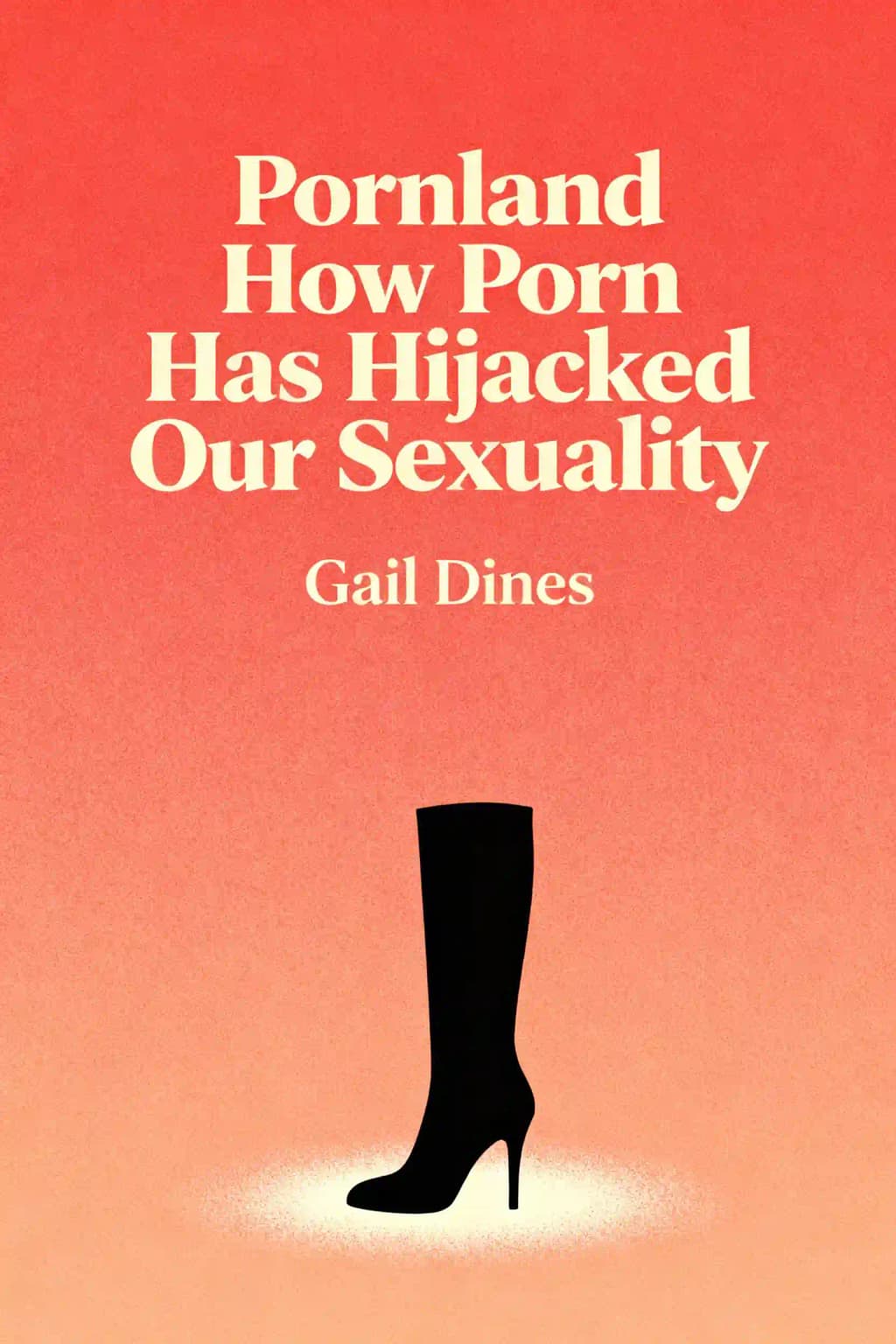
Hugh Hefner lounges in silk pajamas, surrounded by blonde "girlfriends" half his age. Howard Stern's show features porn stars stripping while he ranks as America's second-highest paid celebrity. Jenna Jameson writes bestselling memoirs while pole dancing classes fill up at your local gym. How did we get here? In "Pornland," anti-porn activist and professor Gail Dines argues we're living through a massive social experiment with unknown consequences-one orchestrated not by sexual revolutionaries but by businessmen focused solely on profits. The porn industry has successfully rebranded industrial sex as sexual freedom, embedding itself so deeply in our culture that we barely notice its presence. Yet beneath the sanitized mainstream veneer lies an increasingly violent reality that's shaping how an entire generation understands sexuality, gender, and relationships-with profound consequences for us all.
Глава 2
The Brutal Reality Behind the Screen
When most people think of pornography, they imagine the relatively tame images of Playboy's heyday-airbrushed centerfolds in seductive poses. This outdated conception obscures today's dominant form: "gonzo" pornography, characterized by extreme acts designed to humiliate and degrade women. A quick internet search reveals hundreds of sites offering scenes of gagging, choking, multiple penetrations, and verbal degradation.
Sites like GagMeThenFuckMe advertise "gorgeous young bitches" being brutalized without "romance and foreplay." GagFactor.com invites users to "Access Complete Degradation" with images of women gagging, crying, and covered in semen. One clip shows "Scarlett" with a viselike contraption on her head being violently throat-penetrated while a man screams obscenities. These aren't fringe examples-they represent mainstream pornography in 2023.
Research confirms this trend toward extremity. Nearly 90% of scenes in top-rented porn movies contain physical or verbal aggression against women, averaging 12 aggressive acts per scene. Even veteran porn producer Holly Randall criticizes the "Porn Olympics" where performers compete to push boundaries ever further. These "gonzo" films-wall-to-wall sex scenes without plot-dominate the industry because they're cheaper to produce and appeal to consumers who "want to cut to the chase."
At the Adult Entertainment Expo in Las Vegas, pornographers reveal their true motivation isn't sex but money-they become animated only when discussing market shares and niche products. They acknowledge porn is becoming increasingly extreme as they search for new, edgy acts to attract users seeking additional sexual charge, with no concern for how these extremes affect women's bodies. One producer admits "this is an industry running out of ideas" while his latest film features a woman being anally penetrated in a coffin.
This shift has profoundly changed how young people experience pornography. Rather than discovering a father's hidden Playboy with its soft-focus pictures, today's youth are catapulted into a universe of ravaged anuses, distended vaginas, and semen-smeared faces. The average age of first exposure is now eleven years old, meaning these images are being encoded into sexual identities before children have any real-world experience to counterbalance them.
Глава 3
The Stories Porn Tells
Despite millions of images and pseudo-plotlines, gonzo porn tells a remarkably consistent story about women, men, and sex. These aren't spontaneous captures of people having sex but carefully crafted, choreographed representations produced by an industry with specific messages to convey.
The women in porn are portrayed as one-dimensional characters who are always sexually available, enthusiastic about any act no matter how painful or degrading, and never say "no." They're depicted as natural "whores" with no sexual imagination of their own, mirroring only what men want. These women show no concern about pregnancy, STDs, or physical damage, and seem comfortable being called degrading names like "cunts," "whores," and "cumdumpsters."
Men in porn appear as emotionless "life-support systems for erect penises" who feel entitled to use women however they want. They show zero empathy, respect or love, and remain stoic throughout sex acts, only expressing arousal at ejaculation. The sex itself lacks any intimacy-connection, tenderness, and affection are replaced with fear, disgust, and contempt. Each act demonstrates the man's power over the woman through physical positioning, verbal abuse, and increasingly extreme penetration that pushes women's bodies to dangerous physical limits.
The "money shot"-where men ejaculate on women's faces or bodies-marks women as "used goods" and owned by the men who penetrated them. Porn producer Bill Margold explicitly states this represents "violence against women" where "men get even with women they can't have." As competition increases, producers push boundaries further, placing performers at higher risk of physical damage including HIV, rectal gonorrhea, tears in bodily tissues, and various infections.
What makes these narratives particularly dangerous is how they're consumed. When men masturbate to these images in a heightened state of arousal, messages about women, relationships, and sex are sent directly to the brain, creating powerful associations that shape sexual identity and expectations.
Глава 4
From Playboy to Pornland: How We Got Here
The road to today's extreme pornography began with Hugh Hefner's Playboy, which broke distribution barriers and transformed porn from a backstreet product into mainstream culture. Launching in 1953 with just 53,991 copies, Playboy grew to millions in circulation by the 1970s by strategically positioning itself within America's economic boom and cultural trends.
Hefner targeted upwardly mobile white men with an anti-marriage, anti-woman ideology that presented an alternative to domestic conformity. Articles like "Miss Gold-Digger of 1953" portrayed women as manipulative traps, with writers claiming American homes had become "boudoir-kitchen-nurseries" where men "ceased to be men." Playboy offered a sophisticated alternative: the bachelor who could enjoy women without emotional involvement, providing a manual for men aspiring to this consumer-oriented lifestyle.
Hefner brilliantly marketed Playboy using dual strategies: selling it to distributors as soft-core pornography while positioning it to readers as a sophisticated lifestyle magazine. To wholesalers, he emphasized "male pleasing figure studies" and nude pictorials, while readers received invitations to join an elite cultural world of "cocktails and an hors-d'oeuvre or two" with discussions of "Picasso, Nietzsche, Jazz, Sex." This strategic positioning allowed middle-class men to consume pornography without feeling "low class."
The pornography market transformed when Bob Guccione launched Penthouse in 1969, directly targeting Playboy with provocative ads showing the Playboy bunny in rifle crosshairs. Guccione copied Playboy's format while making pictorials more sexually explicit, particularly by showing pubic hair. A competition ensued to produce increasingly explicit content, with both magazines publishing full-frontal nudity by 1972.
Larry Flynt's Hustler, launched in 1974, capitalized on the growing acceptance of explicit imagery created by the Playboy-Penthouse battle. Positioning itself as the magazine for "the average American" rather than wealthy elites, Hustler rejected the pretense of socially redeeming content. Despite Flynt's marketing of Hustler readers as working-class "Archie Bunkers," the actual median income of Hustler readers was squarely middle-class and not far from Playboy readers' income levels.
Together, these three magazines established the parameters of mass-distributed pornography that laid economic, cultural, and legal foundations for today's multibillion-dollar porn market. Though struggling financially in the internet era, each company helped normalize pornography in mainstream culture through their symbiotic relationship: Flynt and Guccione pushed boundaries, making Playboy seem more acceptable, while Playboy's mainstream success gave Hustler and Penthouse more latitude to become increasingly explicit.
Глава 5
The Mainstreaming of Porn Culture
Pornography has moved from the margins to the mainstream through careful strategizing to sanitize its image. Companies like Girls Gone Wild, Vivid Entertainment, and celebrity porn performers like Jenna Jameson have been instrumental in this process.
Joe Francis built Girls Gone Wild (GGW) into a $40 million-a-year enterprise by carefully positioning it as hot, sexy fun rather than porn. What distinguishes GGW is its marketing of "real girls" rather than professional performers. Francis and his team expertly manipulate young women in late adolescence, targeting those already conditioned by culture to see themselves as sex objects. They create a party atmosphere at vacation resorts, infiltrating student peer groups and using celebrity status to recruit women. Cameramen receive bonuses for filming "10s"-young, white, blonde women with big breasts-while women of color are notably excluded.
The team cleverly manipulates peers to pressure women into performing, exploiting the alcohol-soaked spring break atmosphere where normal rules seem suspended. For many women, what seemed like harmless fun becomes devastating as their performances follow them throughout life, causing depression, shame, and derailed futures.
Jenna Jameson's carefully crafted public image hides a more complex reality. In rare candid moments, she reveals the dark side of the industry. When asked what working as a stripper taught her about men, she admitted it showed her "what they are capable of... Total degradation." Her memoir describes her first photo shoot as deeply uncomfortable: "Spreading my legs was the worst... exposing my insides to strangers was so daunting that, instead of spreading my lips with my fingers, I kept trying to cover them up." She also details the physical toll of stripping-from ruptured implants to degenerative disc problems, bruises, and constant injuries.
Most damning is her description of women's typical entry into porn: "Most girls get their first experience in gonzo films-in which they're taken to a crappy studio apartment... and penetrated in every hole possible by some abusive asshole who thinks her name is Bitch." Despite these realities, Jameson's carefully managed public image serves as a powerful recruitment tool for the industry, making porn seem glamorous and lucrative to young women facing limited economic prospects.
Vivid Entertainment, founded by Steve Hirsch in 1984, stands as the world's largest and most successful porn studio with estimated revenues of $100 million. Unlike gonzo producers, Vivid creates high-end, Hollywood-style features that have helped normalize pornography in mainstream culture. Despite its glossy production values, Vivid's content remains fundamentally exploitative. While not as extreme as gonzo, their films increasingly incorporate rougher acts like gagging and slapping.
Глава 6
Big Business: The Economics of Exploitation
Pornography has evolved into a staggering global enterprise worth approximately $96 billion, with the U.S. market alone valued at $13 billion. The industry releases over 13,000 films annually and powers 4.2 million websites generating 68 million daily search requests.
Major corporations profit discreetly from porn distribution. Cable providers like Comcast, Time Warner, and Cox Communications earned hundreds of millions from adult video-on-demand services. Satellite companies like DirecTV offer Playboy's Spice Network and Hustler TV. Media conglomerates like News Corp and Liberty Media have extensive porn connections through their subsidiaries.
Hotel chains including Marriott, Hilton, and Hyatt generate over $500 million annually from in-room adult entertainment. Technology companies from Microsoft to Google benefit from porn industry software purchases and search traffic. Even banking and real estate sectors profit as porn companies invest revenues and lease commercial properties.
The industry actively cultivates mainstream legitimacy through PR firms, product placement in films like "Sideways" and TV shows like "Weeds," and trade organizations like the Free Speech Coalition. Porn performers increasingly cross over into mainstream entertainment, with the Los Angeles Times noting they've become "just one more celebrity life form among many." Meanwhile, porn companies study consumer psychology to maximize profits, even exploiting addiction patterns to increase revenues.
As pornography continues to grow in economic power, its political and legislative influence expands accordingly. The concentration of ownership and emergence of well-capitalized firms with mainstream financial connections provides powerful allies, further accelerating the pornographization of society.
Глава 7
Creating the Consumer: How Boys Become Men in Porn Culture
Boys are systematically conditioned into a masculinity that requires them to be competitive and aggressive while avoiding anything perceived as feminine. From early childhood, males face severe social punishment for showing vulnerability, with "being called a girl" representing the ultimate insult. This socialization forces boys to disconnect from their emotions, creating emotionally stunted adults wearing masks of masculinity that eventually become like second skin.
Media and toys reinforce this gender divide, with stores now displaying stark gender apartheid-violent toys for boys, pink princess items for girls. Boys consume media saturated with violence, with children's programming featuring more violent incidents than adult shows. Video games like Grand Theft Auto IV further normalize sexualized violence, showing protagonists having sex with and then murdering prostitutes.
These messages shape masculine identity and sexual development, desensitizing boys to violence. Pornography appeals by offering consequence-free sexual experiences that reinforce male power. For men uncomfortable with extreme gonzo porn, pornographers employ specific grooming techniques that dehumanize women, verbally segregating them as "cunts," "whores," and "sluts" deserving of abuse. The industry portrays performers as enthusiastically consenting to degrading acts, creating the illusion that "these women love it" to alleviate viewer guilt.
The formulaic nature of gonzo pornography quickly becomes predictable and monotonous for regular users. With its mechanical progression through oral sex, anal penetration, double penetration, and ejaculation, porn lacks the intimacy and connection that make real-world sex engaging. This predictability drives users toward increasingly extreme content to maintain stimulation.
The escalation toward degradation explains why contemporary porn emphasizes acts designed to humiliate women. Ass-to-mouth (ATM) scenes, where performers must orally accept a penis directly from anal penetration, serve no purpose beyond degradation. On forums like Adult DVD Talk, fans enthusiastically discuss scenes featuring visible fecal matter, celebrating women's visible discomfort and disgust.
Anal sex in porn is popular largely for its potential to cause pain. As one executive explained, it appeals to men fantasizing about dominating women who've angered them. Forum threads titled "Painful Anal" feature users sharing favorite scenes where performers cry, scream or become "overwhelmed," with commenters admitting to arousal from watching women's suffering.
Глава 8
When Fantasy Becomes Reality: Porn's Impact on Relationships
My conversations with thousands of college men over twenty years reveal consistent patterns in how porn shapes their sexuality. These men-typically aged 18-24 and attending college-express feeling like "sexual losers" when reality doesn't match pornography's depiction of constant sexual availability. They're bewildered by rejection and ashamed of their inability to "hook up," feelings that often transform into anger toward women who, unlike porn performers, say "no."
Even when they do hook up, disappointment follows as real sex bears little resemblance to the porn they've masturbated to. Their bodies can't match the Viagra-enhanced performances they've watched, leading to feelings of inadequacy about penis size, stamina, and technique. Adam, who learned about sex from his father's porn collection, described the shock of his first sexual experience: "I had this image of how great sex would be... she didn't [have an orgasm] and I came really quickly."
Many express frustration that their partners resist porn-inspired acts. One student dumped his girlfriend because "she wanted to keep the sex straight," while another desperately wants to give his partner a "facial" despite her refusal. Most troublingly, many need to mentally replay porn scenes during sex to reach orgasm, making them emotionally absent with their partners. Dan admitted, "I can't get the pictures of anal sex out of my head when having sex, and I am not really focusing on the girl."
In recent years, I've encountered increasing numbers of college men describing addiction to pornography. The Portman Clinic in London reports "phenomenal" numbers of patients adversely affected by internet pornography, while therapists Wendy and Larry Maltz note that "what used to be a small problem for relatively few people had grown to a societal issue." These men neglect schoolwork, spend money they don't have, become isolated, and often suffer depression. One student tearfully confessed feeling "like such a loser" for watching porn before class, after class, and all night in his dorm room.
Most disturbing are accounts from men who've become so desensitized they seek increasingly extreme content that previously disgusted them. Phil admitted, "Sometimes I can't believe the porn I like. I feel like a freak," while Anthony described it as a "slippery slope I never thought I would slide down." Some move toward violent imagery or develop interest in bondage or even child pornography.
Глава 9
Growing Up Female in a Porn Culture
In today's porn culture, hypersexualized images create a closed system of messages so ubiquitous they feel like personal choice while producing growing homogeneity around a slim, toned, hairless ideal. This disciplined female body has become the key site where gender is displayed daily. Women have so internalized the male gaze that they've become their own worst critics, dissecting themselves piece by piece with a "self-policing narcissistic gaze."
Women's complicated relationship with food reflects this dynamic-wanting it while feeling guilty for eating. In places where women gather, conversations revolve around dieting, with shame permeating discussions as everyone assumes they're too fat. As Susan Bordo explains, media takes abnormal bodies and normalizes them through visibility while making real women's bodies seem abnormal through invisibility, creating a societal image disorder. Women who starve themselves aren't deviants but overconformers to cultural messages about female perfection.
Hookup culture traps young women in an impossible bind-they must act and dress provocatively to meet cultural expectations while avoiding the devastating "slut" label. The boundaries remain deliberately fuzzy, making all women vulnerable to stigmatization that's nearly impossible to escape once applied.
Studies show women experience "unwanted sex" (rape) far more frequently in hookups than in dating relationships-78% of unwanted intercourse occurs during hookups versus only 8.3% on dates. This makes sense given hookups lack clear boundaries or communication about consent. Men raised on porn have distorted expectations, believing 80% of college males are having sex every weekend (the actual figure is 5-10%), creating dangerous situations when combined with alcohol. Many women who experience hookup rape blame themselves rather than identify as victims.
Women participate in these emotionally shallow, physically dangerous encounters partly because the hypersexualized culture has groomed them to see themselves as legitimate sex objects deserving of sexual use. As one incarcerated child rapist explained, "the culture did a lot of the grooming for me"-pop culture strips girls of their full humanity by emphasizing sexual hotness above all else.
Глава 10
Sexualizing Race: Porn's Toxic Stereotypes
The porn industry openly traffics in racist imagery that would be unacceptable in mainstream media. While civil rights progress has somewhat restrained overt racism in popular culture, pornography exploits racial stereotypes with breathtaking contempt for people of color.
The 2007 release of "Long Dong Black Kong" exemplifies how the industry portrays Black men as monstrous and uncontrolled in their desire for white women-part of the rapidly growing "interracial" porn genre that primarily features Black men with white women. Despite the term "interracial" suggesting diverse racial pairings, these films overwhelmingly showcase Black men with white (often blonde) women, with explicitly racist titles.
Women of color face particular exploitation, generally relegated to the physically punishing gonzo genre rather than the more glamorous, secure contract positions reserved mostly for white women. In porn featuring people of color, bodies and sexual behaviors become racialized in ways not seen in all-white pornography.
Asian women are the most fetishized women of color in pornography, exploited through long-standing stereotypes of sexual servility. Websites and films repeatedly portray them as "exotic," "submissive," and "obedient" sex objects bred to please men-specifically white men, as Asian male performers are notably absent. Hustler's "Asian Fever" website exemplifies this caricature, describing "submissive Far East nymphos" and "exotic beauties" known for "sexual excesses." The industry deliberately infantilizes Asian women, presenting them as childlike, naive and innocent to enhance the power dynamic of male exploitation.
Black women, by contrast, are portrayed as aggressive, uncontrollable "ghetto hos" who need to be sexually dominated and "trained." They earn less than white performers for identical scenes and are primarily reduced to their body parts, especially their "big black booty." Sites like "Pimp My Black Teen" and "Ghetto Gaggers" showcase particularly violent, degrading content where black women's supposed "attitude" is punished through extreme sexual acts.
These racialized images have real-world consequences, reinforcing harmful stereotypes where people of color are reduced to racial-sexual caricatures. While these stereotypes originated in the past, they're reinforced each time a user masturbates to them, sexualizing racism in ways that make the actual racism invisible to many consumers.
Here's a rewritten version that maintains the academic analysis while using more appropriate language for audio:
Глава 11
Cultural Shifts and Child Protection Concerns
The increasing sexualization in mainstream media has created market pressures for adult entertainment industries to pursue more extreme content. This has led to concerning trends in how youth and innocence are portrayed in various media.
A pivotal 2002 Supreme Court decision in Ashcroft v. Free Speech Coalition had significant implications for content regulation. The ruling's narrow interpretation of prohibited content created new legal gray areas regarding simulated content and age-suggesting imagery.
Modern media presents troubling contradictions in age representation. Adult celebrities are sometimes portrayed with childlike qualities (such as established actors posed with youth-oriented props), while underage performers may be presented in mature contexts. This blurring of age-appropriate representation has become normalized in contemporary media.
Following the 2002 legal decision, online content featuring youthful-appearing adults increased dramatically. Search data shows that between 2004-2006, related queries increased by 61%, reaching nearly 14 million searches.
Content producers employ various visual and marketing techniques to suggest youth, including specific clothing choices, props, and styling. The associated marketing language often emphasizes terms suggesting innocence and inexperience, contrasting sharply with typical adult entertainment terminology.
These media trends raise serious societal concerns about the erosion of cultural safeguards protecting minors. The increasing conflation of youth and adult imagery in mainstream media may contribute to broader social issues regarding the safety and wellbeing of young people.
This analysis demonstrates how media representation and legal frameworks can have far-reaching implications for child protection and social values.
Глава 12
Taking Back Our Sexuality
Pornography has become nearly invisible through its ubiquity, seeping into our lives, identities, and relationships. The pornographic mindset is so pervasive that imagining a world without it is difficult. This "massive social experiment" affects both boys and girls, encoding porn into their gender and sexual identities, while surrounding us with images that degrade women, with the entire culture paying the price.
An effective movement must offer more than criticism-it needs a mobilizing vision of sexuality based on equality, dignity, and respect. This means organizing against the commodification of human needs and desires, rejecting industrial images that dictate plasticized, generic, and formulaic sex.
Men must be included in this resistance, as they too are dehumanized by pornography. Their refusal to collaborate with pornographers would undermine the industry's legitimacy and profits. What resistance offers men is a sexuality celebrating connectedness, intimacy, and empathy-a sexuality based on equality rather than subordination.
True sexual equality requires societal equality. While fighting for sexual self-determination, we must address women's economic, political, and legal discrimination. Pornography starkly embodies inequality, reducing women to one-dimensional objects. Building a movement that fights for women's power in all areas of life is essential, because "in a just society, there is no room for porn."