Глава 1
Unveiling Our Hidden Desires: The Internet's Billion-Person Experiment
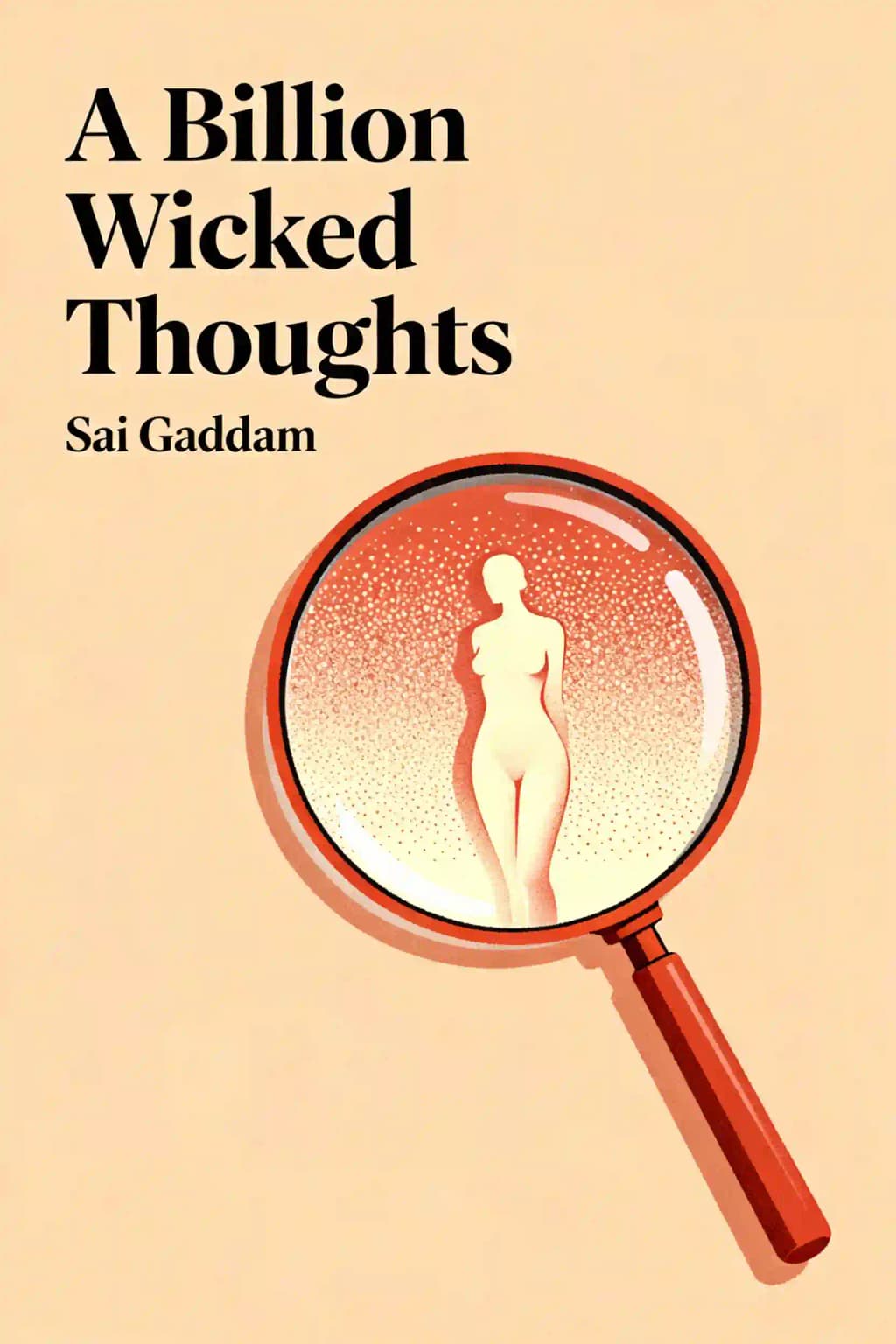
What if the world's largest experiment on human behavior was happening right now, and you were part of it? Every day, over a billion people across the globe reveal their most intimate desires through internet searches, leaving digital footprints that tell a remarkable story about human sexuality. This groundbreaking book by computational neuroscientists Ogi Ogas and Sai Gaddam mines this unprecedented data trove to reveal what people truly desire when no one is watching.
The book became an instant sensation upon release, with psychologists like Steven Pinker praising its innovative methodology. Unlike traditional sex research relying on small samples of college students willing to answer uncomfortable questions, this work analyzes the anonymous behaviors of millions. By examining what people actually do rather than what they say, the authors illuminate the fundamental differences between male and female desire with startling clarity and scientific rigor. Their findings challenge both conservative and progressive orthodoxies about sexuality, making this one of the most controversial yet scientifically sound explorations of human desire ever published.
Глава 2
The World's Largest Experiment on Human Behavior
Behavioral scientists have always faced a unique challenge: studying people who know they're being studied. For decades, researchers relied primarily on college undergraduates-cheap, plentiful subjects willing to endure unusual experiments. But these students represent a peculiar subset of humanity that researchers now call "WEIRD": Western, Educated, Industrialized, Rich, and Democratic-statistical outliers compared to the rest of humanity.
The Internet has changed everything. It's created the world's largest experiment on human behavior, recording the activities of over a billion people from every country, culture, and walk of life. This vast data source offers unprecedented insights into what people truly desire when they believe no one is watching.
Everyone has strong feelings about sexuality, making objective study difficult. Our own desires seem normal while others' seem strange or immoral. But by analyzing the desires of tens of millions of people and explaining their underlying mechanisms, we can illuminate this often misunderstood subject. The sexual brain will challenge both politically correct and socially conservative sensibilities-this isn't an expanded issue of Cosmopolitan, but an unfiltered look into human desire.
The fundamental question that has eluded researchers for centuries is: what does human desire truly look like? Traditional methods fall short because people rarely answer honestly about their most intimate desires. Even Alfred Kinsey's groundbreaking work, interviewing thousands about everything from bondage to silk stockings, relied on self-reporting rather than direct observation. While physicists quietly study subatomic particles, sexologists face public pillorying, criminal prosecution, or career destruction for their research.
The Internet functions like a massive version of Kenneth Gergen's 1973 darkened room experiment, where strangers touched, hugged, and kissed when granted complete anonymity. Online, people freely express desires they'd never reveal publicly. This digital anonymity has revealed the astonishing diversity of human sexual interests, exemplified by "Rule 34"-a viral internet maxim stating "If you can imagine it, it exists as internet porn."
Глава 3
The Genie of a Million Wishes
The Internet search engine functions as an unprecedented digital genie, capable of granting virtually infinite erotic wishes with perfect privacy and immediate fulfillment. To understand the deeper patterns behind human sexual desires, researchers conducted a comprehensive analysis of approximately 400 million searches on Dogpile, identifying roughly 55 million searches specifically seeking erotic content from an estimated 2 million unique users - creating one of the largest datasets ever assembled on human sexual interests.
When meticulously categorized by specific interests and desires, a remarkable and unexpected pattern emerged: merely twenty different interests account for 80 percent of all sexual searches, with just thirty-five interests covering 90 percent of all queries. This finding stands in stark contrast to Rule 34's popular internet axiom suggesting that pornographic content exists for every conceivable interest. Instead, the data reveals that human sexual interests, rather than being infinitely diverse, cluster around a surprisingly limited set of common categories - much like how human faces, while unique, share common features.
The popularity rankings of specific interests challenge conventional assumptions. Transsexual content (#17) consistently outranks searches for celebrities (#23) and Asian-specific content (#29). What makes this particularly noteworthy is that these preferences maintain their popularity despite minimal mainstream cultural promotion or social acceptance - suggesting these interests aren't merely products of cultural influence but potentially reflect deeper, hardwired aspects of human psychology.
The research draws an illuminating parallel to how human taste preferences can be reduced to five fundamental perceptual inputs: sweet, salty, sour, savory (umami), and bitter. Similarly, our sexual desires appear to be built upon a finite set of sexual cues that activate specific neural pathways - our evolved "desire software." Evolutionary psychologist Donald Symons pioneered this framework, proposing that humans have developed specialized psychological mechanisms designed to detect specific indicators of mate value and reproductive fitness.
However, a crucial distinction exists between taste preferences and sexual cues: gender differentiation. While both men and women process the same taste inputs similarly - sweet is sweet regardless of gender - they respond to sexual cues in markedly different ways. This gender-specific response pattern suggests an evolutionary adaptation, as if men and women developed different perceptual systems for detecting and responding to sexual stimuli - analogous to men being programmed to detect salty and sour tastes while women detected sweet and bitter. This fundamental difference explains why men and women often experience and respond to the same sexual stimulus in profoundly different ways, reflecting distinct evolutionary pressures and reproductive strategies.
This understanding of human sexual interests as being both finite in variety yet gender-specific in response helps explain both the clustering of interests we observe in search data and the consistent differences in male and female sexual preferences across cultures.
Глава 4
Elmer Fudd: The Visual Male Brain
Male visual desire is so powerful that even non-human primates will trade resources for it. At Duke University, rhesus macaques willingly exchange fruit juice to view images of female monkey posteriors - a behavior that persists even after repeated viewings. This primal response demonstrates how deeply ingrained visual sexual cues are in male primates' brains. Human males demonstrate similar motivation, but on an industrial scale. Adult websites attract audiences that are roughly 75% male, and when it comes to actually paying for pornography, the gender gap widens dramatically with only 2% of subscriptions using women's names. This disparity holds true across cultures, income levels, and education backgrounds.
Men's visual motivation is so compelling that even highly educated professionals risk their careers to indulge it. Investigations at prestigious government agencies including the National Science Foundation, Securities and Exchange Commission, and Pentagon have all uncovered male employees spending substantial work hours viewing pornography on government computers. In one notable case, a senior SEC employee downloaded so much content that he filled all available space on his government hard drive and had to burn files onto DVDs. Similar incidents at NASA and other federal agencies have led to dozens of terminations and resignations, highlighting how this visual drive can override rational decision-making.
Age dominates male visual cues, appearing in one of every six sexual searches. Analysis reveals two distinct peaks of interest: a narrow, intense cluster focused on teens, and a broader secondary peak centered around fifty-year-olds. Surprisingly, more men search for fifty-year-olds than for nineteen-year-olds, with significant interest in women in their sixties and seventies. This pattern holds steady across different countries and cultures, suggesting a biological rather than cultural basis. The data also shows that men's age-related searches tend to increase as they themselves age, though younger women remain consistently appealing across all male age groups.
The adult industry recognizes these distinct age preferences, categorizing women as "teens" (18-20), "plain porn" (21-35), "MILFs" (35-50), and "mature" (50+). The rise of "tube" sites like PornHub revolutionized the industry by offering free, easily searchable content. These sites generate detailed analytics about user preferences, revealing patterns that challenge common assumptions about male desire. The term "mom" consistently ranks as the most searched term on PornHub, followed by age-specific terms like "teen" and "mature." This data has reshaped content production strategies, with producers increasingly targeting the previously underserved market for older performers.
Despite fashion magazines promoting ultra-thin models, men's private porn searches reveal strikingly different preferences. For every search for "skinny" girls, there are almost three searches for "fat" girls. The Alexa Adult List contains 504 sites dedicated to heavy women (BBW - Big Beautiful Women) compared to just 182 sites focused on skinny women. BBW fans appreciate the exaggerated feminine visual cues - larger breasts, hips, and buttocks. This preference appears to be rooted in evolutionary psychology, where such features historically signaled fertility and resources. Modern data from dating sites further confirms this trend, with profiles featuring fuller-figured women often receiving more messages than those featuring very thin women.
Глава 5
The Miss Marple Detective Agency
While men's desire is triggered instantly by visual cues, women's desire operates through a sophisticated neural system the authors call "the Miss Marple Detective Agency." Like Agatha Christie's shrewd detective, a woman's brain carefully evaluates potential partners before permitting sexual desire. This evolutionary adaptation stems from women's historically greater investment in reproduction: pregnancy, nursing, and child-raising required enormous resources, and choosing the wrong partner could lead to abandonment or danger.
This fundamental difference explains why pharmaceutical companies' quest for a female equivalent to Viagra consistently failed. Despite extensive testing of compounds that successfully increased physical arousal in women, these approaches didn't increase sexual interest the way they did in men. The female brain simply doesn't respond to physical changes with increased sexual desire the way male brains do.
The disconnect between physical and psychological arousal creates profound discomfort for many women. Meredith Chivers' comprehensive review of 132 laboratory studies confirmed this pattern: men experience strong correlation between physical and psychological arousal, while women show almost none. A woman's vaginal lubrication poorly predicts her actual feelings, with many reporting lubrication and even orgasm during unwanted sex.
The Miss Marple Detective Agency intercepts signals from the body, preventing them from triggering conscious arousal until proper evaluation occurs-explaining why women experience less spontaneous desire than men, masturbate less frequently, and more often pursue sex for non-pleasure reasons.
This detective agency has four specialized components. The Emotional Detective evaluates a man's character traits like honesty and loyalty. Women's brains are specially equipped for this emotional sleuthing-they ruminate more over emotional situations, recall emotional memories more vividly, and create sexual fantasies with higher romantic content than men.
The Social Detective gathers intelligence from others. Women constantly consult their social networks about potential partners, as well as related topics like beauty and fashion. This social orientation explains why women are more verbal than men-they send more texts, use more social media, and make more phone calls.
Глава 6
Ladies Prefer Alphas
Unlike men who respond primarily to visual stimuli, women are more aroused by psychological cues that reveal information about a man's stability, commitment, social status, competence, and kindness. These psychological cues are best conveyed through narratives rather than images. Romance stories provide the richest compilation of these cues in a format perfectly designed to engage the Detective Agency's analytical processes.
From the 1740 novel Pamela to modern bestsellers, romances feature two essential characters: the hero (the "Flame") and the heroine (the "Flower"), with the hero representing Miss Marple's fantasy of an ideal partner.
Romance heroes occupy specific high-status professions-doctors, cowboys, bosses, princes, and ranchers top the list from 15,000 Harlequin novels. Notably absent are blue-collar workers, bureaucrats, and men in traditionally feminine professions. These heroes embody power, status, and competence-traits of the alpha male, whom romance author Angela Knight defines as "natural leaders with a strong protective streak and fierce confidence."
Despite women's attraction to alpha males, psychologist David Buss found that "kindness and understanding" ranked as women's top preference in men across 37 cultures. This apparent contradiction explains why romance heroes follow what might be called the "coconut template"-hard and tough on the outside, but soft and sweet on the inside. Crucially, this sweet interior must be accessible only to the heroine.
Wealth serves as a powerful indicator of alpha status in romance novels, with Amazon featuring 415 millionaires, 286 billionaires, and 263 sheiks in romance titles. This attraction to material resources appears throughout the animal kingdom-from chimpanzees to bower birds, females consistently prefer males with the most resources.
Competence is non-negotiable for romance heroes. They must excel at what they do-whether as CEOs, movie stars, quarterbacks, or spies. Unlike men, who readily pursue attractive women regardless of their competence or ambition, women strongly prefer capable men. This preference for competence extends to intelligence, which may have evolved through sexual selection.
Глава 7
The Sisterhood of the Magic Hoo Hoo
In romance novels, one of women's most fundamental psychological cues is irresistibility - the feeling of being sexually desirable. As Madame de Stael wrote, "The desire of the man is for the woman; the desire of the woman is for the desire of the man." This powerful cue manifests across cultures and time periods, from ancient beauty rituals to modern skin-whitening cream advertisements. The "Magic Hoo Hoo" trope in romance novels exemplifies this, where the heroine's sexual power creates an instant, overwhelming bond with the hero, often transforming him from a hardened alpha male into a devoted partner.
Unlike men's unidirectional desire focused entirely outward, women have a more panoramic sexual awareness that includes how they feel about themselves. This self-perception can outweigh even their partner's explicit desire for them, explaining why female self-esteem is so crucial to women's sexual satisfaction. Research shows that women who feel confident and attractive report significantly higher levels of sexual pleasure and satisfaction, regardless of their partner's actual level of attraction.
The popularity cue powerfully influences female desire through social proof and preselection. In Legally Blonde, when Elle Woods pretends to have dated the awkward David, the previously dismissive pretty girl suddenly becomes interested. This exemplifies the maxim "All the best men are taken" - a man already chosen by another woman has received validation from her Detective Agency. Similar effects appear in countless romantic comedies and novels, where a man's desirability increases dramatically once other women show interest. This phenomenon has evolutionary roots in mate selection, where female choice serves as a quality indicator.
The psychological cue of adorability - a woman's desire to feel loved for her unique qualities - is as fundamental as irresistibility. While men evolved to "strive for greatness" through competition and achievement, women evolved to be "lovable" to attract and retain the best mates. In romance novels, the hero must demonstrate that his love is "steady, irrational, and everlasting" through sacrifice and commitment. This manifests in grand gestures, emotional vulnerability, and choosing the heroine over other options, even when doing so comes at great personal cost.
Male and female arousal operate on fundamentally different principles, reflecting evolutionary adaptations. Men follow the "Power of Or" - a single-cue arousal system where any sexual cue can independently trigger desire. Women follow the "Power of And" - requiring multiple simultaneous cues before authorizing arousal, including emotional connection, physical attraction, and situational safety. This fundamental difference explains why women experience more desire disorders but enjoy greater sexual plasticity, including more fluid partner gender choice throughout life. Studies show that women's arousal patterns are more complex and context-dependent, responding to a broader range of stimuli while requiring more specific combinations of cues for full activation.
Глава 8
Erotical Illusions
Leonardo da Vinci's Mona Lisa captivates viewers through a clever optical illusion. When looking directly at her mouth, it appears neutral, almost flat. But when focusing on her eyes, peripheral vision picks up only coarse details of her mouth, creating the impression of a smile. This phenomenon, known as peripheral drift illusion, demonstrates how our brains can construct different perceptions from the same visual input depending on where we focus our attention.
If visual cues can be combined to produce surprising perceptual effects, the same principle applies to sexual cues. The erotic equivalent of the Mona Lisa smile is not only possible but widespread, as ancient sexual cues are now spliced together in novel combinations that hyperstimulate our sexual perception. These combinations tap into deep-seated evolutionary triggers while presenting them in unprecedented configurations.
In modern pornography, this quest manifests in an unexpected form: transsexual or "T-girl" porn, featuring individuals with feminine bodies and male genitalia. This category has exploded in popularity, ranking as the fourth most common type of adult website. Despite assumptions, the primary audience is heterosexual men, not gay men. The phenomenon challenges conventional understanding of male sexuality and demonstrates how sexual arousal patterns can be more complex than traditional categories suggest.
T-girl porn creates an erotical illusion through the novel juxtaposition of two male visual cues: feminine features (breasts, curves) that trigger typical male arousal, and the penis, which has special power to activate the male sexual brain. This combination creates a unique cognitive tension - simultaneously activating multiple arousal triggers that wouldn't naturally occur together. The popularity of this genre suggests that male arousal patterns are more flexible and nuanced than previously understood.
Paranormal romances create the perfect erotical illusion for women by combining supernatural alpha traits with emotional vulnerability. J.R. Ward's Black Dagger Brotherhood features Wrath, "six feet, six inches of pure terror dressed in leather" with aristocratic yet brutal features - a description so captivating it's among the most highlighted passages by Kindle readers. These characters embody an impossible combination of dominance and submission that speaks to deep-seated female fantasies.
These vampire heroes possess impossibly exaggerated masculine traits: immortality, wealth, fighting prowess, and leadership status. Yet their ultimate appeal comes when these invincible beings are brought to their knees by ordinary women. The juxtaposition of supreme power and complete surrender creates an intoxicating fantasy cocktail. This dynamic appears consistently across the genre, from Twilight to True Blood, suggesting it taps into fundamental female arousal patterns. The supernatural element allows for the amplification of masculine traits beyond human possibilities while maintaining the essential vulnerability that makes the fantasy compelling.
The success of both these forms of erotical illusion - T-girl porn and paranormal romance - demonstrates how modern media can combine sexual cues in ways that nature never could, creating novel stimuli that nonetheless activate ancient arousal patterns in particularly powerful ways.
Глава 9
Happy Ending or Happily-Ever-After?
Our research reveals a fundamental truth: no matter your attributes or character, you are someone's ideal. Women of all shapes and sizes - tall or petite, curvy or slim, outgoing or reserved - are the sexual fantasy for countless men. Similarly, men of every temperament - aggressive or gentle, witty or stoic, wealthy or poor - can find women who desire them deeply when love is reciprocated. This diversity of attraction patterns demonstrates nature's ingenious way of ensuring genetic variety and species survival.
Though finding sexual matches may be challenging in traditional settings, the Internet has revolutionized how we connect with potential partners. Dating apps and specialized forums have created unprecedented opportunities to find those whose desires complement our own. These platforms have revealed that even seemingly niche preferences are shared by significant populations worldwide. Human sexuality's diversity - homosexuality, bisexuality, transsexuality alongside heterosexuality - stems from the evolutionary divergence between male and female brains, creating a rich tapestry of human experience and connection.
The greatest hurdle to sexual harmony isn't physical compatibility but our deep-seated assumption that others must be just like ourselves. This cognitive bias leads to misunderstandings and unrealistic expectations in relationships. By identifying and understanding each other's sexual cues - from subtle body language to explicit communication patterns - we can develop greater compassion and connection. While science can't prescribe which cues should be socially acceptable, it clearly shows that men's rigid cues are neurologically difficult to modify, and women's more plastic tastes cannot simply be suppressed or ignored.
Our conscious cortex - the most evolved part of our brain - allows us to ponder our sexuality and form judgments about our unique pattern of cues. This self-awareness enables us to accept our fantasies without becoming slaves to them, finding fulfillment in exploring the one realm of primordial adventure still available to us in our industrial culture. Modern technology and social progress have created safe spaces for this exploration while maintaining personal boundaries and respect.
The internet has become a vast laboratory revealing the astonishing diversity of human desire while simultaneously showing that we're more alike than different in our fundamental needs for connection, acceptance, and intimacy. Behind the seemingly infinite variety of sexual interests lie a limited number of fundamental cues that have evolved over millions of years - touch, smell, visual triggers, and emotional bonding. Understanding these cues - and how they differ between men and women - offers not just scientific insight but a practical path to greater empathy and connection in our most intimate relationships. This knowledge helps couples bridge their differences and build stronger, more fulfilling partnerships based on mutual understanding and acceptance.
The key to lasting sexual happiness lies not in conforming to societal norms but in finding authentic ways to express our sexuality while respecting others' boundaries. By embracing both the commonality and diversity of human sexual experience, we can create more meaningful and satisfying relationships that honor both our primal nature and our evolved capacity for love and understanding.