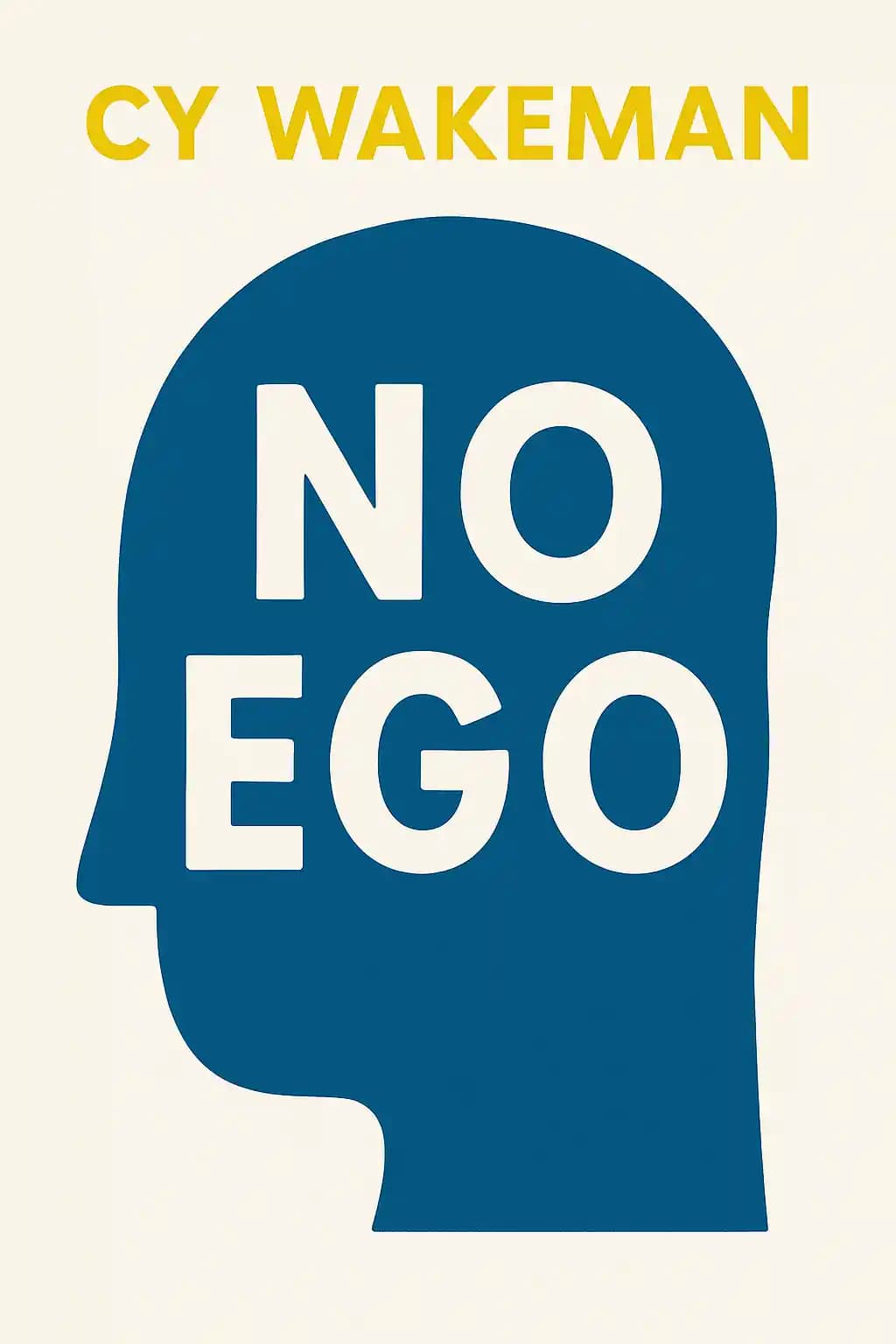
No Ego
How Leaders Can Cut the Cost of Workplace Drama, End Entitlement, and Drive Big Results
Обзор книги No Ego
"No Ego" exposes the hidden cost of workplace drama - 2.5 hours daily wasted by leaders. Cy Wakeman's reality-based approach has transformed organizations by replacing emotional waste with accountability. What if eliminating drama, not managing it, is the key to breakthrough results?
Ключевые темы в No Ego
- workplace drama reduction
- emotional waste management
- reality-based leadership
- radical accountability
- ego bypass techniques
Цитаты из No Ego
The ego is not your amigo.
Ego talks you out of discomfort.
Stop believing everything you think.
Reality doesn't cause suffering; attachment to how things 'should be' does.
Персонажи в No Ego
- Cy WakemanAuthor and developer of Reality-Based Leadership
Об авторе
Об авторе книги No Ego
Cy Wakeman, New York Times bestselling author of No Ego: How to Cut the Cost of Drama, End Entitlement, and Drive Big Results, is a globally recognized leadership expert and drama researcher. A Certified Speaking Professional and 2023 World’s #1 Leadership Guru, her Reality-Based Leadership philosophy empowers organizations to eliminate workplace conflict and foster accountability. With over 25 years of experience, Wakeman has advised Fortune 500 companies like Google, NASA, and Bank of America, blending practical strategies with psychological insights to address leadership challenges.
Her work extends beyond No Ego to include acclaimed titles like Reality-Based Leadership: Ditch the Drama, Restore Sanity to the Workplace and Life’s Messy, Live Happy, which further explore resilience and mental clarity in professional and personal contexts.
A frequent contributor to Forbes, Business Insider, and The Huffington Post, she hosts the No Ego podcast and a viral weekly leadership newsletter reaching over 30,000 subscribers. Inducted into the Speaker Hall of Fame in 2024, Wakeman’s methods are celebrated for transforming workplace culture worldwide, with her keynotes ranking her among the top 3% of global speakers.
Скачать резюме книги «No Ego»
Получите резюме книги «No Ego» в формате PDF или EPUB бесплатно. Распечатайте или читайте офлайн в любое время.
Часто задаваемые вопросы об этой книге
No Ego by Cy Wakeman provides a reality-based leadership framework to eliminate workplace drama, reduce emotional waste, and drive results by fostering personal accountability. The book critiques traditional management practices like open-door policies and entitlement-driven engagement strategies, offering tools to help leaders redirect energy toward productivity. Key concepts include self-reflection, accountability filters, and dismantling ego-driven behaviors.
Leaders, managers, and HR professionals seeking to reduce workplace conflict and improve team performance will benefit most. It’s ideal for those navigating entitlement, low accountability, or excessive drama in organizations. Cy Wakeman’s strategies are particularly relevant for industries like healthcare, tech, and finance, where she has partnered with firms like Google and NASA.
Yes, No Ego is praised for its actionable insights into cutting organizational drama and boosting accountability. It’s recommended for leaders tired of conventional engagement tactics and seeking a results-driven approach. The book includes self-assessment tools and real-world examples, making it a practical guide for transforming workplace culture.
Reality-Based Leadership focuses on confronting facts over emotions, bypassing ego, and empowering employees to solve problems through self-reflection. Key principles include rejecting victim mentalities, minimizing emotional waste, and using accountability metrics to drive decisions. Wakeman emphasizes equipping teams to adapt to change rather than dwell on complaints.
Wakeman argues open-door policies often enable unproductive venting and drama. Instead of resolving issues, they create cycles of dependency where employees seek validation rather than solutions. She advocates replacing open-door hours with structured problem-solving questions like, “How can you contribute to fixing this?” to foster accountability.
The book redefines engagement by pairing it with accountability, arguing traditional methods create entitlement. Wakeman suggests using “accountability filters” to prioritize feedback from high-performing employees and linking engagement to business outcomes, not just satisfaction. This shifts focus from perks to measurable results.
Key tools include:
- Accountability assessments to identify drama sources.
- Self-reflection prompts like “What can I do to improve this situation?”
- Drama expense calculators to quantify the cost of unproductive behaviors.
- Reality-Based questions to redirect complaints into problem-solving.
Wakeman advises leaders to set clear expectations, reject “victim” narratives, and reward problem-solving over complaining. For example, instead of accommodating unreasonable demands, ask, “How can you adapt to this constraint?” This reinforces personal responsibility and reduces entitlement.
Some argue Wakeman’s approach oversimplifies complex workplace dynamics or dismisses valid emotional concerns. Critics suggest it risks alienating employees who feel unheard. However, supporters counter that the book targets unproductive drama, not genuine issues, and provides a pathway to healthier dialogue.
Unlike books focusing on empathy or motivation, No Ego prioritizes accountability and actionable problem-solving. It contrasts with works like Radical Candor by avoiding “nice” feedback and instead fostering self-driven solutions. Wakeman’s data-driven approach appeals to leaders seeking tangible cultural shifts.
With remote work and rapid organizational changes amplifying drama, Wakeman’s strategies help teams adapt without emotional friction. The book addresses hybrid work challenges, generational entitlement, and burnout by teaching employees to control their responses to stress.
Key quotes include:
- “Your thoughts are optional, but reality is not.”
- “Suffering is optional—but only if you choose accountability.”
- “Great leaders don’t argue with reality; they equip people to navigate it.”




