Глава 1
The Mediocrity Machine: How White Male Privilege Shapes America
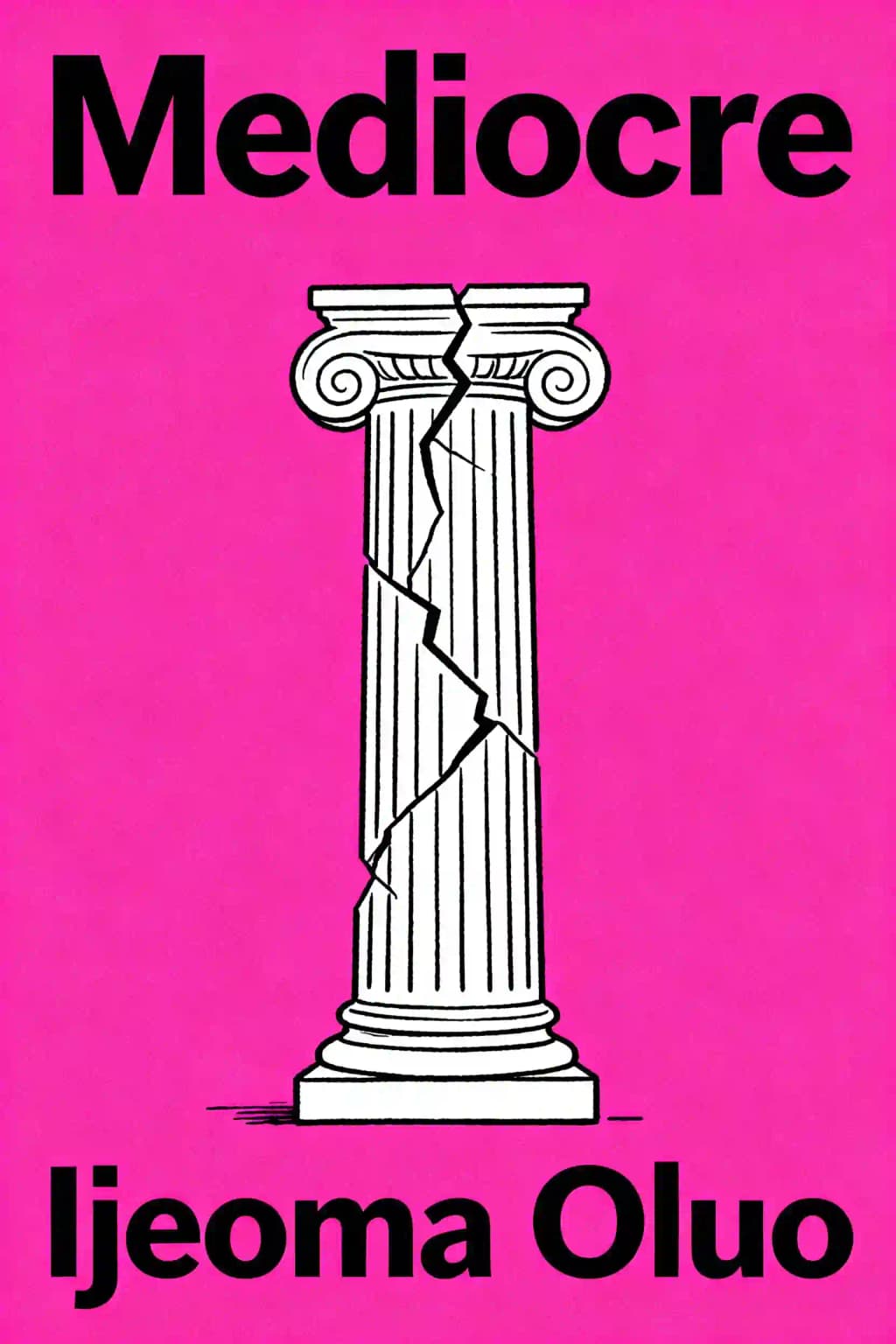
In 2019, Ijeoma Oluo's "Mediocre: The Dangerous Legacy of White Male America" arrived like a thunderbolt in American discourse. The book quickly became a New York Times bestseller, joining Oluo's previous hit "So You Want to Talk About Race" in sparking nationwide conversations about privilege and power. What makes this work particularly compelling is how it systematically dismantles the myth of meritocracy that props up white male mediocrity while demanding excellence from everyone else. The book resonated deeply during the Trump era, with celebrities from Trevor Noah to Jameela Jamil praising its unflinching examination of how America rewards white men not for achievement but for simply existing. As one reviewer noted, "Oluo doesn't just identify problems-she offers a roadmap for creating a healthier society." Her work stands alongside contemporaries like Ibram X. Kendi and Robin DiAngelo, yet with a distinctive voice that makes complex social analysis feel like a conversation with a brilliant friend.
Глава 2
The Burden of Assumed Greatness
I found myself at a women's writing retreat, surrounded by nature, yet struggling to find inspiration. Each evening, five writers would gather for dinner, and inevitably our conversations turned to the shitty white men who dominated our industries and lives. Despite our diverse backgrounds, we shared stories of men devaluing our work, sexual harassment, and fighting to have our voices heard in a world determined to silence us.
This pattern reveals something fundamental about American society: the expectation of accomplishment is not an accomplishment itself. By making whiteness and maleness their own reward, we disincentivize white men from earning their privileged status. Why struggle when you're already assumed to be great? Meanwhile, women and people of color must work twice as hard to prove themselves exceptional before we consider equal representation.
We're told to implement equality slowly to avoid "shocking society" - but who needs this protection? Women and people of color could handle equality today. The mediocre-white-man-industrial complex promotes an image of bold, confident white men who often perform exactly as mediocrely as expected in positions of power, doubling down on mistakes rather than admitting weakness.
Our supposed meritocracy is built on exploitation - of enslaved people, migrant laborers, domestic workers, wives and mothers. Those who profited did little more than be born privileged, yet we craft stories of greatness around them. For someone like Oluo, a Black woman, greatness was never presented as her birthright.
White men cling to their "better than" status while elite white men take the lion's share, leaving average white men angry and looking for someone to blame - usually those with less power, not those above them. Our society rewards counterproductive "masculine" traits like overconfidence and aggression while devaluing "feminine" traits like patience and cooperation.
Since Trump's 2016 election, women of color face a new onslaught of white male anger and incompetence. This isn't new - it works according to design. By examining our history, we can see how anything threatening white manhood has been attacked despite its necessity for progress. We've all played a part in upholding white male supremacy, but we can change whom we look up to and what traits we cultivate as a society.
Глава 3
Cowboys, Indians, and the Myth of American Manhood
What makes the story of men like Brian so revealing is that their self-defense narratives are often entirely fictional. Brian, a middle-aged white man who tucks Disney T-shirts into jean shorts and has likely never handled a gun, clings to the belief he needs weapons to protect himself from imagined "thugs" and Muslim terrorists supposedly eager to bomb his suburban neighborhood.
These fictionalized enemies form the foundation for racist worldviews and masculine identity. By inventing both villains and heroic responses to them, such men write themselves into an American western mythology of cowboys and Indians. For men with few meaningful connections, pretending to be heroes in violent American mythology gives them a sense of belonging and purpose.
This pattern extends beyond individual delusions. Consider Black people who've had police called on them for simply existing in public spaces, George Zimmerman killing seventeen-year-old Trayvon Martin, Michael Dunn shooting into a car of Black teenagers for playing music too loudly, killing seventeen-year-old Jordan Davis. Mediocre white men who dream of being heroes often fabricate villains to justify their imagined role, and while their adventures are fantasy, the violence they inflict on others is devastatingly real.
The archetype of the American cowboy emerged through deliberate mythmaking. Buffalo Bill Cody built his fame through theatrical revenge narratives against Native Americans, performing shows like "The First Scalp for Custer" that featured him dramatically defeating Cheyenne warriors and scalping their chief. These performances perpetuated myths about Native "barbarism" while erasing the fact that European colonizers had long practiced scalping themselves and paid bounties for Native scalps.
Cody earned his nickname by slaughtering thousands of buffalo - claiming 4,280 in just eighteen months. What began as hunting to feed railroad workers evolved into a deliberate strategy to eliminate Native resistance by destroying their primary food source. When President Grant appointed Phillip Sheridan to solve the "Indian Problem," William Sherman advised removing buffalo to remove Indians. Buffalo hunting became popular "sport" with wealthy men shooting from train windows, leaving carcasses to rot across the plains.
This cowboy mythology profoundly influenced Theodore Roosevelt, who transformed himself from a scrawny dandy to a muscular frontier hero in the Dakota badlands. Roosevelt's Rough Riders, named after Cody's show, exemplified this masculine renewal. As president, Roosevelt's obsession with white male physical supremacy shaped his policies, including claiming tens of millions of acres from Native peoples for national parks - what Native scholar Angelique Townsend EagleWoman calls "an illegal, unconsented-to land grab" based on "might makes right."
The modern manifestation of this mythology appeared in 2016 when Ammon and Ryan Bundy led an armed takeover of Oregon's Malheur Wildlife Refuge. The Bundy family embodies the merging of Mormon settlers' antigovernment stance with the independent Western cowboy archetype. Their father Cliven had stopped paying federal grazing fees in the 1990s, believing the Constitution invalidates federal land claims outside Washington D.C.
Despite facing numerous charges for their armed standoffs with federal authorities, the Bundys were ultimately acquitted, and the Trump administration later pardoned the ranchers they claimed to support. White militia and antigovernment groups continue to grow throughout the West, emboldened by sympathetic politicians. Lost in this battle between white men is the fact that neither the ranchers nor the federal government has legitimate claim to lands that for centuries belonged to the Paiute nations, who practiced sustainable land management including controlled burns - techniques long dismissed as "Paiute forestry."
Глава 4
The Ally Illusion: When White Men "Help" Movements
The pattern is painfully familiar - a self-proclaimed feminist male comedian who later reveals himself as abusive and misogynistic. White men often center themselves in social justice movements, ultimately undermining the causes they claim to support. Whiteness and masculinity are identities constructed in opposition to what they oppress. When these identities are threatened, white men in progressive spaces may unconsciously maintain their position by elevating themselves above those they're "helping" or by recentering movement goals to preserve their power.
Early male feminists like Max Eastman and Floyd Dell exemplify this contradiction. Their feminism primarily served their own interests - they argued capitalism was forcing women to economically exploit men, and that men couldn't be free until women were liberated. Their vision of feminist freedom heavily centered on sexual access to "intelligent, beautiful, highly sexual women" without commitment. Despite supporting women's suffrage and birth control, both men's marriages exposed their hypocrisy through infidelity and abandonment of feminist principles when they became personally inconvenient.
As leaders, they were equally problematic - Eastman founded the Men's League for Woman Suffrage but promised members they only needed to "exist" rather than take action. Both eventually abandoned their feminist principles: Dell rejected free love for traditional marriage after finding personal happiness, while Eastman became fiercely anti-communist, eventually supporting McCarthy's persecution of suspected communists.
This pattern of entering movements, centering themselves, gaining prominence despite limited dedication, then abandoning or undermining those movements when no longer personally beneficial, remains common among privileged men in social justice spaces today.
Joe Biden's shifting stance on school busing further illustrates this dynamic. Initially supporting busing during his 1972 Senate campaign, Biden created a convoluted position that he was for busing to correct "de jure" segregation (South) but against it for "de facto" segregation (North). When Delaware courts mandated busing to address Wilmington's severe school segregation, white constituents revolted. Biden quickly pivoted, partnering with segregationists Jesse Helms and Strom Thurmond on anti-busing legislation, claiming busing was "bankrupt" and would make non-racist whites hate Black people.
Biden's opposition legitimized white liberal resistance to integration, devastating civil rights leaders while securing his reelection. When busing ended nationally, the "better solutions" Biden promised never materialized, and schools rapidly resegregated with massive funding disparities between white and non-white districts.
Perhaps most telling is the "Bernie Bros" phenomenon during the 2016 and 2020 elections. Despite Sanders' progressive platform, his campaign struggled with racial inclusion. Black staffers reported being sidelined from outreach work, events at HBCUs were dominated by white attendees, and Black outreach tours were cut despite successful fundraising. Women staffers experienced sexual harassment, discrimination, and pay disparities as high as 50% compared to male counterparts.
Sanders consistently prioritized class over race in his politics, often pivoting racial questions back to economic inequality. This approach carried the patronizing assumption that activists of color were somehow unaware of economic factors in their struggles. Sanders frequently dismissed race and gender issues as distractions from "bread-and-butter issues that mean so much to ordinary Americans," revealing his blind spot about who constitutes "ordinary Americans."
When asked directly about reparations by a Black woman, Sanders deflected by talking about poverty affecting all races, refusing to address the specific history of Black economic exploitation. The white male supremacy in Sanders' campaign wasn't the violent type seen in Trump supporters, but rather a privileged blindness that maintained systems of oppression through neglect.
Глава 5
The Ivory Tower's White Foundation
Higher education in America has a complicated relationship with white male power. While portrayed as a meritocratic utopia, our institutions have historically legitimized bigotry through deliberately biased study. Princeton students' 36-hour occupation of Nassau Hall in 2015 demanded cultural competency training, required classes on marginalized groups, and removal of Woodrow Wilson's name from the School of Public Policy. Wilson, as Princeton's president, had blocked Black student admission and later became a segregationist US president who dismantled Reconstruction integration efforts, fired Black supervisors, defended the Klan, and was quoted in the racist film "Birth of a Nation."
Princeton refused the students' demands, dismissing Wilson's racism as typical of his era, though it was recognized as extreme even then. This pattern of exclusion was common across elite institutions, with Harvard's president A. Lawrence Lowell banning Black students from dormitories and implementing admissions criteria to limit Jewish enrollment, claiming they would drive away wealthy white Christians. Princeton psychology professor Carl Brigham developed the SAT based on eugenics theories to preserve "European" intelligence, though he later rejected his own racist methodology after realizing it merely tested English fluency and familiarity with white culture.
Higher education expanded beyond its exclusive white male origins as campuses integrated through affirmative action and women gained access. The first women's studies department emerged in 1970 at San Diego State University, while ethnic studies programs began in 1969 at San Francisco State University following student protests. As education became more accessible, the financial advantages of degrees began to level somewhat-though white men still earned more than women and people of color with similar credentials.
This democratization of higher education coincided with changing attitudes toward college value, particularly among conservatives. Starting in the 1980s, tuition costs rose dramatically while the Reagan administration characterized students as "tax eaters" draining government resources. Conservative hostility toward higher education has intensified, with 58 percent of Republicans viewing colleges negatively by 2017-up from 37 percent just two years earlier.
Trump's administration proposed massive education budget cuts of $8.5 billion (12 percent), targeting student aid programs while increasing funding for vocational training and private school vouchers. Republican rhetoric against higher education follows consistent patterns: claims that colleges indoctrinate students with liberal values, resentment of Obama's Ivy League background as "elitist," and complaints about expensive degrees in supposedly impractical fields. However, these criticisms ignore that state funding cuts are largely responsible for tuition increases, with states spending 10 percent less per student in 2017 than in 2007.
The 2016 election revealed stark educational divides: 71 percent of white men without college degrees voted for Trump, while college-educated voters favored Clinton by nine percentage points. This pattern reflects several factors: college exposes students to greater diversity, breaking down the racial isolation many white Americans experience; liberal arts education provides foundational knowledge about political and economic systems; and college-educated whites face less economic competition from minorities.
Despite these flaws, universities remain the best places for young Americans to develop social and political consciousness. The war on higher education comes from both external forces like Trump delegitimizing colleges and internal conservative administrators cutting funding for race and gender studies. This assault aims to ensure working-class people keep their heads down, don't ask questions, and don't demand more from systems that exploit them-particularly targeting the angry white working-class man as white supremacy's most powerful tool.
Глава 6
America's Paradox: Needing Yet Hating Black Labor
Even the most racist Americans must confront an uncomfortable truth: the United States would not exist without people of color. From Native peoples who taught agricultural techniques to early colonizers, to Black, Asian and Hispanic Americans who built the nation's infrastructure, America's foundation rests on non-white contributions. Today's technology, from computers to mathematics itself, owes its existence to Black, Asian, and Middle Eastern innovators. Yet despite this dependency, many white Americans actively seek out people of color to express hatred and superiority.
After the Civil War, white Southerners faced a dilemma: they were terrified of living alongside newly emancipated Black Americans yet equally afraid of living without them. When World War I created labor shortages in the North, Black Southerners found factory positions paying six times their Southern wages. Despite Southern whites' desperate attempts to prevent their departure-cutting wages, refusing to cash paychecks, arresting travelers, and even violence-more than one million Black Americans fled north between 1916-1930.
By 1970, the percentage of Black Americans living in the South had dropped from 90% to 47%. The South's insistence on maintaining white supremacy over economic progress has left a lasting legacy: eight of America's ten poorest states are in the South. Harvard research confirms that former slaveholding states show predictably stagnant economic growth patterns. The South fought a war to keep Black labor but ultimately destroyed itself because it couldn't imagine treating Black people as equals.
While only 25% of Southern white households owned slaves (with the wealthiest 7% holding the majority), poor whites still fiercely defended the system that gave them racial superiority. As one Southern politician put it, the poor white laborer "belongs to the only true aristocracy, the race of white men." During the Great Migration, twice as many white Southerners as Black Southerners fled north. Though initially struggling to adjust to Northern life, white migrants quickly integrated and saw better wages than they'd had in the South. Within a generation, they earned nearly the same as Northern-born whites and were consistently chosen for higher-paid positions over Black workers.
The summer of 1919, known as Red Summer, saw anti-Black riots erupt in approximately twenty-five cities across America. In Chicago, the violence began when seventeen-year-old Eugene Williams was deliberately drowned by a white man for crossing the unofficial beach segregation line. Police refused to arrest the perpetrator, igniting widespread violence that left 38 people dead, 520 injured, and 1,000 Black families homeless. Housing discrimination further oppressed Black migrants, with racist covenants banning non-white residents from 80% of properties in cities like Chicago and Los Angeles by 1940.
When George Wallace ran for president in 1968, he broadened his language while maintaining his segregationist message, replacing "dangers of integration" with "law and order" and "fighting school busing." Despite lacking substantial policies, Wallace's promise to "Stand up for America" resonated with white Southern migrants in Northern cities. As Wallace's support grew into double digits, Richard Nixon panicked and adopted the "Southern Strategy," using coded language about "law and order" and "states' rights" to signal protection of white supremacy. Nixon's victory taught future presidents that mobilizing the white working class required at least alluding to reinforcing their power over communities of color.
Глава 7
When Women Work: The Struggle for Workplace Equality
The 1980 comedy film "9 to 5" depicts three women transforming their workplace while their abusive, sexist boss is held captive. They implement job sharing, flexible hours, and onsite daycare, resulting in a 20% productivity increase. Despite the boss's intention to reverse these changes, he's sent to Brazil after taking credit for the improvements. Male critics gave lukewarm reviews, but the film resonated with working women who recognized the fantasy of confronting workplace harassment while demonstrating their underutilized talents.
During the Great Depression, women became scapegoats despite contributing nothing to the economic collapse. Norman Cousins' simplistic solution-"fire the women"-ignored reality: women weren't competing for the same jobs as men but working as teachers, housekeepers and seamstresses. Women entered the workforce out of necessity as male breadwinners lost jobs or faced pay cuts. White men refused "women's work" despite their desperation, preferring unemployment to perceived degradation. Anti-woman sentiment led to widespread discrimination-by 1940, twenty-six states restricted married women's employment, and 77% of school districts wouldn't hire married women teachers.
During World War II, with 11 million men overseas, America faced a labor shortage just as manufacturing needs increased. Women entered traditionally male fields in unprecedented numbers: 34.2% of ammunition workers, 40% in aircraft manufacturing, with 6.5 million women joining the workforce overall. The Magazine Bureau coordinated with women's publications to reshape narratives about working women, replacing stories of career-seeking women meeting ruin with tales of patriotic women finding fulfillment in supporting the war effort.
Employers suddenly improved working conditions for women, adding daycare centers and adjusting facilities, though women still earned less than men. But the government planned from the war's beginning to remove women from the workforce afterward. Propaganda like "Do You Want Your Wife to Work After the War?" aimed to shape public opinion, framing women's employment as a male decision. Despite 75-80% of working women wanting to keep their jobs, a million women were fired when the war ended, with others demoted or pushed into lower-paying "women's work."
The workplace remains fundamentally hostile to women despite apparent progress. When Jill Abramson became the first female executive editor of the New York Times after 150 years, it was celebrated as a breakthrough-though it took decades after discrimination lawsuits to happen. The "glass cliff" phenomenon places women in leadership positions only when companies are already failing, setting them up to take blame for problems created by their male predecessors. Research shows women and people of color are disproportionately appointed to lead struggling companies, then replaced by white men when they can't immediately turn things around. Leaders like Marissa Mayer at Yahoo, Ellen Pao at Reddit, and Abramson herself were criticized for the same traits celebrated in male leaders-whether "brusque" leadership or attention to detail.
Глава 8
The Political Battlefield: Women of Color in Government
As a Black female writer addressing political issues, Oluo has experienced relentless harassment including death threats, doxing, and even "swatting" - where armed police were sent to her home based on false reports. Despite having more freedom to speak openly than many women of color, she's faced hacked emails, compromised financial information, and threats requiring her family to flee their home temporarily. Yet she acknowledges this pales in comparison to what women of color in Congress like Ilhan Omar, Rashida Tlaib, Alexandria Ocasio-Cortez and Ayanna Pressley endure daily.
While white male politicians can hold office despite believing climate change is a hoax, opposing racial integration, or facing sexual assault allegations, women and people of color must have impeccable personal lives, moderate views, prestigious degrees, and never appear angry. This disparity means diverse perspectives remain severely underrepresented in government, with a single Latinx or female representative expected to speak for vast, diverse constituencies.
In 1993, Bill Clinton nominated Lani Guinier to head the Civil Rights Division of the Justice Department, triggering a conservative backlash orchestrated by legal activist Clint Bolick. His "Quota Queen" label for Guinier masterfully exploited racist fears about affirmative action and welfare fraud, though Guinier never advocated for quotas. What she actually proposed was cumulative voting-a system used worldwide that gives voters multiple votes across larger districts to increase minority representation. Despite Guinier's attempts to explain her views, the media caricatured her as a "white-hating Black supremacist." Unlike President Bush who defended Clarence Thomas against sexual harassment allegations, Clinton abandoned his longtime friend, refusing to meet with her before withdrawing her nomination.
In 2018, Alexandria Ocasio-Cortez shocked the political establishment by defeating long-term incumbent Joe Crowley, who hadn't faced a primary opponent in fourteen years. By knocking on doors and engaging voters Crowley had ignored - especially younger voters and immigrant communities - she energized a district that was 70 percent people of color. Similarly, Ilhan Omar connected with marginalized Minnesotans across demographic lines, winning her election with the highest percentage of votes of any woman in House history. Rashida Tlaib became the first Palestinian American in Congress, while Ayanna Pressley became Massachusetts' first Black congresswoman with her "Change can't wait" message.
Ocasio-Cortez's Green New Deal, a nonbinding resolution to address climate change, became a lightning rod for conservative outrage despite its practical goals: reducing greenhouse gas emissions by moving to renewable power, upgrading energy efficiency in buildings, investing in electric vehicles and light rail, while protecting vulnerable communities economically dependent on fossil fuels through job training and economic development initiatives.
Глава 9
Playing Politics: Race, Sports, and American Identity
In October 2015, a swastika drawn with feces at the University of Missouri became the breaking point after numerous racist incidents on campus. Graduate student Jonathan Butler began a hunger strike demanding President Tim Wolfe's resignation. The turning point came when thirty Black football players refused to play until Wolfe resigned, with their white teammates and coach Gary Pinkel supporting them. Within 72 hours, Wolfe resigned-not from moral conviction but because the university stood to lose millions if games were missed.
The protest's success came with consequences: the state legislature cut millions from Mizzou's budget, enrollment declined, and lawmakers attempted to pass legislation punishing student athletes who protest. Despite financial fallout, participating students felt transformed by their successful stand against powerful systems.
In 2016, Colin Kaepernick began kneeling during the national anthem to protest police brutality against Black Americans. After consulting with a military veteran, he switched from sitting to kneeling as a sign of respect while still protesting. Despite pledging $1 million to charitable organizations and explaining his patriotic intentions, Kaepernick faced fierce backlash. Other Black players joined the protest, forming the Players Coalition, while NFL leadership scrambled to "make the problem go away."
Donald Trump weaponized the protests to stoke white racial anxiety, framing them as disrespect to America rather than protests against police brutality. After the 2016 season, Kaepernick went unsigned despite staying in top form, as Trump personally pressured team owners, telling Cowboys owner Davey Jones, "This is a very winning, strong issue for me." Michael Bennett joined the protests following the Charlottesville white supremacist rally and after personally experiencing police brutality in Las Vegas, where officers threatened to "blow his fucking head off" when he was mistakenly targeted as a shooting suspect.
The backlash against athlete activism reveals how America expects Black athletes to "shut up and play" while benefiting from their labor. This dynamic mirrors the broader relationship between white America and communities of color-their contributions are desired but their voices and humanity are not.
Глава 10
Reimagining White Manhood: A Path Forward
After the El Paso shooting in August 2019, where a white gunman targeted Mexicans, killing twenty-two people, Oluo reflects on white male identity in America being in a dark place. White men have been promised fulfillment and power but feel empty inside, missing an intrinsic sense of self not tied to dominating others. This creates a desolate loneliness where they can only relate through conquest and competition.
Oluo doesn't believe white men are born wanting to dominate or lacking empathy. Rather, they're victims of white male supremacy-a construct that locks them into cycles where success comes at others' expense and the only acceptable emotions are triumph or rage. When they try breaking free, they're ostracized or targeted by other white men. When women and people of color challenge this system, they're viewed as threats to white male identity.
White male supremacy protects itself through violence and control of societal norms-from action films glorifying gun violence to career advice telling women to compete more, to our tendency to elect men in suits with strong handshakes and no apologies.
We must reimagine white manhood not based on oppressing others, valuing empathy and cooperation instead. The current path has brought only death and despair for centuries. White manhood stands "at the edge of disaster with a gun in its hands," manifesting in terrorism, self-harm, and environmental destruction. Oluo believes we can break free by examining our complicity in these systems and having faith we can do better-starting now.
The challenge isn't simply to dismantle white male supremacy but to create something better in its place-a vision of manhood that values connection over domination, cooperation over competition, and shared prosperity over individual gain. This isn't just about saving marginalized communities from oppression; it's about saving white men from the prison of their own making.