In "Master of Change," bestselling author Brad Stulberg reveals why stability comes through change, not despite it. Embraced by medical educators and featuring insights from Terry Crews, this guide to "rugged flexibility" transforms life's chaos into your greatest advantage.
Brad Stulberg, bestselling author of Master of Change, is a leading expert on sustainable success, resilience, and well-being. A professor at the University of Michigan’s School of Public Health and co-creator of The Growth Equation platform, Stulberg blends modern science, Stoic philosophy, and practical wisdom to explore themes of personal transformation and adaptability.
His work on navigating change draws from his academic background in health management, coaching experience with executives and elite athletes, and contributions to major outlets like The New York Times and The Wall Street Journal.
Stulberg is also the author of The Practice of Groundedness and co-author of Peak Performance, which have collectively sold over 350,000 copies and been translated into 20+ languages. Through his writing, speaking engagements, and research, he has emerged as a trusted voice on building enduring strength in turbulent times. Master of Change has been featured in prominent media outlets and adopted by organizations seeking strategies for thriving amid disruption.
Master of Change explores strategies for thriving amid life’s inevitable disruptions, combining modern psychology, ancient philosophy, and neuroscience. Brad Stulberg introduces the “rugged flexibility” framework, teaching readers to embrace change by anchoring themselves in core values while adapting to new circumstances. The book dismantles rigid self-narratives, advocating for a fluid identity that integrates growth and stability.
This book suits individuals navigating career shifts, personal transitions, or organizational changes. It’s particularly valuable for leaders, coaches, and anyone seeking resilience strategies. Stulberg’s blend of research and actionable advice resonates with readers interested in self-improvement, psychology, or philosophy.
Yes—it offers fresh perspectives on change management with practical tools like value-driven decision-making and stress-response techniques. While some critics note overlaps with common self-help themes, its synthesis of science and stoic wisdom provides a unique roadmap for sustainable adaptability.
Rugged flexibility combines resilience (“ruggedness”) with adaptability (“flexibility”). Stulberg argues that thriving during upheaval requires holding core values steady while adjusting behaviors. For example, a laid-off worker might maintain their integrity (ruggedness) while pivoting to a new industry (flexibility).
The book challenges static self-perceptions, advocating for a “fluid identity” that evolves with circumstances. Stulberg suggests viewing identity as a verb (e.g., “I adapt”) rather than a noun, reducing friction during life changes like parenthood or career shifts.
Core values act as stabilizers during chaos. Stulberg advises identifying 3-5 non-negotiable principles (e.g., authenticity, growth) to guide decisions when facing uncertainty. These values become portable anchors, whether navigating divorce or a corporate merger.
Yes. Key techniques include:
While Peak Performance focused on sustainable success and The Passion Paradox on balanced ambition, Master of Change synthesizes these themes into a system for lifelong adaptability. It incorporates newer research on neuroplasticity and post-traumatic growth.
Some readers find the later chapters on actionable steps less original compared to the book’s philosophical foundations. Critics also note that the “rugged flexibility” model, while useful, overlaps with existing resilience frameworks.
Absolutely. Stulberg’s strategies help teams maintain cohesion during restructuring by focusing on shared values. Examples include using the ODR Cycle to normalize transition phases and designing “flexibility rituals” for remote/hybrid work challenges.
“The path to mastery is not denial, but navigation” encapsulates Stulberg’s thesis. This reminds readers that avoiding change is futile—true empowerment comes from skillfully steering through it.
The book advises applying rugged flexibility to relationships by committing to mutual respect (ruggedness) while adapting communication styles (flexibility). Stulberg uses examples like renegotiating roles after having children or maintaining connections during geographic moves.
Stulberg’s website offers free reflection templates and exercises, while his Growth Equation platform provides courses on implementing the book’s principles. The YouTube review by “Obsidian University” also shares a downloadable mind map of key concepts.
Почувствуйте книгу через голос автора
Превратите знания в увлекательные, богатые примерами идеи
Захватите ключевые идеи мгновенно для быстрого обучения
Наслаждайтесь книгой в весёлой и увлекательной форме
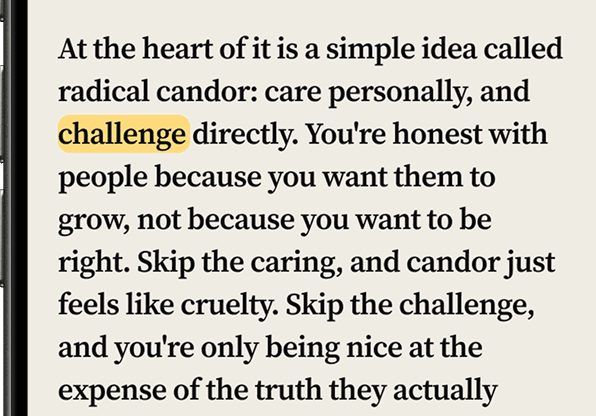
Change inherently causes tumult, but it's our resistance rather than change itself that causes the most harm.
To live is to lose, and the certainty of loss makes our experiences precious.
Our happiness in any moment is a function of reality minus expectations.
Разбейте ключевые идеи Master of Change на понятные тезисы, чтобы понять, как инновационные команды создают, сотрудничают и растут.
Погрузитесь в Master of Change через яркие истории, превращающие уроки инноваций в запоминающиеся и применимые моменты.
Задавайте любые вопросы, выбирайте свой стиль обучения и создавайте идеи, которые действительно вам подходят.

Создано выпускниками Колумбийского университета в Сан-Франциско
"Instead of endless scrolling, I just hit play on BeFreed. It saves me so much time."
"I never knew where to start with nonfiction—BeFreed’s book lists turned into podcasts gave me a clear path."
"Perfect balance between learning and entertainment. Finished ‘Thinking, Fast and Slow’ on my commute this week."
"Crazy how much I learned while walking the dog. BeFreed = small habits → big gains."
"Reading used to feel like a chore. Now it’s just part of my lifestyle."
"Feels effortless compared to reading. I’ve finished 6 books this month already."
"BeFreed turned my guilty doomscrolling into something that feels productive and inspiring."
"BeFreed turned my commute into learning time. 20-min podcasts are perfect for finishing books I never had time for."
"BeFreed replaced my podcast queue. Imagine Spotify for books — that’s it. 🙌"
"It is great for me to learn something from the book without reading it."
"The themed book list podcasts help me connect ideas across authors—like a guided audio journey."
"Makes me feel smarter every time before going to work"
Создано выпускниками Колумбийского университета в Сан-Франциско

Получите резюме книги «Master of Change» в формате PDF или EPUB бесплатно. Распечатайте или читайте офлайн в любое время.
Change isn't the exception-it's the rule. We experience approximately 36 major disruptions throughout adulthood, yet our culture has conditioned us to view these transitions as abnormal and undesirable. This fundamental misunderstanding stems from outdated medical models like "homeostasis"-the tendency of systems to maintain stability-which we've wrongly applied to our entire lives. When faced with change, most people respond counterproductively: avoiding it entirely, actively resisting it, surrendering all agency, or desperately trying to return to previous states. Consider Thomas, whose carefully constructed life was upended by the pandemic. His initial response-trying to recreate his pre-pandemic routine exactly-led to frustration and burnout as he fought against an irreversibly altered reality. Revolutionary research from the University of Pennsylvania introduced "allostasis"-stability through change. Unlike homeostasis (order, disorder, order), allostasis describes a pattern of order, disorder, reorder. Healthy systems don't rigidly resist change but adapt to it, achieving stability somewhere new. Tommy Caldwell's harrowing experience as a hostage in Kyrgyzstan transformed him completely. After pushing their captor off a cliff to escape, he struggled to integrate this massive disruption into his self-narrative. Eighteen months later, disaster struck again when he accidentally cut off his left index finger with a table saw. Despite doctors telling him his climbing career was over, Caldwell quickly accepted his new reality rather than resisting it. "When I started climbing again, I felt a surprising amount of exhilaration," he said, finding liberation in others' low expectations. Change inherently causes tumult, but it's our resistance rather than change itself that causes the most harm. Major philosophical traditions-Buddhism's concept of impermanence, Taoism's dynamic path, Stoicism's dichotomy of control-all recognize this challenge. Modern science confirms that resisting change triggers stress hormones like cortisol, causing physical ailments.
Happiness arises from the gap between reality and expectations. When reality meets expectations, we feel content; when it falls short, we suffer. Denmark's high happiness ratings stem from citizens maintaining modest rather than idealized expectations. The brain's prefrontal cortex acts as a prediction machine, preparing our mind-body system. Large gaps between expectations and reality create psychological and physiological strain. Artist Serge Hollerbach exemplifies successful adaptation - when becoming legally blind at seventy-one, he transformed his art style to paint from his "inner eye," viewing his vision loss as a "new direction." This "tragic optimism" helps us better handle life's hardships. Erich Fromm contrasted the having mode (identity through possessions) with the being mode (identity through values). True adaptation starts with accepting what we cannot change - like appreciating a flower's beauty despite its brevity.
Olympic speed skater Nils van der Poel maintained a balanced life - drinking with friends and nurturing relationships outside sport - unlike peers who defined themselves solely through athletics. This fluid identity protected him from the emotional turbulence common among elite athletes. Evolution reveals that species surviving major disruptions possess high complexity - differentiated parts working cohesively. Ginger Feimster exemplified this when her daughter came out, integrating seemingly opposing identities as a Southern Christian and LGBTQ advocate, unified by maternal love. Western cultures view identity through individual uniqueness, while Eastern perspectives emphasize relational adaptation. Both approaches offer situational value. The Buddha's silence on the existence of self pointed to a dual truth: the "conventional self" of daily life and the "ultimate self" interconnected with everything coexist - requiring "this-and-that" rather than "this-or-that" thinking.
Our identities are like rivers - flowing yet contained within banks that guide us. Georgia Durante exemplifies this, evolving from model to mafia getaway driver to Hollywood stunt driver while maintaining her core value of intensity. Core values are fundamental beliefs providing stability during change - portable qualities we express across situations. During uncertainty, we can ask how to move toward or protect these values. Brain imaging reveals that reflecting on core values helps us reframe threats as challenges. Acceptance and Commitment Therapy confirms values provide strength during turbulent times. The New York Times illustrates this perfectly. While the newspaper industry declined, the Times thrived by applying its core values of independence, integrity and excellence - transforming from 1.2 million print subscribers in 2000 to over 10 million digital subscribers by 2022. When the ground shifts, we need both fluidity and structure to evolve while maintaining our essence.
Target fixation - becoming so focused on what's ahead that you crash into it - affects all areas of life, from mountaineers ignoring weather warnings to parents missing present moments while fixating on future goals. Aikido's zanshin offers a solution: maintaining continuous awareness that balances immediate focus with broader perspective. As master George Leonard notes, "Zanshin is the future, but zanshin is also now." When change strikes, our amygdala triggers the RAGE pathway for instant reaction, while the SEEKING pathway offers a more measured response through uncertainty. Cristina Martinez exemplifies this mindful approach. After fleeing Mexico to Philadelphia, she transformed her undocumented status into opportunity, using her barbacoa expertise to create South Philly Barbacoa - one of America's top new restaurants. Change presents two paths: reactive 2Ps (panic and pummel ahead) or responsive 4Ps (pause, process, plan, and proceed). Naming our emotions precisely increases our control over them.
Sometimes change shakes us deeply, even when we do everything right. When I struggled with OCD suffering, my therapist offered wisdom: "Not everything has to be meaningful. Why can't it just suck?" Our psychological immune system helps us cope with setbacks but needs time to respond to devastating changes. Forcing positivity too soon backfires. Jay Ashman's transformation from neo-Nazi leader to anti-hate advocate illustrates this. Bullied for wearing hearing aids and losing his father young, he embraced extremism until a Black man told him, "You're better than that shirt." He later found purpose educating others about hate. True surrender brings humility. When we let go of control, we stop trying to fix everything. Resilience isn't just internal - studies show asking for help strengthens it. Like redwoods whose roots intertwine, we need connection to weather life's storms.
When solving problems, people instinctively add rather than subtract. Jon Kabat-Zinn's "voluntary simplicity" teaches us to remove physical, psychological, and social clutter to focus on what matters most. Routines automate actions and save mental energy, while rituals - like religious services or morning meditation - create meaningful anchors amid chaos. Learn to distinguish between "real fatigue" requiring rest and "fake fatigue" from stagnation, which needs movement to overcome. Like mountains weathering into gentler forms, challenges soften our edges and build compassion. Success requires both fierce self-discipline and self-compassion. Research shows those who've faced moderate adversity often fare better than those experiencing either extreme hardship or minimal difficulty. To develop rugged flexibility, examine rigid patterns, challenge unrealistic expectations, diversify identities, and clarify core values. As Mary Oliver notes, "We shake with joy, we shake with grief. What a time they have, these two, housed as they are in the same body." True strength comes from embracing both the joy and grief of change.