Глава 1
The Renaissance Man: A Journey Through Leonardo's Boundless Curiosity
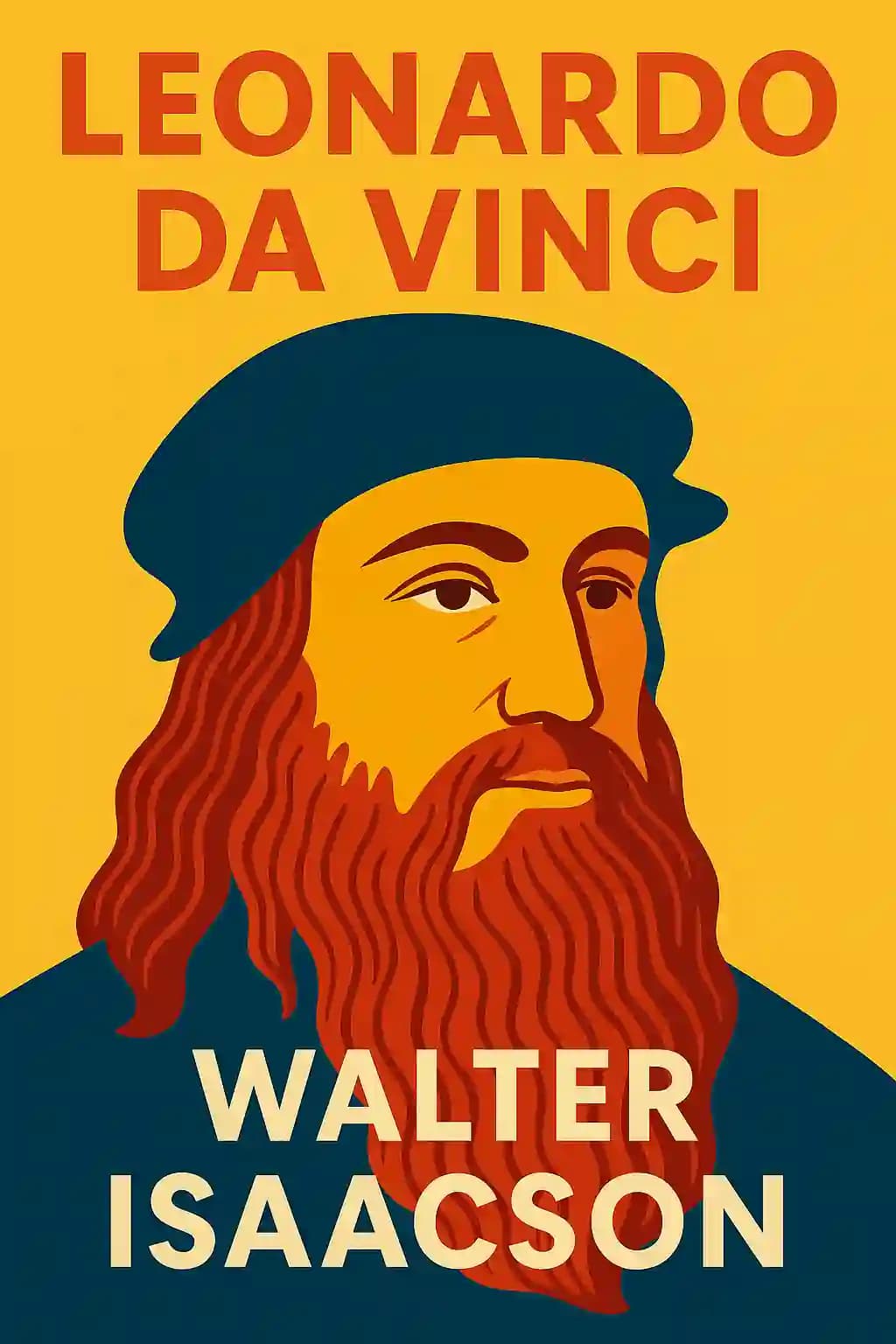
In a letter to the ruler of Milan, a thirty-year-old Leonardo da Vinci listed his qualifications as an engineer, architect, and weapons designer. Only in the eleventh paragraph did he mention, almost as an afterthought: "Likewise in painting, I can do everything possible." This understated claim came from the man who would create history's two most famous paintings-The Last Supper and the Mona Lisa. Walter Isaacson's comprehensive biography reveals Leonardo as the ultimate Renaissance man, whose genius stemmed not from supernatural talent but from qualities we can learn from: relentless curiosity, careful observation, and an imagination that knew no boundaries. Leonardo's story resonates deeply with modern innovators and creative thinkers; Steve Jobs reportedly purchased the rights to Isaacson's biography before its completion, seeing in Leonardo a kindred spirit who blended art and technology. The book has captivated readers worldwide, spending weeks on bestseller lists and inspiring a generation to embrace cross-disciplinary thinking in our increasingly specialized world.
Глава 2
The Curious Mind Behind the Masterpieces
Leonardo's illegitimate birth in 1452 proved a blessing in disguise. As the son of a respected Florentine notary and a peasant woman, he was excluded from following the family profession, freeing him to pursue his boundless curiosity. Growing up in the Tuscan countryside with his grandfather and uncle, young Leonardo developed keen observational skills, studying how light played across landscapes and examining insects, birds, and plants with uncommon intensity.
His most vivid childhood memory involved discovering a dark cave near Florence. "Suddenly there arose in me two contrary emotions, fear and desire-fear of the threatening dark cave, desire to see whether there were any marvelous thing within," he later wrote. Inside, he found fossilized whale bones that sparked philosophical reflections on time and mortality. This tension between fear and curiosity would define his life's approach to knowledge.
Unlike his educated contemporaries, Leonardo received no formal classical education, instead learning practical mathematics at an "abacus school" that prepared merchants' sons for commerce. This lack of Latin learning became both limitation and liberation. He proudly called himself a "disciple of experience" who learned through observation rather than from dusty books. His self-taught approach freed him from medieval dogmas and scholastic traditions, allowing him to develop an empirical method that anticipated the scientific revolution.
Leonardo's left-handedness-evident in his distinctive mirror writing and hatching technique-further marked him as different. Rather than a code designed to protect secrets, his right-to-left writing was simply a practical adaptation to avoid smudging ink. This physical trait would help authenticate his works centuries later through the distinctive upward-sloping hatching lines that appeared in his drawings.
At fourteen, Leonardo began apprenticing with Andrea del Verrocchio, Florence's premier artist-engineer. In this bustling workshop, he learned not just painting techniques but engineering principles, anatomical study, and the interplay between art and science. The workshop's collaborative environment, where multiple artists contributed to single works, established Leonardo's lifelong preference for teamwork over solitary creation.
Глава 3
Mastering Light and Shadow: The Artistic Revolution
Leonardo's artistic innovations fundamentally transformed Western art through his masterful development of three revolutionary techniques: chiaroscuro, sfumato, and perspective. Chiaroscuro-the dramatic use of sharp contrasts between light and shadow-became "the first intention of the painter" in Leonardo's view. Rather than simply varying colors as his contemporaries did, he meticulously added black pigments to create subtle gradations of darkness that gave three-dimensional form to flat surfaces. This technique allowed him to model forms with unprecedented sophistication, creating an illusion of depth that made figures appear to emerge from the canvas.
More revolutionary was his development of sfumato, the smoky technique of blurring contours to eliminate harsh lines. "Your shadows and lights should be blended without lines or borders in the manner of smoke losing itself in the air," he instructed young painters. This innovative approach involved laying down extremely thin layers of paint and carefully blending them to create imperceptible transitions between colors and tones. The technique enabled the mysterious expressions in his portraits, particularly the enigmatic smiles that seem to shift as viewers change position. In the Mona Lisa, for instance, up to thirty layers of paint, each as thin as a gossamer web, were applied to achieve the subtle modeling of the subject's face.
Leonardo's first independent works revealed his emerging genius and experimental nature. His Annunciation (1472-1475) demonstrated his early experiments with light and atmospheric perspective, particularly in the way he rendered the distant landscape with progressively lighter tones to simulate aerial perspective. The unfinished Adoration of the Magi (1481) introduced a revolutionary swirling composition with figures arranged in a dynamic vortex of emotion, breaking from the static arrangements typical of the period. Though abandoned after only a few months of work, this painting signaled Leonardo's ambition to transform traditional religious scenes into psychological narratives filled with human drama and emotional complexity.
His first major portrait, Ginevra de' Benci (1474-1478), hinted at his extraordinary ability to capture inner emotions and psychological states. Though initially appearing reserved or vacant, prolonged viewing reveals a complex psychological portrait of hidden feelings-a technique he would perfect three decades later in the Mona Lisa. The subtle suggestion of a smile on Ginevra's lips foreshadowed his most famous portrait, making this work unmistakably identifiable as coming from the same master. The portrait also showcased his innovative use of the juniper bush behind the sitter, which served both as a visual pun on her name and as a symbol of female virtue.
Leonardo's legendary perfectionism often prevented him from completing commissioned works. The Adoration of the Magi remained unfinished because, as Vasari noted, "his conceptions were so subtle and so marvelous" that executing them flawlessly seemed impossible to him. This pattern would repeat throughout his career, frustrating numerous patrons but allowing Leonardo to continually refine his ideas and techniques. His workshop notebooks reveal countless studies and experiments in light, shadow, and perspective, demonstrating his relentless pursuit of artistic perfection and his belief that painting was not merely a craft but a science requiring deep understanding of natural phenomena.
Глава 4
The Scientist's Eye: Observation as Foundation
Leonardo's scientific approach transformed how he understood and depicted the world. Unlike medieval scholars who relied on ancient authorities, Leonardo insisted on direct observation and experimentation. "My intention is to consult experience first, and then with reasoning show why such experience is bound to operate in such a way," he wrote, establishing a proto-scientific method a century before Galileo.
His notebooks reveal an insatiable curiosity through endless questions and investigations. One list included reminders to "describe the tongue of the woodpecker," "measure Milan and its suburbs," and "get the master of arithmetic to show you how to square a circle." He filled over 7,200 surviving pages (perhaps only a quarter of what he actually wrote) with anatomical studies, engineering designs, mathematical puzzles, and observations of natural phenomena.
Leonardo's greatest scientific strength was his ability to see patterns and connections across disciplines. When studying water flows, he noticed similarities to curling hair; when examining tree branches, he observed patterns matching human veins. This cross-disciplinary thinking led to his famous "rule of trees"-that the total thickness of a tree's branches at any level equals the thickness of the trunk-a principle he found repeated in river systems and human blood vessels.
His anatomical studies represented his most sustained scientific work. Beginning as artistic research to improve his paintings, these investigations evolved into pure scientific inquiry. Leonardo dissected at least thirty human cadavers, creating unprecedented anatomical drawings that combined scientific precision with artistic beauty. His studies of the heart were particularly groundbreaking-he correctly identified the heart as a muscle with four chambers and discovered how vortices help close the aortic valve, a finding not confirmed by modern science until the 1960s.
Despite these achievements, Leonardo rarely published or shared his scientific discoveries. Unlike contemporaries who advanced knowledge through collaboration and publication, he kept most findings in his private notebooks. This reluctance to publish diminished his scientific impact, as many of his discoveries had to be rediscovered centuries later.
Глава 5
The Engineer's Mind: Machines and Motion
Leonardo approached engineering with the same blend of observation, imagination, and artistic skill that characterized his scientific work. His engineering notebooks contain designs for flying machines, hydraulic systems, weapons, and theatrical devices that combined practical utility with aesthetic beauty. These notebooks, filled with precise measurements and detailed annotations, reveal his systematic approach to understanding mechanical principles, often incorporating mathematical calculations alongside his sketches.
His mechanical studies focused on understanding motion-how force transfers between components and how friction affects movement. Unlike other Renaissance technologists who merely presented completed machines, Leonardo dissected them with exploded and layered views to analyze their inner workings. His beautiful drawings of hoists, cranes, and gears demonstrate not just technical understanding but artistic appreciation for mechanical elegance. He developed innovative ways to illustrate complex mechanisms, creating the first known examples of cross-sectional views and transparent overlays to show internal operations.
Leonardo's fascination with flight produced over five hundred drawings and thirty-five thousand words on birds and flying machines. Beginning with theatrical devices for stage productions, his interest evolved into serious attempts to understand the principles of flight. He meticulously observed birds' wing movements, noting how different species adjusted their wings during flight and landing. His studies included detailed analyses of air currents, wind resistance, and the relationship between wing surface area and body weight. His flying machine designs incorporated ingenious features like hinged wings that changed position during upstrokes to reduce resistance, retractable landing gear, and pilot positioning systems that predated modern aviation concepts by centuries.
Water engineering particularly captivated Leonardo, engaging his artistic, scientific, and practical interests simultaneously. He designed canals, locks, and irrigation systems, while conducting experiments on fluid dynamics using glass tanks with tracers to visualize flow patterns. His studies of water eddies and vortices combined scientific precision with artistic appreciation for nature's patterns. "Water is the driving force of all nature," he wrote, a principle reflected in both his engineering designs and artistic depictions of flowing water. His hydraulic projects included innovative solutions for Milan's canal system, automated irrigation devices, and water-powered machinery that demonstrated remarkable efficiency for their time.
Though many of Leonardo's engineering designs remained unbuilt during his lifetime, they demonstrated remarkable foresight. His wheellock mechanism for firearms was adopted in the early 1500s, while other concepts like ball bearings and double-hulled ships anticipated innovations that would appear centuries later. He designed an automated loom, a mechanical calculator, and even a primitive version of a tank. His engineering legacy includes the first known designs for a self-propelled vehicle, an automated sprinkler system, and a mechanical drummer. These innovations weren't merely theoretical - many included detailed construction notes and material specifications that would prove viable when finally attempted in modern times.
Глава 6
The Courtier's Life: Art as Political Currency
Leonardo's career unfolded across the politically fragmented landscape of Renaissance Italy, where he moved between competing courts seeking ideal patronage. After leaving Florence at thirty, he spent seventeen years in Milan serving Ludovico Sforza, the ambitious ruler who controlled the city through military force rather than legitimate authority.
At the Sforza court, Leonardo flourished in multiple roles: painter, engineer, festival designer, and scientific advisor. He created elaborate theatrical productions with mechanical special effects, designed costumes and stage machinery, and entertained the court with music, riddles, and fables. These spectacles weren't mere frivolities but political statements reinforcing Sforza's legitimacy and cultural sophistication.
Leonardo's greatest commission under Sforza was a massive bronze equestrian monument honoring the duke's father. Planned at an unprecedented height of twenty-three feet, the project consumed Leonardo for years as he studied horse anatomy, designed casting techniques, and created a full-size clay model. When French forces threatened Milan in 1494, the bronze intended for the horse was diverted to make cannons, and when the French conquered the city in 1499, their archers used Leonardo's clay model for target practice.
After Sforza's fall, Leonardo briefly served the notorious Cesare Borgia as a military engineer, creating innovative maps and studying fortifications. This association with the brutal Borgia seems contradictory for the vegetarian Leonardo, who avoided harming animals, but reflects his pragmatic approach to patronage and his lifelong fascination with military engineering.
Leonardo's final patron, King Francis I of France, proved his most supportive. The young king gave the aging artist a comfortable manor house near his castle at Amboise, valuing Leonardo's conversation and intellect without pressuring him to complete paintings. Francis reportedly declared there had never been another man "who knew as much" and treated Leonardo with unprecedented respect, allowing him to pursue his interests freely until his death in 1519.
Глава 7
The Last Supper: Drama Frozen in Time
Leonardo's masterpiece The Last Supper transformed religious painting by capturing a pivotal narrative moment with unprecedented psychological depth. Commissioned by Ludovico Sforza for the refectory of Santa Maria delle Grazie in Milan, the massive mural (15 by 29 feet) depicts the moment after Jesus announces, "One of you will betray me."
Rather than showing a static scene, Leonardo captured the rippling reactions to this announcement. Jesus sits with bowed head at the center while his words spread outward like waves, creating varied emotional responses among the twelve apostles arranged in four groups of three. The leftmost trio shows immediate surprise; the next group features Judas clutching his silver bag while recoiling in shadow; the rightmost apostles display confusion and disbelief.
Leonardo's mastery of what he called "moti dell'anima" (motions of the soul) appears in each apostle's distinctive gesture and expression. These weren't arbitrary poses but carefully studied movements that conveyed specific emotional states. Leonardo had filled notebooks with observations of how feelings manifested physically, writing that "a good painter has to paint two principal things, man and the intention of his mind."
The painting's perspective is both mathematically precise and artfully manipulated. The vanishing point sits exactly at Jesus's right temple, marked by a nail hole Leonardo hammered into the wall when beginning the work. Yet he adapted perspective rules to accommodate multiple viewing angles, creating what he called "complex perspective" that worked from various positions in the refectory.
Tragically, Leonardo's experimental technique doomed the painting to rapid deterioration. Rather than using traditional fresco methods, he painted directly onto dry wall using a mixture of tempera and oil that began flaking within twenty years. Despite six major restoration attempts over the centuries, much of the original work has been lost. The painting's current state-innovative yet flawed, brilliant in conception yet compromised in execution-becomes a fitting metaphor for Leonardo himself: a genius whose reach sometimes exceeded his grasp.
Глава 8
The Mona Lisa: Science and Art in Perfect Balance
The Mona Lisa represents the culmination of Leonardo's lifetime perfecting the intersection of art and science. Though begun in 1503 upon his return to Florence, he carried it with him through Milan and Rome, adding delicate touches until his death. The painting exemplifies Leonardo's genius-what began as a portrait of a silk merchant's wife evolved into an exploration of human emotion through a mysterious smile, connecting human nature to the universe itself.
According to Vasari's account (largely confirmed by subsequent discoveries), Leonardo painted Lisa Gherardini, wife of Florentine silk merchant Francesco del Giocondo. Born in 1479 to a distinguished but financially diminished family, Lisa married Francesco at fifteen and had borne him two sons by 1503 when the portrait was commissioned. Curiously, Leonardo never delivered the painting to Francesco nor collected payment, instead keeping it with him for sixteen years, continually refining what had become a universal work rather than a mere commission.
The painting's technical innovations begin with Leonardo's preparation of the poplar panel with lead white primer that reflects light back through his translucent glazes, creating luminous depth. Using up to thirty imperceptibly fine layers of paint with minimal pigment, he achieved shifting subtleties that make the painting come alive as viewing conditions change. The composition places Lisa on a loggia with her hands unusually close to the viewer while a misty landscape recedes into the distance, connecting human figure to geological environment.
Most famous is the enigmatic smile that seems to flicker and change as we look at it. Leonardo's anatomical studies informed this creation; he had analyzed every facial muscle controlling expressions, even dissecting cadavers to understand how smiles form. His scientific understanding of optics also played a crucial role-the smile appears more pronounced when viewed peripherally because different areas of the retina process visual information differently.
The Mona Lisa became the world's most famous painting not by mere chance but because viewers feel a profound emotional connection with Lisa. She seems aware both of us and herself, making her appear uniquely alive among portraits. As Leonardo worked on it for the last sixteen years of his life, it transcended being merely a portrait to become universal-a meditation on human nature and our connection to the world.
Глава 9
The Legacy of a Universal Mind
Leonardo died on May 2, 1519, at age sixty-seven in his manor house near Amboise, France. His burial site at the church of Saint Florentin was later demolished, leaving his final resting place another Leonardo mystery. In his will, he left most of his estate to his devoted student Francesco Melzi, including his precious notebooks and art materials.
Leonardo's legacy transcends his individual works to represent the ideal of the Renaissance universal man-someone who sought knowledge across all disciplines. Unlike modern specialists who focus on narrow fields, Leonardo moved fluidly between art, science, engineering, and philosophy, finding connections that specialists might miss. His notebooks reveal a mind constantly seeking patterns and relationships, from the spirals in seashells to the eddies in flowing water to the curls in human hair.
What distinguished Leonardo was his ability to combine keen observation with boundless imagination. He saw details others overlooked-how dragonfly wings move differently during upward and downward strokes, how water forms vortices around obstacles, how facial muscles create expressions-then used these observations to inform both his scientific understanding and artistic creations.
Leonardo's approach offers valuable lessons for modern thinkers. Be relentlessly curious about everything, from everyday phenomena to cosmic mysteries. Observe acutely, not through magical talent but deliberate effort. Embrace distractions and tangents that might create unexpected connections. Respect facts rather than adjusting them to suit theories. Think visually rather than abstractly. Avoid specialization by connecting arts and sciences. Make lists of questions and pursue them with childlike wonder.
Perhaps most importantly, Leonardo teaches us to maintain a balance between observation and imagination, between the concrete and the mysterious. His greatest works-whether the enigmatic smile of the Mona Lisa or his studies of turbulent water-combine scientific precision with artistic wonder. They remind us that the most profound understanding comes not from dissecting nature into separate disciplines but from seeing the patterns that connect all knowledge into a unified vision of our world.
Глава 10
The Woodpecker's Tongue: Curiosity as Its Own Reward
Among Leonardo's countless to-do lists appears a simple entry: "Describe the tongue of the woodpecker." This seemingly random task exemplifies Leonardo's approach to knowledge-pursuing understanding for its own sake, driven by wonder rather than practical application. His notebooks contain thousands of such observations, from the flight patterns of dragonflies to the spiral arrangement of leaves on plant stems.
The woodpecker's remarkable tongue extends three times the length of its bill, wrapping around its skull when retracted and curving down to its nostril. This extraordinary adaptation serves multiple purposes: it enables the bird to extract insects from deep within tree bark, acts as a shock absorber during rapid pecking, and provides crucial protection for the brain. When pecking, woodpeckers endure forces up to 1,200 times that of gravity, ten times what would kill a human. The tongue's specialized structure, composed of elongated hyoid bones and elastic tissues, represents one of nature's most ingenious engineering solutions.
Leonardo couldn't have known these modern scientific details, but his curiosity drove him to investigate natural wonders without immediate utility. His detailed sketches of the woodpecker, alongside numerous other anatomical studies, reveal his methodology of careful observation combined with imaginative speculation. He would often dissect specimens, create multiple drawings from different angles, and accompany his illustrations with mirror-written notes questioning how and why such structures evolved.
In our efficiency-obsessed world, where research is increasingly driven by commercial potential and practical applications, Leonardo reminds us that the most profound discoveries often come from seemingly impractical questions. His studies of bird flight, for instance, while initially purely observational, later influenced his designs for flying machines. Similarly, his investigations of water flow patterns informed his engineering projects decades later. His life demonstrates that curiosity itself is a virtue worth cultivating, that the boundaries between disciplines are artificial, and that the greatest insights emerge when we approach the world with both scientific rigor and artistic wonder.
The woodpecker's tongue-complex, ingenious, and easily overlooked-becomes the perfect symbol for Leonardo's legacy: a reminder to notice what others miss, to question what others accept, and to find beauty in the intricate mechanisms of our world. Leonardo's approach to understanding nature combined meticulous observation with an almost childlike sense of wonder. He would spend hours watching water flow around obstacles, studying how cats land on their feet, or examining the geometric patterns in flowers. Each observation led to deeper questions and connections across different fields of study.
In this spirit of boundless curiosity, Leonardo's genius continues to inspire five centuries after his death, challenging us to see our world with fresh eyes and renewed wonder. His example teaches us that true innovation often springs from the fertile ground of pure curiosity, and that the most valuable discoveries might come not from asking "What use is this?" but rather "Why is this so?"