Глава 1
The Billionaire's Blueprint: Wisdom Beyond Wall Street
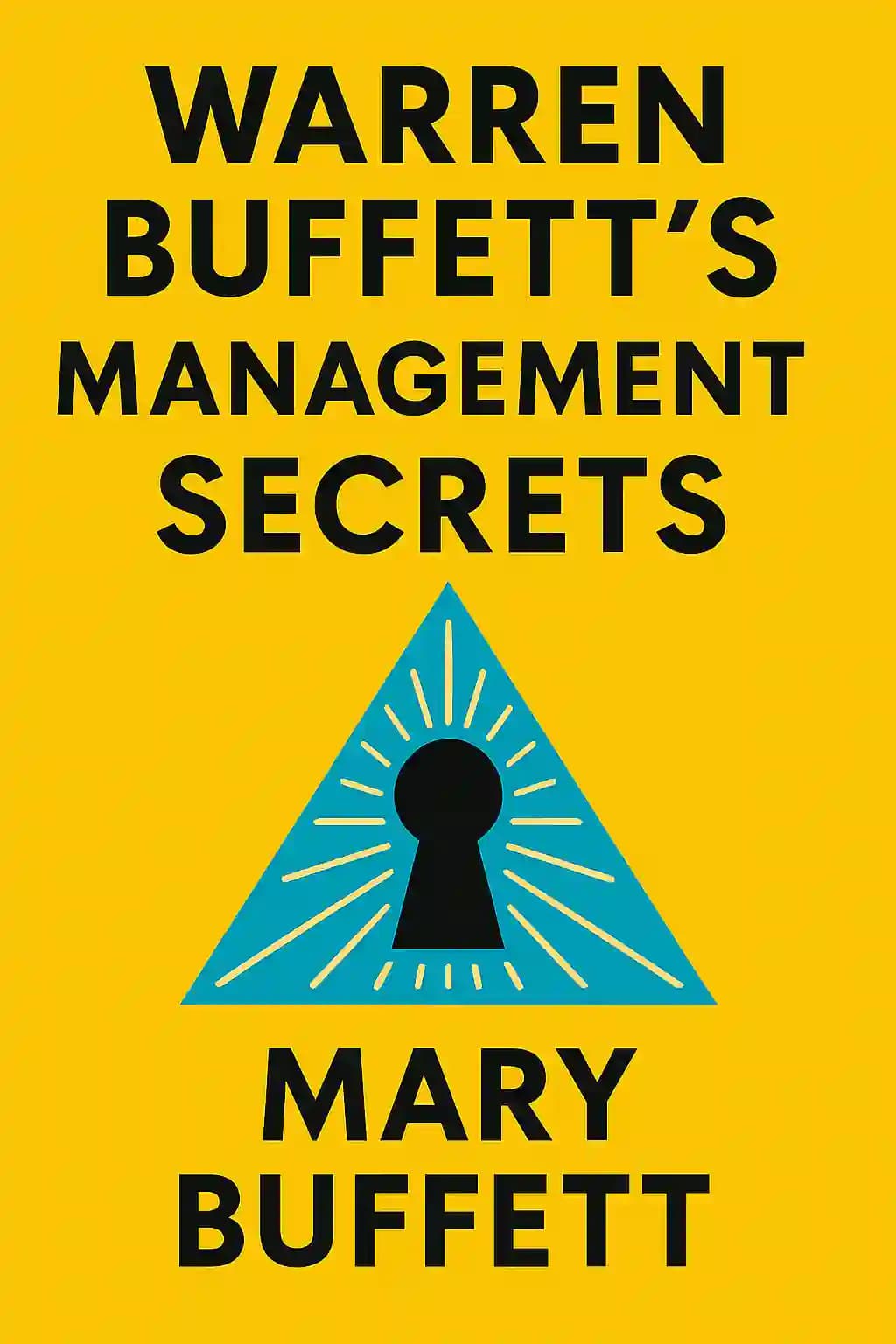
What if the greatest investor in history was actually an even better manager? While Warren Buffett's investment prowess has been dissected endlessly, his extraordinary management philosophy has remained largely unexplored-until now. This management genius oversees 88 diverse businesses with 233,000 employees, achieving an astonishing 21.39% annual operational growth rate over decades, outperforming even his legendary investment returns. The book has become required reading at business schools worldwide, with CEOs like Bill Gates citing it as transformative to their leadership approach. Beyond Wall Street circles, celebrities from Oprah to LeBron James have praised its accessible wisdom that applies far beyond corporate boardrooms. At its core lies a revolutionary idea: the most effective management isn't about control but inspiration.
Глава 2
Finding Your Fortune: The Business Selection Advantage
The foundation of Warren Buffett's management philosophy begins with a counterintuitive insight: not all businesses are created equal. Some enterprises possess such inherently favorable economics that even mediocre management will appear brilliant. These are the companies Buffett wants to own and where smart professionals should seek employment.
The secret lies in identifying businesses with durable competitive advantages-those that burn less capital than they earn. These exceptional enterprises typically produce brand-name products that rarely change (like Coca-Cola or Wrigley's gum) or provide unique services commanding premium prices (like Moody's or H&R Block). Without constant R&D expenses or retooling costs, they can use the same equipment for years while reinvesting profits into expansion without taking on debt.
How can you identify these golden opportunities? Buffett employs three simple tests. First, examine per-share earnings over ten years-the ideal employer shows consistent earnings with a steady upward trend. Companies with erratic earnings typically operate in fiercely competitive industries prone to boom-bust cycles, making them unstable employers that hire quickly in good times but fire just as rapidly during downturns.
Second, check the debt levels-great employers typically carry little or no long-term debt because their strong cash flow allows them to self-finance. Companies with debt exceeding five times their net earnings likely lack a durable competitive advantage and have little cash for raises, bonuses, or expansion.
Finally, calculate the gross profit margin (Revenue minus Cost of Goods Sold, divided by Revenue). Companies with durable competitive advantages maintain consistently higher margins: Coca-Cola (60%+), Moody's (73%), and Wrigley (51%). Contrast these with struggling companies like United Airlines (14%) or General Motors (21%). Even in tech, Microsoft's 79% margin versus Apple's 33% reveals stronger underlying economics.
These tests aren't just academic exercises-they're practical tools for career planning. Working for companies with durable competitive advantages means better compensation, greater job security, and more advancement opportunities. The business's inherent strength creates a rising tide that lifts all boats, including yours.
Глава 3
The Art of Letting Go: Delegation as a Superpower
Most executives struggle with delegation, but Warren Buffett has elevated it to an art form. He delegates "almost to the point of abdication," owning over 88 diverse businesses run by highly competent CEOs who enjoy complete operational control. When Berkshire bought Forest River, Buffett told CEO Peter Liegl not to expect to hear from him more than once a year. He even told McLane Company's CEO that purchasing new company jets was "your decision. It's your company to run." This hands-off approach extends to major acquisitions like GEICO, Shaw Industries, and See's Candies, where founding management teams remained largely intact.
This extreme delegation isn't laziness-it's strategic brilliance based on three principles. First, Buffett recognizes that every business culture is unique with specialized skills he can't match. His job isn't to micromanage but to inspire greatness. For instance, when Berkshire acquired Dairy Queen, Buffett maintained its Minnesota headquarters and existing management structure, acknowledging their deep understanding of the quick-service restaurant industry. Second, he understands that competent managers prefer autonomy and work harder when they think of the business as "theirs." This was demonstrated when he allowed Rose Blumkin to continue running Nebraska Furniture Mart her way after acquisition, resulting in continued growth and market dominance. Finally, he knows that complete delegation requires managers with not just intelligence and passion, but absolute integrity - exemplified by leaders like Tony Nicely at GEICO and Ajit Jain in Berkshire's reinsurance operations.
This approach transformed Berkshire Hathaway from a failing textile company into a multinational conglomerate worth over $150 billion. By stepping back and giving talented people room to excel, Buffett created an environment where businesses flourish under managers who feel genuine ownership. His annual letters to shareholders frequently highlight the success of this approach, citing examples like Shaw Industries' growth under Robert Shaw and BNSF Railway's performance under Matthew Rose.
The lesson extends beyond corporate boardrooms. Whether managing a small team or running a household, the willingness to delegate meaningful responsibility-not just tedious tasks-empowers others and often produces better results than trying to control everything yourself. This principle is evident in how Buffett structured Berkshire's headquarters, maintaining a lean staff of just 25 people to oversee an empire of hundreds of thousands of employees. As Mrs. B of Nebraska Furniture Mart succinctly put it when asked about her business success: "Sell cheap and tell the truth." This philosophy of trust and autonomy has become a cornerstone of Berkshire's corporate culture, inspiring other companies to rethink their approach to management and control.
The success of this delegation strategy is further validated by Berkshire's remarkably low turnover rate among subsidiary CEOs and the consistent outperformance of its acquired companies compared to their industry peers. It demonstrates that true leadership often means knowing when to step back and let others lead in their areas of expertise.
Глава 4
The Manager's Mindset: Character Traits That Drive Success
After finding the right business and embracing delegation, the next crucial step is identifying managers with the right qualities-or developing these qualities in yourself. Buffett seeks three essential characteristics: integrity, intelligence, and passion.
The first critical trait is what psychologists call an internal locus of control-the belief that you control your fate rather than external forces controlling you. Buffett learned this from his father Howard, who started a successful business during the Depression and got elected to Congress when he disagreed with government policies. People with this mindset take responsibility for failures and learn from mistakes without dwelling on them. When Warren's Irish bank investments failed, he didn't blame the economy-he acknowledged his error and moved forward. This "victor" mentality, as opposed to a "victim" mentality, is essential for leadership because victors solve problems while victims waste time inventing excuses.
The second vital characteristic is genuine passion. Buffett believes that not doing what we love destroys our spirit and limits our potential. The most successful people in any field-whether programmers, salespeople, carpenters, nurses, or lawyers-are those who genuinely love what they do. This passion drives them to learn everything about their field, impressing customers and colleagues alike. Many of Buffett's top managers have stayed with their companies for decades despite being wealthy enough to retire-like Stan Lipsey of the Buffalo News (30+ years) and Irv Blumkin of Nebraska Furniture Mart (since his teens).
This passion often manifests as healthy obsession. Warren himself memorized the entire Moody's stock manual as a young investor. His archetype was Mrs. B of Nebraska Furniture Mart, who ran her business until age 104, took only one vacation in 60+ years (which she hated), and couldn't wait to get back to "her customers" each morning. In Buffett's world, this obsession trumps raw intelligence-though being smart too is "just icing on an obsessively delicious cake."
The final essential quality is unwavering honesty. Buffett believes managers who are truthful about mistakes are more likely to learn from them, while those who blame others will eventually lie to themselves about important matters. This is especially critical in accounting-"Managers who always promise to 'make the numbers' will at some point be tempted to make up the numbers." A manager with absolute integrity is like money already in the bank.
Глава 5
The Frugal Factor: Cost Management as Competitive Edge
In both business and personal finance, profit is simply the difference between costs and prices. A manager's twin goals are maximizing sales at the highest possible price while producing or acquiring products at the lowest possible cost. While most executives focus on increasing sales, Buffett places equal emphasis on rigorous cost management.
Buffett judges managers' cost consciousness by how they handle small expenses: "If managers aren't disciplined on the little things, they will probably be undisciplined on the large things." He admires extreme cost-cutters like Benjamin Rosner who counted toilet paper sheets to verify vendor honesty, and Tom Murphy who refused to paint unseen walls and eliminated ABC's private dining room after acquiring the network.
This principle extends to personal finance too-reducing living costs by $6 equals earning $10 pre-tax. Buffett seeks managers who are "cost conscious" as a lifestyle, not just during crises, because cutting costs is the fastest way to increase profits in both business and personal wealth.
Cost management also determines pricing flexibility, which affects product desirability. Companies with lower cost structures can price more competitively while maintaining profitability. This creates a virtuous cycle where cost efficiency enables competitive pricing, which drives sales volume, which further reduces per-unit costs through economies of scale.
However, Buffett distinguishes between wise frugality and short-sighted penny-pinching. He willingly invests in necessary infrastructure, employee development, and strategic acquisitions. His favorite holding period for exceptional businesses is "forever"-a long-term perspective that created his wealth. Most managers focus on quarterly results for bonuses and promotions, which kills strategic planning. They neither prepare for future opportunities nor potential recessions-reactive rather than proactive management.
When determining executive compensation, Buffett believes performance must be measured correctly. Business performance must be evaluated against industry peers, not absolute numbers. A business earning 20% on equity might seem impressive until compared with competitors earning 30%. Conversely, a business earning only 5% might deserve praise if industry peers average just 2%. Bonuses should reflect the manager's true value-add, not the business's underlying economics.
Глава 6
The Carnegie Connection: Motivation Through Positive Influence
After finding the right businesses and managers, Buffett's primary function becomes motivation. His approach, heavily influenced by Dale Carnegie's principles, centers on inspiring exceptional performance through positive reinforcement rather than criticism or control.
Buffett understands the power of first impressions. When Beryl Raff interviewed for CEO of Helzberg Diamond Shops, he personally picked her up at the airport in his gold Cadillac, immediately putting her at ease with his wit and charm. After discussing her vision for the jewelry business, he took her to lunch at his country club and gave her a hometown tour before offering her the job. This personal touch made her feel valued and special-creating the impression of a boss she'd love to work for.
He recognizes our deep human need to be appreciated, a principle psychologist William James called "the deepest principle in human nature." Following Charles Schwab's example (the first CEO paid a million dollars annually), Buffett believes hearty praise inspires greater achievement while criticism kills ambition. He never misses an opportunity to praise employees privately and publicly at annual meetings and in reports.
Buffett gives his employees a fine reputation to live up to. He consistently praises his managers as "the best in the business" in shareholder letters, annual meetings, and press interviews, giving them a stellar reputation to maintain. When advising Bono about fundraising for Africa, Buffett suggested appealing to America's greatness rather than its conscience: "Don't make people feel guilty; appeal to their pride and they will live up to it."
He avoids criticism because it breeds resentment and destroys productive working relationships. When David Sokol lost $360 million on a failed zinc project, Buffett simply said, "We all make mistakes," sharing that he had made even bigger errors himself. This response inspired loyalty-Sokol went on to brilliantly lead Berkshire's energy operations for nine years. When personal criticism is unavoidable, Buffett follows Carnegie's advice to begin with sincere compliments, creating trust that makes the criticism more acceptable.
Buffett believes the best way to win an argument is to avoid having one in the first place. Instead of contradicting others, he agrees with them to gain their trust and create an opening for his own ideas. Following Benjamin Franklin's example, he avoids direct contradictions and absolute statements, preferring phrases like "I conceive" or "I imagine."
Глава 7
The Human Element: Understanding Deeper Motivations
Warren Buffett's management philosophy centers on understanding what others truly want rather than focusing on his own desires. Following Henry Ford's wisdom about seeing things from others' perspectives, Buffett applies this principle in both family and business relationships.
When acquiring companies, he speaks to owners' deeper needs beyond just money. Rose Blumkin sold Nebraska Furniture Mart to Buffett for less than competitors offered because he allowed her to keep running her beloved business. Similarly, A.L. Ueltschi of FlightSafety sold to Buffett because he offered both financial reward and continued operational control. By addressing these emotional needs rather than just financial ones, Buffett consistently acquires excellent businesses at favorable prices while keeping talented founders engaged.
Buffett never tells his managers what to do, instead letting them set their own goals and standards-which invariably exceed what he would have demanded. He understands that people resist direct orders but embrace their own ideas with conviction. He asks questions rather than giving commands, turning potential orders into suggestions that stimulate independent thinking. For example, instead of saying "I want that job done by Monday," he might ask, "Do you think you can come up with a way to get this done by Monday?" This approach transforms resistance into willing action, as employees feel ownership over the solutions they develop.
He believes in admitting mistakes quickly and emphatically. When he lost several hundred million on Irish banks or $2 billion on ConocoPhillips when oil was $140 a barrel, he immediately took full responsibility without blaming others or making excuses. This transparency builds trust and respect, preventing the political fallout that has destroyed many leaders throughout history.
Buffett recognizes that leaders often surround themselves with yes-people who tell them what they want to hear rather than what they need to hear. His solution? Minimize his team, make most decisions independently, and rely on Charlie Munger as his "no man" who rejects ideas ten times more often than approving them-keeping Buffett from numerous potential disasters.
Глава 8
Navigating Business Hazards: Lessons from Buffett's Experience
Through decades of experience, Buffett has developed keen insights into common business pitfalls and how to avoid them. These hard-earned lessons provide a roadmap for navigating the treacherous waters of business management.
Leverage is seductive but dangerous. While debt can dramatically improve performance-borrow $100 million at $10 million interest to earn $15 million, nearly doubling profits-it creates vulnerability during downturns. Without debt, companies can simply reduce production during recessions; with debt, they risk bankruptcy. This explains why Buffett examines how companies performed during the Great Depression and why Berkshire maintains minimal debt with substantial cash reserves.
Buffett echoes his mentor Benjamin Graham's warning that "you can get into way more trouble with a good idea than a bad idea." Bad ideas are killed immediately, but successful good ideas become institutions that can eventually create disaster. Subprime mortgages initially helped people with marginal credit buy homes but eventually extended to those with poor credit histories, leading to widespread defaults during the recession. Similarly, AIG profited from insuring investment-grade corporate bonds, then applied the same model to subprime mortgage pools without properly assessing the risk-nearly causing global financial collapse.
After the Salomon Brothers bond-trading scandal where traders submitted false bids to the U.S. Treasury, Buffett advised his managers: "There is plenty of money to be made in the center of the court. There is no need to play around the edges." When he took over as chairman, he immediately removed the CEO and managers who supervised the offending traders, cooperated fully with investigators, and paid a $290 million fine-but saved the company. The lesson is clear: managers must vigilantly ensure employees don't risk the entire business for short-term gains.
Buffett acknowledges making plenty of mistakes-overpaying for businesses like ConocoPhillips and USAir, buying into declining businesses like Blue Chip Stamp, missing opportunities like Capital Cities Broadcasting, and hiring poor managers. What distinguishes him is how he handles these errors: he learns from mistakes without dwelling on them. Those who obsess over past failures waste energy that could be directed toward making money and enjoying life.
Глава 9
Personal Wisdom: Life Management Beyond Business
Buffett's management philosophy extends beyond business to personal life management, offering wisdom for career development, personal finances, and relationships.
Young managers often believe they need original ideas or creative genius to succeed, but Buffett has discovered that the best ideas are tried and true concepts with minimal chance of failure. As Miles Davis said, "Lesser artists borrow, great artists steal"-the same applies to business managers. Rose Blumkin brought discounting from Russia to her Nebraska Furniture Mart, revolutionizing local retail despite competitors' resistance. Jack Ringwalt of National Indemnity practiced disciplined underwriting, only writing insurance when profitable and building capital during good times. His philosophy that "There is no such thing as a bad risk. There are only bad rates" became fundamental to Berkshire's insurance operations.
Buffett believes we become like those we associate with-hanging out with low-lifes drags us down while smart, educated companions elevate us. Throughout his career, he cultivated relationships with business elites like Nick Newman (who modernized supermarket chains), Jack Ringwalt (who taught disciplined underwriting), Katharine Graham (Washington Post owner), and Bill Gates. These friendships provided creative, successful role models.
He advises thinking of yourself as a business with infinite earning potential, where you are your greatest asset. Young and inexperienced, your "business" earns little, but education and experience dramatically increase earning potential. Taking care of your "business" means maintaining good health and pursuing education to improve earning potential. Those with specialized skills have an advantage during inflation because limited competition allows them to raise prices.
Modern retailers have transformed from selling products to selling financing, profiting twice-once from the loan and once from the merchandise. Buffett advises avoiding loan obligations you can't comfortably handle. He lived modestly, paying $34,000 for the house he still occupies and driving inexpensive cars long after becoming wealthy. By living below his means, he accumulated capital to invest while others accrued debt for bigger houses and better cars. Like the tortoise beating the hare, Buffett's debt-free approach led to sustainable wealth while debt-burdened consumers crashed during recessions.
Глава 10
The Buffett Paradox: Simple Principles, Extraordinary Results
What makes Warren Buffett's management philosophy so remarkable is its apparent simplicity coupled with its extraordinary effectiveness. His approach isn't built on complex theories or cutting-edge management trends but on timeless principles of human psychology and business economics. For instance, when Buffett acquired See's Candies in 1972, he didn't implement sophisticated management systems; instead, he let the company continue operating with its proven formula while focusing on gradual price increases and maintaining quality.
The paradox lies in how these seemingly straightforward ideas produce exceptional results when consistently applied over decades. Consider his approach to delegation: when Buffett purchased GEICO, he retained CEO Tony Nicely and gave him complete operational autonomy, resulting in the insurance company's premium volume growing from $2 billion to over $16 billion. His principles - finding good businesses, delegating authority, hiring passionate people with integrity, motivating through praise rather than criticism, understanding others' needs, admitting mistakes, avoiding debt, learning from the past without dwelling on it - form a comprehensive framework for success.
Perhaps the greatest lesson from Buffett's management secrets isn't any single principle but the power of integrating them into a coherent philosophy and applying them with unwavering discipline. Take his approach to acquisitions: while other conglomerates frequently restructure their portfolios, Berkshire has held onto companies like See's Candies, Nebraska Furniture Mart, and GEICO for decades, allowing compound interest and strong management to work their magic. While many executives chase the latest management fads, Buffett has stayed true to his approach for over six decades, refining rather than reinventing his methods.
This consistency explains why Berkshire Hathaway has outperformed the market by such a wide margin for so long. From 1965 to 2021, Berkshire's per-share market value grew at an annual rate of 20.1% compared to 10.5% for the S&P 500. It's not just about making brilliant investment decisions-it's about creating an organizational culture where exceptional businesses run by passionate managers can thrive with minimal interference. For example, Buffett's hands-off approach with Precision Castparts allowed CEO Mark Donegan to continue his successful operational strategy after Berkshire's acquisition.
The beauty of Buffett's approach is that these principles apply equally well to managing a multinational corporation, a small business, a department within a larger organization, or even one's personal life and finances. His emphasis on reputation ("It takes 20 years to build a reputation and five minutes to ruin it") and long-term thinking has influenced managers across industries. At their core, his principles are about understanding human nature, aligning incentives with goals, focusing on the long term, and maintaining unwavering integrity.
As we navigate an increasingly complex business landscape, Buffett's management secrets remind us that sustainable success often comes not from complexity but from mastering the fundamentals and executing them with consistency and discipline. His annual letters to shareholders, which have maintained the same straightforward style for decades, exemplify this approach. In a world obsessed with the next big thing, there's profound wisdom in Buffett's focus on timeless principles that have worked for generations and will likely continue working for generations to come. His success with diverse businesses - from insurance to railroads to manufacturing - proves that these fundamental principles transcend industry boundaries and economic cycles.