Глава 1
Where Dragons and Duty Collide: A Napoleonic Fantasy Takes Flight
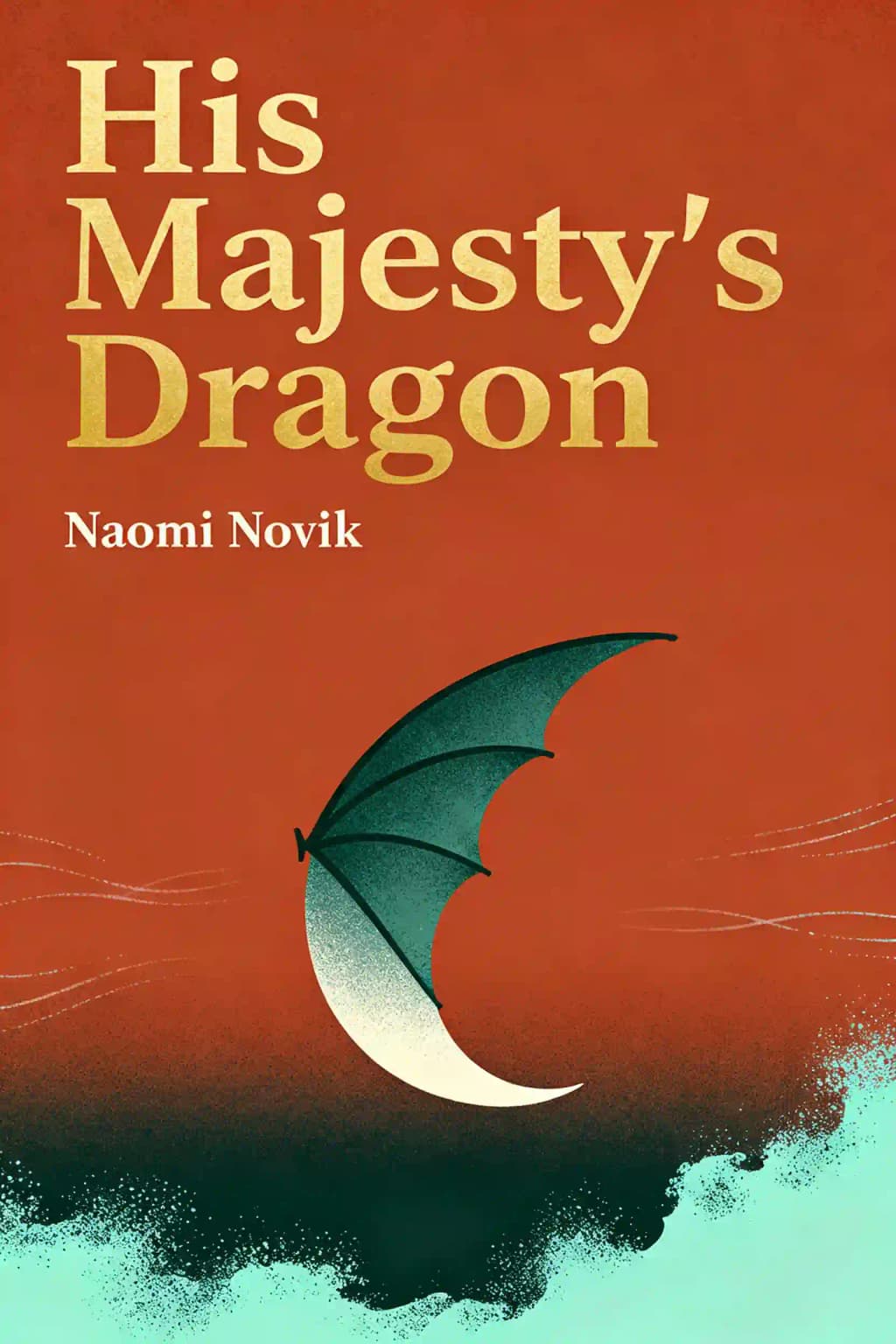
His Majesty's Dragon has captivated readers since its 2006 debut, earning praise from literary giants like Stephen King and filmmakers like Peter Jackson. This first installment in Naomi Novik's Temeraire series brilliantly fuses Napoleonic War naval fiction with dragons, creating an alternate history where aerial combat shapes the fate of nations. The novel's exploration of friendship across species boundaries and its meticulous attention to historical detail have made it a cornerstone of modern fantasy literature. Beyond critical acclaim, the series has developed a passionate fanbase, inspiring artwork, cosplay, and even tabletop gaming adaptations. Novik's work stands as a testament to fantasy's ability to reimagine history while exploring timeless themes of duty, honor, and the bonds that transcend conventional boundaries.
Глава 2
A Naval Captain's Life Upended
Captain Will Laurence's meticulously ordered life as a respected naval officer is thrown into complete chaos when his vessel, HMS Reliant, captures a French frigate carrying an exceptionally rare dragon egg. The prize, initially valued for its monetary worth, becomes far more significant when it unexpectedly hatches weeks ahead of schedule during a violent storm at sea. The intelligent dragonet immediately chooses Laurence as his handler - forming an instantaneous telepathic bond that, according to centuries of tradition and British law, cannot be broken or transferred. Naming the dragon Temeraire after a legendary ship of the line, Laurence must face the devastating reality that he must abandon his promising twenty-year naval career to join the socially ostracized Aerial Corps, a prospect that horrifies both him and his well-connected family.
The relationship between Laurence and Temeraire develops beautifully from their first encounter in the ship's makeshift dragon covert. Despite his initial reluctance and shock, Laurence quickly grows attached to the intelligent, curious dragonet who devours not only his meals but knowledge with equal enthusiasm. Their early days aboard the Reliant reveal Temeraire's remarkable abilities - his speed rivals that of courier dragons, his eyesight can spot approaching vessels hours before human lookouts, and his intellectual capacity for languages and mathematics astounds even the ship's educated officers. When Laurence attempts to transfer Temeraire to a trained aviator from the Corps, believing it best for both of them, the dragon stubbornly refuses, declaring with unexpected eloquence, "I do not want another captain." This pivotal moment cements their partnership and sets Laurence on an irreversible new path into the mysterious world of Britain's aerial forces.
What makes this section so compelling is watching Laurence's transformation from reluctant dragon handler to devoted captain and companion. His naval background - with its emphasis on discipline, honor, and duty - shapes his approach to dragon-handling in ways that will later set him apart from other aviators. He maintains his formal manners and insists on proper dress even while adapting to the more casual customs of the Aerial Corps. Through their daily training sessions and conversations, Laurence discovers in Temeraire not just a military asset but a profound intellectual equal. When he realizes he would "rather have Temeraire than any ship in the Navy," we witness the beginning of a profound bond that will be tested throughout the series. This relationship forms the emotional core of the novel, demonstrating how unexpected connections can fundamentally alter one's sense of identity and purpose, while challenging societal prejudices about both dragons and their handlers.
Глава 3
Into the Aerial Corps: Culture Shock and New Beginnings
Arriving at the Loch Laggan training covert in Scotland, Laurence encounters a world utterly foreign to his naval experience. The Aerial Corps operates with shocking informality - officers address each other by surname without rank, women serve as captains of the larger dragons, and social norms are disregarded in favor of practicality. For Laurence, whose life has been defined by rigid naval hierarchy and propriety, this cultural shift proves as challenging as learning to fly. The stark stone buildings and informal mess halls stand in sharp contrast to the polished wood and strict protocols of naval vessels, while the casual mixing of social classes would be unthinkable aboard ship.
The aviators initially treat Laurence with thinly veiled hostility, particularly Lieutenant Granby, who was supposed to captain Temeraire. Their resentment stems not just from Laurence's naval background but from the perception that he's received an unearned prize in Temeraire, whose rare breed and exceptional abilities become increasingly apparent. The discovery that Temeraire is a rare Chinese Imperial - one of only a handful in Western service - only intensifies this resentment. When Laurence confronts Granby about his disrespect, demanding proper address and threatening disciplinary action, he establishes necessary boundaries while dreading the inevitable backlash. This confrontation becomes a turning point in their relationship, as Granby's subsequent grudging respect lays the groundwork for their future partnership.
The clash between naval and aviator cultures manifests in countless small details that Novik weaves throughout the narrative. Laurence is appalled to learn dragons aren't regularly bathed, considering it a basic courtesy, and that Temeraire's standard-issue harness causes him visible discomfort. His insistence on proper care - removing the uncomfortable harness and ordering regular baths - marks him as an outsider but also demonstrates his devotion to Temeraire's wellbeing. The other aviators initially mock these "naval affectations" but gradually come to appreciate the practical benefits of his innovations. When he encounters Levitas, a neglected Winchester whose handler Captain Rankin treats with callous indifference, Laurence's compassion compels him to intervene despite the risk of appearing presumptuous. This incident highlights the stark contrast between those who view dragons as mere military assets and Laurence's more humanitarian approach.
Through these cultural conflicts, Novik explores how institutions shape individuals and how outsiders can bring fresh perspectives to entrenched systems. Laurence's naval background, initially a liability, gradually becomes a strength as he applies tactical knowledge to aerial combat in ways the Corps hasn't considered - such as adapting naval formation flying to dragon warfare and introducing concepts of coordinated fleet actions. His journey from outsider to respected aviator reflects the novel's broader theme of finding one's place in an unexpected community. The transformation is particularly evident in his growing comfort with the Corps' informal customs, though he never entirely abandons his ingrained sense of propriety, creating a unique hybrid approach that ultimately enriches both cultures.
The training covert itself becomes a character in these scenes, with its mixture of military discipline and dragon-necessitated adaptations. The massive feeding grounds, the intricate network of dragon pavilions, and the specialized training grounds all represent a world that has evolved to accommodate beings that the rest of society prefers to ignore. Through Laurence's eyes, readers discover both the practical challenges and the hidden beauty of this parallel society that exists alongside the familiar historical world of the Napoleonic era.
Глава 4
The Dragon's Perspective: Temeraire's Growth and Discovery
One of the novel's most remarkable achievements is its portrayal of Temeraire as a fully realized character with his own developmental arc. Far from being merely Laurence's mount, Temeraire emerges as an intellectual force whose curiosity and intelligence drive much of the story. His evolution from newly-hatched dragonet to sophisticated thinker provides some of the book's most delightful and thought-provoking moments, challenging both characters and readers to reconsider their assumptions about intelligence, consciousness, and the nature of relationships.
Temeraire's education begins with language - he hatches speaking French but quickly masters English - and expands to encompass an impressive breadth of knowledge. His voracious appetite for learning leads him through literature, mathematics, and philosophy. When Laurence reads him Newton's Principia Mathematica, Temeraire not only comprehends the complex concepts but applies them to flying, developing intuitive understanding of aerial movement that informs innovative battle maneuvers. His mathematical prowess becomes particularly evident during combat situations, where he calculates trajectories and wind patterns with remarkable precision. His questions often challenge human assumptions: "Why should it signify so much whether one has a title or not?" he asks, perplexed by social hierarchies that seem arbitrary to his logical mind. This intellectual curiosity extends to poetry, with Paradise Lost becoming a particular favorite that prompts deep discussions about free will and loyalty.
The dragon's perspective serves as a powerful lens through which to examine human society, offering both innocent observation and incisive critique. When Temeraire learns about human relationships, he expresses concern about Laurence potentially marrying, fearing it would diminish their bond - a fear that reveals complex layers of attachment and dependency in dragon-human partnerships. His observations of human courtship customs lead to amusing misunderstandings but also highlight the arbitrary nature of many social conventions. When he witnesses the execution of the traitor Choiseul and hears the anguished screams of the man's dragon Praecursoris, his distress forces both Laurence and the reader to confront the ethical implications of binding intelligent creatures to human conflicts. This scene particularly emphasizes the moral complexity of the dragon corps system and raises questions about autonomy and consent.
Through Temeraire's eyes, we see familiar aspects of human society made strange, inviting us to question conventions we might otherwise take for granted. His outsider perspective combines childlike innocence with penetrating insight, creating moments of both humor and profound reflection. Whether he's puzzling over the concept of property ownership, questioning gender roles in military service, or contemplating the nature of loyalty, his observations challenge established norms. His relationship with other dragons adds another layer of complexity, as he navigates between human and dragon social structures, often serving as a bridge between two very different worlds.
This dual narrative focus - following both Laurence's and Temeraire's growth - enriches the storytelling and elevates the novel beyond typical military fantasy. Their parallel journeys of discovery and adaptation create a unique dynamic where each character's development influences and enhances the other's, resulting in a deeply nuanced exploration of partnership, growth, and mutual understanding.
Глава 5
Aerial Combat: The Art and Strategy of Dragon Warfare
Novik's depiction of aerial combat represents one of the novel's most innovative elements, blending historical naval tactics with the unique capabilities of dragons to create a compelling new form of warfare. The training sequences at Loch Laggan reveal the intricate complexities of aerial combat, where dragons must coordinate their movements while carrying crews of up to 30 members who handle weapons, maintain communication networks, and navigate through challenging weather conditions. Each dragon breed brings distinct tactical advantages: the acid-spitting Longwing Lily serves as a formation leader with her devastating chemical attacks, while the massive Regal Copper Maximus provides raw power and can carry the heaviest loads. The lightweight Yellow Reapers excel at quick maneuvers, and the mid-weight Parnassian breeds offer versatility in both combat and transport roles.
Laurence and Temeraire's collaborative approach to combat training demonstrates their complementary strengths in unprecedented ways. Temeraire contributes an intuitive understanding of aerial movement and wind patterns, while Laurence applies sophisticated tactical military knowledge from his fifteen years of naval experience. Their innovative use of a flight-table - with dragon figures suspended by threads to simulate three-dimensional battle formations - attracts attention throughout the Corps. This teaching tool allows crews to visualize complex maneuvers before attempting them in flight, reducing training accidents and improving coordination. Their method becomes so successful that other training grounds across Britain begin adopting similar approaches.
The novel's climactic battle sequence showcases the full spectacle and strategy of dragon combat in extraordinary detail. When Napoleon attempts to invade England using dragons to carry transport vessels across the Channel, Britain's aerial forces face overwhelming odds against a force nearly triple their size. The battle description weaves together multiple layers of action - from individual dragon duels to large-scale formation tactics. Readers feel the cold wind cutting through leather flying gear, hear the thunderous roar when Temeraire reveals his divine wind ability for the first time, and experience the heart-stopping tension of watching crew members execute mid-air boarding actions with nothing but thin leather straps between them and a thousand-foot fall.
What makes these combat scenes particularly effective is their seamless integration of emotional depth and strategic complexity. When Laurence reluctantly permits Granby to lead a boarding party onto an enemy dragon, his anxiety reveals how deeply he's come to care for the man who once resented his appointment as captain. The scene gains additional poignancy through flashbacks to their early conflicts and gradual development of mutual respect. When French boarders attack Temeraire, Laurence's desperate defense of his dragon demonstrates the profound bond that has become the center of his life - a relationship that transcends mere military partnership. Through these moments of crisis, character relationships deepen and evolve against the backdrop of intricate battle maneuvers, formation changes, and the constant calculation of wind patterns and altitude advantages that determine survival in aerial warfare.
Глава 6
Social Constraints and Unconventional Freedom
Throughout the novel, Novik explores how the Aerial Corps exists both within and outside conventional British society. Aviators face social ostracism-they're considered necessary but distasteful, their close association with dragons marking them as somehow less than proper. Yet this very marginalization creates space for unconventional freedoms impossible elsewhere in Regency society.
The most striking example is the presence of female captains, necessitated by the preferences of certain dragon breeds like Longwings, who will only accept women handlers. Captain Jane Roland embodies this paradoxical freedom-a scarred veteran bearing a Nile medal, she speaks frankly about having an illegitimate daughter specifically to inherit her dragon's captaincy. Her matter-of-fact attitude toward sexuality ("aviators can marry, but their dragons always take precedence") contrasts sharply with the rigid propriety Laurence has always known.
Laurence's evolving relationship with these social constraints forms a key aspect of his character development. His initial shock at the Corps' practices gradually gives way to appreciation for their practicality. When he returns to his family estate and proposes to Edith Galman, his former love interest, their conversation reveals how thoroughly his values have shifted. Edith's rejection-based on her unwillingness to accept the social isolation of an aviator's wife-no longer devastates him as it once might have. His priorities have fundamentally changed.
The novel also examines how social hierarchies affect dragons themselves. When Laurence discovers the platinum-rich prize money for capturing Temeraire's egg, he purchases an exquisite jeweled pendant for his dragon-recognizing Temeraire's appreciation for beautiful things and his need for status markers comparable to human titles. This gesture acknowledges the dragon's personhood and dignity in a society that largely views dragons as mere weapons.
Through these explorations of social constraints and freedoms, Novik creates a nuanced portrait of how institutions shape individuals and how relationships can transcend societal limitations. The Aerial Corps, for all its flaws, offers a vision of merit-based community where traditional hierarchies matter less than practical abilities and genuine bonds.
Глава 7
The Price of Neglect: Rankin and Levitas
Among the novel's most emotionally powerful subplots is the tragic relationship between Captain Rankin and his Winchester dragon Levitas. Through this counterpoint to Laurence and Temeraire's healthy partnership, Novik explores the consequences of treating dragons as mere tools rather than sentient beings deserving of care and respect.
Rankin, a well-born officer who views his dragon assignment as beneath his dignity, provides the minimum care required by regulations while withholding affection and basic kindness. When Laurence first encounters Levitas, the small dragon is pathetically grateful for the slightest attention, having been left thirsty and uncomfortable while his captain socializes. Laurence's intervention-ordering water and harness adjustments-establishes him as Levitas's advocate, though it risks appearing presumptuous to other aviators.
The contrast between Rankin's neglect and Laurence's compassion illuminates different approaches to dragon-handling. When Laurence confronts Rankin about denying Levitas water, Rankin defends his actions as proper discipline rather than "coddling." Laurence strongly disagrees, arguing that reasonable care is not coddling and that unnecessary deprivation serves no purpose. Rankin's dismissive response-"dragons are not men"-reveals his fundamental failure to recognize dragons' sentience and emotional needs.
This subplot reaches its heartbreaking climax when Levitas returns mortally wounded after delivering crucial intelligence about Napoleon's invasion plans. While the little dragon lies dying, Rankin continues drinking wine in the officers' club until Laurence forcibly drags him to Levitas's side. Under Laurence's stern command, Rankin offers awkward words of praise that, though ungraceful and insincere, comfort Levitas in his final moments. The dragon dies peacefully, believing his service mattered to his captain.
Through this tragic storyline, Novik explores themes of responsibility, compassion, and the consequences of treating sentient beings as mere instruments. The contrast between Levitas's fate and Temeraire's flourishing under Laurence's care underscores the novel's ethical core-that relationships based on mutual respect and genuine care lead to better outcomes for both dragons and humans.
Глава 8
The Divine Wind: Temeraire's Hidden Heritage
As the story progresses, Temeraire's exceptional abilities and unusual physical characteristics raise questions about his true breed. Initially believed to be an Imperial dragon, his distinctive black coloration with iridescent blue markings along his wings, five-taloned claws, and remarkable intelligence suggest something far more extraordinary. His physical development outpaces other dragons, and his capacity for complex mathematical calculations and philosophical discussions surpasses even the most educated British dragons. This mystery deepens when the French traitor Choiseul reveals that Napoleon specifically targeted Temeraire's egg during its transport - not just any dragon egg would suffice - suggesting it held extraordinary significance in the emperor's plans.
The revelation of Temeraire's true identity forms the novel's pivotal twist. Sir Edward Howe, Britain's foremost expert on Oriental dragons who spent decades studying in the East, identifies Temeraire not as an Imperial but as a Celestial dragon - an extremely rare and revered breed traditionally given only to Chinese emperors or their closest blood relations. These dragons, he explains, are considered divine beings in Chinese culture, bred for centuries with meticulous care and chosen for their exceptional intelligence and unique abilities. This explains Napoleon's desperate attempts to acquire him; the egg was intended as a diplomatic gift for Bonaparte himself after his coronation as Emperor of France. The discovery carries severe diplomatic implications, as Sir Edward warns that the Chinese imperial court will likely view a British officer possessing such a sacred treasure as both theft and sacrilege.
This revelation serves multiple narrative functions while deepening the world-building. It explains Temeraire's extraordinary capabilities, particularly his devastating sonic attack - the "divine wind" - a rare ability even among Celestials that proves decisive in the climactic battle against Praecursor. His heritage establishes him as uniquely valuable in both political and military terms, justifying both Napoleon's relentless pursuit and the complex diplomatic entanglements that follow. The revelation also introduces broader geopolitical tensions, setting up future conflicts as Laurence and Temeraire must navigate between British loyalty and Chinese claims of sovereignty.
Beyond these plot functions, Temeraire's heritage raises profound questions about identity, belonging, and the nature of loyalty. Though hatched from a Chinese egg intended for a French emperor, Temeraire has developed a distinctly British sensibility while maintaining an independent intellectual curiosity that frequently challenges British social customs and colonial attitudes. His hybrid identity - Chinese by birth, British by choice, yet ultimately his own being - mirrors the novel's sophisticated fusion of historical and fantasy elements. Through Temeraire, the story suggests that true belonging stems not from accident of birth or imperial claims, but from freely chosen bonds and shared experiences that transcend national and cultural boundaries.
Глава 9
Friendship Across Boundaries: The Heart of the Story
At its core, His Majesty's Dragon is a story about friendship transcending boundaries-between species, between social classes, and between different ways of understanding the world. The central relationship between Laurence and Temeraire evolves from reluctant duty to profound attachment, challenging both characters' preconceptions and ultimately transforming their identities.
For Laurence, this transformation involves reconsidering deeply held beliefs about propriety, duty, and social hierarchy. His naval background initially makes the Aerial Corps' informality and pragmatism seem shocking, even offensive. Yet as he grows closer to Temeraire and other aviators, he begins to value substance over form, genuine care over rigid protocol. When he finally earns Celeritas's praise-"Well flown; very well flown, Captain"-and Granby's respect, we see how completely his priorities have shifted.
For Temeraire, the friendship opens a world of knowledge and experience. His natural curiosity finds an outlet through Laurence's patient education, while his innate intelligence brings fresh perspective to human customs. When he questions social hierarchies or expresses concern about Laurence potentially marrying, he reveals how deeply he values their bond and how central it has become to his identity.
The novel's final scene beautifully captures this mutual transformation. After learning of Temeraire's Celestial heritage and the complications it may bring, Laurence chooses to sleep beside his dragon rather than returning to his hotel. Finding security in Temeraire's heartbeat, "so very much like the endless sound of the sea," he bridges his naval past and aviator present. When Temeraire declares he will never let anyone take Laurence from him, their shared determination to preserve their bond-despite political pressures, social constraints, and even international tensions-affirms the novel's central theme: that genuine connection transcends all artificial boundaries.
Through this relationship and others-Laurence's evolving partnership with Granby, his unconventional connection with Jane Roland, even his compassion for the neglected Levitas-Novik explores how friendship can bridge differences and create new possibilities. In a world divided by rigid hierarchies and national conflicts, these bonds offer glimpses of a more integrated future where differences become strengths rather than barriers.