Глава 4
False Confessions and the Illusion of Intelligence
Under extreme torture, Slahi eventually broke and began fabricating confessions to satisfy his interrogators. "I yessed every accusation my interrogators made," he writes. "I even wrote the infamous confession about recruiting jihadists to go to Canada." This false confession would later be used as key evidence against him, despite having been extracted through torture.
The diary provides a devastating critique of torture's effectiveness as an intelligence-gathering tool. Slahi describes how he began inventing elaborate stories about terrorist plots and connections, carefully crafting narratives that would please his interrogators while minimizing harm to innocent people. "I had to be smart enough to make up something that made sense to them without being too incriminating to others," he explains.
What emerges is a picture of an intelligence apparatus more interested in confirming its preexisting suspicions than discovering the truth. Interrogators would reward Slahi for information that matched their theories and punish him when his statements contradicted them. This created a perverse incentive structure where the only path to better treatment was through fabrication.
The absurdity of this system becomes apparent when Slahi describes being interrogated about events that occurred after his detention began. One interrogator questioned him about a friend's 2003 travel to Iraq, though Slahi had been detained since 2001. When he pointed this out, she simply replied, "I have the question in my request," revealing the mechanical nature of the process.
Slahi also details how interrogators often lacked basic knowledge about the people they were questioning. "SSG Mary once claimed 'KSM spoke about you,' though KSM didn't know me," he writes, referring to Khalid Sheikh Mohammed. This fundamental ignorance about detainees undermined any genuine intelligence value that might have been gained.
Perhaps most damning is Slahi's account of passing two polygraph tests-administered by the government itself-that indicated he was telling the truth about his innocence. Rather than leading to his release, these results were simply ignored, and his torture continued. This rejection of exculpatory evidence reveals a system more committed to punishment than truth.
Глава 5
The Human Element: Finding Connection in Captivity
One of the most surprising and moving aspects of Slahi's diary is his account of the relationships that developed during his captivity. Despite the extreme circumstances, genuine human connections formed between Slahi and some of his guards and interrogators.
"Guards would sometimes cry when leaving their duties, telling me 'I am your friend,' 'I like you very much,' 'I hope you get released,' or even 'You guys are my brothers,'" he writes. These moments of connection across the vast divide of captor and captive reveal the persistent power of human empathy even in the most dehumanizing environments.
Slahi describes developing friendships with several guards, whom he gives nicknames like "Marine," "Stretch," and "Big G." Before leaving their assignment, these guards gave him a copy of Steve Martin's book with personal messages written inside. One guard wrote that it was "impossible not to like a character" like Slahi despite trying to maintain a professional relationship.
These connections weren't without complexity and contradiction. Slahi describes experiencing confusing emotions, crying when seeing a female guard hurt herself, then hiding these feelings from fellow detainees. "I questioned how I could feel compassion toward people who had caused me such pain and destroyed my life," he reflects. He compares his situation to that of slaves who, despite their circumstances, sometimes developed attachments to their masters.
Slahi also engaged in deep philosophical and religious discussions with his guards. He recounts debating faith with "Marine," a conservative Catholic who claimed he only believed what he could see. Slahi countered that "after you've seen something, you don't need to believe it"-belief precedes knowledge. These intellectual exchanges provided rare moments of equality and mutual respect.
What makes these relationships particularly remarkable is that they developed despite an environment designed to foster hatred. Guards were taught to view detainees as "the most evil creatures on earth" and "savages," while detainees had every reason to despise their captors. That genuine human connections could form in such toxic conditions speaks to something fundamental about human nature-our innate desire to connect with others, even across the deepest divides.
Глава 6
The Writer's Resistance: Finding Power Through Words
From childhood, Mohamedou dreamed of becoming a writer and teacher. As a boy, he would gather neighborhood children who couldn't attend school and teach them using walls as blackboards and scavenged chalk. This early passion for education and communication would later become his most powerful form of resistance against his captors.
In Guantanamo, when denied pen and paper, Slahi would trace words with his finger on his body-a habit that infuriated his interrogators. When finally granted writing materials, he seized the opportunity to document his experiences. "Writing became my way of fighting the U.S. government's narrative," he explains.
The process of creating the diary was itself an act of defiance and preservation. After the Supreme Court ruled that detainees could challenge their detention, Slahi prepared for his first meeting with attorneys by writing his story in a green spiral notebook. To protect his manuscript from seizure, he wrote it in sections as attorney-client letters. He worked constantly, often asking guards for help with English expressions he didn't know.
What's remarkable about Slahi's writing is not just its content but its quality. Despite writing in his fourth language under the most difficult circumstances imaginable, he produced a work of genuine literary merit. His narrative features vivid characterizations, sharp dialogue, moments of unexpected humor, and powerful imagery. He transforms dehumanizing situations into intimate human exchanges, revealing Guantanamo's secret world of brutalities but also moments of kindness.
The diary also demonstrates Slahi's mastery of English-a language he largely learned from his captors. This linguistic achievement allowed him to engage directly with his interrogators without translators and to decode the language of the power controlling his fate. It also enabled him to speak directly to an American audience, bypassing the filters of translation and interpretation that might have distanced readers from his experience.
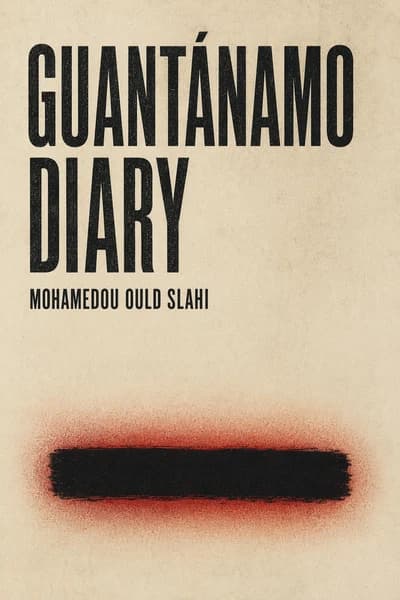
On September 28, 2005, Slahi finished his 466-page, 122,000-word manuscript with the simple words "The End." Though initially writing for his lawyers, he came to see humanity as his jury. The manuscript was immediately classified and locked away in a secure facility near Washington, DC. For over six years, his attorneys fought to have it cleared for public release. When finally published in 2015, it contained more than 2,600 black-box redactions imposed by government censors-visual reminders of the ongoing attempt to control his narrative.
Глава 7
The Long Road to Freedom: Justice Delayed and Denied
Slahi's legal journey was as tortuous as his physical one. In 2010, U.S. District Court Judge James Robertson granted his habeas corpus petition and ordered his release, finding that the government lacked sufficient evidence to continue holding him. The judge determined that Slahi's confessions-the primary evidence against him-were obtained through torture and therefore unreliable.
Rather than release him, however, the government appealed the decision. This appeal effectively kept Slahi imprisoned for six more years while his case remained in legal limbo. During this time, his diary was published and became an international bestseller, bringing unprecedented attention to his case and to conditions at Guantanamo.
In June 2016, Slahi finally appeared before a Periodic Review Board, which determined he did not pose a significant threat to the United States and could be released. On October 16, 2016, after 5,445 days of detention without charge or trial, Mohamedou Ould Slahi was finally released and returned to his native Mauritania.
Slahi's final day at Guantanamo is described with characteristic attention to detail. After being locked down for "the longest two hours" of his life, he was shackled one last time and escorted to the red line by nervous guards. A new team took custody of him outside the gate, where his identity was confirmed against a photo. He was transported by bus to a ferry, then to a cargo plane where he was blindfolded and earmuffed for the flight.
Upon landing in Mauritania, his restraints were removed, and he stepped onto the tarmac where Mauritanian officials and the U.S. ambassador awaited. When the ambassador began walking away, Slahi asked to greet him. They shook hands, with the ambassador saying simply, "Welcome home."
This moment of homecoming, fourteen years in the making, marked the end of Slahi's physical captivity but not his commitment to justice and reconciliation. In the restored edition of his diary, published after his release, Slahi reaffirmed his earlier statement: "I hold no grudge against anyone mentioned in the book." He extended an invitation to all who appear in his narrative-even his torturers-to share tea and conversation, saying, "my doors are open."
Глава 8
The Aftermath: Life After Guantanamo
Following his release, Slahi faced the immense challenge of rebuilding his life after fourteen years of detention and torture. Despite the trauma he endured, he has approached this task with remarkable grace and purpose. He worked with his editor, Larry Siems, to create a restored edition of his diary with the government's redactions removed or reconstructed.
Initially, Slahi was obsessed with replacing every redacted word exactly as he had written it. Over time, however, he found freedom in reconstructing his memories more fluidly. Through this process, he confronted his younger self's sarcastic tendencies and reaffirmed his commitment to forgiveness.
Slahi has also become an outspoken advocate for human rights and against torture. He has given interviews, participated in documentaries, and spoken at international forums about his experiences. Despite being denied entry to many countries due to his past detention, he has managed to build a global platform through virtual appearances and his writing.
In a particularly poignant development, Slahi's cousin Abu Hafs-whose connection to bin Laden was a key factor in Slahi's detention-was repatriated to Mauritania in 2012 after leaving Afghanistan for Iran, where he lived under house arrest for over a decade. After two months in prison and meetings with an international delegation where he condemned the 9/11 attacks and renounced al-Qaeda ties, Abu Hafs was released and now lives as a free man in Mauritania.
The film adaptation of Slahi's diary, "The Mauritanian," starring Tahar Rahim as Slahi alongside Jodie Foster and Benedict Cumberbatch, brought his story to an even wider audience. The film received critical acclaim and further elevated public awareness of the issues surrounding Guantanamo and the treatment of detainees in the War on Terror.
Despite everything he has endured, Slahi maintains a remarkable capacity for forgiveness and a commitment to building bridges across divides. His story stands as a powerful testament to human resilience and the enduring importance of truth-telling in the face of injustice.
Глава 9
The Broader Context: America's Post-9/11 Detention Regime
Slahi's personal ordeal illuminates the larger systemic issues of America's post-9/11 detention policies. His experience exemplifies how the United States abandoned established legal principles in its response to terrorism, creating a system where individuals could be detained indefinitely without charge or trial, subjected to torture, and denied basic legal protections.
The diary reveals how Guantanamo operated as a legal black hole-a place deliberately chosen to be beyond the reach of U.S. courts and international law. In this environment, practices that would be clearly illegal on American soil were justified as necessary security measures. The government's classification system further ensured that these abuses remained hidden from public scrutiny.
Slahi's case also highlights the arbitrary nature of many detentions. His connections to terrorism were tenuous at best-primarily based on his cousin's association with bin Laden and his own travel to Afghanistan in the early 1990s when the United States itself was supporting the Afghan resistance against Soviet occupation. Yet these thin connections were enough to subject him to years of detention and torture.
The diary exposes the psychological toll of indefinite detention without charge. "Many brothers are losing their minds under these conditions," Slahi writes, describing fellow detainees driven to hunger strikes and suicide attempts by the hopelessness of their situation. This mental health crisis was an inevitable consequence of a system designed to exist outside normal legal constraints.
Perhaps most damning is Slahi's account of how the government responded when evidence of his innocence emerged. Rather than acknowledge mistakes and release him, officials doubled down, appealing court orders and continuing his detention for years after a federal judge had ordered his release. This pattern reveals a system more concerned with saving face than delivering justice.
Глава 10
The Power of Bearing Witness: Why This Story Matters
Mohamedou Ould Slahi's diary stands as one of the most important first-person accounts of the War on Terror. Its significance lies not just in what it reveals about Guantanamo, but in how it reveals it-through the eyes of someone who experienced its worst abuses yet maintained his humanity throughout.
The diary forces readers to confront uncomfortable truths about actions taken in the name of security. It challenges us to consider what values we're willing to compromise in the face of fear, and what those compromises cost us as individuals and as a society. By putting a human face on abstract debates about detention and interrogation policies, Slahi makes these issues impossible to ignore or dismiss.
Beyond its political and historical significance, the diary is a profound meditation on resilience, faith, and forgiveness. Slahi's ability to maintain his moral compass despite extreme pressure, to find moments of connection and even humor in the darkest circumstances, and to emerge from his ordeal without hatred speaks to something fundamental about the human spirit.
Perhaps most remarkably, Slahi's diary is ultimately a hopeful document. Despite documenting terrible abuses, it affirms the possibility of understanding across divides and the capacity for growth and redemption. "I believe most Americans want justice," Slahi writes, expressing his faith that when people know the truth, they will demand better from their government.
In the end, Mohamedou Ould Slahi's voice-silenced for so many years-has become impossible to ignore. His diary ensures that his experience, and the larger issues it represents, cannot be redacted from our collective memory or conscience. It stands as both a damning indictment of injustice and a testament to the enduring power of truth.
Глава 11
Bearing Witness to History: The Legacy of an Unbroken Spirit
The publication of "Guantanamo Diary" marked a watershed moment in our understanding of America's post-9/11 detention policies. For the first time, readers worldwide could experience these events through the eyes of someone who lived them-not as abstract policy debates or distant news headlines, but as daily, lived reality. What makes this account particularly powerful is Slahi's extraordinary literary gift. Despite writing in his fourth language under unimaginable circumstances, he produced a work of genuine literary merit that transforms dehumanizing situations into intimate human exchanges.
Slahi's story forces us to confront difficult questions about the moral compromises made in the name of security. When we abandon our principles in the face of fear, what do we become? His account reveals how easily systems designed to operate outside normal legal constraints can descend into cruelty and arbitrariness. Yet remarkably, his narrative is ultimately one of hope rather than despair. Despite documenting terrible abuses, it affirms the possibility of understanding across divides and the capacity for growth and redemption.
Today, Mohamedou Ould Slahi continues his work as a writer and human rights advocate. Though his physical freedom has been restored, the legacy of his detention remains-in ongoing travel restrictions, in health issues resulting from his treatment, and in the memories he carries. Yet he maintains his extraordinary capacity for forgiveness, extending an invitation to all who appear in his narrative-even his torturers-to share tea and conversation. "My doors are open," he writes, a statement of reconciliation that stands as perhaps the most powerful rebuke to the system that imprisoned him.