Глава 1
Overcoming the Impossible: One Man's Journey with Tourette's
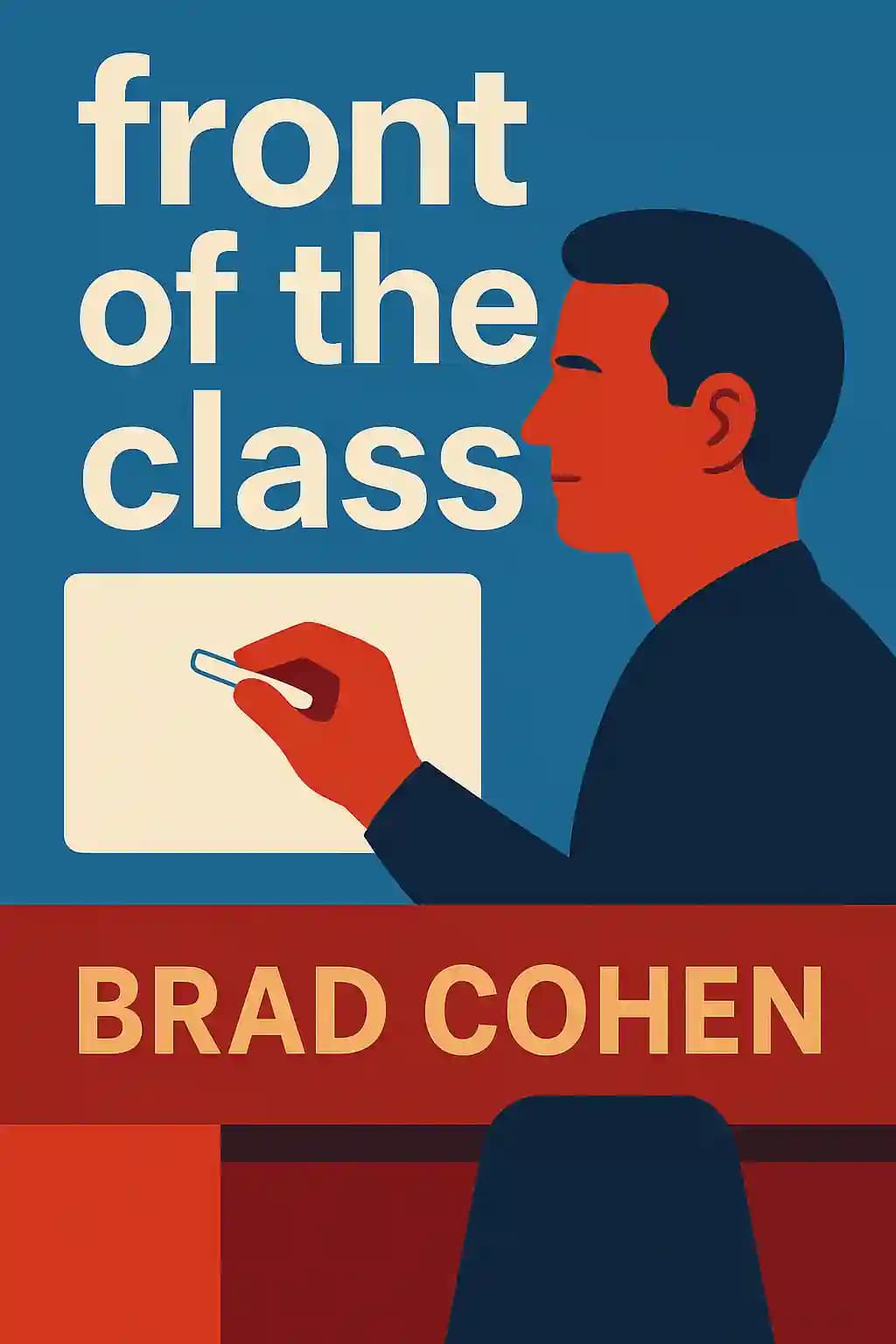
What if your greatest obstacle became your greatest strength? This is the story of Brad Cohen, a man whose uncontrollable vocal tics and physical movements could have derailed his dreams but instead became the foundation of his extraordinary success. Front of the Class has become a cultural touchstone for understanding neurological differences, inspiring millions through its Hallmark Hall of Fame adaptation starring Jimmy Wolk and Patricia Heaton. Oprah Winfrey featured Brad's story on her show, calling it "one of the most inspiring stories of perseverance" she'd encountered. The book has won multiple awards including Best Education Book from the Independent Publisher Awards, and continues to be required reading in many education programs nationwide. Through Brad's journey, we discover that our greatest challenges often contain the seeds of our greatest gifts.
Глава 2
The Battle Within: Living with Tourette Syndrome
Growing up in St. Louis in the 1980s, Brad Cohen's childhood was marked by a mysterious condition that no one could explain. His energy wasn't just boyish exuberance-it was manic, frantic, and accompanied by facial twitches and strange noises that he couldn't control. By second grade, these behaviors deeply concerned his mother, who recognized something more serious than typical childhood restlessness.
Brad's parents had divorced early, creating a fractured home life where his father, not witnessing the daily struggles, often dismissed Brad's behaviors as mere irritation or lack of discipline. This misunderstanding created distance between them during Brad's formative years. The turning point came at Camp Sabra before fourth grade, where Brad developed a constant throat-clearing tic that amused other campers. By summer's end, he received a "Froggy Award" for these funny noises-an identity he briefly embraced as a playable alternative to being seen as different.
This eccentric persona worked temporarily, allowing Brad to reframe mockery as positive attention. But when school started, with its demands for quiet and conformity, his tics-now including knee-knocking and a piercing "woop" bark-became impossible to disguise. Teachers criticized him constantly, classmates tormented him, and his father's frustration intensified when Brad couldn't stop these involuntary behaviors.
"I was caught in a terrifying cycle," Brad recalls. "The more stressed I became about my tics, the worse they got. And the worse they got, the more stressed I became." This vicious cycle defined much of his childhood, creating a sense that his body was betraying him in the most public and humiliating ways possible.
Brad's fear of unpredictability manifested in rigid routines-refusing to sleep upstairs, keeping the TV on as a nightlight, and clinging to familiar patterns. His green bicycle-the "Green Dragon"-became his salvation, allowing freedom and normalcy as he sped through the neighborhood making all the noise he wanted without judgment. The Jewish Community Center offered another refuge through organized sports where his energy could be channeled positively.
Despite these challenges, Brad maintained a curiously upbeat attitude. He embraced his uniqueness rather than shrinking from it, cultivating a mischievous persona that made people think his symptoms were part of some secret joke. Small doses of acceptance powered his self-esteem, and he believed society should value kindness and loyalty over material things-a perspective that would later define his teaching philosophy.
Глава 3
Diagnosis and Identity: Finding Answers and Purpose
Fifth grade proved devastating as Brad's vocal tics grew louder and more disruptive. "Woop! Ja, ja... JA!" His classmates kept their distance, and teachers had no patience. One particularly cruel teacher humiliated him by forcing him to apologize to the class for making noises and promise to stop-a promise he couldn't possibly keep. This experience, though painful, sparked Brad's determination to become the kind, caring teacher he never had.
The breakthrough came when his mother's friend discovered Tourette syndrome in a medical dictionary, leading to Brad's official diagnosis. The doctor immediately took him off the stimulants previously prescribed for attention issues, which his family believed had intensified his symptoms. The diagnosis brought relief-his behavior had a medical name and explanation-though his father remained skeptical that Brad wasn't just being deliberately disruptive.
Seeking support, Brad's mother contacted the Tourette Syndrome Association and they attended a local chapter meeting. Instead of finding hope, they encountered adults with severe symptoms who had given up on mainstream society. None of the children there attended public school-all were home-tutored. The adults were unemployed, many on disability plans.
This experience became pivotal for Brad. Seeing their depression and isolation, he made a conscious decision not to let Tourette's dictate his life. "I wanted to be seen as 'Brad, the funny guy, and oh, yeah, he has Tourette's,' not defined primarily by my condition," he explains. He refused to adopt their pessimistic outlook or let negativity infect his home.
Rather than letting Tourette's control his life, Brad chose to frame limitations as choices. For instance, with movies, instead of feeling he "can't" attend, he saw it as choosing when to go-perhaps during off-peak hours when his barking wouldn't disturb many people. This positive outlook bred success, while negativity bred failure.
Sports became Brad's salvation during this difficult period. Though never excelling at any particular sport, he loved physical activity. More importantly, sports provided crucial social interaction when his circle of friends had drastically shrunk. In sports, he could make all the noises he wanted without it being a big deal. Running down a soccer field with screaming kids gave him normalcy. On teams, they shared experiences and worked toward common goals-giving him the everyday life he craved.
Глава 4
Surviving School: From Isolation to Understanding
Junior high brought new challenges as Brad became increasingly isolated. Lunchtime was particularly torturous-he sat alone while classmates mocked his tics, dancing circles around him and imitating his sounds. As his stress increased, so did his tics. Eventually, the school nurse became his savior, inviting him to eat lunch in her office after witnessing his daily torment.
The school bus brought more harassment, with older kids taunting and physically attacking him. After one incident, Brad was unfairly placed in in-school suspension, where the no-noise rule was impossible for him to follow. His mother intervened forcefully, ensuring he would never face that punishment again.
Despite these challenges, when it came time for his Bar Mitzvah at thirteen, Brad never doubted he would complete this significant Jewish ceremony. Though his tics were particularly severe at that time-constant head jerking, shoulder shrugging, eye blinking, and barking-he performed remarkably well. When concentrating intensely on the ceremony, his tics temporarily subsided like "snow melting on a warm winter afternoon," allowing him to successfully read in both English and Hebrew.
The Bar Mitzvah proved transformative-it showed his family that behind his tics was intelligence and determination. For the first time, many relatives truly understood that he couldn't control his Tourette's. More importantly, Brad gained confidence from conquering this challenge, reinforcing his belief that while Tourette's meant working harder than others, there was nothing he couldn't accomplish.
A true turning point came in eighth grade when his principal, Bill Myer, decided to address Brad's condition with the entire junior high during a school assembly. As a fourteen-year-old, Brad stood before hundreds of students to explain his condition. Though initially nervous, with Mr. Myer's support, he explained that Tourette's is a neurological disorder causing uncontrollable noises and tics.
The students' applause afterward signaled their appreciation and understanding, lifting a tremendous weight from Brad's shoulders. This moment transformed his self-perception, showing him the power of education and planting the seed of his future teaching career. Though not instantly popular, he finally began making genuine friendships of his own, opening a colorful new world of experiences after years of isolation.
Глава 5
Finding Community: The Power of Belonging
High school brought new opportunities as Brad discovered that participating in interactive classes helped others become comfortable with his condition. The more he participated, the more teachers and students learned not to fear his tics, and he began sensing something entirely new-respect.
His life improved dramatically when he was invited to join B'nai B'rith Youth Organization (BBYO). While the Jewish Community Center had previously been his escape for sports activities, BBYO provided leadership opportunities and the social life he craved. Starting as corresponding secretary, he made thirty phone calls before each event-a tedious job nobody wanted but that allowed members to learn about him and his Tourette's.
After explaining his condition at a BBYO meeting, people became fascinated rather than judgmental. Just three months after joining, Brad organized and delivered his first prepared speech about Tourette's to the entire St. Louis Council. The positive response led to speaking at a regional convention in Omaha, where he educated over a hundred people.
These experiences gave Brad validation from peers and a beautiful rush of success. His involvement in BBYO improved his friendships, schoolwork, self-esteem, and even family relationships. BBYO helped transform him from introvert to "major-league extrovert" with newfound confidence-something he would need for the challenges ahead.
College at Bradley University in Peoria, Illinois, brought both challenges and opportunities. When Brad was thrown out of a restaurant by an employee who mistook his tics for drunkenness, students across campus rallied behind him, starting a boycott that prompted the manager to apologize. The incident even made the front page of the campus newspaper. While humiliating, this experience gave Brad instant campus recognition and friends.
He joined Alpha Epsilon Pi, a Jewish fraternity where his Tourette's was never an issue. He was elected pledge-class president and later became president of his entire Bradley fraternity. His education program gave him classroom experience from his very first semester. With each new class, he'd first educate the teacher about Tourette's, then explain it to the students using his "Banana Theory"-you can't judge someone by their outside appearance, just as you can't judge a banana by its bruised peel.
Глава 6
The Dream Deferred: Pursuing a Teaching Career
Fresh out of college in June 1996, Brad drove to Atlanta to begin his teaching career. His confidence was high after successful student teaching, and he was eager to stand before a classroom of children. He found summer housing and returned to Camp Alterman, this time as a unit head with supervisory responsibilities.
When his first interview came with a district recruiter, Brad arrived in his navy pin-striped suit, ready with answers about his teaching philosophy and classroom management approach. He openly discussed his Tourette's, explaining how he would address it with students. Though the recruiter seemed impressed, she cautioned that finding a job might be difficult because "people just aren't used to the possibility that a successful teacher would have Tourette syndrome."
What followed was a grueling series of rejections-twenty-four principals interviewed Brad and turned him down. One particularly painful interview came at a school where the principal was dismissive, declaring he couldn't see Brad as a teacher because his Tourette's "would get in the way." He claimed students would laugh and couldn't concentrate, adding he'd never met a teacher with Tourette's.
Despite defending himself and explaining his successful student teaching experience, the principal insisted the kids at his school "would beat you up" and advised Brad to "refrain from making noises during class time." Though tempted to cite the Americans with Disabilities Act, Brad simply left, deciding this wasn't the right position for him.
By summer's end, Brad was unemployed with eroding confidence. His mother offered the option of returning to St. Louis, but he couldn't quit. His determination to teach was linked to his survival and dignity-if he gave up, he'd be agreeing with everyone who said he couldn't succeed.
The constant rejections took their toll. Brad's tics worsened dramatically-old ones from junior high resurfaced, his head twitched violently, and he chomped his teeth together. The physical exhaustion from these intensified tics sapped his strength and spirits. His once-active social life disappeared as he rarely left the apartment, finding it easier to avoid depressing questions about his job hunt.
Finding himself in what mythologist Joseph Campbell called the "Innermost Cave"-that point when all resources are exhausted-Brad knew he needed to develop new abilities or face defeat. He resolved to make an aggressive leap in his marketing skills and find a principal willing to take a chance on him.
Глава 7
The Breakthrough: Mountain View Elementary
The next morning, energized by new determination, Brad put on his pin-striped suit and planned to visit as many schools as possible in one day. After visiting twenty schools in one manic burst of effort, he returned home exhausted. Just as he was about to nap, the phone rang. It was Jim Ovbey, principal at Mountain View Elementary, asking if he could come in for an interview that day.
When Brad arrived at Mountain View, he immediately felt more comfortable than at any other school. Jim and his assistant principal Hilarie created a welcoming atmosphere with classical music playing softly and even parakeets chirping in the background. The interview lasted over two hours-long enough for Brad's tics to naturally decrease as he relaxed.
After meeting with the fifth grade teachers and later the second grade team, Brad waited anxiously for days. Finally, the call came from human resources-they were offering him a second grade position! As soon as he got the job offer, his extra stress-induced tics disappeared. He had finally reached base camp on his own personal Mount Everest-now he just had to prove he could climb it successfully.
Walking into Mountain View Elementary as a teacher for the first time was momentous. With only a day and a half to prepare his classroom, Brad worked frantically to get everything ready. He visited each second grade classroom to introduce himself to all the students. His tics were pronounced due to nervousness and excitement, so he immediately addressed his Tourette syndrome, explaining it was a neurological disorder that caused involuntary noises and movements.
The children's questions flowed naturally-"Do you go to movies?" "Does it hurt?" "Is it contagious?" Brad told them they wouldn't be playing hide-and-seek with him because they'd always know where he was. When they laughed, he knew everything would be fine.
Fellow teachers surprised him with a "Welcome Wagon" filled with supplies and stayed after school to help set up his classroom. Even the custodian welcomed him warmly. Brad knew Mountain View was absolutely the right place for him-everyone could see through the Tourette's and see him.
Глава 8
Making a Difference: The Teacher with Tourette's
Brad's classroom became a place where learning was fun and engaging through creative, hands-on activities like making papier-mache planets, studying habitats, and celebrating achievements with special events. He established a structured routine and developed special features like a giant reading "bubble" that became one of his trademarks.
The more Brad taught, the more he brought his personality into the classroom. He introduced Waffle the rabbit, wore a tuxedo on meet-and-greet night, created a cozy classroom with a couch and floor lamps, and organized special events like "100 Days, 100 Years" where students dressed as elderly people. His silly tie-dyed hat became his trademark for reading time, and he created engaging projects like "Where in the World Is Miss Owens?" with a trucker pen pal.
Teaching came naturally to Brad-he treated each child as if they were his only student, and interestingly, he barely ticced while teaching because his brain was too busy focusing on his students. "When I'm teaching, my brain is so engaged with the children that there's simply no room for the tics to take over," Brad explains. "It's like my Tourette's takes a backseat to my passion."
In July of his first year teaching, Brad received incredible news: he had won Georgia's Sallie Mae First Class Teacher of the Year Award! This victory felt especially sweet after all his struggles-proof that while Tourette's might win sometimes, Brad usually had the upper hand. He traveled to Washington D.C. for the awards ceremony, bringing his parents, stepmom, and brother. While there, he met with Georgia's Congressional representatives. Senator Paul Coverdell entered Brad's name into the Congressional Record and presented him with a huge American flag that had been flown over the Capitol in his honor.
At the gala dinner, Brad received a glass prism award with an Einstein quote about teaching. Unlike other winners, he couldn't name a single teacher who had inspired him-his motivation came from proving wrong those who had doubted him. Accepting the award, he felt he was representing everyone with disabilities who had been told they weren't worthy.
Глава 9
Legacy and Impact: Beyond the Classroom
After several years in Atlanta, Brad fulfilled another dream by starting a Tourette Syndrome Adventure Camp-a five-day overnight experience for children with Tourette's. Fourteen boys attended the camp at Inner Harbour, where activities included swimming, horseback riding, arts and crafts, nature walks, pet therapy, sports, and team-building exercises. The camp also featured anger management sessions where children could discuss living with Tourette's and share coping strategies. It was tremendously successful, giving the children an environment where they were valued for their strengths rather than judged for their differences.
Brad's greatest reward comes from seeing his students succeed. Six years into teaching, he received a special invitation to former student Jacob Singer's Bar Mitzvah. Jacob reminded Brad of himself as a child-constantly cutting up in class, impulsive, blurting out answers, and struggling with academics. Despite these challenges, Brad spent extra time with him, refusing to give up when other teachers might have.
During the candle lighting ceremony, where Jacob honored the ten most important people in his life, he surprisingly called Brad his "hero" who had given him confidence and self-esteem. This public acknowledgment remains one of the proudest moments of Brad's life. Jacob later explained he wanted to recognize Brad because he pushed him beyond what he thought possible and never accepted less than his best.
Students like Jacob represent what teaching truly means to Brad-not just teaching academics, but showing children how to make the best of what they have and convincing them they can succeed regardless of challenges. Teachers never fully know all the lives they touch until moments like these reveal their unexpected influence.
Since the hardcover release of Front of the Class, Brad's life has transformed dramatically. He appeared in People magazine, on Inside Edition, and even on Oprah. The book won Best Education Book awards at both the Independent Publisher Awards and ForeWord Magazine Book Awards. He married Nancy Lazarus, who supported him throughout these experiences. Through meeting Tim Shriver (son of Special Olympics founder Eunice Shriver), Brad's story became a Hallmark Hall of Fame television movie that aired on CBS.
Глава 10
Lessons from the Front of the Class
Brad's journey offers powerful lessons for anyone facing challenges, whether personal, professional, or medical. He emphasizes having a positive attitude-not just as a feel-good philosophy, but as a practical survival strategy. His mantra that failure is not an option stems from his early experiences when giving up would have been the easier choice. He recommends putting yourself in situations where you can succeed to build confidence and self-esteem, starting with small victories and gradually taking on bigger challenges.
"You can't choose to have a disability," Brad explains, "but you can choose to accept it." This acceptance isn't resignation but rather a strategic decision that allows you to stop fighting against reality and start working with it. Once you accept your disability, you can channel your energy into finding creative solutions and workarounds. Brad discovered that acceptance becomes one of the best coping mechanisms for dealing with differences, as it frees up mental and emotional resources for growth rather than resistance.
Brad has developed simple yet effective ways to explain Tourette's to others, tailoring his approach to different audiences. For children, he relates it to things they understand-like how their brains control blinking or sneezing-involuntary actions they can recognize. For adults, he provides a more technical explanation, describing it as a neurological disorder causing involuntary noises and movements, while emphasizing that it doesn't affect intelligence or capability.
Perhaps most powerfully, Brad has chosen to reframe his relationship with Tourette's, thinking of it as a friend rather than an enemy. "Tourette's has shaped who I am, and I call it my best friend," he says. "We've experienced everything together, and while it would be nice to watch a movie without tics, TS has given me the challenges and personality that make me Brad." This perspective shift from adversary to ally has been transformative in his journey.
Brad adamantly refuses to make excuses or let his condition limit him. Through his classroom experiences, he's learned that "Making excuses becomes a habit that's hard to break," he explains. "If you want equal treatment, prove no task is too difficult." He demonstrates this daily in his teaching, taking on challenging situations head-on. He also emphasizes the importance of humor as a bridge-building tool-often joking that he's not good at hide-and-seek or that his tics make him an excellent aerobics instructor. Taking the lead in finding humor shows you're comfortable with your disability, which helps others relax and relate to you more naturally.
Brad's "Banana Theory" has become a cornerstone of his teaching philosophy-explaining that just as bananas come in many varieties but are similar inside, people too shouldn't be judged by their external differences. "Don't judge me just by my Tourette's," he says. "Get to know me better before making judgments." This simple but profound analogy has helped countless students and adults understand the importance of looking beyond surface differences.
Through his extensive teaching career, speaking engagements across the country, and tireless advocacy work, Brad continues to demonstrate that our greatest challenges often contain the seeds of our greatest gifts. His story serves as a powerful reminder that with determination, creativity, and a positive attitude, we can transform our obstacles into opportunities-and perhaps even find our true calling along the way. His journey from struggling student to award-winning teacher exemplifies how accepting and embracing our differences can lead to extraordinary achievements.