Глава 1
Awakening to the Truth Beyond Our Thoughts
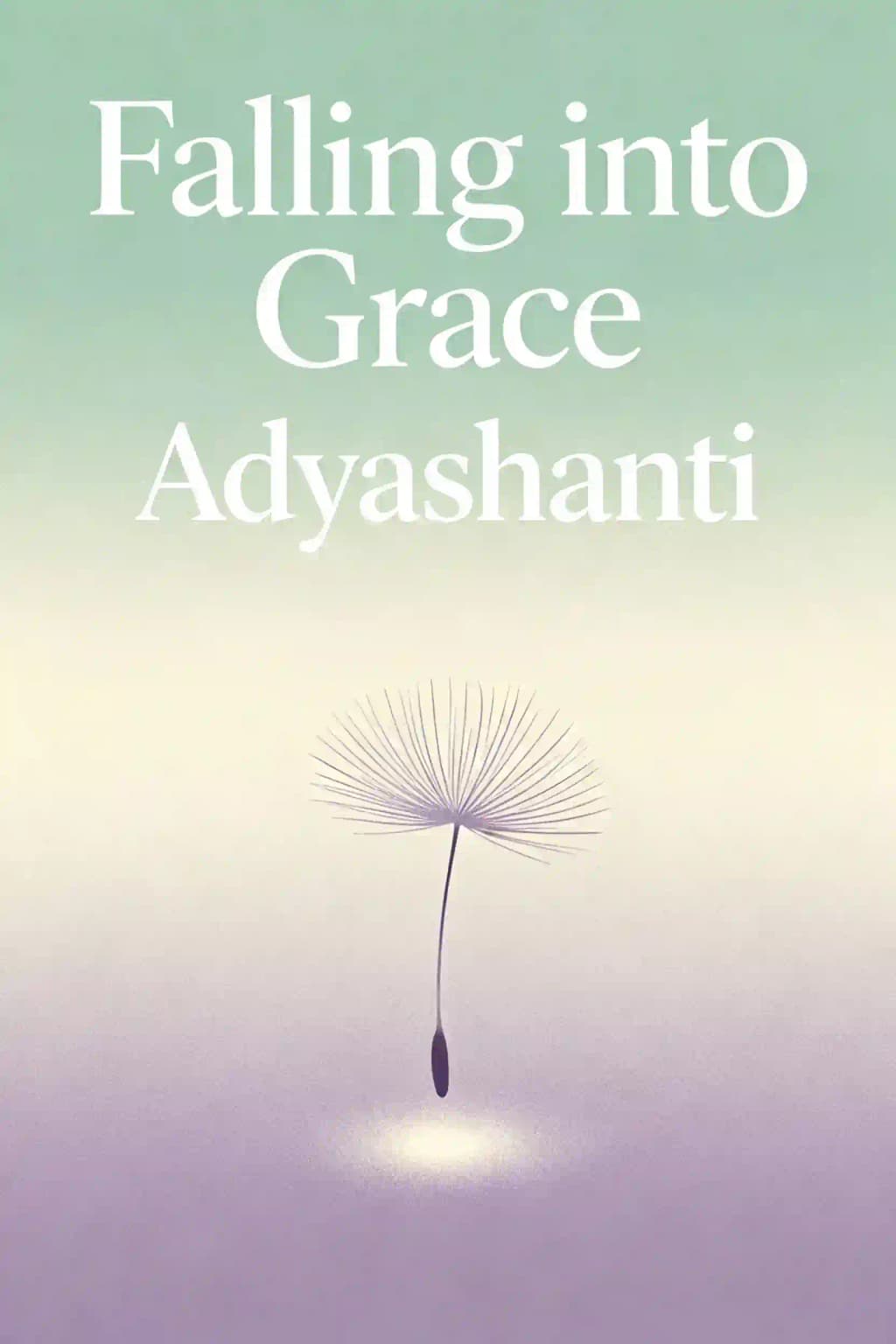
Have you ever found yourself caught in a cycle of suffering that feels impossible to escape? Adyashanti's "Falling into Grace" offers a revolutionary perspective on why we suffer and how we can break free. As a former Zen Buddhist who experienced profound awakening after years of dedicated practice, Adyashanti brings a unique blend of Eastern wisdom and Western accessibility to spiritual teaching. The book has garnered praise from spiritual luminaries like Tara Brach and Geneen Roth, who calls it "a dazzling, clear, profound book-a cool drink of water for thirsty hearts." What makes this work particularly compelling is how it strips away complexity to reveal fundamental truths about human suffering that apply universally, regardless of spiritual background. Through personal stories, practical guidance, and penetrating insight, Adyashanti invites us to discover the grace that's available when we stop struggling against reality and fall into the present moment.
Глава 2
The Root of Human Suffering
As a child of seven or eight, Adyashanti had a profound realization while observing adults: they suffered because they believed their thoughts. Despite his happy upbringing, he noticed how adult conversations ebbed and flowed through conflict as each person tried to convince others that their perspective was correct. This early insight revealed what would become a central theme in his teaching-that human suffering stems from identifying with our thoughts.
Unlike animals who quickly release hurt feelings, humans cling to suffering, often defining themselves by past painful events. We get caught in mental loops, unable to put down thoughts even when they cause great pain. This programming begins with language acquisition. While naming things helps us communicate and establish identity, it also has a shadow side. As Krishnamurti noted, "When you teach a child that a bird is named 'bird,' the child will never see the bird again." By naming things, we think we know them, losing sight of their mystery and aliveness.
Though names and concepts are necessary for functioning in the world, believing they represent ultimate reality entrances us in a world of ideas that separates us from direct experience. We end up living in a conceptual dream world rather than experiencing life as it really is. Our suffering persists because we believe our thoughts equal reality, when in fact they're merely symbols pointing to experience.
The prime illusion is that we are what we think-our beliefs, ideas, and opinions-when these mental constructs are not our true identity. To escape this thought-prison, we must observe that all thoughts arise and disappear within a vast space of silence. Though we believe we are the thinkers of our thoughts, closer examination reveals thinking simply happens on its own, like breathing or digestion. This recognition shows us we aren't merely the next thought in our minds.
The entry point to ending suffering is realizing we don't know anything with absolute certainty-about the world, others, or ourselves. This "great internal space" opens when we're willing to be disturbed by the possibility that everything is different than we imagined. Looking beneath the veil of thinking reveals we are not our thoughts but a mysterious point of awareness-consciousness itself.
Глава 3
The Illusion of Separation
What creates suffering is our sense of self as separate from everything else. While an infant can feel pain and anguish, the suffering of self-conscious adults is fundamentally different. As children develop an ego-seeing themselves as separate from the world-they initially find it empowering. But this sense of separateness breeds alienation and fear, as we begin to view others and existence itself as potential threats.
The ego is simply a state of consciousness, a way of conceptually packaging the world. When our mind imagines we're separate from everything around us, it fundamentally alters our perception. Just as imagining a peaceful beach scene can change how we feel in the present moment, our thoughts about being separate entities change our consciousness. This egoic consciousness becomes so deeply woven into our perception that we don't consciously think about it-we automatically see separation everywhere.
When we quiet our minds for even five seconds, something remarkable happens-our sense of separateness vanishes along with our entire past. The past exists only in memory, never in the present moment. Our minds function like recording devices, replaying mental representations of past events that we mistake for the events themselves. Research consistently shows how unreliable these memories are-college students in one study began distorting a simple thirty-second story within minutes of hearing it, with their retellings becoming unrecognizable within hours or days, despite believing they remembered accurately.
We form images of ourselves out of nothing-a vast inner space of quiet awareness. From early childhood, we're given names, genders, and accumulate ideas about ourselves through experience. By age five or six, we have the basic building blocks of a self-image that we continuously protect and improve. We end up relating to each other as images rather than who we truly are, wondering why we misunderstand each other so deeply.
Living from a self-image creates an emotional environment-positive images create positive emotions, negative images create negative ones. But at the core of all our images lies a feeling of inauthenticity. When we look underneath our self-definitions, what we find isn't a better image but no image at all. The Zen koan asks, "What was your true face before your parents were born?"-inviting us to look beyond all images and ideas about ourselves.
Глава 4
Three Ways We Create Our Own Suffering
Once we imagine ourselves as separate entities, we naturally feel compelled to control ourselves, others, and our circumstances to maintain safety and security. Yet the fundamental truth is that we have no control whatsoever. The ego itself is merely a thought in the mind, an image created through mental reference points-and thoughts cannot control reality.
Despite life continuously demonstrating our lack of control (we can't even control which thoughts enter our minds), we cling to this illusion because surrendering it feels too overwhelming. If we were truly our egos, this realization would be devastating. But we aren't-we are the awareness that watches the mind, notices thoughts, and observes the futile desire to control.
Another way our minds create suffering is through demands we make on life. Ego is essentially a demanding machine: "I want this!" "You should be like that!" These demands are attempts to manipulate reality, insisting life be different than it is. We look to everything external to make us happy, not realizing happiness is at our core. When we demand others change to make us happy, we disregard their best interests and deny our true nature.
The third common way we suffer is by arguing with what is and what was. "What is" means this moment before you even think about it. Argue with this moment, and suffering is guaranteed. This applies equally to the past-deciding what happened shouldn't have happened creates suffering. While this may seem oversimplified when we've experienced genuine hurt or abuse, the truth remains: whatever happened is what happened. We don't need to deny pain or pretend injuries didn't occur, but arguing with reality locks us into a narrow mindset with few options.
There's also a particularly sticky type of suffering that's passed down through generations. Each family system carries both beauty and "generational pain"-an energy unconsciously transmitted from one generation to the next. Parents who struggle with anger or depression tend to produce children with similar afflictions, creating a pattern that becomes deeply ingrained over time. By becoming aware of these patterns, you have the precious opportunity to end this chain of suffering rather than unconsciously transferring it to those you love.
Глава 5
Breaking Free from the Egoic Trance
When caught in the egoic trance, we're imprisoned in mechanical, conditioned patterns of mind that generate profound frustration. The ego-merely our past conditioning expressing itself in the present-lacks true creativity and choice. Despite our belief in free will, if we truly had choice, we would simply choose happiness. Our failed resolutions and intentions reveal that from the egoic level, we don't possess the power of choice we imagine.
Egoic consciousness extends beyond the mental realm to include emotions and energetic qualities. Our bodies function as duplicating machines, alchemically transforming thoughts into emotions and physical sensations. While not all feelings originate from thought, approximately 90 percent do. Just as we identify with our thinking, we also identify with our emotional environment-that unique feeling-state that makes us feel like ourselves.
The hypnotic quality of egoic consciousness has been recognized by spiritual masters throughout history as a dream state. Where Buddha called it "the wheel of Samsara," Adyashanti sees it as a vortex with gravitational force that pulls us in whenever we buy into it. This vortex is activated through emotionally-charged reactions like anger, greed, pride, and the desire for control. When two people get pulled in, cycles of conflict, defensiveness and blame strengthen and become difficult to break.
Ironically, the more we try to control life to escape the vortex, the deeper we're pulled into it, as the ego actually requires resistance and conflict to maintain its separate identity. To avoid being pulled into suffering, we must begin with understanding our own minds. Even when circumstances seem favorable, the ego inevitably finds reasons to contract and suffer because it requires resistance to maintain separation.
Historically, awakening from egoic consciousness was reserved for mystics and spiritual masters. Today, this invitation extends to everyone, as our collective survival depends on awakening from the dream of separation. Adyashanti meets ordinary people-working jobs, raising families-who feel called to explore their hearts and minds just as the mystics were. More people are beginning to wake up from the trance of suffering maintained by clinging to beliefs and opinions.
Egos are fundamentally addicted to pain and struggle. They bond through suffering more than joy. When someone shares their worst experience, we're drawn in more deeply than when they share their happiness. The egoic state isn't entirely negative-we do experience moments of happiness and peace-which is partly why we remain caught in it. The constant oscillation between acceptance and rejection, love and hate, keeps our consciousness trapped and vulnerable to suffering's vortex.
Глава 6
Embracing What Is
To shift from egoic consciousness-the cause of our suffering-we must awaken to our natural state. This requires understanding why we struggle against what is. The egoic state is merely a contraction of our natural expansiveness, creating the feeling of separation. Spirit is like an "awake nothingness," a vast expanse of consciousness, while the egoic state is a narrowing down of this expansiveness through struggling and striving.
What we all naturally aspire to-openness, peace, love, and well-being-are qualities that arise when we become conscious of our non-separate nature. Yet even as we seek freedom, we often do so through unconscious struggle, trying to change ourselves rather than recognizing the peace already present within us.
The real search isn't about tomorrow or anywhere but now. We must "stand in our own two shoes" by looking clearly into our immediate experience rather than chasing someone else's. Instead of pushing forward toward spiritual enlightenment, we need to take the "backward step"-turning around to see if what we seek isn't already present. This isn't about making stillness happen but recognizing the stillness naturally present, even when the mind is confused.
Another form of struggle comes from our continuous need to know. While practical knowledge helps us operate in the world, finding peace requires letting go of knowing. When we honestly ask "What do I know with total certainty?" we discover that our minds are filled with symbols rather than absolute truths, and all this supposed knowing hasn't prevented our suffering.
A profound insight is that there's no such thing as a true thought. Unlike regular thoughts, true insights involve understanding with our entire being-an "Aha!" that resonates through the body. Thoughts are merely symbols for things, not the things themselves. When we realize no thought is ultimately true, we can stop looking to our mind to tell us what's real, and we no longer believe thoughts that cause us to struggle.
When we open to the notion that our ideas aren't true, we initially feel empty-handed and vulnerable. The mind craves knowing, but no story, however intelligent, is as real as what is. Beyond this void of not knowing lies the heart of reality-not a concept but a vast expanse we can live within. If we related to each other knowing our thoughts are only approximations of truth, we'd hold our minds more lightly.
True revelation stuns the mind because it comes from beyond thought-from silence. Despite our cultural neglect of silence and tendency to run from it through constant noise and distraction, silence remains the ground from which awakening springs. It's where we shift out of the egoic state of consciousness and the belief in separation, which is ultimately just a story made up in our minds.
Глава 7
Experiencing Emotions Fully
To address our suffering, we must summon the courage to fully experience what we're feeling without judgment or attempts to edit it. Suffering consists of both mental and emotional components that become intertwined. Set aside time to feel whatever emotions arise without trying to solve or avoid them. Experience the raw energy in your body-notice where you feel tightness or tension. Then allow the voice of suffering to speak, even if it sounds shocking or vicious.
We maintain our suffering through the stories we tell ourselves. Adyashanti shares the example of a woman whose lifelong despair began at age six when she cried for her mother who never came. From this experience, she created a story of abandonment that generated feelings of despair whenever she recalled it. When guided to experience the memory without the accompanying story or conclusions, she discovered the memory itself no longer triggered emotional pain.
Our suffering persists through unconscious conclusions we make during painful moments, which then regenerate the same emotions repeatedly. By separating the experience from the mental conclusions, we begin to taste real freedom. Painful emotions regenerate themselves in our systems because we typically avoid fully experiencing them-either by repressing them or impulsively acting them out.
When painful emotions arise, our mind frantically constructs stories to explain why we feel bad, causing us to go unconscious and contract away from direct experience. This contraction locks the emotion into our system, where it will regenerate until we develop the capacity to experience it without going unconscious. Our bodies are naturally equipped to purge suffering (through crying, for example), but our minds often re-traumatize us with stories and conclusions that seem justified.
Sometimes we can't identify the story behind our suffering because we're keeping ourselves apart from it, merely witnessing rather than fully experiencing it. Adyashanti shares the story of a man who initially couldn't find the narrative behind his painful emotion. Only when he relinquished his position as witness and fully immersed himself in the experience did the story emerge. Once he allowed both the emotional and thought-based components to flow freely, the emotion lifted by itself.
Our conclusions about past events often sustain our suffering, even when they seem reasonable and justified. Adyashanti describes working with a woman who insisted her mother "should have been more kind." When we argue with what was, we're the only ones who suffer. By dropping our mental judgments about what should have happened and simply acknowledging what did happen, we can begin to release the emotional suffering locked in our systems.
Глава 8
Finding Inner Stability
Finding inner stability provides the foundation that allows us to examine our experience clearly and objectively. Without this stability, we're constantly at the mercy of external circumstances and challenging situations. Adyashanti compares this stability to a boat's ballast-the weight in the bottom that prevents it from tipping over in strong winds. For humans, this stabilizing force comes from our capacity to access interior silence and stillness.
True open-mindedness isn't another self-improvement project but emerges naturally when we stop arguing with reality. Our conventional worldview involves constant evaluation and judgment, putting us in opposition with what is. This perpetual state of telling life what should and shouldn't be creates suffering. When we open our minds by releasing judgment, our senses open differently-we truly see what's before us, our hearing transforms, and our hearts open to all of existence.
The stillness that brings inner stability doesn't come from effort but emerges naturally as we open to life. It's a stillness of inclusion that embraces everything. When we stop viewing life as ground for constant negotiation, we discover a mysterious grace permeating existence. This "magic" isn't about life unfolding as we wish, but about experiencing wonder and deep satisfaction in life's mystery.
As we recognize the insanity of arguing with reality, our relationship with the world transforms. Happiness no longer depends on external conditions or specific inner experiences-it emerges naturally from opening to things as they are. This openness is true meditation. When we no longer resist reality, we enter a constant state of meditation that permeates every moment of life.
Opposition to what is creates its own form of suffering and denies the stillness within. When we stop judging and resisting life's flow, we don't become indifferent as the ego fears-instead, we develop a deeper, more intimate relationship with experience. From this alignment emerges compassionate action born not from conflict but from wholeness. Inner stillness is simply the absence of conflict, available whenever we cease arguing with what is.
When we meet life as it is rather than as we think it should be, we become grounded in silence-a state of nonconflict that opens us to a different dimension of being. Through cracks in our habitual perception, grace shines through as our conceptual worldview breaks down. What emerges isn't just an intellectual understanding of oneness but a lived experience of profound intimacy with every aspect of life. The most ordinary objects become transparent to an inner connectivity, revealing the divine in each moment.
Глава 9
The Power of Intimacy and Vulnerability
When we surrender into not knowing-not conceptually defining ourselves or our experience-we fall into a vast field of possibility. While this openness can initially trigger feelings of vulnerability based on past memories of hurt, these are merely echoes from the past arising in present awareness. As we become comfortable with not knowing, we discover pure intimacy-not with something separate, but a union with all experience.
In the space of not knowing emerges what Zen master Dogen called "intimacy with the ten thousand things"-a closeness with every aspect of experience where distance falls away. Within this boundless field lies presence and natural awareness, what Tibetan Buddhists call "self-luminosity." This open expanse of being is our most essential nature-the unchanging awareness that has always been with us, within which all experience occurs.
This field of unknowing isn't dead or inert-nor does it negate practical knowledge needed for daily life. Rather than eliminating useful information, it provides access to a different kind of knowing: intuitive understanding and "inspired thinking" that arises from interior awareness. This thinking emerges from the unknown itself, not from our will or control, offering a new way of moving through life that comes directly from the silent expanse within.
While we must respond to each moment, our relationships reveal how deeply we've returned to stillness. Though we need to think and use our minds, especially when engaging with others, we no longer need to assert our beliefs in a domineering manner. Communication becomes lighter, more fluid, because we know reality arises from beyond thinking. When we realize our thoughts aren't ultimate truth, communication becomes more of a dance-adapting itself to each moment with transparency and openness.
To communicate from undefended openness requires staying in "beginner's mind," where possibilities remain infinite. No matter how great our revelations or insights, maintaining this innocence and lightness prevents rigidity and allows our thoughts and communications to be naturally inspired.
Real connection requires making ourselves fully available to others. Though we crave intimacy, we simultaneously fear it, often hiding behind protective walls built from childhood pain. Few humans can be truly intimate even with themselves, creating anxiety when alone with their thoughts.
To open to others, we must first enter into ourselves, facing any fears that arise. Surprisingly, intimacy with reality becomes relatively easy once you practice relaxation rather than struggle. But emotional openness with another human being touches our core more profoundly, requiring not just beginner's mind but beginner's heart-a willingness to remain emotionally vulnerable despite past wounds.
Глава 10
The End of Suffering
To truly end suffering, we must wake up from our illusions-a disturbing process that requires confronting uncomfortable truths. Most people don't actually want to end suffering but merely manage it, avoiding the realization that we ourselves cause our pain. Like addicts, we must hit bottom before genuine change occurs, recognizing there's no escape except facing ourselves directly.
The spiritual path's greatest challenge isn't about practices or prayers but confronting our addiction to suffering itself. We cling to our worldviews, self-centeredness, and past pain because they form our identity. Though painful experiences may contribute to our suffering, we choose to remain attached to them rather than face the terrifying prospect of not knowing who we'd be without them.
Adyashanti's own spiritual journey began at twenty when he desperately needed to discover what was real. Despite years of Zen meditation and disciplined practice, he hit a wall after four years, realizing he knew nothing more than when he started. This crushing defeat-the moment he admitted "I can't do this anymore!"-became the turning point. Only in complete surrender, in absolute powerlessness, did his perspective fundamentally shift, revealing that he was simultaneously nothing and everything.
To end suffering requires a type of death before physical death. This paradoxical truth becomes clear when observing those facing imminent mortality who've completely surrendered-they often experience profound freedom.
Adyashanti witnessed this with a woman who, despite being near death, suddenly recovered enough strength to vacuum her house, declaring she couldn't die yet because she didn't know who would be dying. Something deep within her consciousness demanded completion before death.
When they met, he asked if she could drop her entire past at once and fully enter the present moment. A week later, he found her bedridden again but with a blissful glow. She had awakened, and instead of requiring comfort from others, she began comforting them.
Awakening isn't a process-we're either asleep in the mind's dream world or awake in reality. The woman accomplished in days what took Adyashanti years because she had no time for process. Those still suffering insist awakening takes time; those awake know it doesn't.
Time is the biggest barrier to awakening. Imagine there is no time. Let go of tomorrow. What if this moment was all you had? Your entire existence would be viewed through completely different eyes.
In the moment of truly stopping, suffering disappears. Complete stopping involves a death-not physical, but the death of who you think you are, your past and future. These exist only in imagination. Right now, there is always and only freedom and peace.
Глава 11
True Autonomy: The Flowering of Spirit
Spiritual awakening isn't an endpoint but rather the ground from which a whole new movement begins. This movement, arising from our sense of freedom, is what Adyashanti calls "awakening into our true autonomy." Unlike conventional notions of autonomy as separation, true autonomy emerges from the knowing of unity and oneness.
The great spiritual teachers like Jesus and Buddha didn't just realize oneness with God or existence-they discovered their true autonomy. Jesus "stood in his own two shoes," embodying his humanness in a way that allowed spirit to fully occupy his life. This autonomy permitted life to flower through him in a completely unique way, not as an extension of what came before, but as a radical break from the past.
Unlike our ego's concept of "mission" as something we're supposed to do, true autonomy is the flowering of existence in a creative, unprecedented way. Jesus's transformative power came from his willingness to live out that unique expression of oneness in human form.
The spiritual greats like Jesus and Buddha are often sanitized in religious accounts, but their true power came from their humanity. Jesus experienced anger, despair, and anguish yet still followed his destiny. This willingness to fully occupy human life while maintaining spiritual awareness is what makes awakened beings extraordinary.
Spiritual freedom isn't about escaping life's challenges-awakening often brings bigger challenges as our capacity grows. True freedom isn't defined by what we're free from but by what we're free to do and be. Are we free enough to meet life fully? To stand in our own shoes and allow spirit to flow through us?
True autonomy isn't separation but spirit embodying form and standing in that form. The spiritual journey often begins by awakening from identification with body, mind, and ego-an "up-and-out" process. But this isn't the end. Eventually, consciousness returns "down and in," back into our humanness, where spirit realizes its true autonomy-independent yet not separate.
Finding our true autonomy requires feeling our way in the dark for our inner wisdom, like finding a pillow in the night without seeing it. We must learn to trust ourselves and listen to the silence beyond what we think we know. Discovering our autonomy begins with deep listening, especially during states of suffering. The more we struggle to escape difficult emotions, the deeper we sink into them.
Our autonomy reveals itself moment by moment through a fierce embrace of life. True love isn't what we imagine-it's seeing yourself as everything and everybody, not from ego but from essence. The true significance of our lives isn't in how they appear but in each breath-the unborn birthing itself moment to moment. This requires surrendering into the unknown, staying in beginner's mind, always touching the uncreated potential within us that is free from suffering.
Глава 12
Beyond Duality: Embracing All of Life
Nisargadatta Maharaj once told a woman describing worldly suffering, "That's your world. I don't exist in your world." Similarly, Jesus said, "I am in the world, but not of it." They referred to the conventional world of relativity and opposites-light and dark, good and bad, love and hate. The manifest world operates through this flux of opposites, which are necessary for life itself (night and day, breathing in and out). This duality provides the framework for our minds to operate, yet these sages indicate their consciousness resides in another world entirely.
A Buddhist abbess once wisely observed, "Everybody knows not to get caught in Hell, but very few people know how not to get caught in Heaven." This puzzling statement reveals that attachment to Heaven is just as limiting as attachment to Hell. Like breathing-we need both inhale and exhale to live-we must not cling to either pole. In egoic consciousness, we constantly move away from what seems bad toward what seems good, never realizing they're interconnected.
The virgin birth stories across religions symbolize consciousness born beyond duality. Unlike our physical birth-the union of opposites (male and female)-the virgin birth represents our spiritual awakening that transcends all pairs of opposites. Jesus's virgin birth signifies that Christ consciousness manifests beyond duality. This "second birth" feels like being born again as something completely new emerges in our awareness.
Jesus uniquely claimed to be both human and divine, experiencing human distress while maintaining access to the transcendent. Many spiritual seekers struggle when they taste the formless dimension and cling to it, wanting to be "barely in the world." This becomes problematic because in duality's world, we can't ultimately hold onto anything.
As Ramana Maharshi taught: "The world is illusion. Brahman alone is real. The world is Brahman." First we recognize our mental constructs as illusion, then discover the divine formless consciousness as reality, but finally we must see that the world itself is divine. This brings us to nonduality-the fundamental oneness of form and formlessness.
The spiritual journey isn't about becoming spirit instead of human, but spirit as well as human. It's not about becoming divine nothingness instead of somebody, but realizing you are both divine nothingness and somethingness with a definite life. This ultimate reality beyond all duality-what Christian mystics called the "Godhead" and Sufis "the dazzling darkness"-is all-inclusive, inhabiting all worlds and viewpoints.
Paradoxically, as we awaken, we become more conscious of suffering around us, feeling people and events more profoundly, not less. Adyashanti's teacher called this "the great heartbreak." We can't control others or wipe away their suffering, yet our open hearts profoundly affect the world. Life's beauty exists not just in mountain vistas but in each moment-even in suffering's nobility. Our hearts break open wider until there's nothing to hold onto the heartbreak, as it moves through consciousness.
Глава 13
Falling into Grace: The Surrender to What Is
Grace-though difficult to define-is anything that truly opens our minds, bodies, emotions and hearts. Sometimes grace appears as gentle insight or a blossoming heart, but often it manifests as fierce, trying experiences whose gifts we only recognize in retrospect. What seems devastating can become our greatest blessing, as demonstrated by the Tibetan teacher who considered losing the use of his legs "the greatest thing that ever happened to me" because it forced him to turn within and find freedom.
The spiritual path is ultimately one of defeat-a crushing that allows awakening to reveal itself. This defeat represents true surrender, a complete opening where we acknowledge we don't know where to go. Such surrender becomes a "true prayer"-spoken when we open ourselves to the entire universe without expectations.
The first time Adyashanti uttered such a prayer was sitting at a desert bus stop, asking the universe: "Give me whatever is necessary for me to awaken. I don't care what it takes." This prayer surrendered control back to the universe, unleashing unknown forces and opening him to grace's transformative power. He received exactly what he needed-some beautiful and filled with ease, some horrific and trying-but all precisely what was necessary for his consciousness to awaken from separation.
Spiritual teachings easily become conceptual and abstract, mere "fingers pointing to the moon." Yet what matters most is what we bring to these teachings-our state of mind, our openness and availability, our genuine desire to transform. One significant moment in Adyashanti's life came during a Zen retreat when Kwong Roshi shared a story about encountering a deformed boy being teased in India. With remarkable vulnerability, he openly wept while recounting how, despite not knowing what to do, he simply took the boy's hand and helped him buy ice cream for all the children, transforming him from outcast to hero. This embodied enlightened action-where an open heart takes the lead when the mind cannot figure out how to respond.
Grace surrounds us if we have eyes to see it-in good moments, difficult moments, and confusing moments. When we recognize grace in every situation and person, our hearts flower and express the peace and love within us. We fall into grace by letting go, relaxing even amid tension, pausing to notice there's something beyond our mind's stories.
In this moment of surrender, we discover that whatever we experience-from difficult emotions to causeless joy-occurs within a vast space of peace and ultimate well-being. Freedom isn't in the future or when circumstances change; it's right here in this moment. When we surrender our demand that life change to suit our ideas, everything opens. We awaken from the dream of separateness and realize that what we've always yearned for is what we've always been at our deepest source.