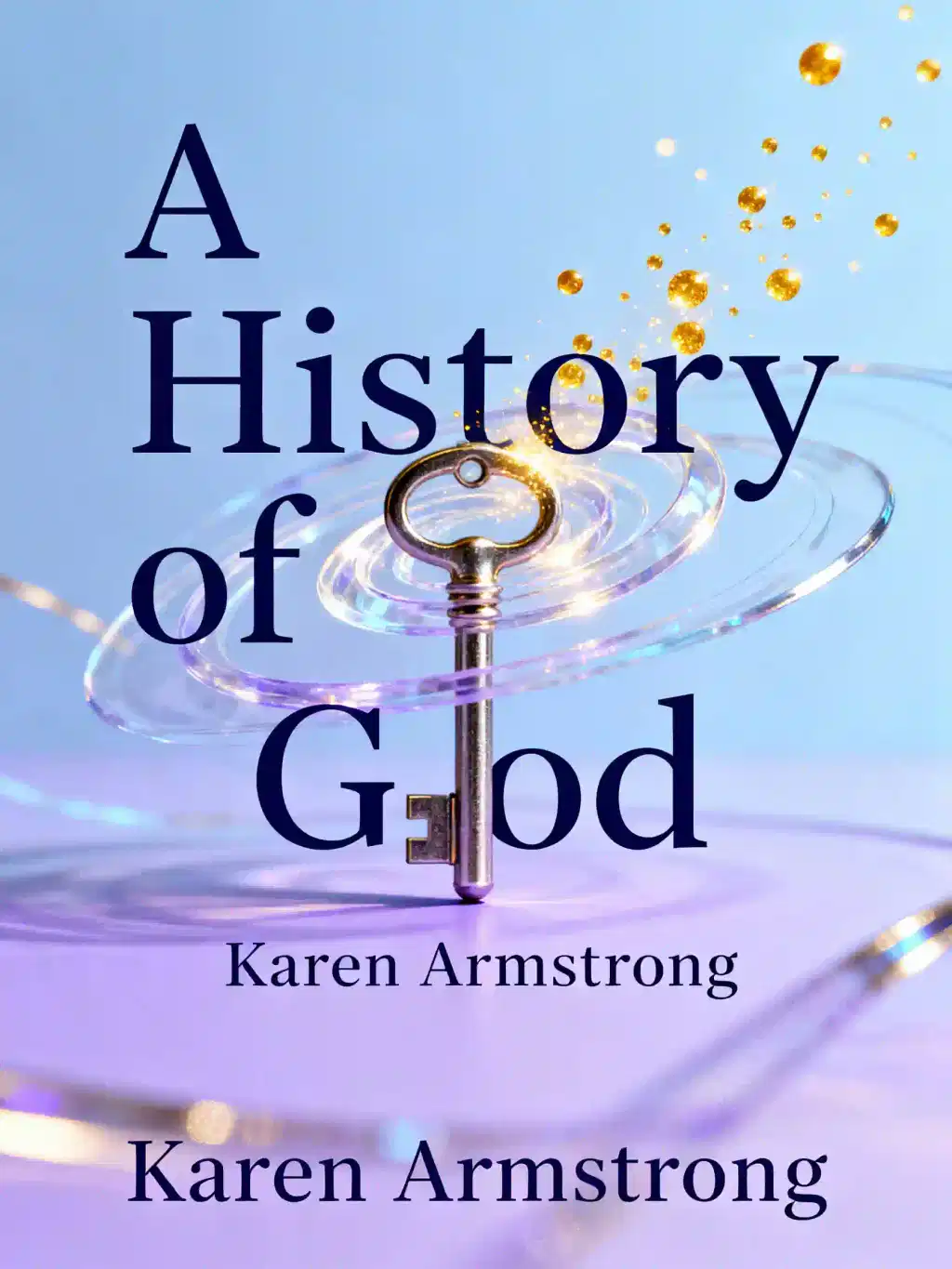
A history of God: the 4000-year quest of Judaism, Christianity, and Islam by Karen Armstrong Summary

Overview of A history of God
Journey through 4,000 years of monotheism as Armstrong masterfully traces how Judaism, Christianity, and Islam shaped our concept of divinity. Praised by The New Yorker as "magisterial," this provocative exploration challenges male-dominated religious narratives while revealing how God evolves with each generation.
- How monotheistic religions evolved distinct God concepts through cultural crises
- Why Jesus’s humanity forced Christianity to redefine divine unity versus Jewish tradition
- Islam’s Tawhid doctrine reshaped God as singular reality beyond human allegory
- Prophets as radical social reformers challenging power structures to embody divine justice
- Mystical Kabbalah/Sufi traditions revealing God through paradox rather than dogma
- How Crusades and colonialism weaponized God-concepts against interfaith understanding
- Armstrong’s case for viewing God as evolving verb rather than fixed noun
- Why rational theology fails to address primal human hunger for transcendence
- How biblical authors J and E crafted competing portraits of Yahweh
- Reformation’s double-edged sword: personalized faith versus divisive doctrinal battles
- Modern secularism’s spiritual void and the resurgence of fundamentalist God-images
- Interfaith dialogue’s urgency in atomic age where God-ideologies kill
About the Author of A history of God
Karen Armstrong, author of A History of God: The 4,000-Year Quest of Judaism, Christianity and Islam, is a celebrated British historian of religion and bestselling commentator on interfaith dialogue.
A former Roman Catholic nun, Armstrong left religious life to study literature at the University of Oxford, later transitioning to a prolific career as an author and documentary presenter. Her exploration of monotheistic traditions, shaped by academic rigor and personal spiritual inquiry, positions her as a leading voice in comparative religion.
Known for bridging scholarly depth with accessible prose, Armstrong’s works like The Battle for God and Jerusalem: One City, Three Faiths examine the interplay of faith, history, and modernity. Her television series, including The First Christian and Genesis: A Living Conversation, extend her reach beyond print.
A regular contributor to global interfaith initiatives, Armstrong’s books have been translated into over 40 languages, with A History of God alone selling millions of copies worldwide. This landmark text remains a cornerstone in theology curricula and public discourse on religion’s evolving role in society.
FAQs About A history of God
What is A History of God by Karen Armstrong about?
The History of God explores the 4,000-year evolution of monotheism across Judaism, Christianity, and Islam, analyzing how political, philosophical, and cultural shifts reshaped humanity’s understanding of divinity. Armstrong traces concepts like the Trinity, Islamic Tawhid (divine unity), and Jewish covenant theology, while addressing mysticism, Reformation debates, and modern skepticism toward faith.
Who should read A History of God?
This book suits interfaith enthusiasts, theology students, and readers curious about religion’s historical impact. Its interdisciplinary approach—blending history, anthropology, and philosophy—appeals to those seeking to understand monotheism’s role in shaping civilizations or navigating debates about God’s relevance today.
Is A History of God worth reading?
Widely praised for its depth and accessibility, the book offers a nuanced perspective on religious development without doctrinal bias. Critics highlight Armstrong’s ability to connect theological debates to broader societal changes, though some note lighter coverage of 20th-century Christianity.
How does A History of God compare Judaism, Christianity, and Islam?
Armstrong contrasts Judaism’s covenantal relationship with God, Christianity’s incarnational theology (via Jesus), and Islam’s emphasis on divine unity (Tawhid). She argues each tradition adapted God’s identity to historical crises—e.g., Jewish exile, Christian schisms, and Islamic imperial expansions.
What role do mystics play in A History of God?
Mystics like Rumi and St. John of the Cross reimagined God as an immanent, experiential force rather than a distant ruler. Armstrong shows how Sufism, Kabbalah, and Christian contemplatives prioritized personal union with the divine over rigid dogma.
What are key quotes from A History of God?
- “God is a product of the creative imagination, like the poetry and music that springs from it.”
- “The prophets insisted that cult and worship were useless unless society as a whole was reformed.”
These lines underscore Armstrong’s themes of divinity as a cultural construct and religion’s ethical imperatives.
How does A History of God address modern atheism?
Armstrong examines Nietzsche’s “God is dead” claim and 19th-century secularism, arguing that declining religious adherence stems from rigid institutional doctrines, not spirituality itself. She suggests mysticism and adaptive theology could revive meaningful God-concepts.
What criticisms exist about A History of God?
Some scholars argue Armstrong oversimplifies complex theological debates (e.g., the Trinity) and underrepresents non-Abrahamic traditions. Others note her focus on elite intellectual history over everyday religious practices.
How does A History of God relate to Karen Armstrong’s other works?
It complements The Battle for God (fundamentalism’s rise) and Fields of Blood (religion-violence links) by providing foundational context for her interfaith advocacy. All emphasize religion’s adaptability and societal influence.
Why is A History of God relevant in 2025?
As debates about religious extremism and secularism intensify, Armstrong’s historical lens helps readers analyze current interfaith conflicts, spiritual trends, and efforts to reconcile science with theology.
How does A History of God explain the concept of the Trinity?
Armstrong frames the Trinity as a response to early Christian identity crises, blending Greek philosophy with Jesus’s divine-human paradox. She contrasts Eastern Orthodoxy’s mystical Trinity with Western Christianity’s legalistic framing.
What does A History of God say about prophets?
Prophets like Isaiah and Muhammad emerge as social critics who redefined holiness as ethical justice rather than ritual purity. Armstrong highlights their role in challenging power structures and recentering faith on compassion.
Feel the book through the author's voice
Turn knowledge into engaging, example-rich insights
Capture key ideas in a flash for fast learning
Enjoy the book in a fun and engaging way
Key Themes in A history of God
Quotes from A history of God
Humans are inherently spiritual creatures.
Religion is fundamentally pragmatic.
The earliest religious expressions weren't literal explanations.
The concept of God has undergone dramatic transformations.
Humans have consistently sought meaning through religious frameworks.
Characters in A history of God
Quick Summary Mode - Read or listen to A history of God Summary in 9 Minutes

Break down key ideas from A history of God into bite-sized takeaways to understand how innovative teams create, collaborate, and grow.

Flash Card Mode - Top 10 Insights from A history of God in a Nutshell

Distill A history of God into rapid-fire memory cues that highlight key principles of candor, teamwork, and creative resilience.

Fun Mode - A history of God Lessons Told Through 26-Min Stories

Experience A history of God through vivid storytelling that turns innovation lessons into moments you'll remember and apply.
Personalize Mode - Read or listen to A history of God Summary in 0 Minutes

Ask anything, pick the voice, and co-create insights that truly resonate with you.

From Columbia University alumni built in San Francisco
"Instead of endless scrolling, I just hit play on BeFreed. It saves me so much time."


"I never knew where to start with nonfiction—BeFreed’s book lists turned into podcasts gave me a clear path."


"Perfect balance between learning and entertainment. Finished ‘Thinking, Fast and Slow’ on my commute this week."
"Crazy how much I learned while walking the dog. BeFreed = small habits → big gains."
"Reading used to feel like a chore. Now it’s just part of my lifestyle."

"Feels effortless compared to reading. I’ve finished 6 books this month already."
"BeFreed turned my guilty doomscrolling into something that feels productive and inspiring."

"BeFreed turned my commute into learning time. 20-min podcasts are perfect for finishing books I never had time for."
"BeFreed replaced my podcast queue. Imagine Spotify for books — that’s it. 🙌"

"It is great for me to learn something from the book without reading it."
"The themed book list podcasts help me connect ideas across authors—like a guided audio journey."
"Makes me feel smarter every time before going to work"
From Columbia University alumni built in San Francisco
"Instead of endless scrolling, I just hit play on BeFreed. It saves me so much time."
"I never knew where to start with nonfiction—BeFreed’s book lists turned into podcasts gave me a clear path."
"Perfect balance between learning and entertainment. Finished ‘Thinking, Fast and Slow’ on my commute this week."
"Crazy how much I learned while walking the dog. BeFreed = small habits → big gains."
"Reading used to feel like a chore. Now it’s just part of my lifestyle."
"Feels effortless compared to reading. I’ve finished 6 books this month already."
"BeFreed turned my guilty doomscrolling into something that feels productive and inspiring."
"BeFreed turned my commute into learning time. 20-min podcasts are perfect for finishing books I never had time for."
"BeFreed replaced my podcast queue. Imagine Spotify for books — that’s it. 🙌"
"It is great for me to learn something from the book without reading it."
"The themed book list podcasts help me connect ideas across authors—like a guided audio journey."
"Makes me feel smarter every time before going to work"
"Instead of endless scrolling, I just hit play on BeFreed. It saves me so much time."
"I never knew where to start with nonfiction—BeFreed’s book lists turned into podcasts gave me a clear path."
"Perfect balance between learning and entertainment. Finished ‘Thinking, Fast and Slow’ on my commute this week."
"Crazy how much I learned while walking the dog. BeFreed = small habits → big gains."
"Reading used to feel like a chore. Now it’s just part of my lifestyle."
"Feels effortless compared to reading. I’ve finished 6 books this month already."
"BeFreed turned my guilty doomscrolling into something that feels productive and inspiring."
"BeFreed turned my commute into learning time. 20-min podcasts are perfect for finishing books I never had time for."
"BeFreed replaced my podcast queue. Imagine Spotify for books — that’s it. 🙌"
"It is great for me to learn something from the book without reading it."
"The themed book list podcasts help me connect ideas across authors—like a guided audio journey."
"Makes me feel smarter every time before going to work"
"Instead of endless scrolling, I just hit play on BeFreed. It saves me so much time."
"I never knew where to start with nonfiction—BeFreed’s book lists turned into podcasts gave me a clear path."
"Perfect balance between learning and entertainment. Finished ‘Thinking, Fast and Slow’ on my commute this week."
"Crazy how much I learned while walking the dog. BeFreed = small habits → big gains."
"Reading used to feel like a chore. Now it’s just part of my lifestyle."
"Feels effortless compared to reading. I’ve finished 6 books this month already."
"BeFreed turned my guilty doomscrolling into something that feels productive and inspiring."
"BeFreed turned my commute into learning time. 20-min podcasts are perfect for finishing books I never had time for."
"BeFreed replaced my podcast queue. Imagine Spotify for books — that’s it. 🙌"
"It is great for me to learn something from the book without reading it."
"The themed book list podcasts help me connect ideas across authors—like a guided audio journey."
"Makes me feel smarter every time before going to work"

Get the A history of God summary as a free PDF or EPUB. Print it or read offline anytime.