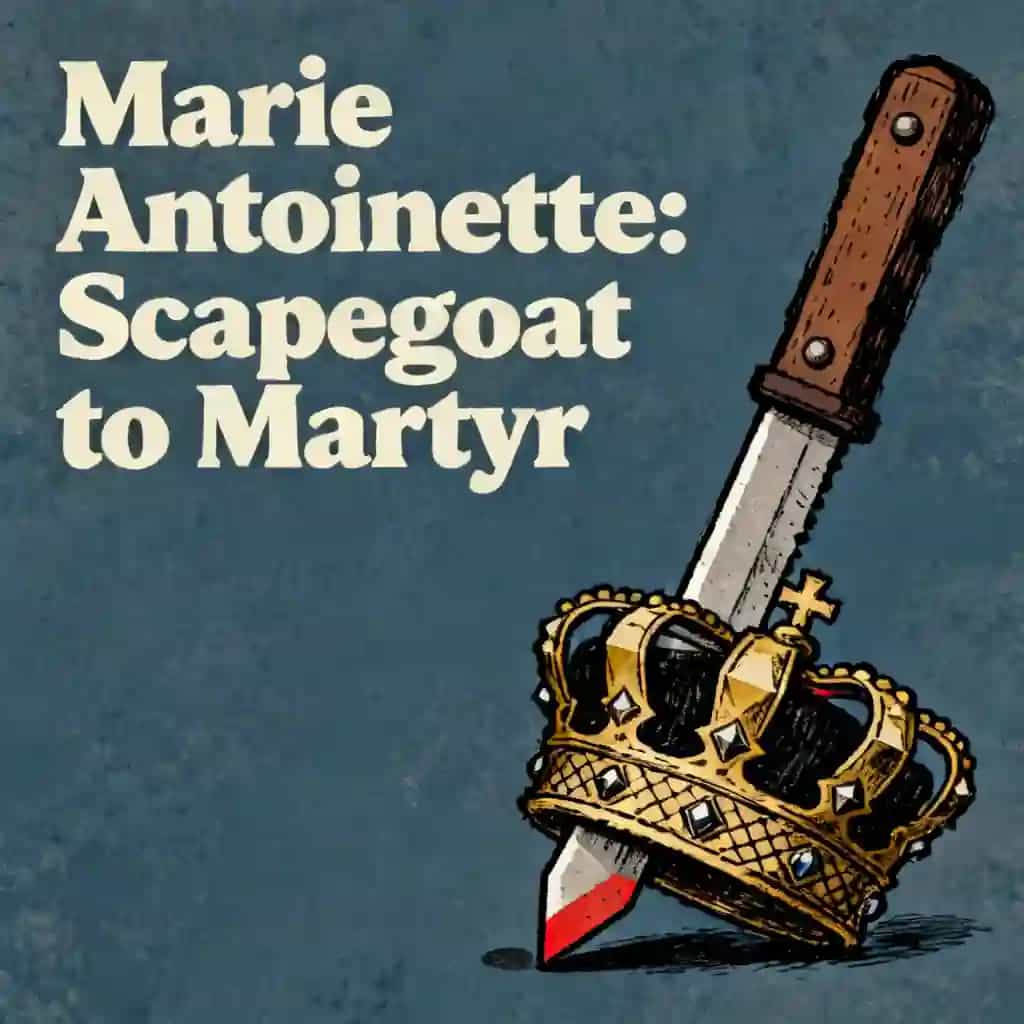
Overview of Marie Antoinette
Stefan Zweig's "Marie Antoinette" transforms history's most misunderstood queen from villain to victim. This 1932 masterpiece reveals how an ordinary woman faced extraordinary circumstances, sparking debates among historians for its emotionally charged narrative that humanizes the French Revolution's most famous casualty.
- Marie Antoinette’s childhood politicking in Austria’s court shaped her disastrous French reign
- Zweig reveals how Versailles’ extravagance blinded the queen to escalating revolutionary tensions
- The “chemistry of a woman’s soul” analysis reframes royal scandals as psychological studies
- Marie Antoinette’s correspondence with Count Axel von Fersen exposes her forbidden romantic entanglements
- Louis XVI’s sexual dysfunction becomes political ammunition in pre-revolutionary court intrigues
- Zweig positions the Diamond Necklace Affair as the monarchy’s irreversible reputation killer
- The failed Varennes escape proves Marie Antoinette’s political naivety outweighed maternal instincts
- Prison letters show the queen’s transformation from spendthrift to stoic revolutionary target
- Zweig’s Trianon chapters expose how aristocratic insulation fueled public hatred
- Execution protocols detail Marie Antoinette’s calculated dignity during revolutionary humiliation rituals
- The biography frames royal fashion excesses as armor against powerlessness
- Zweig’s Conciergerie documents prove isolation sharpened Marie Antoinette’s strategic intelligence
About the Author of Marie Antoinette
Stefan Zweig (1881–1942) was an Austrian novelist and master biographer, best known for Marie Antoinette: The Portrait of an Average Woman. He was renowned for his psychologically nuanced explorations of historical figures and pivotal moments.
A Vienna-born intellectual trained in philosophy and literature, Zweig combined meticulous research with vivid storytelling to humanize complex subjects. This approach is evident in his 1932 biography of Marie Antoinette, which reframes her life through the pressures of revolution and monarchy.
His works, including the memoir The World of Yesterday and the novella The Royal Game, often examine themes of individual agency amid societal upheaval—a reflection of his own exile from Nazi-occupied Europe. Zweig’s biographies of Joseph Fouché and Mary Stuart similarly blend narrative flair with forensic historical analysis.
Translated into over 50 languages, Zweig's writings have inspired film adaptations like Letter from an Unknown Woman (1948) and remain foundational to modern historical literature.
FAQs About Marie Antoinette
What is Marie Antoinette by Stefan Zweig about?
Stefan Zweig’s Marie Antoinette explores the life of the French queen through her personal correspondence, emphasizing her transformation from a frivolous young monarch to a dignified figure during the Revolution. The biography contrasts her private struggles with public scrutiny, detailing her time at Versailles, the failed escape to Varennes, and her execution. Zweig humanizes her as a product of circumstance, blending psychological insight with historical drama.
Who should read Marie Antoinette by Stefan Zweig?
History enthusiasts, biography lovers, and readers intrigued by the French Revolution will find this book compelling. Zweig’s narrative appeals to those interested in psychological portraits of historical figures and the intersection of personal flaws with political turmoil. It’s ideal for fans of Antonia Fraser’s work or adaptations like the 2006 film Marie Antoinette.
Is Marie Antoinette by Stefan Zweig worth reading?
Yes. Hailed as the “most influential biography” of the queen by the Guardian, Zweig’s work remains definitive for its nuanced portrayal. It combines rigorous research with vivid storytelling, offering insights into her humanity amid tragedy. The book’s exploration of power, public perception, and resilience makes it a timeless classic.
How does Stefan Zweig portray Marie Antoinette’s character?
Zweig depicts Marie Antoinette as a complex figure—initially naive and extravagant, yet resilient in adversity. He critiques her indifference to France’s crises but highlights her courage during imprisonment and trial. This balanced view avoids vilification, framing her as a victim of both her upbringing and revolutionary fervor.
What primary sources did Stefan Zweig use for his research?
Zweig relied on Marie Antoinette’s letters to her mother, Empress Maria Theresa, and her confidant Count Axel von Fersen. He also accessed Austrian imperial archives, offering fresh perspectives on her relationships and decisions. This approach was groundbreaking in the 1930s, providing intimacy rarely seen in historical biographies.
What are the major themes in Marie Antoinette by Stefan Zweig?
Key themes include the corruption of absolute power, the fragility of public image, and gender roles in leadership. Zweig examines how Marie Antoinette’s perceived extravagance fueled revolutionary anger, while her later stoicism challenged stereotypes of female weakness in crisis.
How does Zweig’s Marie Antoinette compare to other biographies?
Zweig’s work is more psychological than traditional histories, focusing on emotional depth over political analysis. Unlike Antonia Fraser’s later biography, which contextualizes her actions within broader social structures, Zweig emphasizes personal transformation, making it a foundational text for modern interpretations.
What criticisms exist about Zweig’s portrayal of Marie Antoinette?
Some historians argue Zweig’s sympathy for Marie Antoinette downplays her political missteps, such as the Diamond Necklace Affair. Others note his focus on her victimhood overlooks systemic issues in the monarchy. Despite this, his humanizing approach is praised for reframing her legacy.
How does Stefan Zweig’s writing style enhance the biography?
Zweig employs novelistic pacing and rich metaphors, turning historical events into gripping drama. His psychological lens, influenced by Freudian theory, dissects Marie Antoinette’s motivations, creating a relatable protagonist amidst the French Revolution’s chaos.
Why is Marie Antoinette by Stefan Zweig still relevant today?
The book’s themes—media manipulation, the toll of leadership, and societal misogyny—resonate in modern discourse. Zweig’s critique of how public figures are judged offers lessons on empathy and the complexities of historical memory.
What symbolic elements does Zweig use to describe Marie Antoinette’s life?
Zweig contrasts the opulence of Versailles and the Trianon with the austerity of the Conciergerie prison, symbolizing her downfall. The guillotine serves as a metaphor for irreversible historical change, while her children’s fate underscores the personal cost of political collapse.
How did Stefan Zweig’s background influence this biography?
As a Jewish writer exiled by the Nazis, Zweig identified with outsiders and societal upheaval. His focus on Marie Antoinette’s isolation mirrors his own disillusionment, infusing the narrative with empathy for those crushed by uncontrollable forces.
Feel the book through the author's voice
Turn knowledge into engaging, example-rich insights
Capture key ideas in a flash for fast learning
Enjoy the book in a fun and engaging way
Key Themes in Marie Antoinette
Quotes from Marie Antoinette
"What can I do?" she wrote to her mother. "I cannot force him."
"Your days begin late, are consumed by empty amusements, and end in frivolous company," he wrote.
"You read little, and reflect less."
This isn't merely history - it's a psychological thriller about a woman discovering her strength precisely when it's too late to save her.
Characters in Marie Antoinette
Quick Summary Mode - Read or listen to Marie Antoinette Summary in 8 Minutes

Break down key ideas from Marie Antoinette into bite-sized takeaways to understand how innovative teams create, collaborate, and grow.

Flash Card Mode - Top 10 Insights from Marie Antoinette in a Nutshell

Distill Marie Antoinette into rapid-fire memory cues that highlight key principles of candor, teamwork, and creative resilience.

Fun Mode - Marie Antoinette Lessons Told Through 23-Min Stories

Experience Marie Antoinette through vivid storytelling that turns innovation lessons into moments you'll remember and apply.
Personalize Mode - Read or listen to Marie Antoinette Summary in 0 Minutes

Ask anything, pick the voice, and co-create insights that truly resonate with you.

From Columbia University alumni built in San Francisco
"Instead of endless scrolling, I just hit play on BeFreed. It saves me so much time."


"I never knew where to start with nonfiction—BeFreed’s book lists turned into podcasts gave me a clear path."


"Perfect balance between learning and entertainment. Finished ‘Thinking, Fast and Slow’ on my commute this week."
"Crazy how much I learned while walking the dog. BeFreed = small habits → big gains."
"Reading used to feel like a chore. Now it’s just part of my lifestyle."

"Feels effortless compared to reading. I’ve finished 6 books this month already."
"BeFreed turned my guilty doomscrolling into something that feels productive and inspiring."

"BeFreed turned my commute into learning time. 20-min podcasts are perfect for finishing books I never had time for."
"BeFreed replaced my podcast queue. Imagine Spotify for books — that’s it. 🙌"

"It is great for me to learn something from the book without reading it."
"The themed book list podcasts help me connect ideas across authors—like a guided audio journey."
"Makes me feel smarter every time before going to work"
From Columbia University alumni built in San Francisco
"Instead of endless scrolling, I just hit play on BeFreed. It saves me so much time."
"I never knew where to start with nonfiction—BeFreed’s book lists turned into podcasts gave me a clear path."
"Perfect balance between learning and entertainment. Finished ‘Thinking, Fast and Slow’ on my commute this week."
"Crazy how much I learned while walking the dog. BeFreed = small habits → big gains."
"Reading used to feel like a chore. Now it’s just part of my lifestyle."
"Feels effortless compared to reading. I’ve finished 6 books this month already."
"BeFreed turned my guilty doomscrolling into something that feels productive and inspiring."
"BeFreed turned my commute into learning time. 20-min podcasts are perfect for finishing books I never had time for."
"BeFreed replaced my podcast queue. Imagine Spotify for books — that’s it. 🙌"
"It is great for me to learn something from the book without reading it."
"The themed book list podcasts help me connect ideas across authors—like a guided audio journey."
"Makes me feel smarter every time before going to work"
"Instead of endless scrolling, I just hit play on BeFreed. It saves me so much time."
"I never knew where to start with nonfiction—BeFreed’s book lists turned into podcasts gave me a clear path."
"Perfect balance between learning and entertainment. Finished ‘Thinking, Fast and Slow’ on my commute this week."
"Crazy how much I learned while walking the dog. BeFreed = small habits → big gains."
"Reading used to feel like a chore. Now it’s just part of my lifestyle."
"Feels effortless compared to reading. I’ve finished 6 books this month already."
"BeFreed turned my guilty doomscrolling into something that feels productive and inspiring."
"BeFreed turned my commute into learning time. 20-min podcasts are perfect for finishing books I never had time for."
"BeFreed replaced my podcast queue. Imagine Spotify for books — that’s it. 🙌"
"It is great for me to learn something from the book without reading it."
"The themed book list podcasts help me connect ideas across authors—like a guided audio journey."
"Makes me feel smarter every time before going to work"
"Instead of endless scrolling, I just hit play on BeFreed. It saves me so much time."
"I never knew where to start with nonfiction—BeFreed’s book lists turned into podcasts gave me a clear path."
"Perfect balance between learning and entertainment. Finished ‘Thinking, Fast and Slow’ on my commute this week."
"Crazy how much I learned while walking the dog. BeFreed = small habits → big gains."
"Reading used to feel like a chore. Now it’s just part of my lifestyle."
"Feels effortless compared to reading. I’ve finished 6 books this month already."
"BeFreed turned my guilty doomscrolling into something that feels productive and inspiring."
"BeFreed turned my commute into learning time. 20-min podcasts are perfect for finishing books I never had time for."
"BeFreed replaced my podcast queue. Imagine Spotify for books — that’s it. 🙌"
"It is great for me to learn something from the book without reading it."
"The themed book list podcasts help me connect ideas across authors—like a guided audio journey."
"Makes me feel smarter every time before going to work"

Get the Marie Antoinette summary as a free PDF or EPUB. Print it or read offline anytime.