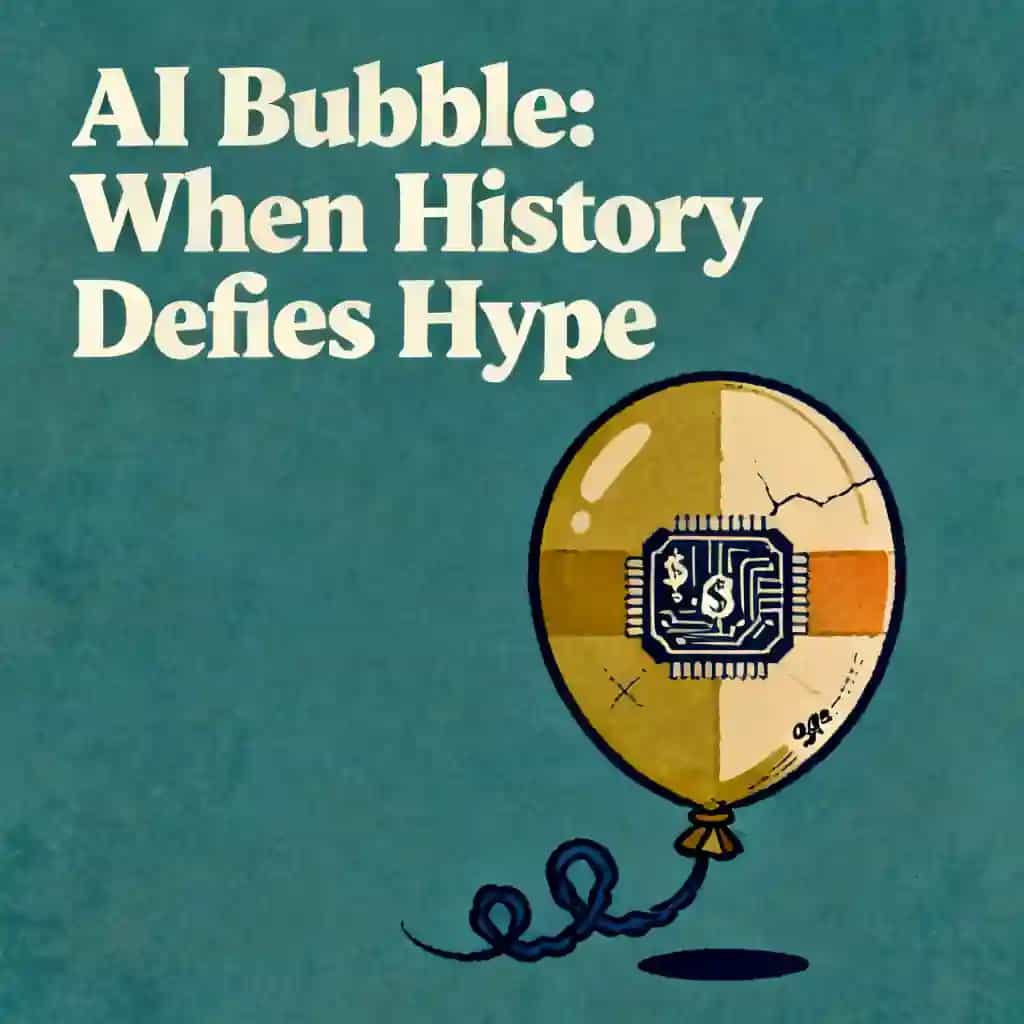
Technological Revolutions and Financial Capital: The Dynamics of Bubbles and Golden Ages by Carlota Perez Summary

Overview of Technological Revolutions and Financial Capital
Discover how technological innovation and financial capital dance through history in Perez's groundbreaking framework. Endorsed by venture capital titan Marc Andreessen, this 4.32-rated masterpiece reveals why bubbles aren't accidents but predictable patterns - essential wisdom for navigating today's AI and crypto revolutions.
- Techno-economic paradigms drive 50-year innovation cycles through four distinct phases
- Financial capital fuels technological bubbles but enables critical infrastructure for adoption
- Production capital focuses on tangible output while financial capital prioritizes speculative gains
- Each revolution cycles through irruption frenzy synergy and maturity phases
- The turning point marks recoupling of financial and production capital post-crisis
- Maturity phase sees market saturation and financial capital seeking next disruption
- Synergy phase demands political regulation to address inequality and unrest
- Five historical revolutions show recurring patterns of technological and financial interplay
- Successful deployment requires institutional adaptation to new techno-economic paradigms
- Each revolution’s frenzy phase inevitably leads to financial bubble bursts
- Financial speculation during installation phases lays groundwork for next great surge
- Balancing financial speculation with production investment is key to sustainable growth
About the Author of Technological Revolutions and Financial Capital
Carlota Perez, a British-Venezuelan scholar and expert in techno-economic development, is the author of the seminal work Technological Revolutions and Financial Capital: The Dynamics of Bubbles and Golden Ages.
This groundbreaking book, spanning economics and technology, explores how financial markets drive and derail technological revolutions, offering historical insights into innovation cycles and their societal impacts.
With a career blending academia, policy, and consultancy, Perez draws from roles at University College London, the London School of Economics, and the Venezuelan Ministry of Industry, where she pioneered one of Latin America’s first government-backed venture capital funds. Her research on the interplay of finance, technology, and institutional change has shaped global discourse, cited in frameworks for understanding crises like the Dotcom Bubble and the Great Recession.
Perez is currently expanding her work in Beyond the Technological Revolution, analyzing strategies for inclusive growth in the digital age. Recognized as a leading voice in innovation economics, her theories are taught in postgraduate programs worldwide and inform policymakers and business leaders navigating AI, blockchain, and sustainable development.
Technological Revolutions and Financial Capital remains a cornerstone text, referenced in top-tier publications and adapted into lectures at institutions from Stanford to the World Economic Forum.
FAQs About Technological Revolutions and Financial Capital
What is Technological Revolutions and Financial Capital by Carlota Perez about?
Technological Revolutions and Financial Capital examines how financial markets and technological innovations drive economic cycles. Perez argues that each technological revolution (e.g., steam engines, information age) triggers an "installation phase" of speculative investment, followed by a market crash, then a "deployment phase" of sustained growth. The book links financial bubbles to technological diffusion, using 200+ years of economic history as evidence.
Who should read Technological Revolutions and Financial Capital?
Economists, policymakers, and business leaders analyzing tech-driven economic shifts will benefit most. It’s also valuable for investors studying market cycles or students exploring innovation economics. Perez’s framework helps readers understand modern challenges like AI regulation and green energy transitions through historical patterns.
Is Technological Revolutions and Financial Capital worth reading?
Yes — it’s acclaimed for blending rigorous analysis with actionable insights. The book won praise for predicting the 2008 crisis and remains relevant to debates on cryptocurrency, automation, and sustainable growth. Its five-phase model is widely cited in tech policy and economic research.
What are the key phases in Carlota Perez’s framework?
Perez identifies two main phases:
- Installation: New technologies attract speculative investments, decoupling financial markets from real productivity.
- Deployment: Post-crash reforms enable broad adoption, creating lasting growth.
These phases repeat across five historical revolutions, from steam power to digital tech.
How does Technological Revolutions and Financial Capital explain financial bubbles?
Bubbles form during the "frenzy" sub-phase of installation, as investors overvalue unproven technologies. Perez shows how railroads (1840s), electricity (1920s), and dot-com (1990s) booms all followed this pattern, with crashes resetting the system for sustainable growth.
What is a "techno-economic paradigm"?
A techno-economic paradigm is the infrastructure, skills, and regulations needed to maximize a revolution’s potential (e.g., highways for automobiles). Perez argues mismatches between old paradigms and new technologies create economic turbulence until institutions adapt.
How does Perez’s work build on Joseph Schumpeter’s theories?
While Schumpeter focused on "creative destruction," Perez adds financial dynamics. She shows how speculation accelerates initial tech adoption but requires later regulatory intervention to prevent inequality and instability.
What are the five technological revolutions identified in the book?
- Industrial Revolution (1771)
- Steam/Railways (1829)
- Steel/Electricity (1875)
- Mass Production/Automobiles (1908)
- Information/Digital Tech (1971)
Each lasted 40-60 years and reshaped global economies.
What is the "decoupling" of financial and production capital?
During installation phases, stock prices detach from company fundamentals as investors bet on future tech potential. For example, 1990s dot-com valuations ignored profit metrics, mirroring 1920s auto industry speculation.
How does Technological Revolutions and Financial Capital apply to today’s economy?
The book’s framework explains current AI/blockchain speculation as part of the ongoing information revolution’s installation phase. Perez suggests upcoming regulatory shifts could channel these technologies into a sustainable "green golden age".
What critiques exist about Perez’s theory?
Some economists argue her model oversimplifies regional differences or underestimates political factors. However, most praise its predictive power, especially regarding post-crisis recoveries like the 2008-2012 tech resurgence.
Where can I find Carlota Perez’s updates to this framework?
Perez explores modern applications in her upcoming book The Social Shaping of Technological Revolutions and through her work at University College London’s Institute for Innovation and Public Purpose.
Feel the book through the author's voice
Turn knowledge into engaging, example-rich insights
Capture key ideas in a flash for fast learning
Enjoy the book in a fun and engaging way
Key Themes in Technological Revolutions and Financial Capital
Quotes from Technological Revolutions and Financial Capital
History isn't a smooth progression but a series of dramatic leaps forward.
Financial capital becomes increasingly convinced it can thrive independently of production.
Each wave brings not only technological change but also social upheaval.
Understanding these revolutionary waves helps us recognize that what seems like permanent economic reality is actually just one phase.
Financial capital is inherently mobile.
Characters in Technological Revolutions and Financial Capital
Quick Summary Mode - Read or listen to Technological Revolutions and Financial Capital Summary in 12 Minutes

Break down key ideas from Technological Revolutions and Financial Capital into bite-sized takeaways to understand how innovative teams create, collaborate, and grow.

Flash Card Mode - Top 10 Insights from Technological Revolutions and Financial Capital in a Nutshell

Distill Technological Revolutions and Financial Capital into rapid-fire memory cues that highlight key principles of candor, teamwork, and creative resilience.

Fun Mode - Technological Revolutions and Financial Capital Lessons Told Through 26-Min Stories

Experience Technological Revolutions and Financial Capital through vivid storytelling that turns innovation lessons into moments you'll remember and apply.
Personalize Mode - Read or listen to Technological Revolutions and Financial Capital Summary in 0 Minutes

Ask anything, pick the voice, and co-create insights that truly resonate with you.

From Columbia University alumni built in San Francisco
"Instead of endless scrolling, I just hit play on BeFreed. It saves me so much time."


"I never knew where to start with nonfiction—BeFreed’s book lists turned into podcasts gave me a clear path."


"Perfect balance between learning and entertainment. Finished ‘Thinking, Fast and Slow’ on my commute this week."
"Crazy how much I learned while walking the dog. BeFreed = small habits → big gains."
"Reading used to feel like a chore. Now it’s just part of my lifestyle."

"Feels effortless compared to reading. I’ve finished 6 books this month already."
"BeFreed turned my guilty doomscrolling into something that feels productive and inspiring."

"BeFreed turned my commute into learning time. 20-min podcasts are perfect for finishing books I never had time for."
"BeFreed replaced my podcast queue. Imagine Spotify for books — that’s it. 🙌"

"It is great for me to learn something from the book without reading it."
"The themed book list podcasts help me connect ideas across authors—like a guided audio journey."
"Makes me feel smarter every time before going to work"
From Columbia University alumni built in San Francisco
"Instead of endless scrolling, I just hit play on BeFreed. It saves me so much time."
"I never knew where to start with nonfiction—BeFreed’s book lists turned into podcasts gave me a clear path."
"Perfect balance between learning and entertainment. Finished ‘Thinking, Fast and Slow’ on my commute this week."
"Crazy how much I learned while walking the dog. BeFreed = small habits → big gains."
"Reading used to feel like a chore. Now it’s just part of my lifestyle."
"Feels effortless compared to reading. I’ve finished 6 books this month already."
"BeFreed turned my guilty doomscrolling into something that feels productive and inspiring."
"BeFreed turned my commute into learning time. 20-min podcasts are perfect for finishing books I never had time for."
"BeFreed replaced my podcast queue. Imagine Spotify for books — that’s it. 🙌"
"It is great for me to learn something from the book without reading it."
"The themed book list podcasts help me connect ideas across authors—like a guided audio journey."
"Makes me feel smarter every time before going to work"
"Instead of endless scrolling, I just hit play on BeFreed. It saves me so much time."
"I never knew where to start with nonfiction—BeFreed’s book lists turned into podcasts gave me a clear path."
"Perfect balance between learning and entertainment. Finished ‘Thinking, Fast and Slow’ on my commute this week."
"Crazy how much I learned while walking the dog. BeFreed = small habits → big gains."
"Reading used to feel like a chore. Now it’s just part of my lifestyle."
"Feels effortless compared to reading. I’ve finished 6 books this month already."
"BeFreed turned my guilty doomscrolling into something that feels productive and inspiring."
"BeFreed turned my commute into learning time. 20-min podcasts are perfect for finishing books I never had time for."
"BeFreed replaced my podcast queue. Imagine Spotify for books — that’s it. 🙌"
"It is great for me to learn something from the book without reading it."
"The themed book list podcasts help me connect ideas across authors—like a guided audio journey."
"Makes me feel smarter every time before going to work"
"Instead of endless scrolling, I just hit play on BeFreed. It saves me so much time."
"I never knew where to start with nonfiction—BeFreed’s book lists turned into podcasts gave me a clear path."
"Perfect balance between learning and entertainment. Finished ‘Thinking, Fast and Slow’ on my commute this week."
"Crazy how much I learned while walking the dog. BeFreed = small habits → big gains."
"Reading used to feel like a chore. Now it’s just part of my lifestyle."
"Feels effortless compared to reading. I’ve finished 6 books this month already."
"BeFreed turned my guilty doomscrolling into something that feels productive and inspiring."
"BeFreed turned my commute into learning time. 20-min podcasts are perfect for finishing books I never had time for."
"BeFreed replaced my podcast queue. Imagine Spotify for books — that’s it. 🙌"
"It is great for me to learn something from the book without reading it."
"The themed book list podcasts help me connect ideas across authors—like a guided audio journey."
"Makes me feel smarter every time before going to work"

Get the Technological Revolutions and Financial Capital summary as a free PDF or EPUB. Print it or read offline anytime.