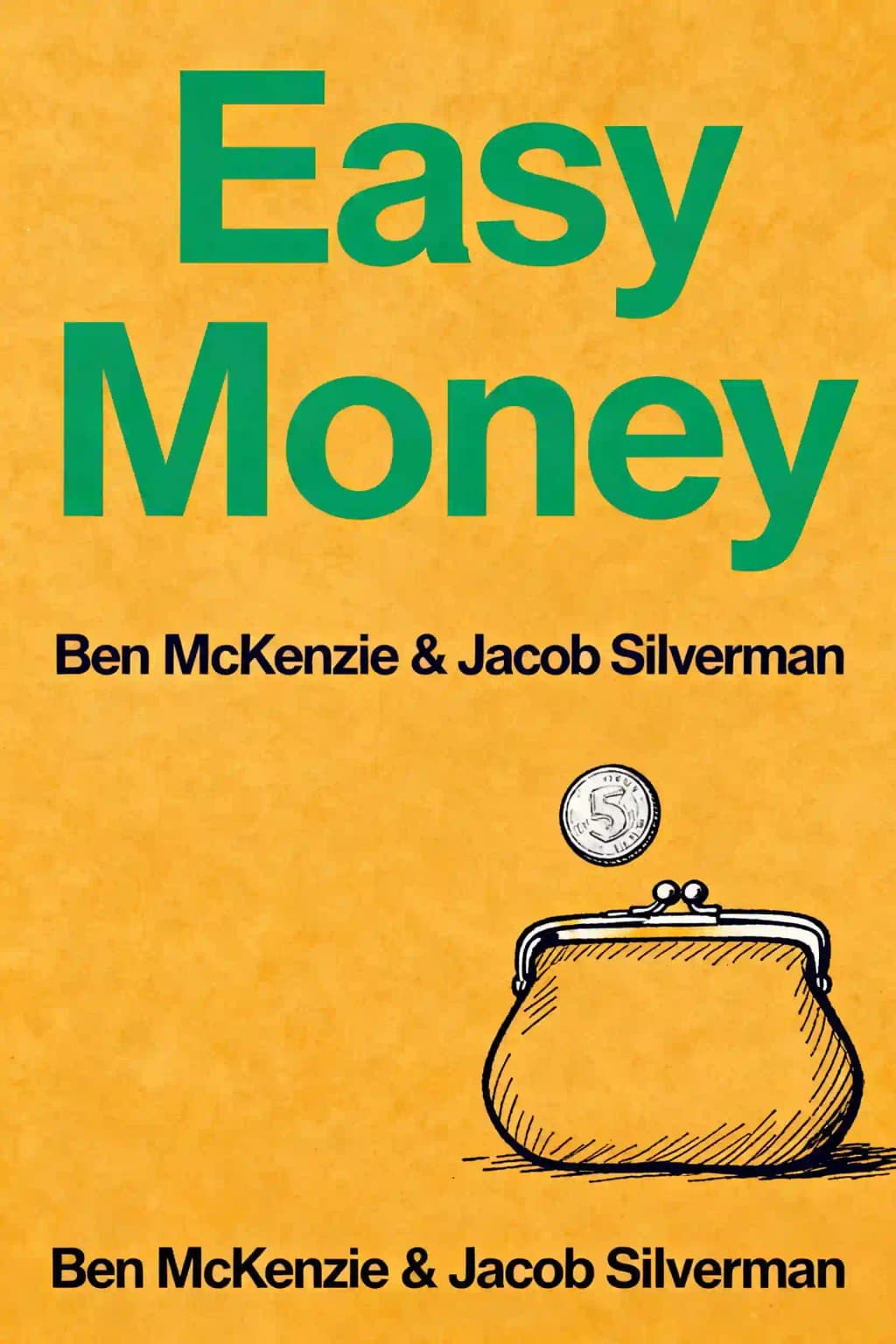
Actor Ben McKenzie's insider expose reveals how cryptocurrency became the ultimate con game. From interviewing Sam Bankman-Fried to documenting Matt Damon's infamous crypto ads, this NYT bestseller asks: how did celebrity-endorsed digital snake oil fool so many smart people?
Ben McKenzie, acclaimed actor-turned-crypto critic, and Jacob Silverman, award-winning journalist specializing in tech and finance, coauthored Easy Money: Cryptocurrency, Casino Capitalism, and the Golden Age of Fraud, a groundbreaking exposé of digital currency scams.
Best known for starring in The O.C. and Southland, McKenzie transitioned to financial commentary through viral New Republic articles and CNBC appearances, while Silverman brings decades of investigative rigor from his role as New Republic contributing editor and Slate columnist.
Their collaboration merges Hollywood perspective with journalistic depth to dissect crypto’s toxic blend of speculative mania and fraud. The book draws from exclusive interviews with figures like Sam Bankman-Fried and Tether’s Brock Pierce, positioning the authors as leading voices in financial accountability.
Praised as “the crypto industry’s unlikely but most prominent critics” (Washington Post), their work has been featured on NPR, The Daily Beast, and international news outlets. Easy Money became a New York Times bestseller within weeks of its 2023 release, sparking global discussions about blockchain’s risks.
Easy Money investigates cryptocurrency’s rise and collapse, blending investigative journalism with firsthand accounts of key figures like Sam Bankman-Fried (SBF) and Alex Mashinsky. Authors Ben McKenzie and Jacob Silverman expose fraud, utopian promises, and reckless speculation, framing crypto as a modern financial bubble akin to past crises like subprime mortgages.
This book suits readers curious about cryptocurrency’s risks, true crime enthusiasts, and critics of speculative finance. It’s ideal for those seeking a layperson-friendly critique of crypto’s 2022 crash, with insights into figures like SBF and Celsius’s Alex Mashinsky.
Yes—for its gripping insider access to crypto’s downfall—but critics note its surface-level technical analysis. While praised for exposing fraud through interviews (e.g., pre-trial SBF), some argue it prioritizes narrative over depth, particularly regarding human impacts.
The book attributes crypto’s collapse to irresponsible speculation, fraudulent schemes (e.g., Tether), and inflated promises. McKenzie and Silverman compare it to the 2008 mortgage crisis, arguing crypto’s decentralized nature amplified risks for retail investors.
SBF emerges as a central figure, portrayed as a charismatic but flawed visionary. The authors critique his empire’s opacity, using his pre-indictment interviews to highlight contradictions between crypto’s utopian ideals and profit-driven realities.
McKenzie dismisses crypto as a “total scam,” arguing it enables fraud, environmental harm, and wealth extraction. The book critiques speculative trading, unregulated exchanges, and influencers like Matt Damon for normalizing risky investments.
Unlike The Big Short or Liar’s Poker, Easy Money focuses on crypto’s unique culture of “casino capitalism.” It blends memoir-style reporting with critiques of Silicon Valley’s role in fostering financial recklessness.
The authors warn against FOMO-driven investing and highlight red flags like opaque blockchain claims. They advocate skepticism toward “get-rich-quick” narratives and stress regulators’ failure to protect retail traders.
Published post-collapse, the book benefits from hindsight but underestimates crypto’s systemic impact. While SBF’s trial adds relevance, McKenzie’s prediction of a global crisis proved overstated.
Critics argue it prioritizes sensationalism over rigor, with excessive focus on the authors’ journey. The El Salvador chapter, for example, is cited as underdeveloped compared to deeper investigative works.
It explores Celsius Network’s collapse, Tether’s reserves controversy, and celebrity promotions. The authors contrast crypto’s libertarian ideals with its reliance on traditional banking systems.
They suggest crypto will persist as a niche for speculation but warn against its mainstream adoption without regulation. The epilogue reflects on post-crash rebranding efforts and ongoing legal battles.
Почувствуйте книгу через голос автора
Превратите знания в увлекательные, богатые примерами идеи
Захватите ключевые идеи мгновенно для быстрого обучения
Наслаждайтесь книгой в весёлой и увлекательной форме
"Don't do it," he warned.
Cryptocurrencies are merely computer code with no intrinsic value.
The entire ecosystem resembled Hans Christian Andersen's "The Emperor's New Clothes".
The company fit perfectly within the "fraud triangle" framework.
Their true economic foundation was simply "number go up".
Разбейте ключевые идеи Easy Money на понятные тезисы, чтобы понять, как инновационные команды создают, сотрудничают и растут.
Выделите из Easy Money быстрые подсказки для запоминания, подчёркивающие ключевые принципы открытости, командной работы и творческой устойчивости.

Погрузитесь в Easy Money через яркие истории, превращающие уроки инноваций в запоминающиеся и применимые моменты.
Задавайте любые вопросы, выбирайте голос и совместно создавайте идеи, которые действительно находят у вас отклик.

Создано выпускниками Колумбийского университета в Сан-Франциско
"Instead of endless scrolling, I just hit play on BeFreed. It saves me so much time."
"I never knew where to start with nonfiction—BeFreed’s book lists turned into podcasts gave me a clear path."
"Perfect balance between learning and entertainment. Finished ‘Thinking, Fast and Slow’ on my commute this week."
"Crazy how much I learned while walking the dog. BeFreed = small habits → big gains."
"Reading used to feel like a chore. Now it’s just part of my lifestyle."
"Feels effortless compared to reading. I’ve finished 6 books this month already."
"BeFreed turned my guilty doomscrolling into something that feels productive and inspiring."
"BeFreed turned my commute into learning time. 20-min podcasts are perfect for finishing books I never had time for."
"BeFreed replaced my podcast queue. Imagine Spotify for books — that’s it. 🙌"
"It is great for me to learn something from the book without reading it."
"The themed book list podcasts help me connect ideas across authors—like a guided audio journey."
"Makes me feel smarter every time before going to work"
Создано выпускниками Колумбийского университета в Сан-Франциско

Получите резюме книги «Easy Money» в формате PDF или EPUB бесплатно. Распечатайте или читайте офлайн в любое время.
Picture a Hollywood actor sitting across from his friend Dave in early 2021, watching him prepare to dump his savings into Bitcoin. Most people would shrug and wish him luck. But Ben McKenzie wasn't most people-his economics degree was screaming warnings that something was deeply, fundamentally wrong. Fast forward months later, and cryptocurrency had ballooned into a $3 trillion market with Matt Damon telling Americans that "fortune favors the brave" in Super Bowl commercials. Yet McKenzie couldn't shake a nagging question: What if this wasn't innovation but the largest fraud in American history, dressed up in Silicon Valley jargon? His investigation would take him from glitzy Miami crypto conferences to impoverished Salvadoran villages, eventually landing him before Congress. What he discovered wasn't the future of money-it was the oldest con in history, repackaged with blockchain buzzwords and sold to millions of ordinary Americans desperate for financial freedom.