Overview of Lord of the flies
Stranded schoolboys descend into savagery on a deserted island - a Nobel Prize-winning exploration of humanity's darkest instincts. Banned yet beloved, this 1954 classic influenced "The Hunger Games" and continues challenging readers: what veneer of civilization might you shed when nobody's watching?
- Human savagery overpowers civilization without societal constraints
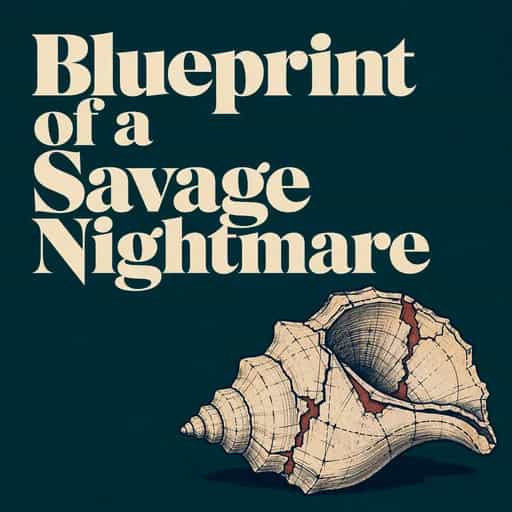
- The conch shell symbolizes democracy's collapse under pressure
- Mob mentality exposes humanity's innate violent tendencies
- Childhood innocence lost to primal survival instincts
- Leadership struggles pit democratic ideals against authoritarian control
- "The beast within" represents humanity's inherent capacity for evil
- Fear fuels tribal warfare and destructive groupthink
- Golding's novel critiques war's impact on human morality
- Power dynamics shift from cooperation to violent domination
- Rescue fire mirrors civilization's dual destructive potential
- Societal rules thinly veil humanity's primal instincts
- Survival scenarios test moral boundaries and ethical erosion
About the Author of Lord of the flies
Sir William Gerald Golding (1911–1993), Nobel Prize-winning author of Lord of the Flies, was a British novelist renowned for his incisive explorations of human nature and morality.
A veteran of World War II, Golding served in the Royal Navy, an experience that deeply influenced his examination of civilization’s fragility and humanity’s inherent brutality. Lord of the Flies, his debut allegorical novel, merges gripping survivalist fiction with themes of societal collapse, innocence lost, and the darkness within human psychology.
Golding’s literary authority is cemented by works like Rites of Passage (Booker Prize winner, 1980) and Darkness Visible, which further dissect existential and ethical dilemmas. His writing is celebrated for blending mythic universality with stark realism, a style recognized by the Nobel Committee as “illuminating the human condition.”
Lord of the Flies remains a modern classic, translated into over 30 languages and widely taught as essential literature for its unflinching portrayal of humanity’s dual nature.
FAQs About Lord of the flies
What is Lord of the Flies by William Golding about?
Lord of the Flies explores the descent into savagery among a group of British boys stranded on an uninhabited island. Through allegorical storytelling, the novel examines human nature’s inherent darkness, the fragility of civilization, and the conflict between primal instincts and societal order. Key symbols like the conch shell and the “beast” underscore themes of power, fear, and moral decay.
Who should read Lord of the Flies?
This book is ideal for readers interested in psychological allegories, moral philosophy, or dystopian literature. Students analyzing themes like civilization vs. savagery, educators teaching symbolic storytelling, and fans of classics like 1984 or The Hunger Games will find it compelling. Its exploration of human nature remains relevant for modern discussions about societal collapse and ethical behavior.
Is Lord of the Flies worth reading?
Yes—Golding’s masterful use of symbolism and gripping narrative make it a timeless critique of human behavior. It offers profound insights into group dynamics, fear-driven decision-making, and the loss of innocence. The novel’s enduring relevance in psychology, leadership studies, and ethics cements its status as a must-read classic.
What does the conch symbolize in Lord of the Flies?
The conch represents order, democracy, and civilized communication. Initially used to organize meetings, its eventual destruction marks the boys’ complete descent into chaos. The shell’s fading influence mirrors the collapse of structured society and the rise of tribal authoritarianism.
How do Piggy’s glasses symbolize civilization in the novel?
Piggy’s glasses embody intellectualism, scientific reasoning, and the power of innovation. Used to start fires, they become a target for Jack’s tribe, symbolizing the rejection of logic in favor of brute force. Their destruction signifies the triumph of ignorance over knowledge.
What is the significance of the Lord of the Flies in the story?
The severed sow’s head, dubbed the “Lord of the Flies,” symbolizes innate human evil and the psychological “beast” within. Simon’s hallucinatory conversation with it reveals the novel’s central thesis: darkness originates not from external threats but from humanity’s primal instincts.
What themes are explored in Lord of the Flies?
Major themes include:
- Civilization vs. savagery: The boys’ struggle to maintain order versus their regression to violence.
- Loss of innocence: The transformation from disciplined children to merciless hunters.
- Power dynamics: Jack’s authoritarian rule contrasted with Ralph’s democratic ideals.
- Fear and mob mentality: The “beast” as a manifestation of collective paranoia.
How does the island serve as a symbolic setting?
The island mirrors the biblical Garden of Eden, initially pristine but corrupted by human presence. Its gradual destruction reflects humanity’s capacity for environmental and moral degradation. The boys’ inability to sustain it underscores the fragility of utopian ideals.
What does the “beast” represent in the story?
The “beast” symbolizes the primal fear and inherent evil within each boy. While initially perceived as a physical threat, it ultimately represents psychological darkness—a metaphor for humanity’s capacity for violence when freed from societal constraints.
How does William Golding use symbolism in the novel?
Golding employs dense symbolism to critique human nature:
- The signal fire: Hope and the desire for rescue, juxtaposed with destructive wildfires.
- The ocean: Isolation and the insurmountable divide between the boys and civilized society.
- Face paint: Dehumanization and the masking of individuality to enable violence.
What is the allegorical meaning of Lord of the Flies?
As an allegory, the novel parallels biblical themes (the Fall of Man) and political critiques (the failure of democracy). The boys’ microcosm reflects macrocosmic societal collapses, suggesting that civilization is a thin veneer over humanity’s inherent brutality.
How does the novel critique human nature and society?
Golding argues that societal structures are fleeting safeguards against humanity’s natural savagery. The boys’ rapid abandonment of rules, adoption of tribalism, and scapegoating of outsiders mirror real-world authoritarianism and moral hypocrisy. The ending—their rescue by a naval officer—ironically contrasts the island’s chaos with the adult world’s wartime violence, implying cyclical human failure.
Feel the book through the author's voice
Turn knowledge into engaging, example-rich insights
Capture key ideas in a flash for fast learning
Enjoy the book in a fun and engaging way
Key Themes in Lord of the flies
Quotes from Lord of the flies
This belongs to us.
Next time there would be no mercy.
What are we? Humans? Or animals? Or savages?
Bollocks to the rules! We're strong-we hunt!
The silence that follows is the sound of innocence beginning to crack.
Characters in Lord of the flies
Quick Summary Mode - Read or listen to Lord of the flies Summary in 8 Minutes

Break down key ideas from Lord of the flies into bite-sized takeaways to understand how innovative teams create, collaborate, and grow.

Flash Card Mode - Top 10 Insights from Lord of the flies in a Nutshell

Distill Lord of the flies into rapid-fire memory cues that highlight key principles of candor, teamwork, and creative resilience.

Fun Mode - Lord of the flies Lessons Told Through 23-Min Stories

Experience Lord of the flies through vivid storytelling that turns innovation lessons into moments you'll remember and apply.
Personalize Mode - Read or listen to Lord of the flies Summary in 0 Minutes

Ask anything, pick the voice, and co-create insights that truly resonate with you.

From Columbia University alumni built in San Francisco
"Instead of endless scrolling, I just hit play on BeFreed. It saves me so much time."


"I never knew where to start with nonfiction—BeFreed’s book lists turned into podcasts gave me a clear path."


"Perfect balance between learning and entertainment. Finished ‘Thinking, Fast and Slow’ on my commute this week."
"Crazy how much I learned while walking the dog. BeFreed = small habits → big gains."
"Reading used to feel like a chore. Now it’s just part of my lifestyle."

"Feels effortless compared to reading. I’ve finished 6 books this month already."
"BeFreed turned my guilty doomscrolling into something that feels productive and inspiring."

"BeFreed turned my commute into learning time. 20-min podcasts are perfect for finishing books I never had time for."
"BeFreed replaced my podcast queue. Imagine Spotify for books — that’s it. 🙌"

"It is great for me to learn something from the book without reading it."
"The themed book list podcasts help me connect ideas across authors—like a guided audio journey."
"Makes me feel smarter every time before going to work"
From Columbia University alumni built in San Francisco
"Instead of endless scrolling, I just hit play on BeFreed. It saves me so much time."
"I never knew where to start with nonfiction—BeFreed’s book lists turned into podcasts gave me a clear path."
"Perfect balance between learning and entertainment. Finished ‘Thinking, Fast and Slow’ on my commute this week."
"Crazy how much I learned while walking the dog. BeFreed = small habits → big gains."
"Reading used to feel like a chore. Now it’s just part of my lifestyle."
"Feels effortless compared to reading. I’ve finished 6 books this month already."
"BeFreed turned my guilty doomscrolling into something that feels productive and inspiring."
"BeFreed turned my commute into learning time. 20-min podcasts are perfect for finishing books I never had time for."
"BeFreed replaced my podcast queue. Imagine Spotify for books — that’s it. 🙌"
"It is great for me to learn something from the book without reading it."
"The themed book list podcasts help me connect ideas across authors—like a guided audio journey."
"Makes me feel smarter every time before going to work"
"Instead of endless scrolling, I just hit play on BeFreed. It saves me so much time."
"I never knew where to start with nonfiction—BeFreed’s book lists turned into podcasts gave me a clear path."
"Perfect balance between learning and entertainment. Finished ‘Thinking, Fast and Slow’ on my commute this week."
"Crazy how much I learned while walking the dog. BeFreed = small habits → big gains."
"Reading used to feel like a chore. Now it’s just part of my lifestyle."
"Feels effortless compared to reading. I’ve finished 6 books this month already."
"BeFreed turned my guilty doomscrolling into something that feels productive and inspiring."
"BeFreed turned my commute into learning time. 20-min podcasts are perfect for finishing books I never had time for."
"BeFreed replaced my podcast queue. Imagine Spotify for books — that’s it. 🙌"
"It is great for me to learn something from the book without reading it."
"The themed book list podcasts help me connect ideas across authors—like a guided audio journey."
"Makes me feel smarter every time before going to work"
"Instead of endless scrolling, I just hit play on BeFreed. It saves me so much time."
"I never knew where to start with nonfiction—BeFreed’s book lists turned into podcasts gave me a clear path."
"Perfect balance between learning and entertainment. Finished ‘Thinking, Fast and Slow’ on my commute this week."
"Crazy how much I learned while walking the dog. BeFreed = small habits → big gains."
"Reading used to feel like a chore. Now it’s just part of my lifestyle."
"Feels effortless compared to reading. I’ve finished 6 books this month already."
"BeFreed turned my guilty doomscrolling into something that feels productive and inspiring."
"BeFreed turned my commute into learning time. 20-min podcasts are perfect for finishing books I never had time for."
"BeFreed replaced my podcast queue. Imagine Spotify for books — that’s it. 🙌"
"It is great for me to learn something from the book without reading it."
"The themed book list podcasts help me connect ideas across authors—like a guided audio journey."
"Makes me feel smarter every time before going to work"

Get the Lord of the flies summary as a free PDF or EPUB. Print it or read offline anytime.