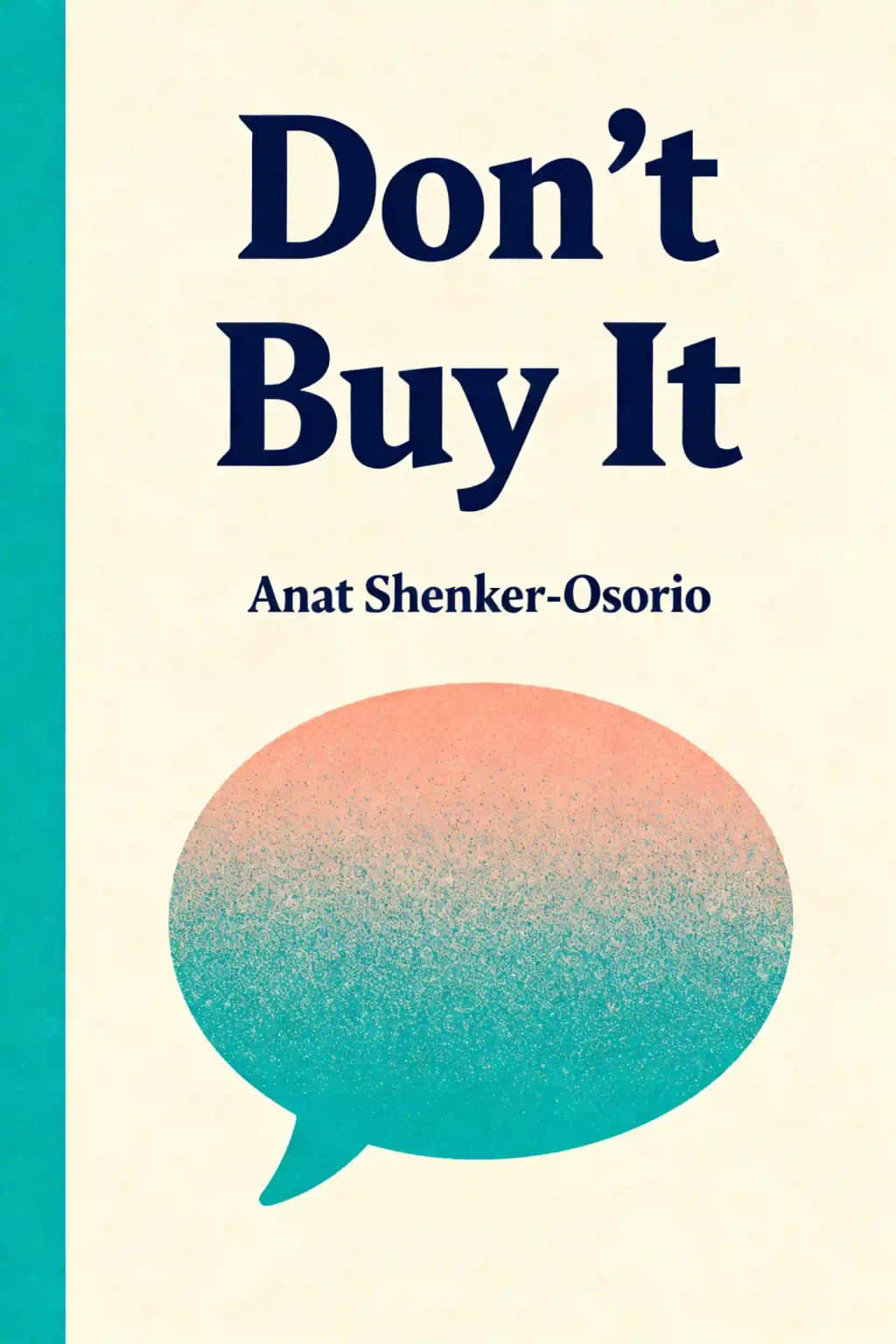
Discover why economists speak nonsense. Shenker-Osorio's groundbreaking work exposes how language shapes economic policy, influencing UC Berkeley's policy discussions. What if our economic metaphors aren't just wrong, but actively harmful? Reframe the economy as your vehicle, not your boss.
Почувствуйте книгу через голос автора
Превратите знания в увлекательные, богатые примерами идеи
Захватите ключевые идеи мгновенно для быстрого обучения
Наслаждайтесь книгой в весёлой и увлекательной форме
Picture a South Park episode where townspeople treat the Economy as an angry deity demanding sacrifice. This satirical portrayal isn't far from our actual national discourse, where politicians constantly invoke the need to "sacrifice" for economic health in almost biblical terms. We've been conditioned to worry about "hurting the economy" rather than hurting actual people. Meanwhile, our financial high priests - bankers and CEOs - interpret the Economy's will while breaking rules with impunity. The metaphors we use to describe economics aren't just figures of speech - they fundamentally shape how we understand financial reality and what solutions we consider possible. This linguistic framing explains why, despite causing financial catastrophe, not a single executive faced criminal charges after 2008. The economy isn't a force of nature or a moral arbiter - it's a human creation that can be redesigned to serve human needs. For most Americans, including 80% of Congress members, the economy is incomprehensible. Studies show fewer than half of adults understand basic concepts like inflation or interest rates. The economy is abstract - you can't hold, weigh, or see it. We make sense of such abstractions through "conceptual metaphors," unconsciously comparing intangibles to concrete things. Research shows these metaphors profoundly shape our reasoning. When crime is described as a "beast," 71% favor law enforcement solutions; when described as a "virus," only 54% do, with more preferring preventive programs. These metaphorical comparisons affect our judgments more powerfully than partisan identification, and they operate below conscious awareness.
Разбейте ключевые идеи Don’t Buy It на понятные тезисы, чтобы понять, как инновационные команды создают, сотрудничают и растут.
Выделите из Don’t Buy It быстрые подсказки для запоминания, подчёркивающие ключевые принципы открытости, командной работы и творческой устойчивости.

Погрузитесь в Don’t Buy It через яркие истории, превращающие уроки инноваций в запоминающиеся и применимые моменты.
Задавайте любые вопросы, выбирайте голос и совместно создавайте идеи, которые действительно находят у вас отклик.

Создано выпускниками Колумбийского университета в Сан-Франциско
"Instead of endless scrolling, I just hit play on BeFreed. It saves me so much time."
"I never knew where to start with nonfiction—BeFreed’s book lists turned into podcasts gave me a clear path."
"Perfect balance between learning and entertainment. Finished ‘Thinking, Fast and Slow’ on my commute this week."
"Crazy how much I learned while walking the dog. BeFreed = small habits → big gains."
"Reading used to feel like a chore. Now it’s just part of my lifestyle."
"Feels effortless compared to reading. I’ve finished 6 books this month already."
"BeFreed turned my guilty doomscrolling into something that feels productive and inspiring."
"BeFreed turned my commute into learning time. 20-min podcasts are perfect for finishing books I never had time for."
"BeFreed replaced my podcast queue. Imagine Spotify for books — that’s it. 🙌"
"It is great for me to learn something from the book without reading it."
"The themed book list podcasts help me connect ideas across authors—like a guided audio journey."
"Makes me feel smarter every time before going to work"
Создано выпускниками Колумбийского университета в Сан-Франциско

Получите резюме книги «Don’t Buy It» в формате PDF или EPUB бесплатно. Распечатайте или читайте офлайн в любое время.