Глава 1
When Heroes Stood Against the Storm
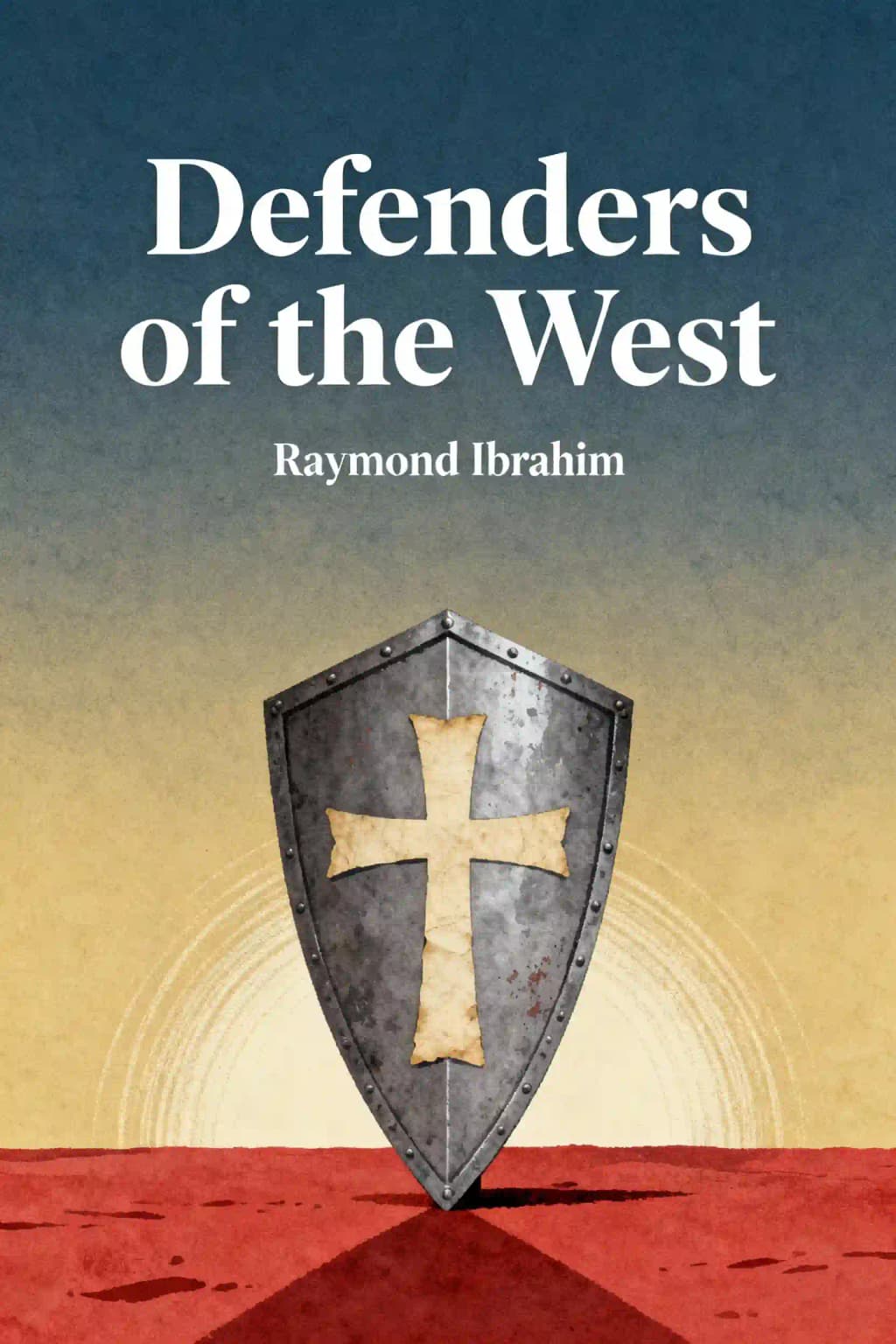
In a world increasingly skeptical of traditional heroes, Raymond Ibrahim's "Defenders of the West" offers a provocative counternarrative. While modern academia often dismisses medieval warriors as bloodthirsty religious zealots, Ibrahim presents eight Christian commanders who saw themselves not merely as fighters for faith, but as guardians of civilization itself. The book has garnered both passionate defenders and critics - Jordan Peterson called it "essential reading," while others question its portrayal of an existential clash between Christianity and Islam. What's undeniable is that these eight men, from El Cid to Vlad "Dracula," faced overwhelming odds against Islamic armies that had conquered three-quarters of the original Christian world. Their stories raise uncomfortable questions: Were they brutal men of their time, or did they embody virtues we've forgotten? And what might their struggles teach us about conviction in an age of moral uncertainty?
Глава 2
The Forgotten Frontline: Christianity's Thousand-Year Defensive War
For nearly a millennium, from 711 to 1683, Europe lived under constant threat of Islamic conquest. This wasn't merely religious conflict but an existential struggle that shaped European identity itself. Ibrahim's narrative begins with a sobering reality: by the time of the First Crusade, Islam had already conquered three-quarters of the original Christian world, including the Holy Land, North Africa, and much of the Middle East.
The pattern of conquest followed a consistent template. First came military invasion, then implementation of Islamic law (sharia), which offered three choices to Christians: conversion, acceptance of second-class "dhimmi" status with special taxes and restrictions, or death. Under this system, Christian populations gradually declined through conversion, emigration, or violence. Churches were converted to mosques, Christian symbols destroyed, and religious practice severely constrained.
What's particularly striking is how this history contradicts modern narratives. Far from being the aggressors, Christians in these territories were fighting defensive actions against waves of conquest. The Reconquista in Spain wasn't European colonialism but an attempt to reclaim territories that had been Christian for centuries before the Moorish invasion of 711. Similarly, the Crusades, rather than unprovoked aggression, were responses to centuries of Islamic expansion and the brutal treatment of Christians in the Holy Land.
Ibrahim documents how Christians under Islamic rule faced systematic persecution. When the Seljuk Turks invaded Asia Minor in the 1040s, hundreds of thousands of Armenian Christians were massacred or enslaved. In Jerusalem, Muslims repeatedly targeted the Church of the Holy Sepulchre, completely destroying it in 1009. By the 1090s, Christian pilgrims were routinely beaten, taxed, and killed, especially those from Rome and Italy.
The book challenges readers to reconsider historical assumptions. While modern Westerners often feel embarrassed by their ancestors' resistance to Islam, Ibrahim notes that many Muslims still take pride in their tradition of conquest. This asymmetry-Western self-criticism versus Islamic historical continuity-creates a fundamental misunderstanding of this prolonged conflict and its modern implications.
Глава 3
Duke Godfrey: The Reluctant King of Jerusalem
The story of the First Crusade centers on Godfrey of Bouillon, a figure whose humility and piety contrasted sharply with his battlefield ferocity. Born around 1060 to noble lineage connected to Charlemagne, Godfrey embodied the medieval ideal of Christian knighthood-deeply religious yet formidable in combat.
When Pope Urban II called for the First Crusade in 1095, describing the plight of Eastern Christians under Turkish rule, Godfrey was among the first nobles to "take the cross." Unlike many of his contemporaries, he funded his journey by selling or mortgaging his lands and properties, including his ancestral castle founded by Charles Martel. His commitment wasn't merely symbolic-he led 80,000 Crusaders eastward, accompanied by monks who celebrated divine offices daily.
The journey tested Godfrey's resolve repeatedly. During the march through Asia Minor's mountains, he nearly died after being mauled by a bear while saving a pilgrim. Though severely wounded with a ruptured artery and self-inflicted leg injury from his desperate struggle, he recovered to lead his forces to Antioch.
At Antioch's siege, Godfrey performed what contemporaries called "a deed worthy of remembrance forever"-splitting a massive Turkish warrior from shoulder to hip with a single sword stroke, sending half the body tumbling into water while the other half remained on horseback. Such displays of martial prowess earned him respect even among Muslim chroniclers.
After Antioch's capture and defense against a massive counterattack, the Crusaders finally reached Jerusalem in June 1099. When their initial assaults failed, Godfrey led the construction of siege towers. In the decisive moment, he single-handedly heaved a platform from his tower to the city wall, allowing the first Crusaders to breach Jerusalem's defenses.
Though the conquest ended with a bloody massacre that troubled even the victors, Godfrey was first to cease the bloodshed, withdrawing barefooted in clean linen to give thanks at the Holy Sepulchre. When offered the title of King of Jerusalem, he refused the crown, stating: "God forbid that I should be crowned with a crown of gold, where my Saviour bore a crown of thorns." Instead, he accepted the humble title "Defender of the Holy Sepulchre."
His reign proved short-less than a year after Jerusalem's capture, he died at age forty. Some accounts cite illness from overexertion, others an arrow wound, but the most plausible explanation suggests poisoning by Muslim chiefs who came under pretense of making peace. His burial near Christ's tomb symbolized his dedication to the cause that defined his life.
Глава 4
The Cid: Spain's Legendary Warrior Against Islamic Reconquest
While Godfrey fought in the Holy Land, Rodrigo Diaz de Vivar-known to history as El Cid-waged his own struggle against Islamic forces in Spain. Born around 1043 near Burgos, Rodrigo rose from minor nobility to become Spain's greatest hero through military genius and indomitable will.
The Cid's story is one of repeated exile and redemption. After serving King Ferdinand I and his son Sancho II, Rodrigo reluctantly served Alfonso VI following Sancho's assassination. During Alfonso's coronation, he boldly made the new king swear publicly-three times-that he had nothing to do with his brother's murder, creating lasting tension between them.
This tension culminated in Rodrigo's exile in 1081. With just 300 loyal followers, he entered service with the Muslim king of Zaragoza, where his reputation as an invincible warrior grew so formidable that even Muslims referred to him as "al-sayyid"-"the lord."
The political landscape shifted dramatically when the Almoravids-austere, black-veiled Islamic zealots from North Africa-invaded Spain in 1086. After crushing Alfonso's forces at Sagrajas, these religious fundamentalists began systematically overthrowing the more moderate Muslim kingdoms of al-Andalus, imposing strict Islamic law.
The Cid's finest hour came with his conquest of Valencia in 1094. Despite being vastly outnumbered, he defeated the previously invincible Almoravids at the Battle of Cuarte, creating "terror and confusion" among enemy ranks. When they returned in 1097 with another massive host, the Cid trapped them at Bairen and achieved another improbable victory.
Despite ruling Valencia with fairness-allowing Muslims freedom of worship and imposing lower taxes than their former Muslim overlords-the Cid faced constant rebellion from his Moorish subjects. This perpetual disloyalty stemmed from the Islamic doctrine of al-wala' wa'l bara' ("loyalty and enmity"), which places an unbridgeable divide between Muslims and non-Muslims. As Ibn Taymiyya summarized this principle: every Muslim "is obligated to befriend a believer-even if he is oppressive and violent toward you, while he must be hostile to the infidel-even if he is liberal and kind to you."
The Cid died in July 1099-the same week Jerusalem was liberated-after five years of undefeated warfare against the Almoravids. His widow Jimena maintained Valencia for three more years before King Alfonso evacuated and burned the city rather than let it fall to Muslim forces.
What makes the Cid remarkable wasn't just his military genius but his cultural significance. He became Spain's national hero during his lifetime, with poems and chronicles celebrating his exploits. Even his bitter Muslim enemy Ibn Bassam had to acknowledge: "this man, who was the scourge of his age, was, by his clear-sighted energy, his virile character, and his heroism, a miracle among the great miracles of the Almighty."
Глава 5
Richard the Lionheart: When Courage Met Its Match
The Third Crusade emerged in response to Saladin's devastating conquest of Jerusalem in 1187. After the Muslim victory at Hattin, where Saladin had the True Cross desecrated and Christian knights executed, Jerusalem fell on October 2, ending 88 years of Christian rule. The news devastated Europe, killing Pope Urban III from shock and grief.
Richard I of England, the thirty-year-old count of Poitou, was the first European noble to take the cross. Standing six-foot-five with reddish-gold hair, Richard embodied the chivalric ideal-courageous, honorable, and devoted to God's cause. Even Muslims would later acknowledge his bravery and battle expertise.
After his father Henry II died in July 1189, Richard ascended to England's throne, using his position to raise substantial funds for the crusade through taxes and selling his own properties. His journey to the Holy Land was eventful-he conquered Cyprus after its ruler imprisoned shipwrecked crusaders, and arrived at Acre in June 1191 to join the ongoing siege.
Richard's dramatic entrance was marked by the sinking of a massive Muslim supply ship attempting to reach the besieged city. Though soon stricken with scurvy, he directed operations from his sickbed, ordering construction of siege engines and personally using his crossbow against defenders. After Acre's surrender on July 12, Richard's French ally Philip Augustus abandoned the crusade, leaving the English king in sole command.
The crusade's defining moment came at Arsuf on September 7, 1191, where Richard faced Saladin's army of at least 25,000 horsemen-more than double the Christian force. The Muslims created a terrifying cacophony with drums, horns, and war cries as Turkish horsemen charged "like lightning." Richard maintained tight formation until the Muslim horses tired, then personally led a devastating counterattack, cutting through enemy forces "as if reaping harvest with a sickle."
This victory shattered Saladin's reputation as Islam's defender, but Richard still faced enormous challenges. Though his forces twice approached within twelve miles of Jerusalem, military advisors convinced him that capturing the Holy City would be unsustainable without first securing supply lines. This strategic retreat infuriated many crusaders who abandoned him.
Richard's final triumph came at Jaffa in August 1192. When Saladin launched a surprise dawn attack on his camp, Richard leapt from bed, donned his mail, and with just ten knights charged "powerfully into the thick of the enemy," fighting so ferociously that his sword "shone like lightning." Muslim chroniclers confirmed this display of valor, with Baha' al-Din recording how Richard galloped unchallenged across the battlefield while Saladin retreated in humiliation.
Weakened by illness and pressed by threats to his European domains, Richard negotiated a three-year peace with Saladin on September 2, 1192. The treaty granted Christians free passage to Jerusalem and allowed them to keep coastal holdings from Tyre to Jaffa. Richard refused to join any pilgrimage to Jerusalem, having sworn to enter only as its liberator.
Richard's journey home brought further trials-shipwreck and imprisonment by Leopold of Austria for over a year. Upon his release in February 1194, he magnanimously forgave his treacherous brother John and swiftly restored order to his kingdoms. In 1199, while besieging a castle over a treasure dispute, he was struck by a crossbow bolt and died from gangrene at forty-two.
His legacy as the archetypal warrior-king endures. When the Crusader states were nearly collapsing, he cowed Islam's forces, retook cities, and gave Christians breathing space to regroup. Decades later, Jean of Joinville recorded that Saracen mothers would quiet their crying children by saying, "Wisht! Here is King Richard!"
Глава 6
Saint Ferdinand: The King Who Reclaimed Spain
Ferdinand III of Castile, born around 1200, inherited a warrior legacy as the maternal grandson of Alfonso VIII (hero of Las Navas de Tolosa) and fourth-great-grandson of both Alfonso VI (conqueror of Toledo) and the Cid. Raised at his grandfather's court after his parents' marriage was annulled, young Ferdinand absorbed tales of heroic battles against the Moors, his mother noticing how he would "tremble with enthusiasm" hearing these stories.
Ferdinand devoted himself to military training while developing strategic thinking through chess. His martial spirit was balanced by deep piety-attending mass daily and praying to be Christ's knight who would "suffer great labors for Him in wars against the Moors." When he inherited the crown in 1217, he immediately declared his intention to "go to war against the Moors."
His first conquest came in 1224 when he took Quesada, planting the Cross on the central mosque's minaret and declaring "the Kingship of Christ on earth." Fighting alongside his men, Ferdinand lived out the heroic tales he'd grown up with, often saying before battle, "Look, my friends, where God is giving us our meal for today...win our bread at a lance's thrust, like El Cid's knights used to do."
His ferocity in battle was balanced by deep devotion-fasting rigorously, wearing a hair-shirt shaped like a cross, and spending nights in prayer before combat. Though merciless in war, Ferdinand showed clemency to surrendered Muslims, allowing them to leave with possessions and escorts. Unlike previous Christian rulers, however, he typically required Muslims to evacuate conquered territories, having learned from history that subjugated Muslim populations often revolted when opportunity arose.
Ferdinand's greatest triumph came with the conquest of Cordoba in 1236. When a daring band of Almogavars seized part of the city's eastern quarter, Ferdinand immediately rode to their rescue with just one hundred knights, despite mourning his wife's recent death. After a five-month siege, on June 29, the once-great "ornament of the world" surrendered. Ferdinand ordered the Cross placed on the highest minaret and converted the great mosque into a church.
His final conquest was Seville, which fell on November 23, 1248, after an eleven-month siege. The Muslims were permitted to sell their properties and leave with their movable goods, resulting in a massive exodus that Muslim poets lamented as one of Islamic history's most tragic episodes.
After securing virtually all of Spain under Christian authority, Ferdinand began preparations to join his cousin, the king of France, in a Crusade against the "Mahometan empire" in Africa. However, his body-ravaged by decades of warfare, privations, and austerities-finally failed him. On May 30, 1252, he died at age fifty-two.
Despite his relatively brief career, Ferdinand's accomplishments were monumental. In just twenty years (1228-1248), he spearheaded the Reconquista into central al-Andalus, becoming undisputed lord of not only the northern Christian kingdoms but also the great southern Moorish kingdoms. English historian Matthew Paris wrote that he "alone has done more for the honor and profit of Christ's Church than the pope and all his crusaders" in the Holy Land.
Canonized as a saint in 1671-the only Spanish king to receive that honor-Ferdinand's legacy represents the culmination of centuries of Christian "re-conquerors" who paved his way. In Reconquista lore, he is accounted the greatest of them all.
Глава 7
Saint Louis: The King Who Gave Everything
Louis IX of France, born in 1214, inherited a distinguished crusading lineage as grandson of Alfonso VIII of Castile, cousin of Ferdinand III, and grandnephew of Richard Lionheart. Raised with exceptional piety by his mother Blanche, who told him she would rather see him dead than commit a mortal sin, Louis attended daily mass and married the devout Margaret of Provence.
In 1248, Louis launched the Seventh Crusade, targeting Egypt as the strategic key to securing Jerusalem. On June 6, 1249, he led the landing at Damietta, leaping into water "up to his armpits" and wading ashore with shield, helm, and sword-much as his granduncle Richard had done at Jaffa decades earlier. After capturing the city, Louis marched toward Mansoura, where disaster struck when his impetuous brother Robert charged ahead and was slaughtered along with nearly three hundred Templars.
Though Louis fought valiantly, even personally fending off six attackers who tried to capture him, the campaign soon unraveled. Disease swept through the Crusader ranks when rotting Muslim corpses polluted their water supply. Men's flesh turned black and brittle, gums rotted, and dysentery ravaged the army. By April 1250, only one-sixth remained alive or able to fight. Even Louis himself was gravely ill with dark patches on his legs and frequent bouts of dysentery.
With his army decimated, Louis attempted a desperate retreat to Damietta on April 5. Though he could have escaped by ship, he refused to abandon his men, declaring, "I have brought my people here, and I will take them back with me or die with them!" Overwhelmed by Muslim forces, Louis surrendered on bended knee. He and other nobles were chained and taken to Mansoura for ransom, while common soldiers faced conversion or death. The Muslims executed hundreds nightly, beheading those who refused to renounce Christianity.
Eventually, Louis negotiated his release by relinquishing Damietta and paying 800,000 bezants. Rather than return to France, he continued to Syria, determined not to leave "the Business of Christ in a state of utter hopelessness." With limited resources, he fortified the remaining Crusader kingdoms and personally gathered and buried the putrid remains of massacred Christians over five days while others recoiled in disgust.
Despite his failed Crusade, Louis returned to France welcomed with "ineffable joy" and ruled as the model Christian king for sixteen years. Daily, he fed 120 poor people from his own table, often serving them personally. He supported reformed prostitutes, washed beggars' feet weekly, and ministered to lepers when others recoiled. Under his pious rule, the French monarchy reached its greatest power and prestige since Charlemagne.
In 1267, the fifty-three-year-old king shocked everyone by taking the Cross again to aid the Christians of the Holy Land. Despite his court's opposition and few willing participants, Louis organized the Eighth Crusade, targeting Tunis as a secure North African base. But once again, disease swept through the camp, killing Louis's son John and eventually afflicting the king himself with "continuous fever." On August 25, 1270, Louis died on a bed of ashes, his last words reportedly being "Jerusalem, Jerusalem."
Of all the Defenders in Ibrahim's book, Louis's failures were the greatest. Yet if heroism is measured by commitment and self-sacrifice rather than success, Louis may well be the greatest of them all. In 1297, the Catholic Church canonized him-the only French king in over a millennium to receive that honor-for his well-documented piety and charity.
Глава 8
Eastern Europe's Bulwark: Hunyadi and Skanderbeg Against Ottoman Expansion
As the Crusaders were expelled from the Holy Land in 1291, a new Islamic power emerged that would redirect Christian military efforts from offensive campaigns to desperate defense of Europe itself. The Ottoman Empire, established by Osman (1258-1326), purged Anatolia of its Christian character before entering Europe in 1354.
John Hunyadi, born in Transylvania around 1406, emerged as Hungary's defender against this existential threat. Known as the "White Knight of Wallachia," Hunyadi understood that merely defending would exhaust his country, while attacking deep into enemy territory would gain support from oppressed Christian populations in Ottoman lands.
His greatest triumph came in 1456 at the Siege of Belgrade. When Sultan Muhammad II approached with a massive army of up to 400,000 troops and twenty massive cannons, Hunyadi rallied a much smaller force of Hungarians and Crusaders. The battle raged furiously, with the fiercest combat occurring on a narrow bridge where Hunyadi personally commanded. Women fought alongside men as the battle continued day and night.
In desperation, the defenders rained fire on their attackers, hurling combustibles, burning pitch and sulphur onto the Turks below. The resulting inferno consumed countless Muslims trapped in the ditches. When the Christians launched a spontaneous counterattack, even Sultan Muhammad was seen fighting before being wounded in the thigh and forced to retreat "foaming with impotent rage." The Ottomans suffered catastrophic losses: fifty thousand men killed and three hundred cannons captured.
Despite this triumph, Hunyadi fell victim to plague twenty days later. His death was mourned throughout Christendom, with Pope Callixtus III praising him as "one of the most glorious men that had ever lived."
Meanwhile, in Albania, George Kastrioti-known as Skanderbeg-waged his own resistance against Ottoman rule. Taken as a hostage at age ten and trained as a janissary, Skanderbeg rose through Ottoman ranks before dramatically defecting during Hunyadi's Long Campaign in 1443. After reclaiming his ancestral fortress of Croya, he publicly renounced Islam, proclaiming himself "avenger of his family and country."
For twenty-five years (1443-1468), Skanderbeg defended his tiny homeland against the world's most powerful empire. His first major victory came at Torvioll in 1444, where he employed brilliant tactics to defeat 40,000 Turks with just 15,000 men. When Sultan Murad II besieged Croya in 1450 with 160,000 men, Skanderbeg evacuated civilians, garrisoned the fortress with 1,500 defenders, and took the rest into the mountains for guerrilla warfare. After eight months and 20,000 casualties, a frustrated Murad lifted the siege.
Skanderbeg's greatest victory came at Albulena in 1457, where he routed 80,000 Turks with just 8,000 men through brilliant deception. For three months, he avoided direct engagement, showing only small roving bands that never left the mountains. When the Ottomans concluded he had become irrelevant, Skanderbeg launched a swift strike that left thirty thousand Turks dead or captured.
Like Hunyadi, Skanderbeg died undefeated-succumbing to plague in January 1468 at age sixty-three. On his deathbed, he warned his comrades of the Ottoman strategy: "The Ottoman tyrant will seek to cause disunity among you, to divide your forces... And when he sees you are at variance with each other, he will in the long run oppress you one by one and utterly consume and destroy all of you."
His prediction proved accurate. Within five months of his death, Croya surrendered. Despite Muhammad's promise of safe passage, he ordered all men slaughtered and women and children enslaved. Within decades, all of Albania was absorbed into the Ottoman Empire.
Глава 9
Vlad Dracula: The Prince Who Terrified an Empire
History remembers him as Vlad "the Impaler," but to the Turks, he was known by an even more terrifying name: Kaziklu Bey, "the Lord Impaler." Born between 1428-1431, Vlad III Dracula ("son of the dragon") endured a traumatic childhood when he and his younger brother Radu were taken as hostages by Sultan Murad II in 1442. They remained captives for six years, their lives constantly in danger.
After reclaiming Wallachia's throne in 1456 with John Hunyadi's support, Vlad immediately consolidated power and strengthened his military. Though previously held hostage by the Ottomans, he pledged allegiance to Hungary and refused to pay tribute to the sultan.
When Muhammad II sent emissaries demanding three years' worth of unpaid tribute plus 500 children for the janissary corps, Vlad responded by having their turbans nailed to their heads when they refused to remove them in his presence. The sultan next attempted trickery, sending officials to capture Vlad when he crossed the Danube. Instead, Vlad seized the Ottoman officials and had them impaled on especially high stakes in his infamous "Forest of the Impaled."
Vlad immediately assembled a force of 2,000 Wallachians and launched a devastating counter-offensive across the Danube. Using his fluent Turkish, he tricked the garrison at Giurgiu fortress into lowering their drawbridge, then stormed and recaptured the fortress. By his own count, he killed 23,884 Turks "not including those burned in their homes" during his rampage through Ottoman territory.
In spring 1462, Muhammad assembled a massive force of 150,000-300,000 men against Vlad's peasant army of merely 30,000. As the Turkish army advanced through Wallachia, Vlad employed scorched earth tactics-poisoning wells, burning fields, and retreating to mountain hideouts while launching guerrilla attacks.
On the night of June 16-17, 1462, Vlad executed one of history's most audacious assaults. With just a few thousand horsemen, he stormed into the heart of the Ottoman camp seeking to assassinate Sultan Muhammad himself. For six hours, Vlad's forces created havoc, causing "great terror" as the Turks believed "some large foreign army had attacked." Though failing to kill Muhammad, the raid became legendary-"until then there did not occur in Turkish history so bold an attack against the person of the sultan himself."
When Muhammad's army approached Targoviste, they encountered Dracula's infamous Forest of the Impaled, stretching six miles around his castle. Some 20,000 Turkish captives were impaled on stakes of various heights, their decomposing bodies ravaged by birds of prey. This macabre spectacle was deliberately staged to destroy whatever spirit remained in Muhammad after the failed assassination attempt. Facing this psychological warfare and relentless harassment, Muhammad ordered a retreat, considering Dracula's country not worth the price of victory.
Despite his victory, Vlad was betrayed by his brother Radu, who had become Muhammad's loyal servant, and by Hungarian king Matthias Corvinus, who had him imprisoned on trumped-up charges of treason. After thirteen years imprisoned (1462-1475), Vlad was finally released when his former betrayers needed him again. He reclaimed the Wallachian throne for the third time in November 1476, but his reign proved tragically short. Just one month later, he was killed in battle against the Turks, his head sent to Constantinople and displayed atop the highest stake.
Глава 10
The Price of Forgetting: Why These Defenders Still Matter
Ibrahim concludes with a sobering observation: the heroes who once defended Christendom are now vilified by their civilizational heirs. Modern academics distort history to fit contemporary paradigms-Richard the Lionheart, despite contemporary sources portraying him as a fearless warrior-king, is dismissed as "a bad son, a bad husband, a selfish ruler, and a vicious man" based on minimal evidence.
A pattern emerges across centuries-these defenders were typically loved by common people while being hated and undermined by nobles and elites who often sided with Islamic enemies to serve their own interests. This division proved fatal time and again. After Skanderbeg's death, Albania fell to Ottoman rule for nearly five centuries. The same happened to Hungary after Hunyadi and Wallachia after Vlad.
The Ottoman strategy, as articulated by Zagan Pasha before Constantinople's fall, relied on Christian disunity: "The Christian potentates will never unite against us... they waste much time before they begin to act." This exploitation of internal divisions allowed a numerically inferior force to conquer vast territories over centuries.
Ibrahim's most provocative argument is that these eight defenders, though imperfect men of their time, preserved Western civilization through their resistance to Islamic conquest. Without them, "there would not have been a West to speak of today." Their firm, unapologetic stance against unprovoked aggression remains their most worthy quality-and precisely what Ibrahim suggests is lacking in the modern West.
The book ultimately challenges readers to consider uncomfortable questions: What does it mean when a civilization no longer honors those who defended it? What happens when historical memory is replaced by revisionist narratives that portray defenders as villains and aggressors as victims? And most troublingly, what becomes of a culture that can no longer distinguish between defense and aggression, between preservation and destruction?
These eight defenders-Godfrey, the Cid, Richard, Ferdinand, Louis, Hunyadi, Skanderbeg, and Vlad-stand as reminders that civilization sometimes requires fierce protection, that values worth having are values worth defending, and that the price of forgetting one's defenders may ultimately be the loss of what they fought to preserve.





![[PDF] The battle of Ayn Jalut - Cambridge University Press & Assessment](/_next/image?url=https%3A%2F%2Fd1y2du6z1jfm9e.cloudfront.net%2Fassets%2Fpodcast%2Fyellow.png&w=1024&q=50)