Глава 1
The Emotional Revolution: Embracing Our Big Feelings
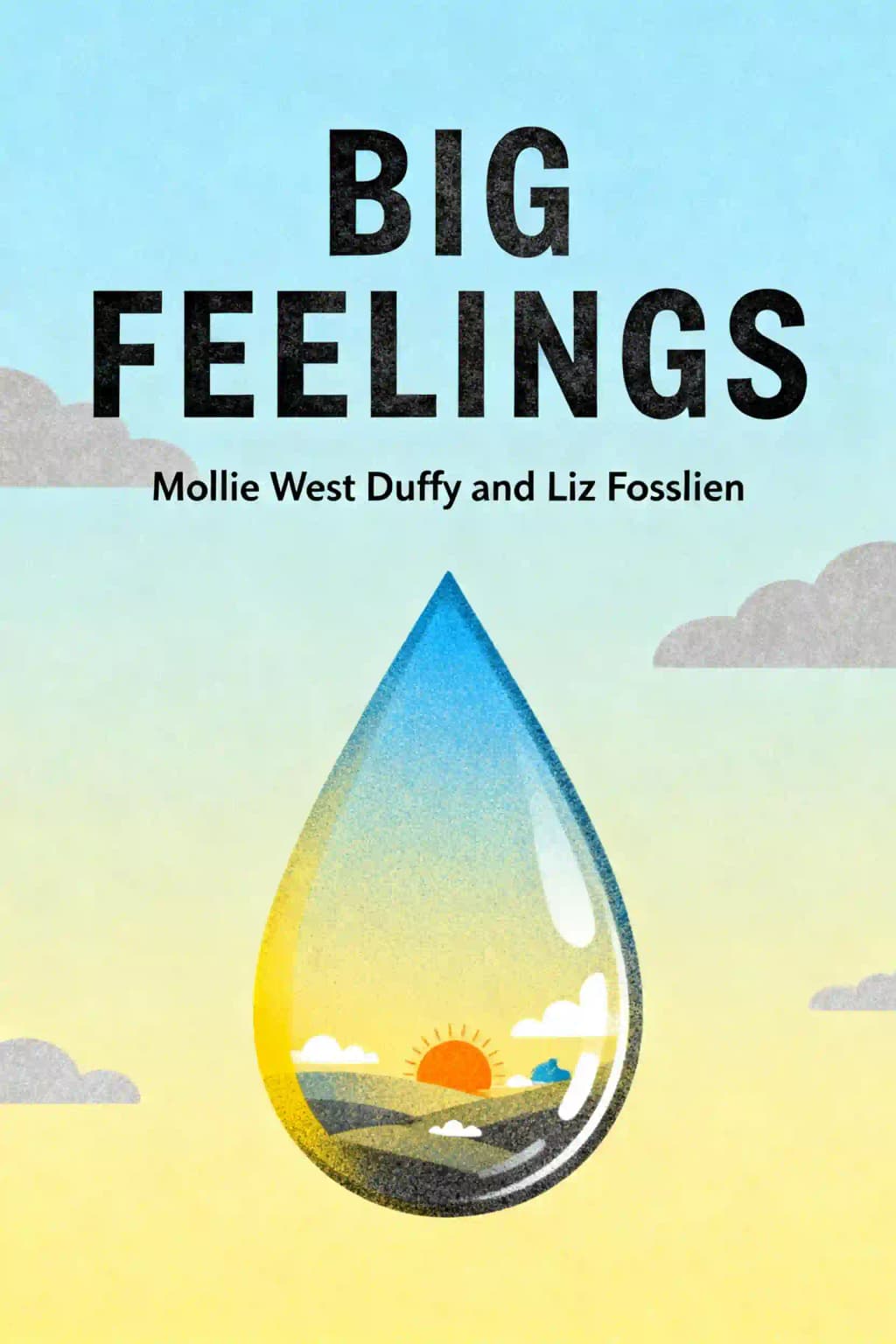
Big Feelings almost didn't happen. When authors Mollie West Duffy and Liz Fosslien pitched their book about navigating difficult emotions in January 2020, publishers were skeptical. Then the pandemic hit, revealing how desperately people needed guidance on handling overwhelming feelings. As virtual workshops shifted from workplace productivity to coping with upended lives and burnout, the authors recognized a universal truth: everyone struggles with big feelings, yet few know how to process them effectively.
This groundbreaking work explores seven challenging emotions: uncertainty, comparison, anger, burnout, perfectionism, despair, and regret. It dismantles harmful myths-that these feelings are "negative," that you should think your way out of them, and that you're alone in experiencing them. Instead, it offers practical strategies for transforming these emotions from obstacles into opportunities for growth. As psychologist Tal Ben-Shahar notes, the only people who don't experience painful emotions are "the psychopaths and the dead." For the rest of us, this book provides a compassionate roadmap through our most difficult feelings.
Глава 2
When Uncertainty Strikes: Finding Footholds in the Unknown
Uncertainty creates profound discomfort. Psychologists have identified three factors that make us feel awful: lack of control, unpredictability, and the perception that things are getting worse-essentially, uncertainty. While we often believe we're living in uniquely uncertain times, uncertainty has always been fundamental to human experience. Life can change instantly-as when Liz's healthy friend suddenly developed cancer, or when a chance grocery store encounter led to marriage.
Our anxiety about uncertainty rarely correlates with actual risk. Research shows people are willing to pay similar amounts to avoid a 99% versus a 1% chance of pain. Brain activity spikes in emotional centers when facing unknown risks, and studies reveal we'd rather face certain negative outcomes than ambiguity. People with a 50% chance of receiving an electric shock were three times more stressed than those with a 90% chance. This explains why we might stay in miserable situations rather than face uncertainty.
Liz's personal health journey illustrates this struggle. After developing debilitating headaches that made her a "medical mystery," she shuttled between specialists receiving various treatments with severe side effects. Following a terrifying panic attack and hospitalization, she refused further mood-altering medication despite returning migraines. Her life revolved around pain and isolation until her birthday, when fury at her situation propelled her to action. She began meticulously tracking her schedule, moods, and migraines, making lifestyle changes including eliminating alcohol and chocolate, establishing regular sleep patterns, and committing to acupuncture and daily exercise. Though not completely "cured," she now manages her condition by taking care of herself and living day by day.
Learning to be comfortable with uncertainty isn't about eliminating it but building "footholds of control." Instead of "anxious fixing"-rushing to accomplish tasks to distract from discomfort-we must first acknowledge our anxiety. Writing a "No Bloody Wonder" letter to your anxiety can help validate these feelings. Remember that intense physical sensations typically last only about ninety seconds-counting through them can interrupt the cycle.
When confronting uncertainty, accept you don't have all the answers by adopting a growth mindset: "I am a person who is learning to _____." This transforms uncertain territory into learning opportunities. Research shows that rituals and habits significantly reduce stress during uncertain times-regardless of what those rituals actually are. Simply performing the same action at the same time improves mental health.
Converting vague anxiety into specific fears helps identify exactly what you're afraid of losing. Then separate your fears into two categories: those within your control (the withins) and those beyond it (the beyonds). For withins, turn each fear into an actionable question and answer it. For beyonds, establish boundaries around worrying by using techniques like "noting" (naming what you're feeling with one-word labels) or scheduling specific worry time.
Successfully navigating change isn't about trusting the world but trusting yourself. Build confidence by reflecting on past challenges: "When have I felt unsure about my next steps? How did I get through that?" Finally, design your life based on your personal tolerance for uncertainty. Despite cultural messaging that uncertainty is fun and adventurous, it's perfectly fine to choose stability if that's what makes you feel best.
Глава 3
The Comparison Trap: Finding Worth in a World of Highlight Reels
Comparison is a natural human tendency that can either motivate us or spiral into self-loathing. Through personal stories like Mollie's painful experience with her friend Vanessa and research showing that 75 percent of people regularly compare themselves to others, we see how comparison shapes our self-worth. While social media intensifies these feelings, comparison is evolutionarily hardwired-even monkeys compare their food to what others receive.
Simply avoiding social media won't eliminate comparison, as it's fundamental to how we establish identity-we spend over 10% of our daily thoughts comparing ourselves to others. Achieving goals doesn't end comparison either, as our targets constantly shift in the "new level, new devil" phenomenon. Law graduates who once dreamed of passing the bar soon compare themselves to peers at prestigious firms, while newlyweds who envied friends' relationships shift to comparing houses or children.
Sometimes we need more comprehensive comparisons that consider context, like Priscilla realizing her seven-year college journey was actually remarkable given her circumstances as a first-generation graduate working multiple jobs. Research shows we tend to compare our weaknesses against others' strengths, creating unfair assessments.
Your most powerful envy reactions can reveal what you truly value, as exemplified by Gretchen Rubin's career-changing moment when she felt overwhelming jealousy toward a law school alum who'd become a writer. This visceral response helped her recognize her own suppressed desire to write books. When envy strikes, ask yourself what specifically triggers it, what void you believe having that thing would fill, whether you genuinely want it, and if it's worth taking action to pursue.
Psychologists distinguish between benign envy (admiration that motivates improvement) and malicious envy (resentment that breeds hostility). The difference often stems from perceived scarcity-seeing another's success as evidence of possibility rather than as taking from a limited pool. To shift from malicious to benign envy, try reframing with phrases like "I'm inspired by them" or "I haven't done what they've done...yet."
Professor Johannes Haushofer's "CV of Failures" reminds us that most successes are preceded by numerous invisible rejections. Research shows 82% of people admit to making their lives appear more glamorous than reality. When comparison strikes, question your assumptions about others' lives, reflect on your own unshared accomplishments, and consider what others might envy about you.
On bad days, you're significantly more vulnerable to "upward comparison"-obsessively comparing yourself to those you perceive as superior. Facebook data reveals people spend 225% more time on the platform after breakups, which can compound feelings of loneliness. When comparing yourself to others, broaden your perspective beyond just the standouts. If a friend hits a milestone making you feel behind, consider ten or twenty friends instead-many are likely in your same situation.
Don't just envy someone's achievements-consider the full reality of their situation. When Liz envied a friend's promotion to managing 200 people, she realized she actually disliked meetings and preferred doing work rather than managing others. Rather than measuring yourself against others, track your own progress. You might not be where you want to be, but you're likely not where you used to be either.
Глава 4
Anger as Fuel: Transforming Rage into Productive Action
Anger, far from being a purely destructive emotion, can be an assertion of one's rights and worth. James Averill's groundbreaking 1977 research challenged academic consensus by showing that anger is both common (most people feel it several times a week) and often constructive-people who get angry typically try to improve bad situations. Modern research confirms that channeled productively, anger can spark creativity, motivate self-advocacy, and enhance competitive performance. As grief expert David Kessler puts it, "Anger is pain's bodyguard."
From childhood, we're taught to suppress anger, especially girls who are told rage is unfeminine and ugly. This approach is harmful as anger serves as evolution's alarm system, telling us "Do something about this!" When suppressed, anger festers into resentment or hatred. As Audre Lorde noted, "Every woman has a well-stocked arsenal of anger potentially useful against those oppressions."
Our perception of anger is heavily influenced by stereotypes and biases. Studies show male faces are perceived as expressing more anger than female faces, despite women reporting higher levels of anger in surveys. Racial stereotypes create even more harmful perceptions: Black students receive harsher punishments for the same behaviors as white students, Black women avoid expressing anger to escape the "angry Black woman" label, while Asian Americans are stereotyped as cold rather than angry.
"Destruction therapy" like punching bags or smashing objects in anger rooms actually escalates anger rather than diminishes it. Research shows doing nothing is more effective at diffusing rage than physical venting. While specific triggers can cause anger explosions, these sparks usually have underlying kindling. Chronic stress "literally rewires the rage circuits in your brain," making you more likely to snap at minor provocations.
To better navigate anger, pinpoint exactly what drives you up the wall. Your triggers might be specific events (being passed over for a promotion) or conditions (hunger). Understanding your triggers helps prevent "amygdala hijack"-overwhelming emotional responses that lead to regrettable actions.
Beyond triggers, understanding how you express anger is crucial. Anger suppressors rush to tamp down their anger, often blaming themselves and risking anxiety, depression, and physical health issues. Anger projectors express anger aggressively-try using the TIPP technique (temperature, intense exercise, paced breathing, progressive muscle relaxation) to cool down. Anger controllers appear calm but avoid exploring what their anger signals. Anger transformers productively resolve anger by recognizing and understanding deeper needs.
Give yourself permission to be angry when violations occur. Many of us try to stamp out anger immediately due to societal messaging, but righteous anger can provide clarity and motivation to speak out against injustice. To uncover what's driving your anger, try writing a letter you'll never send, asking yourself: What triggered my anger? What feelings are underneath it? What do I need right now? What outcome would make me feel better?
Anger can be a powerful tool for change at both individual and societal levels. Dr. Brittney Cooper, once concerned about being labeled an "angry Black woman," now views anger as a "superpower" that gives strength to fight injustice. Anger can clarify the world we want to live in and drive social movements, as seen with the Me Too movement. When channeled effectively, anger provides the energy needed to make positive changes and move to a healthier place.
Глава 5
Beyond Burnout: Reclaiming Balance in a Demanding World
Burnout isn't merely about working too many hours-it's also about the stories we tell ourselves and our approach to work and home life. A vacation alone won't cure it. In 2019, burnout was officially recognized as a diagnosable condition in the US, with over 70% of employees experiencing it at least once in 2020. At its core, burnout is a symptom of capitalism and the pressure to maximize productivity for financial security.
In her late twenties, Mollie prided herself on being constantly busy, viewing "downtime makes me anxious" as a badge of honor despite being an introvert at heart. By December 2018, her relentless pace-weekly flights between New York and Montreal for client work, trips to Shanghai and DC-had left her exhausted. Even in first class, surrounded by similarly strained passengers, she realized: "If you are in first class because of how many miles you have flown, your life is out of balance."
Burnout often feels like a sudden crash because we're too consumed by adrenaline-fueled momentum to notice we're running on empty. The warning signs are subtle: finding grocery shopping overstimulating, cutting out self-care activities, experiencing Sunday scaries on Saturday, saying yes despite being at capacity, running on fumes, finding everything irritating, fantasizing about getting sick for a break, feeling every day is the same, and engaging in "revenge bedtime procrastination."
We believe as long as we can function, there's no need for concern. But burnout accumulates through "hundreds of tiny betrayals of purpose." Modern technology has normalized an unsustainable pace-checking emails 74 times daily and switching tasks every three minutes-preventing reflection and rest. Unlike our ancestors who completed the stress cycle after fight-or-flight responses, we operate on surge capacity constantly, producing cortisol without release.
Burnout manifests in different ways, requiring specific interventions. The Maslach Burnout Inventory measures three dimensions: exhaustion (feeling depleted), cynicism (detachment from work and colleagues), and ineffectiveness (feeling inadequate). These dimensions create five profiles on a continuum: Engaged (doing okay), Overextended (overwhelmed by workload), Disengaged (disconnected from colleagues), Ineffective (feeling incompetent despite actual performance), and Burned Out (experiencing all three dimensions).
Living at 80 percent capacity is essential for preventing burnout. Research shows most people blame themselves for fatigue rather than recognizing they're simply overworked. To become "more tortoise than hare," avoid filling every moment with activity. Practice walking away from work mid-task like Miriam, who discovered "nothing was on fire" when she returned the next day. Consider the Four Burners Theory-family, friends, health, and work-acknowledging you may need to temporarily turn off one or two burners to maintain balance.
Setting and maintaining boundaries is crucial because no one else will draw them for you. Before saying yes to commitments, ask yourself what you'll gain, what you'll have to give up, and the consequences of saying no. Remember that "behind every no is a deeper yes," even if that yes is just to yourself.
When feeling disengaged, actively seek connection despite lacking energy. Isolation creates a vicious cycle of dwelling on exhaustion, leading to more depletion. Even small moments of connection help-research shows that cynical people who focused on helping others for just one day reported lower cynicism the next morning.
"You are not the work you do; you are the person you are," writes Toni Morrison. When your identity becomes enmeshed with your work, your mental well-being becomes overly dependent on achievement. Allow yourself unstructured downtime-like Brene Brown watching forty-six episodes of Law & Order before completing her chapter draft. Letting our brains relax improves health and performance; studies show over 40% of our best creative ideas come when our minds wander outside work.
Глава 6
The Perfection Paradox: Finding Freedom in Good Enough
Perfectionism doesn't lead to feeling perfect-it creates feelings of inadequacy. Liz's personal story of trying to maintain a perfect facade while dating her now-husband reveals how her need to appear flawless nearly sabotaged their relationship. Research shows perfectionism-an unrealistic drive to be flawless combined with intense self-criticism-actually undermines performance. Studies of professional athletes demonstrate that perfectionist tendencies make people overly concerned with mistakes, ultimately causing them to perform worse than peers.
Contrary to popular belief, perfectionism isn't just about being organized or type-A. It's fundamentally driven by low self-esteem and fear of failure. Many perfectionists don't even identify as such because their standards are so impossibly high that they consider themselves failures rather than perfectionists. Key indicators include never feeling satisfied with accomplishments, needing external validation to feel worthy, inability to disconnect from work, people-pleasing tendencies, chronic exhaustion, and devaluing your own achievements.
Contrary to common belief, perfectionists are often less successful than their non-perfectionist counterparts. The anxiety about making mistakes actually impedes performance across professions-even in fields like medicine where precision matters. This "perfection paradox" means perfectionists get stuck revisiting even minor mistakes, making themselves feel terrible, and often giving up entirely when things don't go perfectly. In one experiment, when both perfectionists and non-perfectionists were given impossible tasks, perfectionists quickly abandoned the effort while non-perfectionists kept trying, learning and enjoying the process despite failure.
Beneath perfectionism lies a deep fear of unworthiness-the belief that you must earn love through achievement. Perfectionists often feel fundamentally flawed compared to others who they believe deserve forgiveness. This tendency frequently stems from childhood trauma or environments where love was conditional on performance. Reader Katja developed perfectionism as a response to her father's abuse, cleaning obsessively to please him and continuing these behaviors into adulthood until she realized "perfectionism is a form of self-abuse."
Perfectionists often don't realize their success happens despite their perfectionism, not because of it. As psychologist Thomas Greenspon explains to his patients, "If I could wave a magic wand and get rid of your perfectionism, you'd be more successful." Many fear that self-compassion will lead to complacency, but research shows the opposite-when participants journaled about the benefits of self-compassion, they were more likely to treat themselves kindly and subsequently performed better.
Perfectionism often stems from early experiences where we learned that anything less than extraordinary meant pain or rejection. To begin healing, write out your perfectionist thoughts and reflect on where you learned these expectations, what your perfectionism is trying to protect you from, whether meeting these expectations actually provides that protection, and what you wish you could tell your younger self.
To move away from perfectionist stories, ask yourself: Who am I without labels or roles? How would a friend describe me? What do I want, free of expectations? Avoid defining yourself by how well you perform, what you look like, or what others think of you. Focus instead on intrinsic qualities like being funny, generous, principled, or a good listener.
Perfectionists often set "avoidance goals" (preventing negatives) rather than "approach goals" (achieving positives). For example, instead of "I want to avoid looking incompetent" (avoidance), try "I want to impress people with my compelling storytelling" (approach). While avoiding failure can be motivating, it creates stress and negative feelings. Approach goals are both motivating and exciting because they give you something to celebrate.
There comes a point when continuing to work on something either won't make a meaningful difference or will actively harm you. Dave from Bleacher Report encourages his teams to share work when it's 80% complete, noting that "other people may not know the difference between 80 percent finished and 100 percent finished." Embracing "good enough" requires letting go of all-or-nothing thinking-a one-mile run is better than no run at all.
Глава 7
From Darkness to Light: Navigating the Depths of Despair
This chapter opens with a trigger warning about suicidal thoughts and Mollie's deeply personal story of experiencing despair despite having no prior history of depression. After publishing their first book and dealing with chronic foot pain that doctors dismissed, Mollie descended into a state where she contemplated suicide. Despair is defined through seven clinical indicators: hopelessness, low self-esteem, feeling unloved, frequent worry, loneliness, helplessness, and self-pity. While some overlap with depression and anxiety, the combination creates the unique intensity of despair-a condition increasingly common in America, contributing to declining life expectancy through "deaths of despair."
The dangerous misconception that despair can be remedied through distraction or positive thinking is both ineffective and harmful. Recovery begins by taking despair seriously rather than dismissing it. Many avoid naming their despair due to shame or fear of being labeled "crazy," but research shows that open, nonjudgmental conversations make it less likely someone will act on suicidal thoughts. Professional help is often necessary, as despair typically exceeds what friends and family alone can address.
Comparing your suffering to others who "objectively have it worse" only deepens despair by adding guilt and self-judgment. As Mollie's friend Julia wisely noted, "I don't believe in comparing levels of suffering. When you're in a low place, that's the place you're in." Despair is absolute to the person experiencing it, and there's no judge determining whether someone "deserves" to feel it.
When in despair, we often feel uniquely broken and alone in our suffering. As Phoebe Waller-Bridge's character in Fleabag sobs, "Either everyone feels like this a little bit and they're just not talking about it, or I am completely fucking alone." This isolation comes from comparing our behind-the-scenes footage with others' highlight reels. But despair is far more common than society admits-Mollie found comfort when both her therapist and doctor confirmed that suicidal feelings are widespread and recoverable.
When despair makes every moment feel endless, "chunking time" becomes essential-focusing only on getting through what feels doable. The more you're suffering, the smaller the chunks should be. As one reader shared, "During a really difficult period, I scrapped 'Take it day by day.' Instead, I told myself to take it moment by moment." Self-indulgence in harmless creature comforts-ice cream sundaes, fluffy movies, hot showers, binge-watching shows-can provide necessary escape.
When in despair, it feels like free-falling with no control. The first step to regain agency is throwing "a single climbing pick into the wall" every day-not to stop the fall, but to slow it. Each morning, choose just one small accomplishment: sending a text, taking out trash, or putting on deodorant. These mini-milestones put you back in the driver's seat, even briefly. Progress often feels like "ten steps backward, one step forward," then "two steps back, one forward," before slowly inching upward from the abyss.
When Kate and Hunter terminated a pregnancy due to their unborn baby's rare syndrome with heart and brain malformations, they were devastated. Kate found crucial support by connecting daily with a friend who had experienced the same situation-offering judgment-free understanding that Kate couldn't find elsewhere. They also joined a support group where they felt immediately understood without having to defend their decision.
The Spoon Theory, created by lupus patient Christine Miserandino, explains how chronic illness affects daily energy. While healthy people have unlimited "spoons" (energy units) for daily activities, those with chronic conditions have a finite supply that each task depletes. Every action-sleeping poorly, getting ready, commuting-costs spoons that can't be replenished until the next day. This concept is particularly difficult for others to grasp when someone "looks okay" despite having an invisible condition.
During the 2020 pandemic, Joy Ekuta and her Black friends, exhausted by George Floyd's murder and racial injustice, created hellajuneteenth.com to educate people about Juneteenth and encourage companies to observe it. What began as a small effort snowballed into over 650 companies committing to observe the holiday, eventually leading to Juneteenth becoming a national holiday. While it's frustrating to hear that despair might be "helpful" when you're suffering, psychologists confirm that making meaning is crucial for recovery.
Глава 8
The Road Not Taken: Making Peace with Regret
Regret arises when we contemplate how our lives could have been better had we made different choices. While it can be overwhelming, regret also serves as a powerful internal compass for living a more meaningful life. As a counterfactual emotion, regret's intensity depends on how close we came to realizing alternative possibilities-like silver medalists who obsess over missing gold while bronze medalists feel grateful for any medal. Though we can't eliminate regret entirely (despite #NoRegrets hashtags), we shouldn't want to-without feeling heartbroken over mistakes, we wouldn't learn valuable lessons.
Regret is unavoidable and hardwired into our brains. Studies show people talk about regret more than any emotion except love, and it's our most commonly felt uncomfortable emotion. Even when things work out well, like Erik winning a bet, we can still regret not doing more. Life transitions inherently involve closing off potential paths, making regret inevitable as we wonder about the million lives we didn't choose.
We experience different types of regret depending on which "self" is active-our actual self (who we are now), ideal self (our truest, most fulfilled version), or ought self (the version that meets society's expectations). Even when following your passion, your ought self might occasionally hijack your thoughts with "what ifs." Though studies show we're generally happier choosing passion over obligation, these competing selves ensure some regret will always surface.
We often focus on avoiding short-term regret, leading to worse long-term outcomes. Our "status quo bias" makes us avoid immediate discomfort, causing us to stay in unfulfilling jobs or relationships. Brain research shows that merely fearing regret activates the same neural pathways as actually experiencing it, making our fear of making wrong decisions as painful as dealing with their consequences.
Before moving forward, acknowledge the gut-wrenching pain of regret. Whether it's lost time, missed opportunities to say "I love you" before someone passed, or poor decisions, allow yourself to fully feel the emotion. As Cheryl Strayed writes, we must learn to "salute" our "ghost ship"-the life we didn't choose-from the shore of the life we did choose, asking "What if all those things I shouldn't have done were what got me here?"
Regrets fall into six categories: hindsight regrets (made the best decision with information available), alternate-self regrets (vague longing for different lives), rushing-in regrets (hasty decisions), dragging-out regrets (delayed necessary actions), ignoring-your-instincts regrets (disregarded gut feelings), and self-sabotage regrets (knowingly made bad choices). For the first two types, distraction and perspective help; for the latter four, deeper analysis can change future behavior.
When stuck in regret, we often spiral through "what-ifs" that amplify our emotional response. To counter this, list everything you're grateful for when overwhelmed by if-only scenarios. Remember that in choosing one path, you gain experiences you wouldn't have had otherwise. As one workshop participant noted: "Whenever I have an I-wish-I-had thought, I ask myself: What memories and people would I have to give up for a 'maybe'?"
To use regret constructively, transform "I should have..." statements into "What if..." questions that point toward future action. For instance, replace "I should have been more confident" with "What if I acted with more confidence?" The intensity of regret diminishes over time. We often underestimate our ability to adapt and make the most of our circumstances. Sometimes what seems like the "wrong decision" actually puts us on a path toward something better.
Глава 9
Embracing the Full Spectrum of Human Experience
Big feelings can be overwhelming, but they're not abnormal and can lead to wisdom. The authors wrote this book to demonstrate that difficult emotions can yield valuable insights: grief over paths not taken can inform future choices, envy can clarify our values, and even despair can deepen our sense of self and empathy. Though big feelings often feel purposeless in the moment, they can lead to post-traumatic growth (PTG) - where we emerge from struggle with greater appreciation for life, closer relationships, increased confidence, deeper peace, and expanded possibilities.
Both authors acknowledge they aren't "cured" of life's challenges and continue to struggle with physical pain, grief, and burnout even while writing this book. They emphasize there's no shortcut for processing difficult emotions, but with time and possibly therapy, we can reach a place where big feelings become manageable.
The book provides practical assessment tools to help readers understand their emotional experiences, including detailed questionnaires to evaluate different aspects of mental wellbeing. These include the Burnout Profile Assessment based on the Maslach Burnout Inventory, a Perfectionism Assessment to determine whether you're a healthy striver or perfectionist, an Anger Expression Tendency assessment to identify your anger patterns, and an Uncertainty Tolerance Assessment to measure how you respond to ambiguous situations.
For those seeking support, the book offers guidance for finding affordable therapy options, from sliding-scale therapists to free local clinics staffed by supervised students. It provides specific contacts including NAMI HelpLine, mentalhealth.gov, and SAMHSA's treatment locator, emphasizing the importance of finding a therapist you connect with. The extensive reading list ranges from poetry collections to memoirs to Buddhist-influenced texts on acceptance and mindfulness, organized by emotional challenge.
Through personal stories, rigorous research, and practical strategies, Big Feelings offers a compassionate framework for navigating life's most challenging emotions. By embracing rather than avoiding these feelings, we can transform them from overwhelming obstacles into powerful catalysts for growth, connection, and deeper understanding of ourselves and others. The journey through big feelings isn't easy, but with the right tools and perspective, it becomes a path to a richer, more authentic life.