Глава 1
The Compassionate Revolution: How Plant-Based Eating Transforms Lives
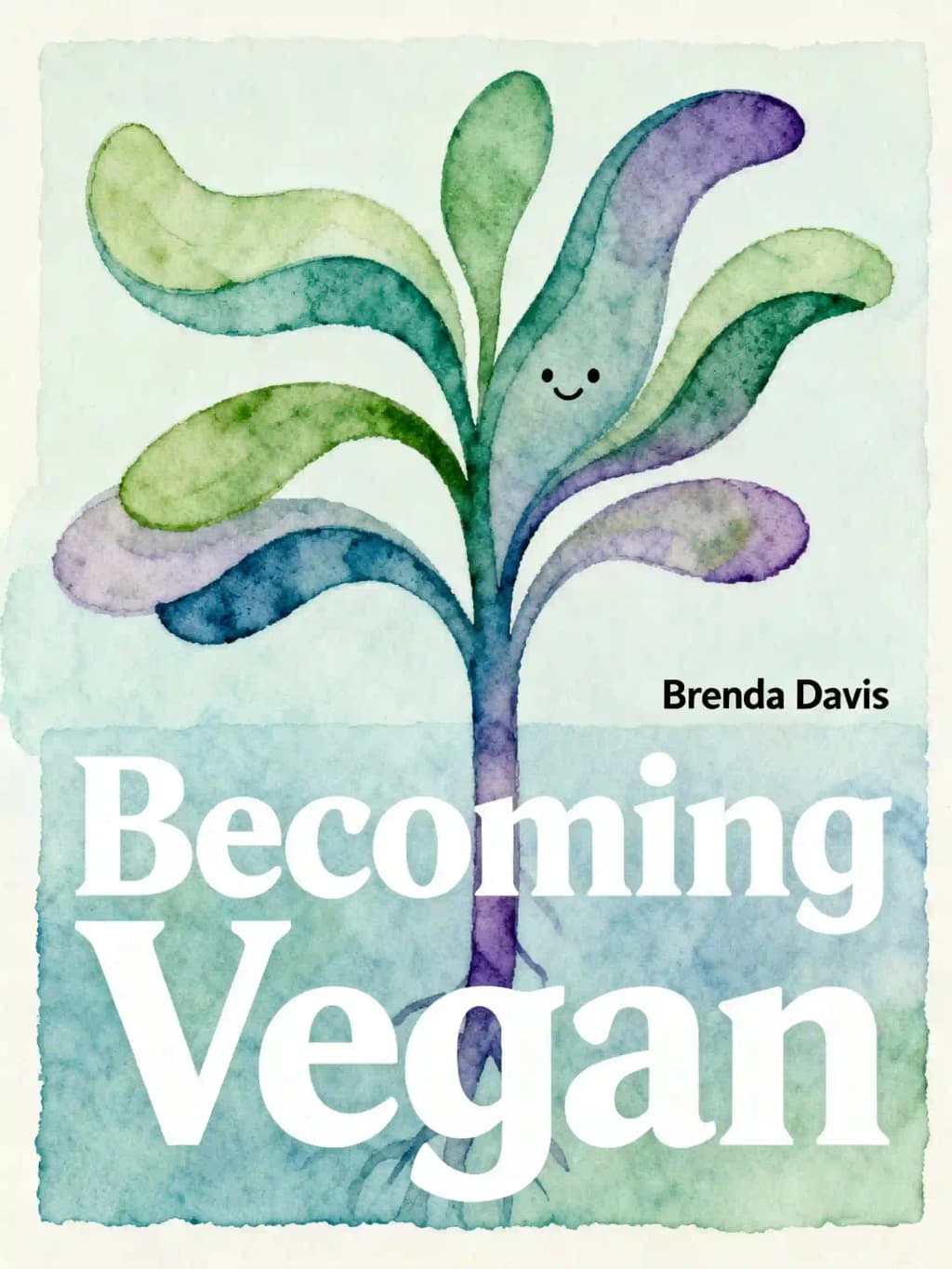
Imagine a lifestyle choice that simultaneously protects your health, preserves the planet, and prevents animal suffering. This is the essence of veganism, a rapidly growing movement that's captured the attention of celebrities like Joaquin Phoenix, Billie Eilish, and Lewis Hamilton. What began as a fringe philosophy in 1944 when Donald Watson coined the term "vegan" has evolved into a mainstream lifestyle embraced by millions worldwide. "Becoming Vegan" by Brenda Davis stands as one of the most comprehensive guides to this transformative way of living, blending rigorous nutritional science with practical wisdom. As plant-based eating continues reshaping the food industry-with the global vegan food market projected to reach $31.4 billion by 2026-this book offers a roadmap for anyone curious about making the transition. Whether motivated by health concerns, environmental awareness, or ethical considerations, readers discover that veganism isn't about restriction but about aligning daily choices with deeply held values.
Глава 2
Vegan Roots: A History of Compassionate Living
The pioneers of veganism were courageous individuals who prioritized truth and justice over social acceptance. While vegetarianism has ancient roots dating back to Pythagoras, Buddha, and Plato, modern veganism emerged from within the vegetarian movement when some recognized the inconsistency in consuming dairy and eggs while opposing animal slaughter. In November 1944, Donald Watson established the Vegan Society in London, creating a term derived from the beginning and end of "vegetarian" to represent a more complete form of vegetarianism.
The early vegan movement gained medical credibility through Dr. Frey Ellis, who conducted pioneering research on vegan health and emphasized the importance of vitamin B12 supplementation. In 1960, Jay Dinshah founded the American Vegan Society, promoting the principle of Ahimsa (non-violence) through six pillars: Abstinence from animal products, Harmlessness, Integrity, Mastery over oneself, Service to humanity, and Advancement of understanding.
Throughout the 1970s and 1980s, awareness grew about the consequences of animal-centered diets. Frances Moore Lappe's "Diet for a Small Planet" highlighted environmental impacts, while John Robbins' "Diet for A New America" exposed the plight of farm animals in modern food production. Meanwhile, The Farm community in Tennessee demonstrated the viability of vegan diets for all life stages, and Seventh-day Adventist research provided scientific validation of vegetarian nutrition.
By the late 1990s, environmental concerns about animal agriculture gained mainstream recognition, with Pulitzer prizes awarded for exposing the environmental damage caused by industrial animal farming. Simultaneously, scientific research increasingly connected diet to disease prevention, prompting health organizations worldwide to promote plant-based eating patterns.
The vegetarian movement has shown a natural progression toward veganism, with increasing numbers shifting away from animal products altogether. This evolution reflects growing awareness about the conditions of dairy cows and laying hens, along with environmental impacts of animal agriculture. Today's vegans benefit from modern kitchen tools, nutritional knowledge, and a wide variety of plant-based alternatives that make vegan living both practical and healthy.
Глава 3
The Science of Plant-Based Nutrition: Transforming Health Outcomes
The scientific perspective on vegan diets has undergone a remarkable transformation. Once dismissed as dangerous "fad diets," they're now recognized by major health organizations as potentially therapeutic for chronic disease. Research shows well-planned vegan diets can support optimal health at all life stages while offering significant disease prevention benefits.
Vegan diets naturally align with dietary guidelines from leading health organizations, which recommend limiting total fat (especially saturated fat) while emphasizing plant foods. Studies consistently demonstrate that vegans have the lowest total and LDL cholesterol levels of all dietary groups-typically 135-165 mg/dl versus 177-205 mg/dl for non-vegetarians. They also have lower blood pressure (5-10 mm Hg less) and much lower rates of hypertension (one-third to one-half those of non-vegetarians).
The cancer-fighting potential of plant-based diets is particularly impressive. The World Cancer Research Fund and American Institute of Cancer Research's comprehensive analysis of over 4,500 studies found that vegetables are protective for 16 cancer sites and fruits for 12 sites. Meanwhile, animal products like meat, animal fat, and dairy were identified among the most harmful dietary components for cancer risk. While specific research on vegans and cancer remains limited, the Seventh-day Adventist studies found non-vegetarians had 54% higher risk of prostate cancer than vegetarians and 88% higher risk of colon cancer.
For diabetes, the evidence is equally compelling. The lowest Type 2 diabetes rates globally occur in populations eating near-vegan diets. The Seventh-day Adventist study found vegetarians had 53% lower diabetes risk for men and 55% lower for women compared to non-vegetarians. For those aged 50-69, the risk reduction was an astounding 76%. When used therapeutically, low-fat vegan diets have shown remarkable results for diabetes treatment, with one study demonstrating a 28% reduction in fasting blood glucose and medication reductions in five of eight participants.
Regarding osteoporosis, research presents a more nuanced picture. Some studies have found significantly lower bone mineral densities in vegans (10-20% lower), particularly those with very restrictive diets and calcium intakes below 400 mg daily. However, vegans can enjoy excellent bone health by ensuring adequate calcium intake from fortified foods or supplements, maintaining moderate protein intake, limiting sodium, and engaging in regular weight-bearing exercise.
Глава 4
Protein Power: Building Blocks from Plants
The first question most vegans hear is "Where do you get your protein?" The simple answer is "From all the whole plant foods I eat." International guidelines recommend getting 10-15% of calories from protein, and most plant foods provide 10-40% of their calories from protein. By consuming enough calories from varied vegan foods, meeting protein needs is straightforward.
Adults need protein primarily for tissue maintenance: muscle, bone, blood cells, and all other body cells. The U.S. Recommended Dietary Allowance for adult protein is 0.8 grams per kilogram daily, which includes safety margins. For vegans eating predominantly whole plant foods, which are slightly less digestible, experts recommend adding 10-15% more protein, suggesting about 0.9g protein per kg body weight.
Protein quality refers to how well a food's amino acid profile meets human requirements. The building blocks of protein are 22 different amino acids, with nine being essential amino acids (EAAs) that must come from diet. Contrary to outdated beliefs, careful "protein complementation" at each meal is unnecessary. When eating a variety of foods, amino acids from different proteins are pooled in bodily fluids and can be used as needed. Frances Moore Lappe, who popularized the complementation concept in "Diet for a Small Planet," later acknowledged she had reinforced this myth.
While individual plant foods may not perfectly match the ideal amino acid pattern, a daily assortment of plant proteins based on the Vegan Food Guide provides abundant amounts of all amino acids. The essential amino acids in animal proteins are ultimately derived from plants, making plants the original source of all EAAs.
Processing improves protein digestibility. Tofu and soy protein isolates are more digestible (90-98%) than whole soybeans (78%). Similarly, white bread (97%) is more digestible than whole wheat bread (92%). Studies show vegans typically consume adequate protein, averaging 11.9% of calories from protein, with men consuming about 76g and women 57g daily.
For vegans who struggle with beans, smaller legumes like lentils or commercial veggie meats may be more digestible. Travelers can pack protein-rich snacks like soynuts, seeds, tofu jerky, and protein bars. When dining out, request vegan airline meals, seek ethnic restaurants with veggie options, or ask chefs to add beans or nuts to dishes. Many "failed" vegans simply haven't included enough concentrated protein sources in their diets.
Глава 5
Fat Facts: Finding the Right Balance
For many pursuing veganism as a path to better health, eliminating dairy and eggs removes key sources of saturated fat and cholesterol. However, this doesn't end concerns about fat-it merely shifts the focus. Debates about optimal fat amounts and types are active in vegan communities, with two opposing camps: the very-low-fat approach versus the higher-fat "Mediterranean-diet" approach.
Fats and oils come in three types: saturated, monounsaturated, and polyunsaturated. Saturated fats, generally solid at room temperature, are linked to heart disease and some cancers. Animal products are the main sources in Western diets, while plant foods contain very little except for tropical oils like coconut. Monounsaturated fats, liquid at room temperature but semi-solid when refrigerated, are "good fats" that protect against heart disease by improving cholesterol profiles. Main sources include olives, olive oil, canola oil, avocados, and most nuts.
The optimal fat intake for vegans remains one of the most contentious issues in vegetarian nutrition. Very-low-fat vegetarian diets (10-15% of calories) gained popularity after remarkable success treating severe heart disease. Dr. Dean Ornish's 1990 research showed that a vegetarian diet with less than 10% fat could reverse atherosclerosis. However, studies of Mediterranean populations suggest some higher-fat diets can also be protective. The Seven Countries Study showed the lowest mortality not in the lowest-fat country but on Crete, where people consumed a Mediterranean diet high in fat but low in saturated fats.
Despite apparent opposition, very-low-fat vegetarian and Mediterranean diets share important commonalities. Both emphasize vegetables, legumes, fruits, and whole grains. Neither contains much saturated fat, trans fat, cholesterol, or animal protein. The Mediterranean diet differs by including monounsaturated fat-rich foods and more omega-3 fatty acids.
Most experts agree the optimal fat intake lies between these extremes, with WHO/FAO recommending 15-30% of calories from fat, and the DRI suggesting 20-35% for adults, 25-35% for children 4-18, and 30-40% for children 1-3. Disease risk correlates more with fat sources than amount-whole plant foods like nuts, seeds, soy, avocados, and olives support excellent health even at 30% of calories from fat.
Essential fatty acids (EFAs) present unique challenges for vegans. Both linoleic acid (LA, omega-6) and alpha-linolenic acid (LNA, omega-3) are critical for healthy cell membranes, brain development, and hormone-like eicosanoids that regulate vital organ systems. Vegan diets typically have omega-6:omega-3 ratios far from optimal (14:1-20:1), unbalanced by high intakes of omega-6 fatty acids. For vegetarians and vegans who consume little direct EPA/DHA, experts suggest an optimal omega-6:omega-3 ratio of 2:1 to 4:1.
To optimize essential fatty acid intake, vegans should: avoid concentrated omega-6-rich oils as primary fat sources; select oils high in monounsaturated fats and omega-3s; eat good sources of omega-3 fatty acids daily; and consider taking a direct source of long-chain omega-3s from microalgae supplements.
Глава 6
Carbohydrates: The Good, The Bad, The Complex
Carbohydrates are the world's most important energy source, with health organizations recommending diets of at least 55% carbohydrates. Created through photosynthesis, these molecules range from simple sugars (monosaccharides like glucose) to complex structures (polysaccharides like starch and fiber). Ironically, while populations consuming plant-based, high-carbohydrate diets show lower rates of chronic disease, popular diet books often blame carbohydrates for health problems.
Carbohydrates are the preferred energy source for most body functions, providing about 4 kcal/g. Unlike protein (which stresses liver and kidneys), fat (which doesn't fuel the brain), or alcohol (which is toxic), carbohydrates efficiently and safely power the entire body. Carbohydrate-rich foods improve satiety, control blood sugar and lipid levels, support insulin metabolism, and promote gastrointestinal health by feeding beneficial gut flora.
The FAO/WHO recommends 55-75% of calories come from varied carbohydrate sources including cereals, vegetables, legumes, fruits, nuts, and seeds. Below 55%, protein and fat become excessive, increasing chronic disease risk. Above 75%, essential fatty acids and protein may become insufficient, particularly for vegans. Vegans typically consume about 60% of their energy as carbohydrates, increasing to nearly 75% for those on very-low-fat diets.
Despite popular low-carbohydrate diet books claiming carbohydrates cause insulin resistance and obesity, there's no scientific evidence supporting this. Dr. Gerald Reaven, whose research is often cited by these diets, clearly states "there's not one shred of evidence that insulin resistance causes obesity... Calories make you fat." Epidemiological evidence shows populations consuming the most carbohydrates actually have the lowest rates of obesity and chronic disease.
While high-carbohydrate diets are recommended, their health impact depends entirely on the sources. Whole plant foods like legumes, whole grains, vegetables, fruits, nuts, and seeds benefit health, while refined carbohydrates and concentrated sugars can be harmful. Refining removes most protective substances-when wheat becomes white flour, it loses approximately 75% of vitamins and minerals, 90% of fiber, and 95% of phytochemicals.
Fiber provides most of the protective effects of high-carbohydrate whole plant foods. It helps protect against nearly every major chronic disease affecting Western populations, including heart disease, cancer, gastrointestinal diseases, diabetes, hypoglycemia, and obesity. The World Health Organization recommends 27-40 grams of fiber daily for most adults. Vegans typically consume 40-50 grams of fiber per day, compared to 30-40 grams for lacto-ovo vegetarians and just 10-20 grams for most non-vegetarians.
Глава 7
Minerals: Building Strong Bodies from Plant Sources
Minerals are essential nutrients that play vital roles in human health. While plants can provide all essential minerals in adequate amounts, some vegan diets may fall short, particularly for zinc and calcium. Three simple rules can help vegans meet their mineral needs: eat whole plant foods following the Vegan Food Guide; ensure adequate caloric intake; and include some foods fortified with calcium, zinc, iron, and iodine.
Calcium, the most abundant mineral in the body, provides structural hardness to bones' flexible protein matrix. Historically, humans obtained calcium from plant foods, not dairy. Before agriculture, human diets were dairy-free but contained 1,500-3,000 mg of calcium daily from plants not commonly eaten today. Our Stone Age ancestors consumed double the calcium we do today-without any dairy.
Calcium status depends on the balance between intake, absorption, and excretion. Diet significantly impacts calcium balance-protein's sulfur-containing amino acids acidify blood, drawing calcium from bones (about 1 mg calcium lost per gram of protein consumed). Vegetarian diets tend to be more alkaline and favorable to calcium balance, while animal-centered diets are more acidic.
For optimal bone health, include 6-8 daily servings of calcium-rich foods spread throughout the day. Eat calcium-rich greens daily (kale, collards, broccoli, bok choy, turnip and mustard greens); use calcium-set tofu regularly; choose calcium and vitamin D fortified plant milks and juices; incorporate other calcium sources like figs, almonds, sesame tahini, and white beans.
Iron, perhaps the most recognized essential mineral, plays crucial roles in oxygen transport, cellular energy production, immune function, and cognitive processes. Iron deficiency is the world's most prevalent nutritional deficiency, affecting populations in both developing and industrialized nations. Vegetarians need 1.8 times more iron than the general population due to differences in bioavailability, with highest requirements for women of childbearing age (14.4-32.4 mg daily for women, 14.4 mg for men).
Plant foods are rich in iron, giving vegans an advantage over other vegetarians who consume dairy products, which can decrease iron absorption by up to 50%. Vegans' higher vitamin C intake (about 50% more than omnivores) significantly boosts iron absorption-75 mg of vitamin C can quadruple iron absorption from a meal.
Though our bodies contain just 2-3 grams of zinc, it's essential for numerous bodily functions, participating in at least 60 enzyme systems. Zinc enables cell division, carbon dioxide elimination, respiration, acid-base balance, wound healing, immune function, taste perception, and protein and DNA synthesis. The recommended daily intake is 8 mg for women and 11 mg for men.
Глава 8
Vitamins: The Micronutrient Foundation
The first half of the 20th century saw the discovery that tiny amounts of certain substances in food could reverse serious diseases. These essential compounds-vitamins-are present in all food groups and are required in amounts that could fit in a teaspoon. Vegan diets generally overflow with these life-supporting substances, with only vitamins B12 and D requiring special attention.
Vitamin B12 (cobalamin) is a complex molecule containing cobalt surrounded by nitrogen compounds. It helps build DNA, maintains nerve fiber sheaths, assists in converting nutrients to energy, and helps eliminate homocysteine-a potentially damaging breakdown product linked to heart disease. Deficiency causes macrocytic anemia, resulting in fatigue, confusion, depression, tingling in extremities, and eventually paralysis. In infants, deficiency can cause serious nervous system damage.
Despite occasional misinformation, the evidence is clear that vegans require B12 from supplements or fortified foods. The recommended intake is tiny-just 2.4 micrograms daily for adults-but essential. To ensure adequate B12 intake, vegans should become label readers, seeking products marked "fortified" or "enriched" that specifically list vitamin B12. Reliable B12 sources include Red Star Vegetarian Support Formula nutritional yeast (providing 4-8 mcg per 2 tablespoons), fortified meat substitutes (0.7-1.5 mcg per serving), and fortified plant milks (0.9-3 mcg per cup).
Vitamin D functions as both a hormone (when made in our skin from sunlight) and a vitamin (when obtained through diet). Without vitamin D, calcium absorption is severely limited, causing rickets in children (bent, misshapen bones) and osteomalacia ("soft bones") in adults. Several factors affect vitamin D production from sunlight: skin color (darker skin needs 3-6 times longer exposure), age (seniors produce half as much), body fat (thin people store less), sunscreen use (SPF 8+ blocks synthesis), time of day, clothing coverage, and geographical location.
Recommendations range from 5-15 mcg (200-600 IU) daily, with higher amounts needed for those over 50 (10 mcg) and over 75 (15 mcg). Evidence shows widespread vitamin D deficiency among elderly populations, with researcher Michael Holick noting that in the absence of sunlight, adults need at least 15 mcg (600 IU) daily to maintain healthy bones and prevent fractures.
Beyond B12 and D, six other B vitamins work as a team to convert carbohydrates, fats, and proteins into usable energy. These vitamins (thiamin, riboflavin, niacin, pantothenic acid, pyridoxine, and folate) are typically found together in whole grains, legumes, green vegetables, nuts, seeds, and nutritional yeast. Generally, excess B vitamins don't cause problems, and vegans typically get adequate amounts of most B vitamins.
Глава 9
Phytochemicals: Nature's Protective Compounds
It seems almost like a conspiracy-the more animal foods people eat, the greater their risk of chronic diseases, while plant-based diets reduce these risks dramatically. Beyond the familiar nutrients, plants contain thousands of phytochemicals that provide flavor, color, and powerful protection. These naturally occurring chemicals not only defend plants against insects and fungi, but also offer remarkable health benefits to humans who consume them.
Phytochemicals are naturally occurring plant chemicals that provide flavor, color, texture, and odor while regulating growth and defense. Though vegetables and fruits are primary sources, legumes, whole grains, nuts, seeds, herbs, and spices also contribute significantly. There are thousands of phytochemicals, with phenolic compounds forming the largest category (over 4,000 chemicals), including flavonoids, phenolic acids, and tannins.
While all whole plant foods contain phytochemicals, certain foods stand out as particularly rich sources. Vegetables are the most protective and phytochemical-rich foods available. Particularly noteworthy are cruciferous vegetables (broccoli, cauliflower, cabbage, kale) containing indoles and isothiocyanates with anticancer and antiestrogenic activity; umbelliferous vegetables (celery, carrots, parsley) rich in coumarins, flavones, carotenoids and other compounds with antioxidant and anticancer properties; and allium vegetables (garlic, onions) containing allicin and its breakdown products with cardiovascular, anticancer and antimicrobial benefits.
Fruits, though not quite as impressive as vegetables in disease risk reduction, are close behind. Citrus fruits contain over 170 different phytochemicals including flavonoids, terpenes, and carotenoids with antioxidant, anticancer, and cardiovascular benefits. Berries are rich in phenolic compounds including anthocyanins (strong antioxidants that inhibit LDL cholesterol oxidation, promote connective tissue repair, and have anticlotting and anti-inflammatory properties).
Legumes, the protein powerhouses of plants, are rich in minerals, fiber, and phytochemicals including isoflavones (phytoestrogens with antiestrogenic activity), phenolic acids (antioxidants with anticancer properties), tannins like catechin (anticancer activity, especially high in lentils), and phytates (antioxidants that bind minerals). Soybeans reign supreme among legumes, containing isoflavones (mainly genestein and daidzein) that may reduce risks of estrogen-related cancers, menopausal discomfort, osteoporosis, and cardiovascular disease.
Nuts and seeds reduce cardiovascular disease risk partly due to their phytochemical content. They contain flavonoids (quercetin, rutin, kaemperol) with antioxidant, anticancer and anti-cardiovascular properties; phenolic acids (ellagic and caffeic acid) with antioxidant and anticancer activity; lignans with antiestrogenic activity; phytic acids with anticancer activity; and tocotrienols (vitamin E) with antioxidant, antitumor, and lipid-lowering effects. Flaxseeds stand out as champions, containing over 100 times the lignans of most plant foods, the highest alpha-linolenic acid content (57% omega-3 fatty acids), and rich amounts of boron, potassium, magnesium, and soluble fiber.
Глава 10
Practical Vegan Living: From Pregnancy to Performance
The Vegan Food Guide translates nutritional information into practical eating advice for those four years and older. Modeled after the U.S. Food Guide Pyramid, it has three key differences: animal foods are replaced with nutritionally similar plant foods (Beans & Bean Alternates for protein, iron and zinc; Fortified Soymilk & Alternates for calcium); it includes an "Other Essentials" top triangle for omega-3 fatty acids, vitamin B12, and vitamin D; and it recommends 6-8 servings from the Fortified Soymilk & Alternates group to reflect higher calcium needs and smaller serving sizes.
Vegan diets can fully support healthy pregnancies despite common concerns. The largest study of 775 vegan pregnancies found normal birth weights and dramatically lower rates of preeclampsia (0.1% versus 5-10% in the general population). While some negative reports exist, they involved very restrictive diets. Today's fortified vegan foods make meeting nutritional needs during pregnancy easier than ever, though careful attention to nutrient intake remains essential.
For vegan infants and children, diets must be carefully adapted to support optimal growth and development. The formula for successful vegan infant nutrition has four essential components: breast milk, vitamins B12 and D supplementation, appropriate solid foods, and sufficient calories. Breast milk should be the sole food for the first 4-6 months, ideally continuing for at least one year and preferably two years or more. Vegan infants must receive B12 supplements of at least 0.3 mcg daily from the second week of life until at least age two, as there are no reliable plant sources.
For vegan athletes, the evidence is clear: plant-based diets can support peak performance at all levels. World-class athletes like six-time ironman champion Ruth Heidrich, Olympic skater Charlene Wong Williams, and thousands of other successful vegan athletes prove it's possible. The key is getting the right balance of energy and nutrients to maximize potential. Sports nutrition experts agree that carbohydrates are the preferred fuel for athletes, with recommended intakes of 60-70% of total calories, protein at 12-15%, and fat below 30%.
Good nutrition during later years significantly impacts health and quality of life. As you age, nutritional requirements shift significantly. Caloric needs decrease due to reduced muscle mass and typically lower physical activity levels, while requirements for certain nutrients (calcium, vitamin D, vitamin B12, and possibly protein) remain the same or increase. This means seniors need more nutrient-dense foods-getting "more bang for your buck" nutritionally despite consuming fewer calories.
Becoming vegan represents a profound journey with immense positive impacts on resource preservation, health protection, and animal suffering reduction. However, the very people with whom you most want to share these insights may become distant and defensive. Vegan diplomacy-honoring your principles without judging others-becomes essential for navigating these social challenges. True vegan diplomacy stems from veganism's core principle-reverence for life and Ahimsa (dynamic harmlessness).