Глава 1
Breaking Free: The Ultimate Guide to Escaping the 9-5
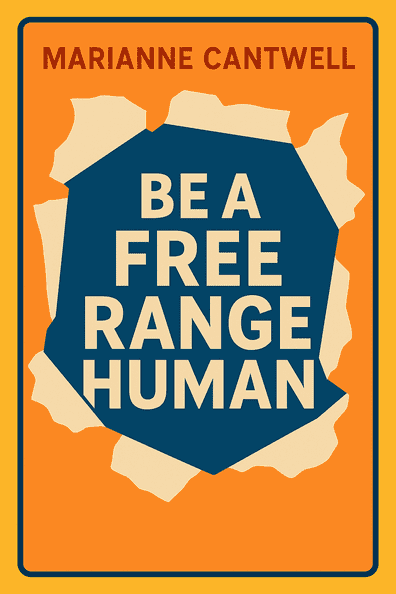
Have you ever found yourself staring out of a rain-streaked office window, watching another precious day of your life tick by? You're not alone. Marianne Cantwell's "Be a Free Range Human" has become a cult classic for the disenchanted corporate worker, selling over 50,000 copies worldwide and translated into six languages. Endorsed by productivity expert Dorie Clark and celebrated by entrepreneurs like Tim Ferriss, this manifesto for career liberation doesn't just promise escape-it delivers a practical blueprint. As the gig economy continues to expand (reaching 43% of the U.S. workforce in 2020), Cantwell's approach has proven prophetic. Whether you're dreaming of digital nomadism, craving creative fulfillment, or simply tired of trading your life for a paycheck, this book challenges the fundamental assumption that security comes from surrendering your freedom.
Глава 2
The Career Cage Myth: Why "Safe" Jobs Are Anything But
The conventional wisdom says you need a "safe job" to pay the bills and support your family. But this safety is largely an illusion. Until recently, people traded work they didn't love for reliable salaries and the promise of retirement. Today, that bargain has collapsed-your notice period (one or three months) is exactly how much security you have. Many won't retire until their seventies or eighties, if at all.
The historical context explains why we've been conditioned this way. Before the Industrial Revolution, self-employment was normal and respected. Factories changed priorities, needing compliant workers who followed rules rather than innovators. We became cogs in factories that became offices, taught to be competent and compliant. Then automation, globalization, and consolidation disrupted everything-computers now do the work of dozens, jobs move overseas, and remaining positions often cover what used to be multiple roles.
The real question isn't whether you want to feel secure, but whether you want to be secure. Jobs feel secure with their regular paychecks and solid glass buildings, while businesses seem risky. Yet going free range actually provides the lifetime security employees imagine they have-until they suddenly realize they don't. Jobs are risky (being dependent on just one client-your employer), put someone else in control of your life, and can simply suck as you abdicate choice over your daily activities.
Free range businesses require no funding or debt, can start for the cost of a few dinners out, are based on your personality and what you love, and remain playful and flexible. The common belief that most small businesses fail is misleading-Barclays estimates only 12% of businesses close due to financial stress in the first year. Many "failures" are simply people changing direction or taking better opportunities.
Глава 3
One Life: Why This Matters Now More Than Ever
Three weeks after leaving her teens, Cantwell's mother died from cancer, leaving her with a powerful awareness of life's brevity. Across her laptop are the words "One life, baby. One life"-a daily reminder of what's truly at stake. We need to stop pretending we have 300 years to live. "Someday" is code for never, and "one day" is the path to taking dreams to the grave.
There will never be a perfect time to make changes-everyone feels too old or too young, too poor or too well-paid, too attached or too single, and certainly too busy. There are no second chances except the one you give yourself starting today.
This urgency isn't about recklessness but about recognizing the true cost of inaction. When we defer our dreams to some hypothetical future, we're gambling with the most precious resource we have-time. The pandemic has only heightened this awareness for many, as we've witnessed how quickly circumstances can change and how fragile our carefully constructed plans can be.
The question isn't whether you can afford to make a change, but whether you can afford not to. What would you do differently if you truly embraced the reality that you have only one life? How would your priorities shift? What risks would suddenly seem worth taking?
Глава 4
Doing What You Love: The Foundation of Free Range Success
Doing what you love isn't a luxury-it's the starting point of any free range life. We're often told passion is separate from success or earning good money, but the reality shows otherwise. As Steve Jobs said, "The only way to do great work is to love what you do." Paul Graham notes "it's hard to do a really good job on anything you don't think about in the shower."
Even Tim Ferriss, who advocates for minimal work hours in The 4-Hour Workweek, built his success around his passion for optimizing physical performance. Doing what you love isn't just the point of going free range-it's your route to success. Without genuine passion, even the cleverest business ideas get abandoned when challenges arise.
The key mistake people make when brainstorming ideas is trying to find something both attractive and feasible simultaneously. This approach kills creativity before it can flourish. Professor Richard Wiseman explains that your methodical, critical mind (the conscious brain) is like a loud man in a room, while your creative (unconscious) mind is the quiet, smart one with the best ideas-but it backs down when criticism starts.
The solution is a two-step strategy: First, nail down what you truly want without judgment; second, figure out what works practically. This separation allows your creative mind the space to dream big before your practical mind starts evaluating feasibility.
Consider Melissa Morgan, who transformed from a well-paid education professional into "Ms Cupcake"-a vegan cupcake entrepreneur with a distinctive 1950s housewife persona. Despite having no chef training, business experience or funding, she pursued her dream by starting small-making cupcakes for office events and parties while still employed. She perfected her recipes based on feedback, educated herself on business requirements, and eventually opened a market stall. Within a year, she had thousands of loyal fans, opened a self-funded shop (profitable from day one), received offers from three publishers, and attracted TV opportunities.
Глава 5
Creating Your Perfect Career When You Want to Do Everything
For those who struggle with multiple interests and can't choose just one path, Cantwell challenges the "one thing myth"-the belief that we must select a single career for life. She compares this to wearing the same outfit every day forever, calling the concept "totally bonkers." Instead, Free Range Humans create bespoke careers that incorporate multiple passions.
Perfect-fit careers aren't found but created from scratch to suit your uniqueness. Cantwell shares how she transformed her coaching style by embracing her natural feisty personality rather than conforming to conventional coaching norms. By "coming out as herself" with more direct strategies and straight talking rather than passive listening, she became happier and attracted more clients.
Portfolio careers allow you to get paid for multiple activities rather than squeezing all interests into one solution. Carla Watkins transitioned from corporate finance to a varied career including web design, stationery subscription boxes, burlesque teaching, mermaid experiences, and photography. The beauty of portfolio careers is flexibility-you can add or remove strands as interests evolve without undergoing major career changes.
Frank Mason enjoys being "openly multi-dimensional" as an HR consultant, photographer, coach and school governor while earning more and working less. Becoming a Free Range Human doesn't mean choosing one business forever. As Barbara Winter says, "You're choosing for this year's version of you, not the 10 years in the future version." The free range approach teaches you to build a flexible vessel for your life, launching whatever interests you and editing your business as you grow.
The key is setting a general direction while correcting details along the way, creating a bespoke career that evolves with you rather than squeezing yourself into someone else's job description. This approach acknowledges the reality that our interests and passions naturally evolve over time, and our work should have the flexibility to evolve with us.
Глава 6
Discovering Your Superpowers: Strengths in Disguise
Cantwell challenges readers to recognize their unique strengths rather than focusing on weaknesses. She argues that the traditional emphasis on becoming an "all-rounder" by improving weaknesses is counterproductive for free range humans. Instead, she encourages identifying and leveraging natural talents-things that feel easy and energizing rather than draining.
Mediocrity comes from suppressing your greatest strengths while trying to be someone you're not. What feels "too easy" often indicates you're in flow with your natural talents. Cantwell distinguishes between skills (learned abilities) and strengths (innate qualities that energize you), illustrating this with Jill and Dave-both skilled presenters, but only Jill has public speaking as a strength since she feels energized rather than drained afterward. People often overlook their most valuable strengths precisely because they come naturally and don't feel like "real work."
Even more powerfully, perceived weaknesses often mask unique strengths placed in the wrong context. Cantwell shares how her own tendency to constantly suggest changes was considered a weakness in a maintenance-focused job but became a highly valued strength in consulting. Someone who "can't focus on one thing" might actually possess valuable strengths as a fast-moving, adaptable, big-picture thinker-perfect for brainstorming sessions.
To transform weaknesses into strengths, Cantwell provides a four-step process: First, list five perceived weaknesses. Second, identify the underlying personality trait behind each weakness. Third, identify two situations where each trait would be advantageous. Finally, name the hidden strengths these "weaknesses" were masking.
There are two approaches to leverage strengths in creating a free range career. First, "Make it yours" by infusing your unique strengths into any business idea-five different people would run a pet-care company in completely different ways based on their strengths. Second, "Create value by being yourself" by recognizing that what comes easily to you is difficult for others. Rachel Papworth transformed her "embarrassing" love of decluttering into a successful professional organizing business. As Einstein said, "Everyone is a genius. But if you judge a fish on its ability to climb a tree it will spend its whole life believing it is stupid."
Глава 7
Taking Action: Why Projects Beat Planning
This action-focused approach emphasizes that thinking alone won't reveal your perfect path-you need to take concrete steps. Cantwell contrasts Benny Lewis's immediate action (launching his language blog within 24 hours) with the common trap of endless research and analysis paralysis.
Contrary to what most believe, humans often make better decisions with less information. Cantwell cites a study showing doctors made worse back pain treatment decisions when given detailed MRI scans that introduced misleading "red herrings." Our conscious brains simply can't process large amounts of information simultaneously-"If you can't see the woods for the trees, the answer isn't to add more trees."
Instead of endless research, Cantwell advocates for "free range projects"-small, practical experiments that test ideas in the real world. She introduces two types: Play Projects (to discover if you enjoy doing something) and Test Projects (to determine market viability). Using Ms Cupcake as an example, Cantwell shows how starting with small steps like sharing baked goods at the office eventually led to a successful business. She shares her own Play Project experience with baking, which taught her that while she enjoyed creating brands and experiences, she didn't want to "fiddle around with frosting for six hours." This hands-on approach taught her more in days than 18 months of dreaming and researching.
John Williams, author of "Screw Work, Let's Play," offers a five-step process for your first Play Project: 1) Choose something exciting; 2) Make it completable within 30 days maximum (Cantwell suggests one week for procrastinators); 3) Produce something tangible at the end; 4) Schedule it in (committing to 30 minutes three evenings a week); and 5) Start immediately while staying curious about your reactions. The goal is to discover what genuinely excites you-not mild interest, but a "Woah I love this" feeling that indicates you've found something worth pursuing.
Self-described planner Nikki Vivian found the mini-projects approach transformative. Instead of planning until perfect (which often meant doing nothing), she tested resume writing and coaching services alongside her day job. By getting into motion, she discovered what she actually liked, refined her services, increased prices, and eventually built enough momentum to leave her job. Today she enjoys a free range portfolio including writing, editing and coaching-living the "ideal day" she once only dreamed about, with control over her schedule, finances, and family time.
Глава 8
The Free Range Business Toolkit: Five Models That Work
Most people seeking to escape traditional careers default to familiar ideas like opening cafes, bookshops, or B&Bs-not because these businesses truly match their skills, but because they imagine these ventures deliver freedom and fulfillment. The reality often involves hard work, location constraints, and financial struggles. Cantwell expands your options by introducing five free range business types that offer better paths to the lifestyle you actually want without requiring significant startup capital.
Services-where you're paid for your time or tasks-are the simplest businesses to start. These include web design, therapy, coaching, speaking, virtual management, accounting, photography, and consulting. While conventional wisdom suggests your earnings are limited by available hours, creative packaging can dramatically increase income. Instead of charging hourly, create branded packages with fixed prices (like a $500+ "Style Springclean" instead of $100/hour styling sessions). Working with groups rather than individuals can multiply your earnings for the same time investment.
Virtual products cost almost nothing to create but can be sold repeatedly online. These information or motivation products-delivered through text, audio, or video-allow you to reach more people without being physically present. For example, instead of repeatedly teaching the same public speaking tips to individuals, create a "Fearless Public Speaking" downloadable course. This provides steady income between live sessions and can serve as an entry point to higher-priced offerings.
The advertising model involves creating content that attracts an audience, then monetizing through ads or promotional space. Examples include Emma and Ollie who earn from YouTube ads on their nursery rhyme animations channel, and Dom and Rob who built Escape the City from a free blog into a community of 450,000 people, initially making money from employers paying to post job ads.
Physical products involve selling tangible items-from handmade crafts to commissioned or resold goods. Rachel Winard, a former attorney, now makes a living selling handmade soap through her online shop. Phil, a photographer, built a side business selling glass jewelry boxes that grew to $15,000 monthly without him even designing the product.
Events and experiences range from conferences to retreats, networking groups to learning adventures. They work well for natural connectors who love bringing people together. Income comes either from ticket prices (high-end events) or through sponsorships and upselling deeper offerings to engaged participants.
Many free rangers combine multiple approaches for variety and stability. Connie Solera quit her job to run Dirty Footprints Studios, offering virtual products (pre-recorded workshops), services and experiences (live art courses and desert retreats), and physical products (her own artwork).
Глава 9
The Three Free Range Styles: Finding Your Natural Path
When it comes to attracting clients without expensive advertising or pretending to be someone you're not, your approach should align with who you are naturally. Despite personalizing what you do and how you present yourself, many people abandon this personalization when trying to bring in clients. The common one-size-fits-all business strategies often fail because they don't account for individual styles. Your "Free Range Style" determines which client attraction methods will work naturally for you.
The three Free Range Styles determine where clients and income naturally come from for different personality types:
Attractors are magnets whose brand or name draws people in without direct connection. They're visible, using story and presentation to make impact. Even without an established presence, they naturally communicate ideas in compelling ways. As an Attractor (Marianne's style), income comes from people being drawn to your products through your brand visibility. Success requires clear external communication, purposeful presence, and a direct path from interest to purchase. You can't hide behind certifications or connections-your magnetic pull is what matters.
Connectors thrive through relationships and conversation. Unlike the magnet-like Attractor, Connectors create movement through relationships. Often extroverted, they initiate contact naturally and make connections effortlessly. Their income comes from working with established brands or leveraging relationships to build their own following. Selina Barker, a Connector, built her thriving coaching career through conversations. "My superpower is chatting," she explains, generating income through relationships and partnerships rather than a traditional following. Connectors need motion, projects to discuss, and collaborative opportunities. Working alone is their kryptonite.
Trusted Persons often introverted, don't need conventional branding or following. Their income comes when people trust their expertise and personal relationship. They excel through qualifications and quiet, deep one-on-one interactions. Jeanne, a Trusted Person, initially struggled by trying to operate like an Attractor with websites and funnels. When she shifted to her natural style-focusing on individual conversations, demonstrating expertise, and collecting testimonials-she quickly replaced her corporate income. Trusted Persons thrive on expertise, referrals, and one-on-one interactions that build confidence in their abilities.
Understanding your Free Range Style helps you choose strategies that work with your natural tendencies rather than against them. This alignment reduces friction and resistance, making your business feel more authentic and sustainable.
Глава 10
Standing Out By Being More You: The Power of Authenticity
Standing out isn't about screaming for attention or using tricks. Many businesses try to differentiate themselves by simply doing something "a bit different from the crowd"-like a teenage Cathy who defined her style only in opposition to her friends' choices. This approach never creates true distinctiveness.
The 1%/100% model shows how small differences create large impact. You don't need to be radically different-just find your natural 1% difference that resonates with your target audience. This difference should come from something your competitors don't prioritize, and should authentically reflect who you are. Standing out isn't a marketing gimmick-it's about amplifying what makes you naturally different. Whether you're more approachable, efficient, blunt, or warm-own it as your superpower.
There are multiple versions of you that emerge each day-serious, playful, analytical, irreverent-and all are authentic. But a great personal brand means taking one aspect of your personality and "putting it on speed." Instead of hiding what makes you different, own it. This often means transforming what you see as weaknesses into advantages.
Luke Milton exemplifies authentic branding. As a former Australian rugby player starting a personal training business, he could have followed the serious fitness industry trend. Instead, he embraced his Aussie love of jokes and camaraderie, creating "Training Mate"-fitness classes with names like "Thunder Down Under," featuring a kangaroo painted on the wall and instructors cracking jokes during intense workouts. By being authentically himself rather than putting on a serious facade, Luke built a thriving community in LA and Sydney, became one of the most booked workouts in town, and even landed on television as a celebrity trainer.
Zoe Hewett discovered that when she stopped trying to be "polished" in interior design and embraced her colorful style and hand-drafted plans (versus industry-standard CAD), she attracted clients who wanted exactly that uniqueness, leading to awards, press coverage, and workshops.
Your brand encompasses every experience people have with you-your name, what you say, how you say it, what you offer, how you offer it, and who your "people" are. Great free range branding puts what you have to offer on the outside so people "get" you before they even buy from you.
Глава 11
Escaping the Career Cage: Your Practical Exit Strategy
"How can you throw away everything you've worked for?" people might ask when you're thinking of quitting. Cantwell has a different question: "How can you throw away your life?" That you invested time and money in a direction that no longer suits you is not a reason to go further in that wrong direction. This is your one life. Don't throw it away.
Start thinking of yourself as a Free Range Human with one client: your employer. You're working with this "client" as part of your own plans, a funding source for your goals. Practice acting free range while still employed-work from cafes occasionally if possible, vary your commute route, or simply start setting boundaries. Say "no" politely but firmly to unreasonable requests. Hold your ground without getting defensive. Every time you take such actions, you're building your free range muscle and reminding yourself you're not a career-cage victim anymore.
Make sure every day you stay contributes to your exit-whether improving finances, clarifying ideas, or building your side business. Define your quitting criteria: Where do you want your business to be when you leave? How will you make time to apply the strategies from this book? What help might you need before moving forward? Determine how much money you need in reserve and set up an automatic transfer to a Free Range Freedom Fund on each payday.
Even perfect escape plans can go awry. When Cantwell was set to go part-time, the job became unbearable and she resigned immediately-before being fully ready and during a recession. During her notice period, she built her website, started Instant Status steps, and made Faststart connections. She added consulting in her old field to smooth the transition financially.
Looking at your goals, determine how long it will take to reach your leaving criteria. If it's too long to wait, revise what you think you need-it's usually possible to start with less. Then commit by marking your leaving date in your calendar. When that date arrives, honor it no matter what. As Danielle La Porte says, if you pass your "no matter what" date without seizing it, "you start to die. You betray yourself, and that's the worst kind of betrayal."
The liberation of freedom is wonderful-waking up later, no commuting, working when you want. But fear will strike. Every free ranger experiences this slump when they realize they're truly in charge of their life. You'll question yourself, browse job ads, and be tempted by offers that would take you off your path. Don't get into a habit of saying "yes" out of fear. Giving up "good enough" to get the great is when things really change.
Глава 12
You're Not Building a Business-You're Creating a Life
At the heart of the free range philosophy is a profound truth: this journey isn't merely about constructing a business-it's about crafting a life that reflects your deepest values and aspirations. Cantwell's approach is built on five fundamental lessons: 1) Be wonderful-care genuinely, don't hold back, assume the world is good; 2) Learning is better than receiving-education is the ultimate freedom and best investment; 3) Be your own boss-do well because you want to, not because you're told to; 4) Inhabit your quirks-embrace what makes you different instead of trying to fit in; 5) You'll win! Of course you will-have the confidence to believe you deserve success.
The free range journey isn't easy-it requires courage to step away from conventional paths and create something uniquely yours. You'll face doubters, internal resistance, and practical challenges. But the alternative-spending your one precious life in a career cage that doesn't fit who you truly are-is far more costly.
Susan Sjolund transformed from a high-flying PR professional trapped in packed commutes and office summers to a successful free range entrepreneur in just 10 weeks. Tired of corporate life but uncertain what to do next, Susan knew she wanted control over where, when and how she worked while maintaining her lifestyle. Through focused coaching, Susan quickly figured out what she wanted to do, launched her business, and landed her first major client-designer Nicky Haslam. With just a self-created WordPress website, a friend-designed logo, and her own copy, Susan billed approximately $50,000 in her first six months. She acknowledges the journey was "s**t scary" but advises readers that taking action is the only way to avoid that nagging "what if" voice forever.
Jon Morrow's story provides perhaps the most powerful testament to the free range philosophy. After being hit by a car going 85mph and suffering severe injuries, Jon spent three months in recovery contemplating his life. Dissatisfied with his direction, he quit his job and started a blog. Within two months, his blog received 2,000 visitors daily and was nominated for best business/money blog. As someone with spinal muscular atrophy who can't move from the neck down, Jon faced medical expenses of $127,000 annually in the US. Tired of government control limiting him to $700 monthly for living expenses, he quit Medicaid, moved to Mexico, and started a business helping people. He mentored writers and developed social media strategies, earning enough to support himself, his mother, his father, and nursing staff.
Jon's message is clear: if he could accomplish all this despite his limitations, you can achieve your dreams too, no matter how difficult the journey might be. You're not just building a business-you're creating a life. And that takes guts. Go for it, tiger.