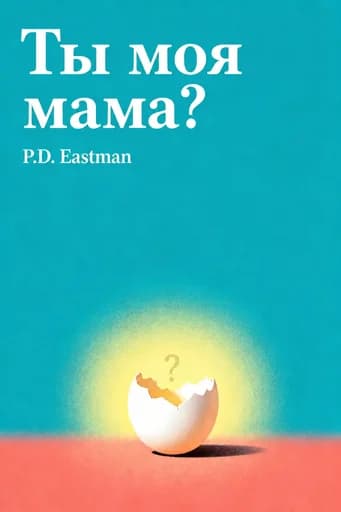
A baby bird's quest to find his mother captivates generations with simple yet profound storytelling. This 50-million-copy bestseller, honored among the "100 Greatest Books for Kids," transforms basic vocabulary into emotional resonance. What makes this 1960 classic still comfort readers who've experienced loss?
Philip Dey Eastman (1909–1986) was a celebrated children's book author and illustrator best known for Are You My Mother?, a timeless picture book that has captivated young readers since 1960.
Born in Amherst, Massachusetts, Eastman began his career as an animator and storyboard artist at Walt Disney Studios and Warner Bros., where he helped develop the beloved character Mr. Magoo.
During World War II, he served in the Army Signal Corps Film Unit under Theodor Geisel (Dr. Seuss), who later invited him to write for the Beginner Books series at Random House.
Eastman's work in animation shaped his gift for visual storytelling, bringing warmth and humor to themes of family, belonging, and childhood curiosity. His other beloved titles include Go, Dog. Go!, Sam and the Firefly, and The Best Nest. Eastman's books have sold over 50 million copies worldwide, making him one of the most cherished authors in early childhood literature.
Are You My Mother? is a classic children's picture book about a newly hatched baby bird who searches for his mother after she leaves the nest to find food. The hatchling asks various animals and objects—including a kitten, dog, cow, car, boat, airplane, and steam shovel—if they are his mother. The story follows his determined quest until he's reunited with his mother, teaching young readers about perseverance, identity, and the special bond between parent and child.
Are You My Mother? is ideal for children ages 3 to 7, making it perfect for preschoolers, kindergarteners, and early readers. Parents, teachers, and caregivers will find it valuable for introducing concepts of family, separation anxiety, and problem-solving. The book's simple vocabulary and repetitive structure make it excellent for beginning readers developing literacy skills. It's also meaningful for any child experiencing questions about belonging, identity, or temporary separation from parents.
Are You My Mother? is absolutely worth reading—it's been recognized among the "Teachers' Top 100 Books for Children" and named one of the "Top 100 Picture Books" of all time by School Library Journal. Published in 1960, this Beginner Books classic has remained relevant for over six decades because it addresses universal childhood emotions with humor and heart. The simple yet engaging story, combined with Eastman's charming illustrations, makes it a timeless choice that continues to resonate with multiple generations of families.
P.D. Eastman (Philip Dey Eastman, 1909-1986) was a renowned children's author and illustrator who worked alongside Dr. Seuss in the Beginner Books series. Before writing children's books, Eastman worked at Walt Disney Studios, Warner Brothers Cartoons, and helped create the character Mr. Magoo at United Productions of America. He co-wrote the Oscar-winning animated short "Gerald McBoing-Boing." His other beloved children's books include Go, Dog. Go! and Sam and the Firefly, all characterized by simple language and engaging illustrations.
Are You My Mother? teaches children about perseverance, identity, and unconditional parental love. The baby bird's determined search despite obstacles demonstrates persistence and problem-solving skills. The story reassures young readers that even when separated from their parents temporarily, they will be reunited. It also introduces the concept of asking questions to solve problems and helps children understand differences between living creatures and inanimate objects. Ultimately, the happy reunion reinforces that parental bonds are special and enduring.
In Are You My Mother?, a mother bird leaves her egg to find food, but the baby hatches while she's gone. Unable to fly, the hatchling walks around asking a kitten, hen, dog, and cow if they are his mother—each says no. Growing desperate, he questions a car, boat, and airplane before climbing onto a large steam shovel, convinced it's his mother. The machine "snorts" and the bird realizes his mistake. The steam shovel then drops him safely back into his nest just as his real mother returns for a joyful reunion.
The baby bird asks the steam shovel if it's his mother because he's desperate and hasn't yet learned to distinguish between living creatures and machines. By this point in his search, he's exhausted all nearby animals and is grasping at anything large enough to be a mother figure. The steam shovel represents the climax of his increasingly absurd search, showing how far determination can take someone. When it "snorts," the bird famously declares "You are not my mother! You are a SNORT!"—a humorous moment that delights young readers.
Are You My Mother? is appropriate for children ages 3 to 7 years old, making it perfect for preschool through early elementary grades. The simple vocabulary, short sentences, and repetitive structure align with the Beginner Books series designed for emerging readers. Toddlers enjoy it as a read-aloud, while kindergarteners and first-graders can practice reading it independently. The story's emotional themes—separation and reunion—resonate with young children's developmental stages, particularly those experiencing separation anxiety or starting school.
Are You My Mother? became a classic because it combines simple, accessible language with deeply relatable emotions that resonate across generations. Published in 1960 as part of Dr. Seuss's Beginner Books series, it addresses universal childhood fears about separation and belonging with gentle humor. P.D. Eastman's charming illustrations perfectly complement the repetitive, rhythmic text that helps beginning readers build confidence. Its recognition by the National Education Association and School Library Journal confirms its enduring educational and entertainment value.
Are You My Mother? helps children cope with separation anxiety by showing that temporary separations from parents have happy endings. The baby bird's mother returns, demonstrating reliability and reinforcing that parents come back. The story normalizes feelings of confusion and fear when separated from caregivers while showing problem-solving strategies. The humorous elements—like mistaking a steam shovel for mother—make the anxiety less frightening. Many parents and educators use this book to prepare children for situations like starting daycare, preschool, or staying with relatives.
In Are You My Mother?, the baby bird encounters a progression of increasingly unlikely "mothers." He asks a kitten (who says nothing), a hen, a dog, and a cow if they are his mother—all living creatures who respond "no." As his search grows desperate, he questions inanimate objects: an old car, a boat, and an airplane (which don't respond). Finally, he climbs onto an enormous steam shovel, calling it "Mother" before discovering it's actually "a SNORT." This sequence teaches children about categorization and the differences between animals and machines.
Are You My Mother? ends with a heartwarming reunion between the baby bird and his mother. Just as the hatchling cries out for help while stuck on the steam shovel, the machine drops him safely back into his nest. His mother returns from her food-gathering trip at precisely that moment. The two are delighted to be together again, and the baby bird excitedly recounts his adventure, explaining all the things that were not his mother. He concludes by telling her what she really is—a bird—affirming his understanding of identity and belonging.
Почувствуйте книгу через голос автора
Превратите знания в увлекательные, богатые примерами идеи
Захватите ключевые идеи мгновенно для быстрого обучения
Наслаждайтесь книгой в весёлой и увлекательной форме
"Are you my mother?"
"I am not your mother," said the kitten.
"Are you my mother?" said the hen.
"I am not your mother," said the dog.
"I am not your mother!" said the cow.
Разбейте ключевые идеи Are You My Mother? на понятные тезисы, чтобы понять, как инновационные команды создают, сотрудничают и растут.
Погрузитесь в Are You My Mother? через яркие истории, превращающие уроки инноваций в запоминающиеся и применимые моменты.
Задавайте любые вопросы, выбирайте свой стиль обучения и создавайте идеи, которые действительно вам подходят.

Создано выпускниками Колумбийского университета в Сан-Франциско
"Instead of endless scrolling, I just hit play on BeFreed. It saves me so much time."
"I never knew where to start with nonfiction—BeFreed’s book lists turned into podcasts gave me a clear path."
"Perfect balance between learning and entertainment. Finished ‘Thinking, Fast and Slow’ on my commute this week."
"Crazy how much I learned while walking the dog. BeFreed = small habits → big gains."
"Reading used to feel like a chore. Now it’s just part of my lifestyle."
"Feels effortless compared to reading. I’ve finished 6 books this month already."
"BeFreed turned my guilty doomscrolling into something that feels productive and inspiring."
"BeFreed turned my commute into learning time. 20-min podcasts are perfect for finishing books I never had time for."
"BeFreed replaced my podcast queue. Imagine Spotify for books — that’s it. 🙌"
"It is great for me to learn something from the book without reading it."
"The themed book list podcasts help me connect ideas across authors—like a guided audio journey."
"Makes me feel smarter every time before going to work"
Создано выпускниками Колумбийского университета в Сан-Франциско

Получите резюме книги «Are You My Mother?» в формате PDF или EPUB бесплатно. Распечатайте или читайте офлайн в любое время.
Have you ever felt lost in a world too big to comprehend? This is precisely how our story begins-with a tiny baby bird who tumbles into existence only to find himself completely alone. His mother, anticipating his hunger upon hatching, has flown off to find food. In her absence, the egg rocks back and forth until-crack!-a confused little bird emerges, blinking in the sunlight. His first emotion isn't joy but bewilderment. Where is the one who should welcome him into the world? With no concept of what his mother looks like or even what kind of creature she might be, he makes a brave decision that will define his journey: if his mother won't come to him, he'll go find her himself. Unable to fly but perfectly capable of walking, he carefully climbs down from his nest and sets off with nothing but instinct and hope to guide him. This simple beginning launches a profound exploration of identity, belonging, and the universal quest to find where-and to whom-we truly belong.
Our determined baby bird first encounters a kitten who responds to his hopeful "Are you my mother?" with nothing but an unblinking stare. This silence creates the first real heartbreak-not rejection, but non-acknowledgment. When seeking connection, isn't silence sometimes the most painful response? Undeterred, the bird approaches a hen who directly states, "No, I am not your mother." Though disappointing, this clear answer provides something the kitten's silence didn't-clarity. Sometimes a definitive "no" serves us better than ambiguity. With each encounter-the dog who explains "I am a dog," the cow who asks "How could I be your mother?"-our protagonist gains not just rejection but education. He's learning through contrast, building an understanding of what his mother isn't, which will help him recognize what she is. What's remarkable is how each "no" only strengthens his determination. His persistence reflects the primal nature of the connection he seeks-too important to abandon despite repeated rejection.
As his search intensifies, our baby bird's concept of "mother" expands dramatically. He begins considering mechanical objects in his world. A red car speeds past, a boat floats by, and a plane soars overhead-all ignoring his cries of "Here I am, Mother!" There's something moving about this small creature calling to things vastly larger than himself. The image captures his essential predicament-small in a big world, lost and seeking connection, his voice barely audible against the world's noise. His desperation peaks when he encounters a massive steam shovel-"the Snort"-which he mistakenly declares, "You are my mother!" This represents the nadir of his confusion-mistaking something completely unsuitable for the object of his deepest desire. Haven't we all been so desperate for connection that we've sought it where it couldn't exist? Reality quickly asserts itself when the steam shovel's movements become threatening. As its giant metal jaws move toward him, clarity strikes: "Oh no, you are not my mother. You are a Snort!"
Just when all seems lost, fate intervenes unexpectedly. The steam shovel's bucket scoops up our tiny protagonist, lifting him higher than his original nest. "Help!" he cries against the roaring engine. "I want to go home! I want my mother!" This crisis brings perfect clarity. For the first time, he articulates what he truly wants - not just any mother, but his mother, and the safety of home. Sometimes danger helps us understand what matters most. Then comes the miraculous turn - the steam shovel's coincidental movement brings the bird back toward his nest. As the machine's arm extends, it deposits him precisely where he began his journey. What seemed like mortal danger becomes the vehicle of his return. Isn't it curious how life works this way? The most threatening thing can lead us back to safety. The journey away often becomes the journey back. The baby bird's greatest fear becomes the turning point making reunion possible. In perfect timing, just as he returns to his nest, his mother arrives from her food-gathering expedition. He has traveled far only to discover that what he sought was always coming back to him.
When the mother bird sees her baby, she asks: "Do you know who I am?" This reversal is significant-throughout his journey, the baby bird questioned others, but now his mother asks him to identify her, suggesting recognition must flow both ways for true connection. The baby's response demonstrates growth: "Yes, I know who you are." He defines her first by negation-listing all the things she is not: "You are not a kitten or a hen or a dog. You are not a cow or a boat or a plane. You are not a Snort!" Each negation represents a lesson from his journey. Then comes positive identification: "You are a bird, and you are my mother"-acknowledging both category and relationship, recognizing their shared nature and specific bond. This recognition brings the story full circle. The nest, initially a place of absence, becomes a site of reunion. The driving question receives its answer, and what makes this resolution satisfying is that it honors both journey and destination.
Throughout his journey, our baby bird exhibits remarkable persistence. From the moment he emerges alone from his shell, he demonstrates a determination that carries him through multiple disappointments and potential dangers. Despite facing rejection or non-response repeatedly, he never gives up or accepts a substitute parent. Instead, he continues his search, maintaining his question-"Are you my mother?"-as a consistent refrain. This persistence speaks to something fundamental about identity and belonging. The baby bird intuitively understands that there's a specific place for him in the world, a defining relationship he won't settle without finding. The story also shows how persistence involves adaptation. As his search progresses, the baby bird modifies his approach-walking becomes running, questions become declarations, living creatures give way to inanimate objects. His determination isn't rigid-it's continuing toward a goal while adjusting methods.
This seemingly simple tale reveals profound truths about identity formation. The baby bird's journey demonstrates how we often learn who we are through contrast-discovering who we are not before understanding who we are. Each "no" he receives isn't merely rejection but clarification that narrows his search. The story's resolution offers insight into the nature of belonging. When the baby bird finally recognizes his mother, it's a moment of mutual recognition-she sees him as her child, and he sees her as his mother. This reciprocity forms the essence of true belonging-not just finding your place but being acknowledged in it, being claimed as well as claiming. This explains why this simple story resonates across generations. In our often disconnected world, it reminds us that persistence in seeking connection is worthwhile. It assures us that even after encountering those who cannot claim us, there exists a place where we belong-a place of mutual recognition and homecoming. The baby bird's journey mirrors our own quest for identity-sometimes confusing, occasionally dangerous, but ultimately rewarding when we find where we truly belong.