Глава 1
The Sobering Truth: How Alcohol Hijacks Your Mind and Body
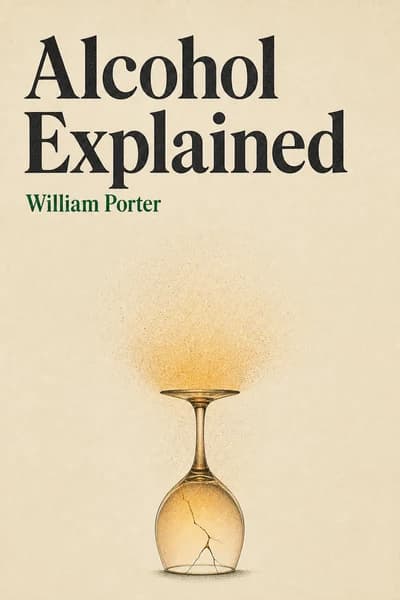
William Porter's "Alcohol Explained" arrived like a lightning bolt in a culture saturated with drinking. While most recovery literature focuses on spiritual transformation or willpower, Porter's analytical breakdown of alcohol's physiological and psychological effects has quietly become a phenomenon. The book has garnered cult-like status among those seeking freedom from drinking, with celebrities like Russell Brand and Lily Allen citing its influence in their sobriety journeys. What makes this book revolutionary is its complete demystification of alcohol's effects - not through moralizing but through meticulous explanation of how this common drug actually works on our bodies and minds. In a world where alcohol marketing spends billions convincing us drinking is essential to relaxation and socialization, Porter's clear-eyed analysis offers something rare: the unvarnished truth about what's actually in your glass.
Глава 2
The Chemical Betrayal: How Alcohol Tricks Your Brain
Alcohol is fundamentally an anesthetic and depressant - this isn't opinion but medical fact. While it temporarily numbs tiredness and pain, our bodies don't passively accept this chemical invasion. The brain actively develops countermeasures, becoming increasingly efficient at neutralizing alcohol's effects through repeated exposure.
Think about your morning coffee routine. Regular drinkers feel groggy until they've had their first cup, though they once woke naturally alert. Their brains stopped producing stimulants, instead relying on the external source. Alcohol works similarly but in reverse - our bodies react to its depressant effects by increasing sensitivity in affected brain areas and releasing stimulants and stress hormones as counterbalance.
This explains why tolerance builds over time. The legendary actor Richard Burton eventually consumed three to four bottles of spirits daily - an amount that would kill someone new to drinking. This natural defense mechanism becomes more efficient with continued exposure, creating a problematic cycle: when alcohol wears off, we're left with heightened sensitivity and excess stimulants, causing anxiety and depression. The more we drink, the worse these after-effects become.
What we call "drinker's remorse" isn't merely regret over embarrassing behavior but primarily a chemical imbalance. When depressed from drinking, we focus on life's negatives, creating a downward spiral. Ironically, more alcohol temporarily relieves this chemically-induced depression, creating the illusion that drinking helps when it actually caused the problem.
This explains why even successful, wealthy people develop drinking problems - no amount of external success can overcome alcohol's chemical assault on our emotional well-being. The only permanent solution is stopping completely, allowing the body to rebalance naturally.
"But I only drink to relax after a stressful day," you might say. The cruel irony is that the stress you're trying to escape is often created by previous drinking sessions. You're not treating stress - you're treating withdrawal from your last drink.
Глава 3
The Subconscious Trap: How Your Brain Learns Addiction
Our subconscious comprises 83% of brain function, processing most of the 2,000 bits of information we receive every second. This powerful system works through pattern recognition, building responses based on repeated experiences that eventually become "instinctive" reactions. These aren't supernatural instincts but logical conclusions drawn from personal experience.
The subconscious is extraordinarily powerful, requiring conscious effort to override. It builds through repetition - the more something happens with the same result, the more deeply ingrained it becomes. Crucially, we can't consciously recall or analyze the individual experiences that created these patterns.
This explains a fundamental aspect of alcohol addiction: every drink causes initial relaxation followed by anxiety. While one drink produces only minor, nearly imperceptible effects, the subconscious registers this pattern. Over thousands of drinking episodes, it forms the conclusion that alcohol relieves anxiety. Since the relief comes immediately after drinking but the anxiety develops more gradually later, our subconscious misses the critical connection that alcohol actually caused the anxiety in the first place.
The timing between consumption and effect is key to addiction formation. The faster a substance enters the bloodstream, the quicker addiction forms. Methods from fastest to slowest are: injection, smoking, snorting, and swallowing. Alcohol, typically swallowed, takes longer to become addictive, though factors like drinking on an empty stomach or consuming higher-proof spirits can accelerate the process.
Even when we logically understand alcohol's harmful effects, these subconscious triggers persist, especially during times of stress. The longer someone has been drinking, the more deeply embedded these triggers become. This explains why even after years of sobriety, a stressful situation can trigger powerful cravings - your subconscious still believes alcohol is the solution to discomfort.
"But I can take or leave alcohol," you might think. Consider this: if you've been drinking for years, your subconscious has logged thousands of instances where alcohol provided immediate relief from discomfort. This learning doesn't disappear with conscious knowledge - it remains ready to activate whenever you feel similar discomfort.
Глава 4
The Spiral of Craving: When Your Mind Becomes Your Prison
Craving forms the core of addiction - an overwhelming desire that begins when we want something we can't have. Rather than abandoning the idea, we obsess over it, creating a mental conundrum where we can't concentrate, relax, or enjoy anything else.
This creates only two possible outcomes: give in and have what we crave, or continue suffering. If we give in, we immediately resolve the mental distress and can resume normal functioning. If we resist, the experience becomes miserable and reinforces the belief that we cannot function without the craved item.
For someone who's stopped drinking, this mental process is particularly torturous. Their subconscious triggers a desire for alcohol during moments of anxiety or depression, and seeing others enjoying drinks intensifies this feeling. Even long after physical dependence ends, this psychological craving persists.
The spiral of craving transforms alcohol from a simple anxiety remedy into something perceived as absolutely necessary for life itself. When we try to stop drinking, this spiral intensifies the addiction to a new level. The subconscious learns that without alcohol, we "literally cannot function as a human being."
Importantly, while subconscious triggers are brief knee-jerk reactions, they often lead to conscious fantasizing about drinking, fully activating the craving. The good news is that craving occurs entirely in the conscious mind, giving us the power to decide whether to crave or not.
When alcohol becomes problematic, people drink not for benefits but to avoid the misery of craving - a lose/lose situation where they're utterly miserable without alcohol and only slightly less miserable with it.
"I just need willpower to resist cravings," you might think. But willpower is a finite resource that eventually depletes. The key isn't strengthening willpower but understanding that the pleasure you associate with drinking is actually just relief from discomfort that alcohol itself created. Once you truly grasp this, the craving loses its power.
Глава 5
The Relaxation Deception: Why One Drink Becomes Many
Most people drink for alcohol's relaxing, comforting effect. As a depressant and anesthetic, it numbs feelings like tiredness, stress, pain and discomfort, creating mental relaxation while simultaneously affecting physical coordination.
A crucial insight is that mental relaxation and physical intoxication run their courses at different speeds. This explains why someone can be over the legal driving limit the morning after drinking yet feel completely sober - the physical intoxication outlasts the mental relaxation effect. Most experienced drinkers won't feel drunk the morning after, though their reaction times remain impaired.
This disparity between mental relaxation and physical intoxication creates a dangerous pattern during drinking sessions. When the relaxing effect of two drinks wears off, we take two more to regain that feeling. However, the physical intoxication from the first drinks hasn't fully dissipated, so we become two drinks mentally relaxed but four drinks physically intoxicated. This accumulation continues throughout the evening.
This explains why virtually every drinker occasionally consumes too much alcohol - something that doesn't happen with coffee, tea or soft drinks. As our bodies become increasingly efficient at countering alcohol's effects, the gap between mental relaxation and physical intoxication grows, making us more likely to lose control.
"But I know my limits," you might insist. The problem is that alcohol itself impairs the judgment needed to enforce those limits. The first drink compromises your ability to make rational decisions about the second, which further impairs decisions about the third, creating a cascade of increasingly poor judgment.
Глава 6
Sleep Sabotage: How Alcohol Ruins Your Rest
Though widely accepted in medical circles that alcohol harms sleep, this remains largely unknown to the public. Many believe alcohol aids sleep because it makes you feel drowsy, but this is a dangerous misconception.
Normal sleep alternates between slow wave sleep (SWS) - deep, restful sleep - and rapid eye movement (REM) sleep, associated with dreaming. Both are essential; REM deprivation has led to death in laboratory rats, while SWS is when the body restores itself. Natural sleep cycles typically include six or seven REM cycles, leaving us refreshed upon waking.
When we drink, we typically experience only two REM cycles. Alcohol causes an unnaturally deep sleep for about five hours, lacking sufficient REM sleep. After this period - which coincides with peak alcohol withdrawal - sleep becomes fragmented. This explains why drinkers often wake about five hours after their last drink and then sleep fitfully.
The result? Even without a classic "hangover," drinkers wake unrefreshed. That "just a bit tired" feeling is actually part of the hangover. Even one drink interrupts natural sleep patterns - there is no safe amount that allows escape from alcohol's sleep-disrupting effects.
Many drinkers claim to sleep well after drinking, but quality matters more than quantity. Eight hours of alcohol-affected sleep lacks the necessary sleep cycles for proper restoration. Sleep deprivation's effects accumulate, leading to constant tiredness, decreased mental and physical capacity, irritability, overeating, and reduced exercise.
Tiredness makes us more prone to drink again, creating a vicious cycle. Alcohol temporarily alleviates exhaustion, making someone who was moments ago ready for bed suddenly want to stay up longer. This false energy masks the body's genuine need for rest.
"But I need alcohol to fall asleep," you might say. Regular drinking prevents the brain's natural sleep-inducing process. Without alcohol, sleep-promoting neurons activate and release chemicals that dampen arousal signals. The brain that relies on alcohol doesn't trigger this natural winding down. Adjusting back takes 3-5 days, and proper sleep patterns may take weeks to fully restore.
Глава 7
The Hidden Dehydration: Why Drinking Makes You Thirstier
Alcohol uniquely disrupts the body's hydration regulation system, but not in the way many believe. The body maintains approximately 70% water content, with the brain controlling reserves needed for functions like sweating and respiration. This internal "water gauge" adjusts based on environmental conditions and triggers thirst when reserves fall below necessary levels.
What alcohol uniquely does is recalibrate this gauge, making the body think it has more water than it actually does - similar to a car's fuel gauge showing "full" when the tank is half empty. This causes the body to jettison what it perceives as excess water through increased urination, expelling not just the consumed liquid but also vital reserve water.
Crucially, this miscalibrated gauge doesn't reset until the alcohol wears off. This explains why we don't feel thirsty while drinking despite becoming progressively dehydrated - the thirst mechanism isn't triggered because the body doesn't realize it lacks water. Attempts to rehydrate during drinking sessions are futile; the body won't retain water until the alcohol's effects subside and natural thirst returns.
This dehydration mechanism makes exercise after drinking particularly dangerous. Not only does the body lack necessary fluid reserves for strenuous activity, but the malfunctioning water gauge prevents warning signals (thirst, exhaustion, overheating) from activating until critical levels are reached - potentially too late.
"I'll just drink water between alcoholic drinks," you might think. Unfortunately, while drinking alcohol, your body will continue expelling what it perceives as excess water regardless of how much you consume. The only solution is waiting until the alcohol leaves your system completely.
Глава 8
The Taste Illusion: Why No One Actually Likes Alcohol
People may enjoy alcoholic drinks, but no one truly likes the taste of alcohol itself. Pure alcohol is a highly poisonous chemical that kills living cells and microorganisms - which is precisely why it's used as a preservative and sterilizing agent. For humans, its toxicity increases when metabolized to acetaldehyde, a substance so toxic that food containing equivalent amounts would be banned as a health hazard.
The human body naturally rejects poisons. Sniffing neat alcohol makes eyes water and noses run; sipping it causes retching; swallowing it induces vomiting. These are protective mechanisms, similar to how pain prevents us from touching hot surfaces.
What explains the apparent contradiction? Alcoholic beverages contain only small percentages of actual alcohol - beer around 4% (1/25th alcohol), wine about 12% (3/25th), and spirits about 40% (2/5th). The higher the alcohol content, the less palatable the drink becomes, which is why spirits are typically mixed or diluted.
The pleasant flavors in alcoholic drinks come from other ingredients: hops and barley in beer, grape juice in wine, grains and barrel aging in whiskey. These strong flavors mask alcohol's inherently repulsive taste. Alcoholic drinks are typically served cold because this reduces our ability to taste the alcohol - colder molecules move less and create fewer chemical reactions with our taste receptors. If a drink tastes unpalatable when warm, it likely contains something your body naturally rejects as poison.
With repeated exposure, our senses of taste and smell become desensitized to unpleasant flavors. This explains why experienced drinkers can tolerate stronger drinks than beginners - they've simply become less able to detect the poison their bodies naturally reject.
"But I genuinely enjoy the taste," you might insist. Try this experiment: let your favorite alcoholic beverage reach room temperature, then sip it slowly, focusing on the actual taste. What you're perceiving as "good" is likely everything except the alcohol itself.
Глава 9
Emotional Hijacking: How Alcohol Destabilizes Your Feelings
Alcohol directly impacts the limbic system - the brain's emotional center responsible for controlling emotions, behavior, and forming long-term memories. The British euphemism "tired and emotional" for drunkenness accurately describes alcohol's dual effects.
Contrary to popular belief, alcohol doesn't reveal our "true selves" by removing inhibitions. Rather, it inhibits the brain's natural emotional regulators that normally keep our feelings in check. When drinking, minor irritations can trigger disproportionate anger because the brain's natural "braking system" for emotions has been chemically disabled.
Any emotion can run unchecked when drinking - anger, sentimentality, introspection, or self-pity. People prone to certain emotions when sober become more vulnerable to those same emotions when drinking, but magnified. Anger is particularly common among drinkers due to alcohol-induced sleep deprivation (making everyone more irritable) and the anxiety that follows as alcohol wears off.
This emotional dysregulation can devastate relationships. Couples normally overlook minor irritations out of love and understanding, but alcohol removes this tolerance. Arguments occur that would never happen sober, creating lasting damage.
Each drink provides a short-term boost but ultimately makes us angrier than before, even while we think we're enjoying the "relief." This explains why alcoholics aren't the happiest people despite consuming the most "relief." The subconscious recognizes alcohol's immediate relief but fails to connect the overall increase in negative emotions that accumulates more slowly.
The drinking version of ourselves is never the real us - just a tired, irritable, overly emotional version that's unpleasant to be around. Even when alcohol amplifies "positive" emotions like humor, it's irritating to others. Long-term drinkers typically experience more negative emotions due to accumulated tiredness and poisoning.
"But alcohol helps me express myself," you might argue. Expression without regulation isn't authentic - it's dysfunction. True emotional authenticity comes from feeling your emotions fully while maintaining appropriate control over how you express them.
Глава 10
Memory Gaps and Emotional Resilience: The Hidden Costs of Drinking
Blackouts aren't periods of unconsciousness but rather periods of consciousness without memory - often involving out-of-character behavior that drinkers later regret. This phenomenon makes problem drinkers feel they're losing control or going mad, reinforcing the belief something is inherently wrong with them.
Blackouts result from alcohol preventing memories from transferring from short-term to long-term storage - not necessarily from extreme intoxication but from maintaining a certain level of intoxication over time. During blackouts, we're intoxicated enough to have depressed inhibitions and heightened emotions but often not drunk enough to pass out. We act on emotions that would normally fade quickly, doing embarrassing or reprehensible things.
Beyond memory loss, alcohol undermines our emotional resilience. A 2017 study in the Journal of Personality and Social Psychology found that people who accept their negative emotions experience fewer negative emotions overall and enjoy better psychological health. Avoiding feelings of disappointment, sadness or resentment actually causes more psychological damage than facing them.
The advice is simple: let negative feelings happen and experience them without trying to control or change them. This builds emotional resilience, just as repeatedly facing difficult situations makes them easier to handle. Our perception of good and bad is relative to our experiences. When we anesthetize negative feelings with alcohol, we never learn to face them, process them, or build resilience.
The Western expectation of constant happiness leads us to immediately remedy any discomfort, often with substances like alcohol. But experiencing unhappiness makes us emotionally stronger and more resilient. When we stop drinking, we continue living life with all its ups and downs, but develop the capacity to handle emotions naturally rather than numbing them.
"But life is hard - don't I deserve some relief?" you might ask. Yes, but alcohol only provides temporary relief while preventing the development of genuine coping skills. It's like using crutches for a minor ankle sprain - what should strengthen through use instead weakens through dependence.
Глава 11
Social Confidence and Weight Gain: Alcohol's False Promises
Our early experiences with alcohol often seem to confirm its positive effects because many start drinking as teenagers in social situations that combine enjoyment with stress. Meeting new people or approaching romantic interests creates anxiety that alcohol temporarily suppresses, providing an immediate sense of relief.
However, this benefit is illusory. In any social situation, stress naturally decreases as the event progresses, with or without alcohol. Children demonstrate this pattern perfectly - initially clinging to parents at parties, then throwing tantrums when it's time to leave because they're having fun.
When we rely on alcohol to mask shyness, we never address the root problem, instead reinforcing the belief that we can't enjoy or endure social occasions without drinking. Most people drink to aid social occasions, believing alcohol makes interaction easier. In reality, shy people remain awkward when drinking, sometimes more so while trying to hide intoxication. The only difference is appearing drunk rather than shy.
Beyond social crutches, alcohol contributes significantly to weight gain through multiple mechanisms. It stimulates appetite while simultaneously numbing the signals that tell us we're full, leading to overeating. Additionally, alcohol calories must be used immediately as they cannot be stored as fat, causing the body to convert other consumed calories directly to fat storage.
Alcohol also inhibits absorption of essential vitamins like B1, B12, folic acid, and zinc. When deficient in nutrients, our bodies trigger hunger signals even when we have sufficient calories. While drinking, we crave high-calorie foods rather than nutrient-rich ones that would satisfy our actual needs.
For men specifically, alcohol reduces testosterone, leading to increased fat, enlarged breasts, low sex drive, erectile difficulties, hair loss, decreased muscle mass, reduced bone density, and mood changes - a far cry from the macho hard-drinking image portrayed by characters like James Bond.
"But alcohol helps me socialize," you might insist. Consider that humans naturally release feel-good chemicals when socializing while relaxed - the same euphoria children experience at parties without alcohol. If you regularly drink socially, alcohol wrongly gets credit for this natural high.
Глава 12
The Progression of Addiction: How Anyone Can Become Alcoholic
Many assume alcoholism means someone who spends every waking hour drinking or who physically cannot stop, which prevents many problem drinkers from acknowledging their condition. Rather than fixating on definitions, we should understand drinking as a journey with various stages, beginning in childhood with no knowledge of alcohol, potentially ending as someone consuming alcohol every waking hour.
Alcoholism progresses through distinct phases: First, withdrawal symptoms are imperceptible, and hangovers make drinking repulsive. Second, repeated drinking through hangovers teaches the subconscious that more alcohol relieves discomfort, transforming our reaction from avoidance to craving. Third, we instinctively know alcohol alleviates previous drinking discomfort, creating stronger cravings. Finally, morning drinking leads to constant consumption where one believes life, though miserable with alcohol, is worse without it.
This progression varies dramatically between individuals - taking months for some, decades for others. Rather than viewing alcoholism as binary, we should recognize addiction develops situationally. Everyone has different views of drinking - one person's alcoholic is another's heavy drinker.
The disease theory of alcoholism claims alcoholics have a different genetic makeup that makes alcohol uniquely addictive for them but not for others. While superficially appealing, this theory collapses under scrutiny. Most significantly, alcoholism develops gradually over years, not instantly. If alcohol were truly physically addictive to those with a specific genetic makeup, addiction would manifest immediately, not after decades of drinking.
The familial patterns are better explained by cultural factors - growing up where heavy drinking is normalized increases one's likelihood of developing alcoholism. As for why recovered alcoholics can't return to moderate drinking, it's because what's been learned can never be unlearned. The subconscious connection between alcohol and relief is permanent - whether someone drinks again after one year or twenty, the mental triggers remain intact, eventually leading back to problematic drinking.
"But I can control my drinking," you might think. Many alcoholics spend years trying to find their "magic number" of drinks that will provide relaxation without negative consequences. This approach is fundamentally flawed because alcohol leaves our system, requiring constant calculation to maintain the "perfect" level. Most drinkers only have genuine choice over their first drink. After that, they face not only their original problems but also physical withdrawal and intensified cravings.
Глава 13
Freedom Through Understanding: A Better Way to Stop Drinking
The key to defeating addiction is destroying the myth that alcohol provides genuine pleasure or benefit. When analyzing idealized drinking scenarios - like that perfect beer on vacation - we can break them down into component parts. For a holiday scenario, eight of nine elements (finishing work, satisfaction of accomplishment, rest, starting a holiday, travel preparations, warm balcony, being freshly showered, wearing nice clothes) are enjoyable without alcohol, and even the ninth (a cold drink) doesn't require alcohol to be pleasurable.
Addiction consists of four main elements: physical triggers (withdrawal or stress), subconscious triggers, the spiral of craving, and the mental agony of stopping. The key to successful quitting is complete understanding of alcohol's actual mechanisms - explaining how the perceived benefits are merely relief from discomfort caused by alcohol itself.
When triggered to drink, don't let the thought fester - actively counteract it by seeing alcohol realistically rather than fantasizing. The author compares alcohol to a loan shark dealing in feelings: it advances good feelings but demands repayment with greater unhappiness. When triggered, consciously consider the entire drinking experience - the crash after the high, returning to old habits, disappointing loved ones, night wakings, and morning exhaustion.
Understanding Fading Affect Bias (FAB) helps neutralize its power. FAB describes how good memories persist longer than bad ones - a universal human trait across all cultures. For drinkers and addicts, FAB distorts memories of substance use, making past experiences seem increasingly benign over time. The chronic alcoholic emerging from a terrible binge may initially remember all the horror, but within weeks or months, the negative memories fade while pleasant drinking occasions remain vivid.
The greatest benefit of quitting alcohol is regaining peak physical and mental health. Most drinkers don't realize how much their mental resilience depends on physical wellbeing. Within days of stopping, quality of life improves dramatically as you regain self-respect and control. Physical benefits include potential weight loss and healthier food preferences. Sleep quality transforms dramatically - waking refreshed becomes normal again.
"But what about withdrawal?" you might worry. For most people, withdrawal involves one bad day (two at most for heavy drinkers), followed by a few days of feeling below par. The first night is the hardest - lying awake, nervous and miserable. But keeping the upcoming benefits in mind will help you persevere through this challenging but brief phase.
The fundamental question isn't whether you have a drinking problem but whether alcohol provides more benefits than costs - the answer being no. When you truly understand alcohol's effects, freedom becomes not just possible but inevitable.