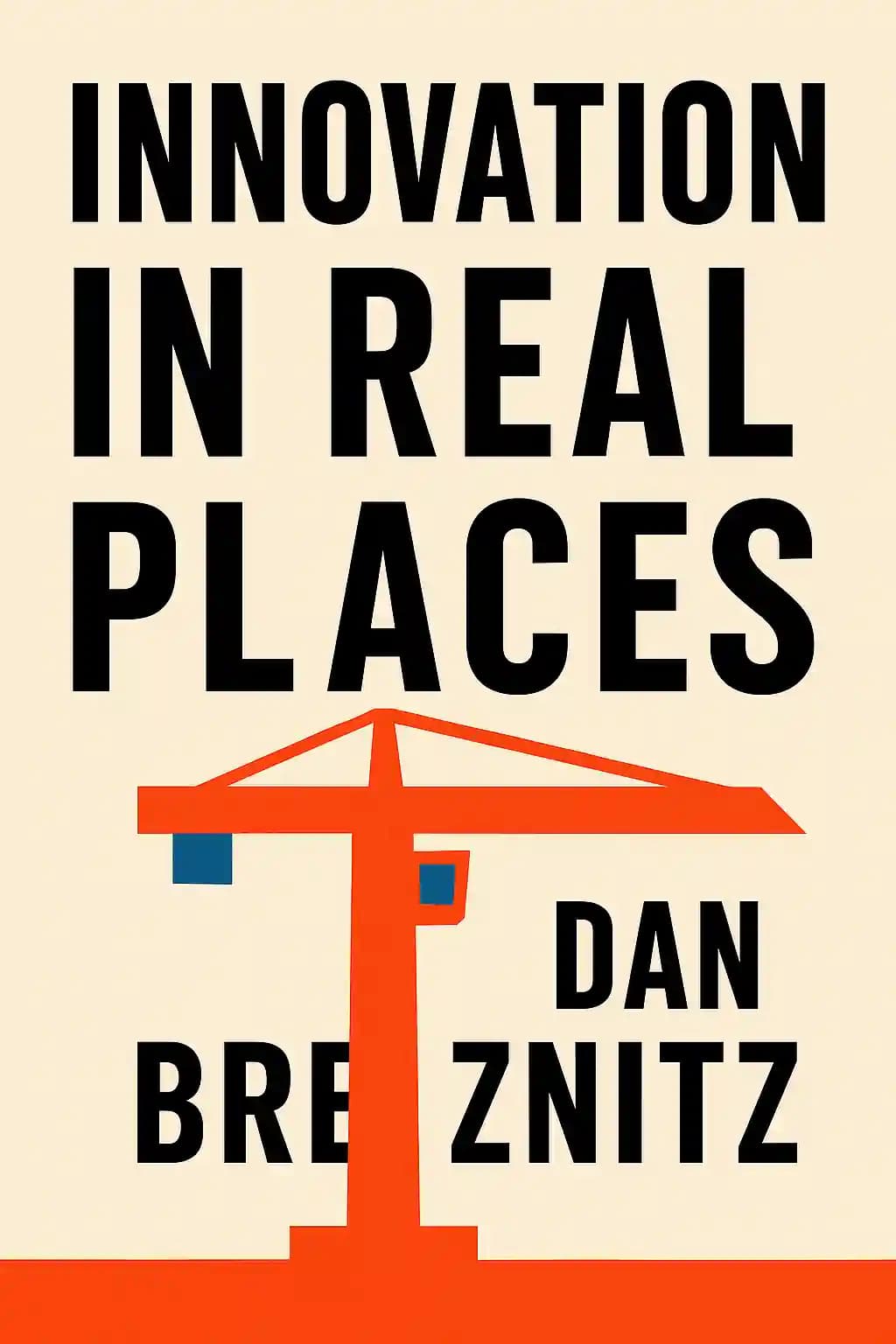
Innovation in Real Places
Strategies for Prosperity in an Unforgiving World
Overview of Innovation in Real Places
Forget Silicon Valley myths. "Innovation in Real Places" - winner of the $60,000 Balsillie Prize - reveals why copying tech hubs fails. What if your region's unique advantages could drive prosperity? McKinsey's top book of 2021 redefines innovation for an unforgiving world.

Key Themes in Innovation in Real Places
- regional economic development
- global production fragmentation
- innovation stage specialization
- silicon valley emulation
- industrial cluster policy
Quotes from Innovation in Real Places
Innovation isn't just inventing 'shiny new things' but the complete process.
Silicon-Hyphens become minor leagues.
The benefits rarely flow to local communities.
Atlanta has become a 'feeder cluster' to Silicon Valley.
The most important reframing of innovation policy in years.
Characters in Innovation in Real Places
- Dan BreznitzAuthor and expert on innovation-based growth
- Alexandria Ocasio-CortezPolicy figure who has cited the book's insights
About the Author
About the Author of Innovation in Real Places
Dan Breznitz, author of Innovation in Real Places: Strategies for Prosperity in an Unforgiving World, is an award-winning innovation policy expert and the Munk Chair of Innovation Studies at the University of Toronto. A globally recognized authority on economic growth and equitable technological development, Breznitz combines decades of academic research and real-world advisory experience with governments and organizations like the World Bank and the United Nations.
His work focuses on challenging Silicon Valley-centric myths about innovation, advocating instead for context-specific strategies to foster inclusive prosperity.
Breznitz’s previous books, including Innovation and the State (winner of the Don K. Price Award) and The Run of the Red Queen (featured in The Economist), established his reputation for blending rigorous analysis with actionable policy insights. As Co-Director of the University of Toronto’s Innovation Policy Lab and a CIFAR Fellow, he shapes global debates on technology and equity. Innovation in Real Places—lauded as a Financial Times Best Business Book of 2021 and translated into multiple languages—has been praised for its pragmatic roadmap to revitalizing communities through localized innovation strategies.
Download Summary of Innovation in Real Places
Get the Innovation in Real Places summary as a free PDF or EPUB. Print it or read offline anytime.
FAQs About This Book
Innovation in Real Places challenges the Silicon Valley-centric innovation model, arguing communities should leverage existing strengths in global production chains rather than copying tech hubs. Breznitz presents strategies for localized prosperity through case studies, emphasizing innovation in manufacturing and distribution over high-tech R&D. The 2021 Financial Times bestseller combines economic analysis with actionable policy frameworks for regional development.
Policy makers, urban planners, and business leaders seeking alternatives to generic tech-led growth strategies will benefit most. It’s equally valuable for economists studying regional development and readers interested in equitable prosperity models beyond major innovation hubs. Breznitz’s clear examples make complex concepts accessible to non-specialists.
Yes – it’s been praised for debunking innovation myths while offering practical alternatives. The Financial Times named it a 2021 best book for its fresh perspective on economic resilience. Blinkist users highlight its actionable insights for community revitalization.
- Reject one-size-fits-all innovation: Copying Silicon Valley often fails.
- Leverage regional advantages: Focus on existing industrial capabilities.
- Innovation phases matter: Prosperity comes from excelling in R&D, production, or distribution stages.
- Equitable growth: Policies must address who benefits from innovation.
Breznitz argues success isn’t about disruptive tech breakthroughs but mastering specific phases of innovation processes. A region might thrive in manufacturing (Taiwan’s chip production) or distribution (Italian textile clusters) without leading in R&D.
Some argue it underestimates the role of digital infrastructure in modern development. Others note its manufacturing-focused examples may need adaptation for service-based economies. However, most praise its evidence-based challenge to conventional wisdom.
Unlike Richard Florida’s "creative class" theory, Breznitz prioritizes leveraging existing industrial ecosystems over attracting high-skilled migrants. He also rejects the assumption that R&D dominance equals economic success.
- Taiwan’s semiconductor manufacturing leadership without original chip designs
- Emilia-Romagna’s textile machinery cluster focusing on incremental improvements
- Israel’s shift from tech R&D to commercialization partnerships
The book suggests identifying underutilized assets (e.g., skilled workforces, transportation networks) and targeting niche roles in global supply chains. Pennsylvania’s steel towns could transition to specialized metal processing rather than chasing biotech startups.
- Tailored innovation metrics: Move beyond patent counts to measure production efficiency
- Stage-specific support: Help regions excel in their strongest innovation phase
- Workforce development: Align training with local industry needs rather than generic tech skills
Breznitz argues innovation policies often widen wealth gaps by favoring high-skilled workers. He advocates for strategies that create quality jobs across education levels, like Germany’s manufacturing apprenticeship systems.
With remote work dispersing talent pools and AI disrupting traditional industries, the book’s emphasis on adaptive regional strategies helps communities navigate economic uncertainty. Its framework assists in evaluating opportunities in automation and green energy transitions.