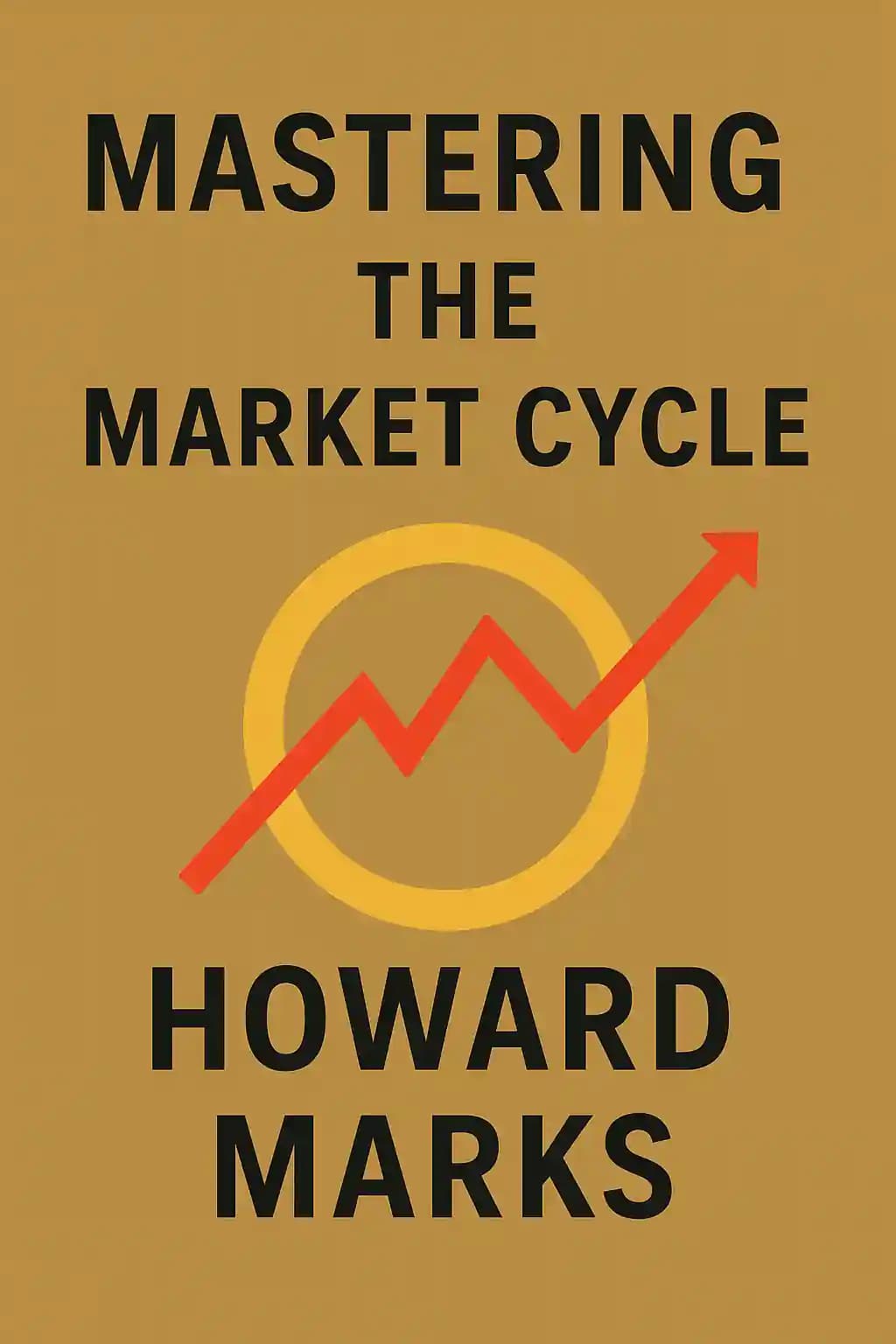
Mastering the Market Cycle
Overview of Mastering the Market Cycle
Howard Marks' masterclass on market cycles reveals how legendary investors like Buffett navigate financial waves. Endorsed by Wall Street titans, this 2018 bestseller doesn't predict markets - it positions you to profit from inevitable patterns. What cycle are we in right now?

Key Themes in Mastering the Market Cycle
- market cycle analysis
- investor psychology
- risk assessment
- portfolio positioning
- probability distribution
Quotes from Mastering the Market Cycle
Rule Number One: Most things will prove to be cyclical.
Rule Number Two: Some of the greatest opportunities for gain and loss come when other people forget Rule Number One.
Being too far ahead of your time is indistinguishable from being wrong.
History doesn't repeat itself, but it does rhyme.
Characters in Mastering the Market Cycle
- Howard MarksAuthor and co-founder of Oaktree Capital
- Peter BernsteinFinancial historian quoted on the nature of risk
About the Author
About the Author of Mastering the Market Cycle
Howard Stanley Marks is the bestselling author of Mastering the Market Cycle and a pioneering investor renowned for his contrarian strategies in high-yield bonds and distressed debt.
Co-founder of Oaktree Capital Management, which oversees $180 billion in assets, Marks built his reputation on navigating market cycles through risk management and second-level thinking—themes central to his book. His career spans decades at institutions like Citicorp and TCW, where he developed frameworks for capitalizing on market inefficiencies.
Marks’s widely read investment memos, praised by Warren Buffett, distill his insights on market psychology and cyclicality. His prior work, The Most Important Thing, is a staple in value investing literature.
Under Marks’s leadership, Oaktree became a global authority in alternative investments, with its 2008 crisis-era distressed debt fund generating historic returns. The firm’s 2019 acquisition by Brookfield Asset Management further cemented its industry influence.
Marks’s works have been translated into over 20 languages, and his ideas continue to shape institutional and individual investing worldwide.
Download Summary of Mastering the Market Cycle
Get the Mastering the Market Cycle summary as a free PDF or EPUB. Print it or read offline anytime.
FAQs About This Book
Mastering the Market Cycle explores how economic, credit, and psychological cycles drive market behavior, offering strategies to identify and profit from cyclical trends. Howard Marks emphasizes understanding investor psychology (greed vs. fear) and leveraging historical patterns to improve investment timing. The book blends theory with real-world examples, showing how cycles impact asset prices, risk, and returns.
Howard Marks is the co-founder of Oaktree Capital Management and a legendary investor with a 19% average annual return over decades. Known for his memos on market cycles, he authored The Most Important Thing and Mastering the Market Cycle, sharing insights on risk management and cyclical investing.
This book is ideal for investors, financial professionals, and students seeking to navigate market volatility. It’s particularly valuable for those interested in behavioral finance, cyclical analysis, and long-term wealth-building strategies. Marks’ clear explanations make complex concepts accessible to both novice and experienced readers.
Yes—it’s a cornerstone for understanding cyclical investing, endorsed by Warren Buffett and Ray Dalio. Marks’ actionable advice on assessing risk, avoiding herd mentality, and timing investments provides a competitive edge. The book’s blend of historical context and psychological insights makes it a timeless resource.
- Cycle Interconnectedness: Economic, credit, and profit cycles influence each other.
- Pendulum of Psychology: Investor sentiment swings between irrational optimism and pessimism.
- Risk-Return Dynamics: High prices often signal low future returns (and vice versa).
- Contrarian Strategies: Buying during distress and selling during euphoria.
Marks describes investor psychology as a pendulum swinging between greed-driven euphoria (leading to overpriced assets) and fear-induced panic (creating bargains). Recognizing these extremes helps investors avoid buying at peaks or selling at troughs.
This metaphor warns against buying assets during rapid declines without assessing intrinsic value. Marks advises investors to focus on fundamentals rather than trying to time the bottom perfectly, as panic often overshadows rationality.
Marks breaks economic cycles into long-term trends (e.g., population growth) and short-term fluctuations (e.g., consumer spending). He highlights how profit cycles, amplified by leverage, are more volatile and critical for investors to monitor.
Success often breeds complacency, leading to failure, while failure fosters humility, paving the way for future success. Marks warns against conflating bull markets with skill, using examples like investors misattuting gains to talent rather than market conditions.
While Benjamin Graham’s classic focuses on value investing principles, Marks’ book emphasizes cyclical awareness and behavioral pitfalls. Both stress margin of safety, but Marks provides a modern framework for navigating volatility.
Some argue the book’s cyclical focus may oversimplify unpredictable markets. Critics note that identifying cycle phases in real time remains challenging, and excessive reliance on historical patterns can lead to missed opportunities.
- “Don’t confuse brains with a bull market.”
- “The worst loans are made at the best times.”
- “Maximum risk occurs when confidence is high.”
These emphasize humility, contrarian thinking, and cyclical awareness.