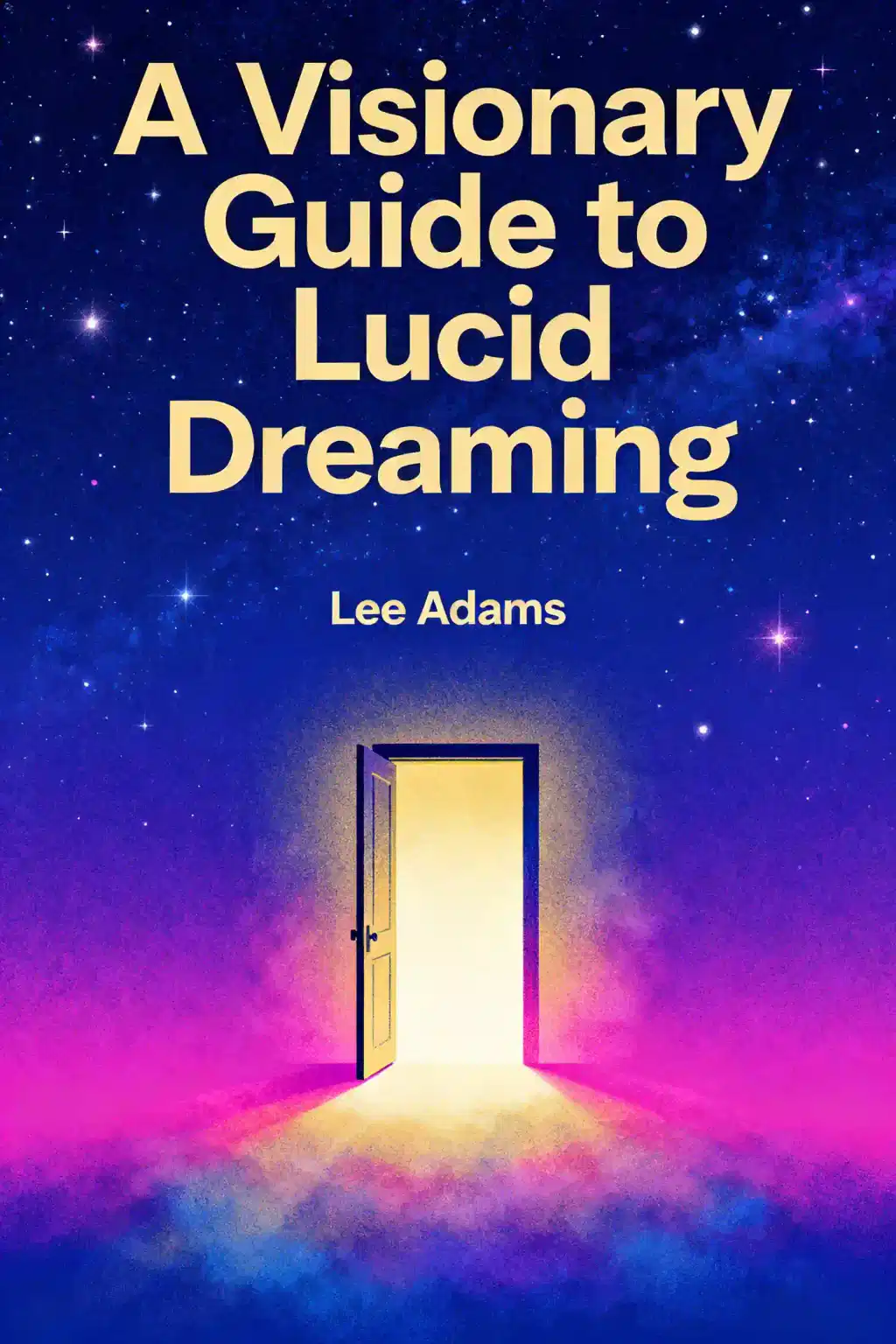
Visionary Guide to Lucid Dreaming
Methods for Working with the Deep Dream State
Overview of Visionary Guide to Lucid Dreaming
Unlock the extraordinary power of conscious dreaming with Lee Adams' groundbreaking guide. Endorsed by neuroscientists and dream researchers as the first book bridging science and mythology, it transforms nightly sleep into heroic adventures. What hidden realms of your subconscious are waiting to be explored?

Key Themes in Visionary Guide to Lucid Dreaming
- dream consciousness
- unconscious mind exploration
- lucid dreaming techniques
- mindfulness training
- archetypal dream analysis
Quotes from Visionary Guide to Lucid Dreaming
Awareness is the cornerstone of lucid dreaming.
The ego represents only a small part of who we are.
Dreams have fascinated humanity since the dawn of civilization.
Consciousness exists in three observable states: waking, dreaming, and deep sleep.
What begins as curiosity about controlling dreams often evolves into something far more meaningful.
Characters in Visionary Guide to Lucid Dreaming
- Lee AdamsAuthor and researcher with 20 years experience
About the Author
About the Author of Visionary Guide to Lucid Dreaming
Lee Adams is the author of A Visionary Guide to Lucid Dreaming: Methods for Working with the Deep Dream State and a renowned expert in dreamwork, Jungian psychology, and neuroscience-backed techniques for personal transformation. A Ph.D. candidate in Jungian Psychology and Archetypal Studies at Pacifica Graduate Institute, Adams combines over two decades of practical experience in lucid dreaming with academic rigor. His book, a cornerstone in the self-help and personal development genres, bridges ancient wisdom and modern science to explore the subconscious mind’s role in growth and healing.
Adams holds a bachelor’s degree in psychology and has dedicated his career to teaching lucid dreaming methodologies, including advanced practices like the Wake Induced Lucid Dream (WILD) technique. His work emphasizes integrating dream symbols into waking life and addresses challenges such as sleep paralysis.
Published by Destiny Books, A Visionary Guide to Lucid Dreaming is celebrated for its actionable tools, from foundational practices to supplements like Galantamine and Alpha-GPC. Adams’ approach, rooted in both clinical research and hands-on mentorship, has established him as a trusted voice for those seeking to harness the transformative power of their dreams.
Download Summary of Visionary Guide to Lucid Dreaming
Get the Visionary Guide to Lucid Dreaming summary as a free PDF or EPUB. Print it or read offline anytime.
FAQs About This Book
The book provides a step-by-step framework for mastering lucid dreaming, blending practical techniques like MILD and WILD with Jungian psychology. It explores how conscious dreaming enhances self-awareness, integrates subconscious insights into daily life, and examines supplements like Galantamine to improve dream vividness. Grounded in neuroscience and decades of research, it bridges ancient practices with modern science.
Ideal for beginners seeking foundational methods, experienced dreamers wanting advanced strategies, and anyone interested in consciousness studies or Jungian psychology. It’s also valuable for those prioritizing sleep hygiene or using dreams for creativity, problem-solving, or emotional healing.
Yes—it combines empirical research with actionable techniques, offering tools for lucid dreaming and personal growth. Readers praise its balanced approach to dream interpretation, sleep optimization, and overcoming obstacles like sleep paralysis. Critics note its depth may overwhelm casual readers.
Lee Adams is a Ph.D. candidate in Jungian Psychology, host of the Cosmic Echo podcast, and a practitioner with 20+ years of experience. His work integrates academic rigor with firsthand insights into dreamwork and subconscious exploration.
Key methods include:
- MILD (Mnemonic Induction): Rehearsing dream awareness before sleep.
- WILD (Wake-Initiated): Transitioning consciously into dreams from wakefulness.
- Reality checks: Daily habits to trigger lucidity.
- Dream journaling: Enhancing recall and pattern recognition.
The book teaches decoding symbolic language through Jungian archetypes, shadow work, and recurring motifs. It emphasizes contextualizing dream symbols within personal experiences rather than relying on generic interpretations.
Adams suggests:
- Galantamine: Boosts acetylcholine for vivid dreams.
- Alpha-GPC: Supports memory and recall.
- Mugwort: Traditionally used to intensify dream clarity.
He cautions moderation and consulting healthcare providers.
Unlike tactical manuals, it merges dream practice with Jungian depth psychology and sleep science. It uniquely prioritizes integrating dreams into waking life for holistic growth, rather than just achieving lucidity.
Some reviewers find its advanced sections overly complex for newcomers. Others note the supplement recommendations may not suit everyone, and the Jungian focus may alienate readers seeking purely scientific approaches.
As stress and screen time disrupt sleep cycles, the book’s emphasis on mindfulness and subconscious exploration aligns with growing interest in mental wellness. Its holistic methods resonate in an era prioritizing integrative health.
- “Lucid dreaming should no longer be seen as esoteric”: Demystifies the practice for mainstream audiences.
- “Dreams can shape our reality”: Highlights the transformative power of integrating dream insights.
Adams reframes sleep paralysis as a gateway to lucidity, advising relaxation techniques and mental refocusing instead of fear. This aligns with clinical approaches to reducing panic during transitional sleep stages.
Yes—by accessing the subconscious, readers report breakthroughs in artistic projects and problem-solving. The book encourages “dream incubation,” where specific questions are posed before sleep to harness creative answers.