Vibe Coding: The Shift from Syntax to Intent
Explore the rise of 'vibe coding,' where English replaces programming languages and the developer's role shifts from writing code to curating AI-generated ideas.

Melhor citação de Vibe Coding: The Shift from Syntax to Intent
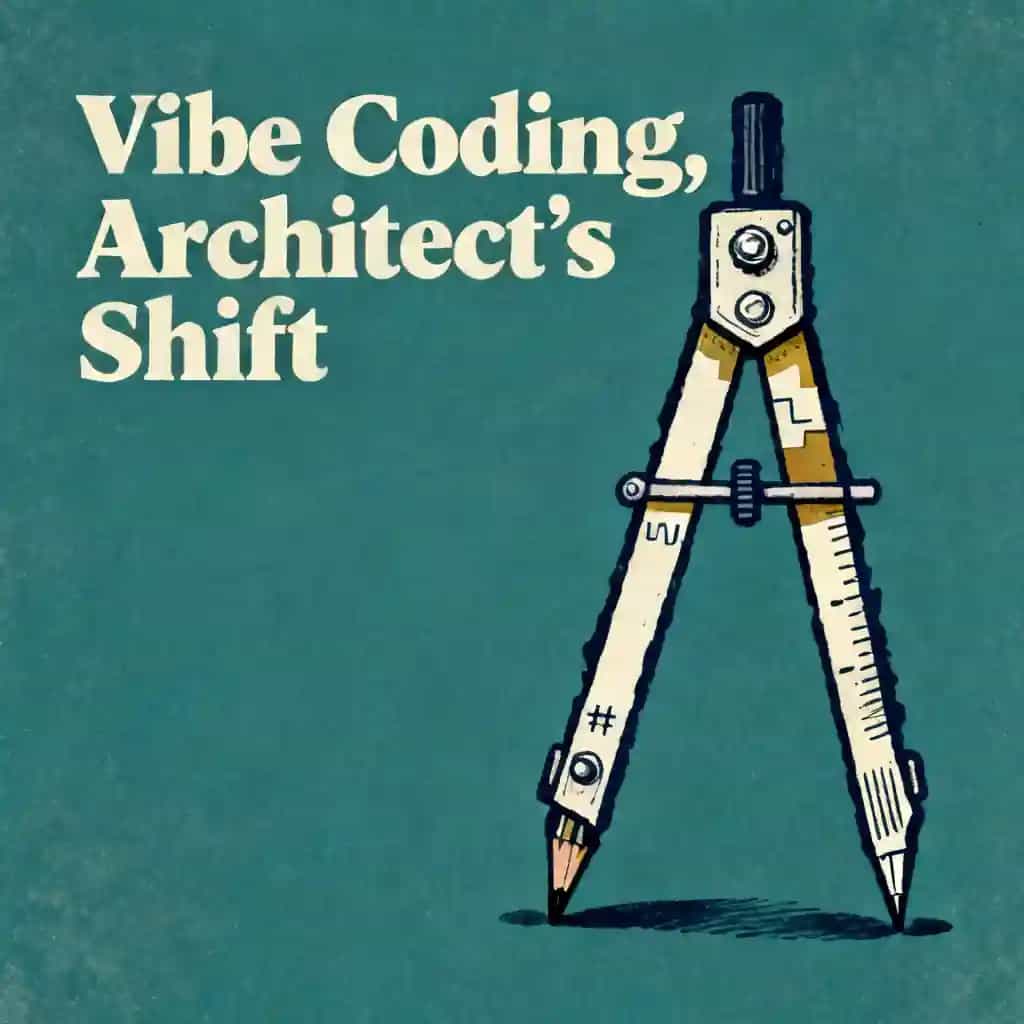
The human role shifts from being a translator for the machine to being a curator of ideas. The expertise shifts from technical execution to taste and judgment.
Generated with BeFreed
vibe coding

Perguntas frequentes
Vibe coding is a term coined by Andrej Karpathy to describe a shift where the "hottest" new programming language is English. Instead of manually writing syntax like semicolons and brackets, a developer describes the "vibe" or intent of a project to an AI agent that handles the technical implementation. In this paradigm, the human role shifts from being a translator for the machine to a curator and director who focuses on high-level goals and user experience rather than individual lines of code.
The "Day 2 problem" refers to the difficulty of maintaining, securing, and scaling an application once the initial "vibe" phase is over. While AI can build a functional prototype in minutes, the resulting codebase can become a "black box" that the creator does not fully understand. If a security breach or technical glitch occurs, a "vibe coder" may lack the deep technical foundation required to debug the complex, machine-generated logic, potentially leading to project failure.
The transition to agentic engineering is defined by autonomy. While a standard AI assistant waits for specific instructions to write a function or fix a line of code, an autonomous agent can take a high-level goal, break it down into sub-tasks, and self-correct. For example, an agent can encounter an error, research the documentation for an external API, refactor its own code to fix the issue, and present a finished feature without constant human intervention.
Even as AI handles the bulk of code generation, deep technical expertise remains vital for "vibe checking" the architecture and security of the output. Senior developers can spot inefficient logic or security vulnerabilities—such as SQL injections or improper authentication—that an AI might introduce. Expertise allows a human to act as an "AI Architect," breaking large problems into addressable chunks and ruthlessly verifying that the AI’s "first draft" meets professional standards.
The script suggests a specific iterative loop: start with a "micro-spec" defining the goal, ask the AI for a structural plan before it writes any code, and then generate the application in small, testable "slices." Developers should maintain a feedback loop by providing error messages back to the AI for "conversational debugging." Finally, a "quality pass" should be performed where the AI is tasked with refactoring the code for readability, documentation, and security hardening.
Criado por ex-alunos da Universidade de Columbia em San Francisco
"Instead of endless scrolling, I just hit play on BeFreed. It saves me so much time."


"I never knew where to start with nonfiction—BeFreed’s book lists turned into podcasts gave me a clear path."


"Perfect balance between learning and entertainment. Finished ‘Thinking, Fast and Slow’ on my commute this week."
"Crazy how much I learned while walking the dog. BeFreed = small habits → big gains."
"Reading used to feel like a chore. Now it’s just part of my lifestyle."

"Feels effortless compared to reading. I’ve finished 6 books this month already."
"BeFreed turned my guilty doomscrolling into something that feels productive and inspiring."

"BeFreed turned my commute into learning time. 20-min podcasts are perfect for finishing books I never had time for."
"BeFreed replaced my podcast queue. Imagine Spotify for books — that’s it. 🙌"

"It is great for me to learn something from the book without reading it."
"The themed book list podcasts help me connect ideas across authors—like a guided audio journey."
"Makes me feel smarter every time before going to work"
 Ask ChatGPT
 Ask Claude
Criado por ex-alunos da Universidade de Columbia em San Francisco
"Instead of endless scrolling, I just hit play on BeFreed. It saves me so much time."
"I never knew where to start with nonfiction—BeFreed’s book lists turned into podcasts gave me a clear path."
"Perfect balance between learning and entertainment. Finished ‘Thinking, Fast and Slow’ on my commute this week."
"Crazy how much I learned while walking the dog. BeFreed = small habits → big gains."
"Reading used to feel like a chore. Now it’s just part of my lifestyle."
"Feels effortless compared to reading. I’ve finished 6 books this month already."
"BeFreed turned my guilty doomscrolling into something that feels productive and inspiring."
"BeFreed turned my commute into learning time. 20-min podcasts are perfect for finishing books I never had time for."
"BeFreed replaced my podcast queue. Imagine Spotify for books — that’s it. 🙌"
"It is great for me to learn something from the book without reading it."
"The themed book list podcasts help me connect ideas across authors—like a guided audio journey."
"Makes me feel smarter every time before going to work"
"Instead of endless scrolling, I just hit play on BeFreed. It saves me so much time."
"I never knew where to start with nonfiction—BeFreed’s book lists turned into podcasts gave me a clear path."
"Perfect balance between learning and entertainment. Finished ‘Thinking, Fast and Slow’ on my commute this week."
"Crazy how much I learned while walking the dog. BeFreed = small habits → big gains."
"Reading used to feel like a chore. Now it’s just part of my lifestyle."
"Feels effortless compared to reading. I’ve finished 6 books this month already."
"BeFreed turned my guilty doomscrolling into something that feels productive and inspiring."
"BeFreed turned my commute into learning time. 20-min podcasts are perfect for finishing books I never had time for."
"BeFreed replaced my podcast queue. Imagine Spotify for books — that’s it. 🙌"
"It is great for me to learn something from the book without reading it."
"The themed book list podcasts help me connect ideas across authors—like a guided audio journey."
"Makes me feel smarter every time before going to work"
"Instead of endless scrolling, I just hit play on BeFreed. It saves me so much time."
"I never knew where to start with nonfiction—BeFreed’s book lists turned into podcasts gave me a clear path."
"Perfect balance between learning and entertainment. Finished ‘Thinking, Fast and Slow’ on my commute this week."
"Crazy how much I learned while walking the dog. BeFreed = small habits → big gains."
"Reading used to feel like a chore. Now it’s just part of my lifestyle."
"Feels effortless compared to reading. I’ve finished 6 books this month already."
"BeFreed turned my guilty doomscrolling into something that feels productive and inspiring."
"BeFreed turned my commute into learning time. 20-min podcasts are perfect for finishing books I never had time for."
"BeFreed replaced my podcast queue. Imagine Spotify for books — that’s it. 🙌"
"It is great for me to learn something from the book without reading it."
"The themed book list podcasts help me connect ideas across authors—like a guided audio journey."
"Makes me feel smarter every time before going to work"