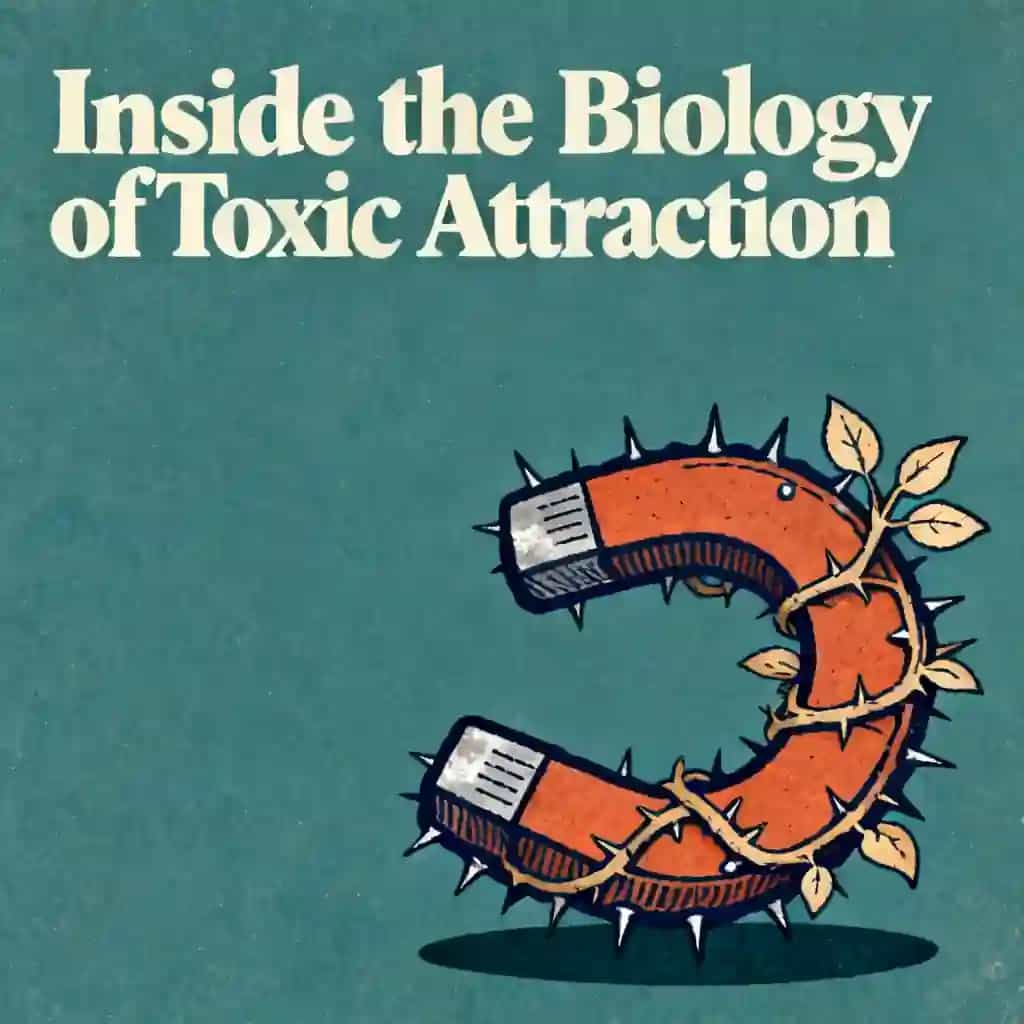
The Chemistry of Breaking Toxic Bonds
Explore the neurobiology of trauma bonds and addiction-fueled relationships. This episode offers a practical toolkit for rewiring your brain, reclaiming your identity, and healing from the inside out.

Melhor citação de The Chemistry of Breaking Toxic Bonds
The brain isn't just a static machine that breaks; it’s more like a garden that can be redesigned. Even after years of toxic patterns, the brain has a built-in capacity to form new neural connections and rewire itself.
Generated by Morgan
Addiction, self healing, relationships

![Facing Codependence [ABRIDGED]](https://d1y2du6z1jfm9e.cloudfront.net/covers/1d91cc59-653c-487c-bb06-0a03ac09820d/image_resized.webp)
Perguntas frequentes
A trauma bond occurs when a relationship is reinforced by intense cycles of highs and lows rather than consistent quality. Biochemically, the brain becomes rewired through intermittent reinforcement, where moments of genuine connection are followed by betrayal. This creates a "biochemical cocktail" of oxytocin and cortisol, making the act of leaving the relationship feel physically painful and making traditional advice difficult to follow.
Yes, the brain is designed to be edited through a process called neuroplasticity. While addiction and toxic relationships create deep "grooves" or neural paths in the brain, neuroplasticity allows for the formation of new connections. By intentionally practicing new behaviors and coping skills, the old neural pathways eventually become overgrown and disappear, effectively allowing the brain to redesign its own architecture.
Cognitive Behavioral Therapy (CBT) helps individuals identify and challenge the automatic, irrational thoughts that lead to old coping mechanisms, effectively training the prefrontal cortex to take control back from the reactive amygdala. Dialectical Behavior Therapy (DBT) focuses on "distress tolerance," teaching the brain to sit with intense, painful emotions without acting on them. Both therapies provide the structural practice needed to strengthen the brain's internal "braking system."
In the context of relational trauma, behaviors often labeled as codependency—such as hyper-vigilance and caretaking—are actually adaptive responses to unstable or dangerous environments. A person learns to monitor others' emotions and "fix" problems as a way to create safety in a chaotic world. Recognizing these as survival strategies helps remove the shame that often prevents people from seeking help and allows them to transition toward healthier boundaries.
Recovery is a holistic process because the brain requires specific "raw materials" to repair itself and create neurotransmitters like dopamine and serotonin. Addiction often leads to "biochemical bankruptcy," depleting essential nutrients like B vitamins and magnesium. Physical activities like exercise further support this by boosting neurogenesis—the birth of new neurons—and helping the body practice regulating its stress response in a controlled environment.
Criado por ex-alunos da Universidade de Columbia em San Francisco
"Instead of endless scrolling, I just hit play on BeFreed. It saves me so much time."


"I never knew where to start with nonfiction—BeFreed’s book lists turned into podcasts gave me a clear path."


"Perfect balance between learning and entertainment. Finished ‘Thinking, Fast and Slow’ on my commute this week."
"Crazy how much I learned while walking the dog. BeFreed = small habits → big gains."
"Reading used to feel like a chore. Now it’s just part of my lifestyle."

"Feels effortless compared to reading. I’ve finished 6 books this month already."
"BeFreed turned my guilty doomscrolling into something that feels productive and inspiring."

"BeFreed turned my commute into learning time. 20-min podcasts are perfect for finishing books I never had time for."
"BeFreed replaced my podcast queue. Imagine Spotify for books — that’s it. 🙌"

"It is great for me to learn something from the book without reading it."
"The themed book list podcasts help me connect ideas across authors—like a guided audio journey."
"Makes me feel smarter every time before going to work"
Criado por ex-alunos da Universidade de Columbia em San Francisco
"Instead of endless scrolling, I just hit play on BeFreed. It saves me so much time."
"I never knew where to start with nonfiction—BeFreed’s book lists turned into podcasts gave me a clear path."
"Perfect balance between learning and entertainment. Finished ‘Thinking, Fast and Slow’ on my commute this week."
"Crazy how much I learned while walking the dog. BeFreed = small habits → big gains."
"Reading used to feel like a chore. Now it’s just part of my lifestyle."
"Feels effortless compared to reading. I’ve finished 6 books this month already."
"BeFreed turned my guilty doomscrolling into something that feels productive and inspiring."
"BeFreed turned my commute into learning time. 20-min podcasts are perfect for finishing books I never had time for."
"BeFreed replaced my podcast queue. Imagine Spotify for books — that’s it. 🙌"
"It is great for me to learn something from the book without reading it."
"The themed book list podcasts help me connect ideas across authors—like a guided audio journey."
"Makes me feel smarter every time before going to work"
"Instead of endless scrolling, I just hit play on BeFreed. It saves me so much time."
"I never knew where to start with nonfiction—BeFreed’s book lists turned into podcasts gave me a clear path."
"Perfect balance between learning and entertainment. Finished ‘Thinking, Fast and Slow’ on my commute this week."
"Crazy how much I learned while walking the dog. BeFreed = small habits → big gains."
"Reading used to feel like a chore. Now it’s just part of my lifestyle."
"Feels effortless compared to reading. I’ve finished 6 books this month already."
"BeFreed turned my guilty doomscrolling into something that feels productive and inspiring."
"BeFreed turned my commute into learning time. 20-min podcasts are perfect for finishing books I never had time for."
"BeFreed replaced my podcast queue. Imagine Spotify for books — that’s it. 🙌"
"It is great for me to learn something from the book without reading it."
"The themed book list podcasts help me connect ideas across authors—like a guided audio journey."
"Makes me feel smarter every time before going to work"
"Instead of endless scrolling, I just hit play on BeFreed. It saves me so much time."
"I never knew where to start with nonfiction—BeFreed’s book lists turned into podcasts gave me a clear path."
"Perfect balance between learning and entertainment. Finished ‘Thinking, Fast and Slow’ on my commute this week."
"Crazy how much I learned while walking the dog. BeFreed = small habits → big gains."
"Reading used to feel like a chore. Now it’s just part of my lifestyle."
"Feels effortless compared to reading. I’ve finished 6 books this month already."
"BeFreed turned my guilty doomscrolling into something that feels productive and inspiring."
"BeFreed turned my commute into learning time. 20-min podcasts are perfect for finishing books I never had time for."
"BeFreed replaced my podcast queue. Imagine Spotify for books — that’s it. 🙌"
"It is great for me to learn something from the book without reading it."
"The themed book list podcasts help me connect ideas across authors—like a guided audio journey."
"Makes me feel smarter every time before going to work"