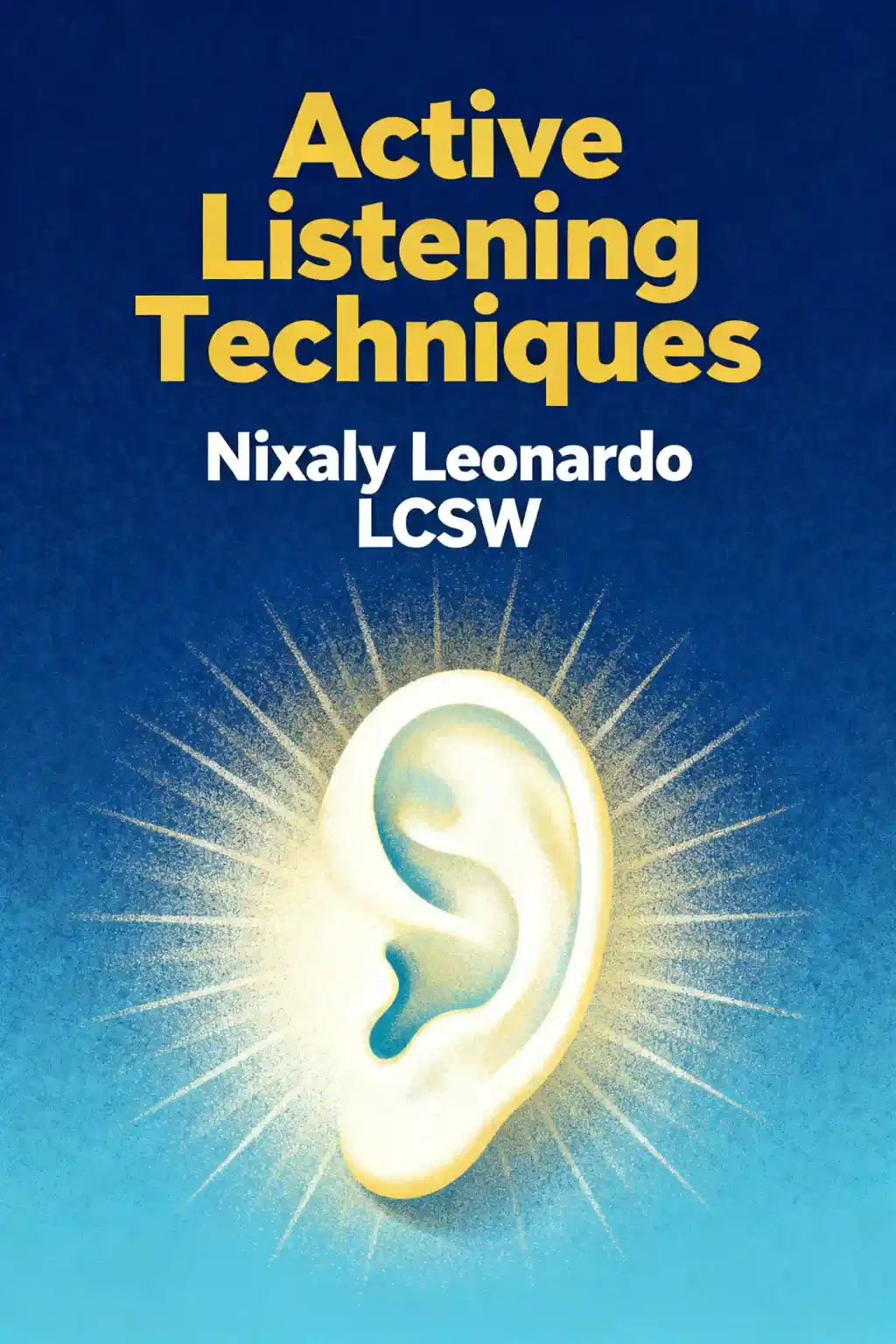
The Art of Connection: Mastering Meaningful Conversation
Learn to move past awkward small talk with a practical framework for active listening, strategic follow-up questions, and the power of vulnerability.

Melhor citação de The Art of Connection: Mastering Meaningful Conversation
The trick is to choose to be 'interested' instead of trying to be 'interesting.' If you are genuinely curious about someone else's perspective, your curiosity does the heavy lifting for you and the pressure to be witty or charismatic disappears.
Generated by Jacob
How to hold a conversation with someone

Perguntas frequentes
High-quality listening is a holistic process that goes beyond simply remaining silent while someone else speaks. It consists of attention, comprehension, and positive intention. While attention and comprehension involve being mentally present and understanding the words said, positive intention is the internal drive to make the speaker feel seen and valued. This internal state dictates external behaviors like eye contact and nodding, which the speaker uses to judge if they are truly being heard.
Research indicates that follow-up questions are the single biggest predictor of social connection, increasing it by about twenty-three percent. Unlike a "data point" question that starts a new topic, a follow-up question signals a genuine desire to clarify or learn more about what the speaker just shared. By using "what" or "how" questions to prompt stories, listeners trigger "neural coupling," where their brain activity begins to mirror the speaker's, creating a shared mental frequency known as positivity resonance.
The "liking gap" is a psychological quirk where people systematically underestimate how much a conversation partner actually liked them. After an interaction, many people worry they were awkward, while the other person usually walks away with a positive impression. Understanding that this gap exists can provide a confidence boost, helping individuals realize that they don't need to be perfect to build rapport; they simply need to be present and attentive.
When a person feels truly listened to during a disagreement, they tend to become less polarized and less defensive. High-quality listening in these moments involves "reflecting and validating," where the listener acknowledges the speaker's feelings or values without necessarily agreeing with their conclusion. By focusing on understanding the other person's internal logic rather than listening critically to find flaws, the listener creates a sense of "perceived safety" that preserves the relationship even when opinions differ.
Criado por ex-alunos da Universidade de Columbia em San Francisco
"Instead of endless scrolling, I just hit play on BeFreed. It saves me so much time."


"I never knew where to start with nonfiction—BeFreed’s book lists turned into podcasts gave me a clear path."


"Perfect balance between learning and entertainment. Finished ‘Thinking, Fast and Slow’ on my commute this week."
"Crazy how much I learned while walking the dog. BeFreed = small habits → big gains."
"Reading used to feel like a chore. Now it’s just part of my lifestyle."

"Feels effortless compared to reading. I’ve finished 6 books this month already."
"BeFreed turned my guilty doomscrolling into something that feels productive and inspiring."

"BeFreed turned my commute into learning time. 20-min podcasts are perfect for finishing books I never had time for."
"BeFreed replaced my podcast queue. Imagine Spotify for books — that’s it. 🙌"

"It is great for me to learn something from the book without reading it."
"The themed book list podcasts help me connect ideas across authors—like a guided audio journey."
"Makes me feel smarter every time before going to work"
Criado por ex-alunos da Universidade de Columbia em San Francisco
"Instead of endless scrolling, I just hit play on BeFreed. It saves me so much time."
"I never knew where to start with nonfiction—BeFreed’s book lists turned into podcasts gave me a clear path."
"Perfect balance between learning and entertainment. Finished ‘Thinking, Fast and Slow’ on my commute this week."
"Crazy how much I learned while walking the dog. BeFreed = small habits → big gains."
"Reading used to feel like a chore. Now it’s just part of my lifestyle."
"Feels effortless compared to reading. I’ve finished 6 books this month already."
"BeFreed turned my guilty doomscrolling into something that feels productive and inspiring."
"BeFreed turned my commute into learning time. 20-min podcasts are perfect for finishing books I never had time for."
"BeFreed replaced my podcast queue. Imagine Spotify for books — that’s it. 🙌"
"It is great for me to learn something from the book without reading it."
"The themed book list podcasts help me connect ideas across authors—like a guided audio journey."
"Makes me feel smarter every time before going to work"
"Instead of endless scrolling, I just hit play on BeFreed. It saves me so much time."
"I never knew where to start with nonfiction—BeFreed’s book lists turned into podcasts gave me a clear path."
"Perfect balance between learning and entertainment. Finished ‘Thinking, Fast and Slow’ on my commute this week."
"Crazy how much I learned while walking the dog. BeFreed = small habits → big gains."
"Reading used to feel like a chore. Now it’s just part of my lifestyle."
"Feels effortless compared to reading. I’ve finished 6 books this month already."
"BeFreed turned my guilty doomscrolling into something that feels productive and inspiring."
"BeFreed turned my commute into learning time. 20-min podcasts are perfect for finishing books I never had time for."
"BeFreed replaced my podcast queue. Imagine Spotify for books — that’s it. 🙌"
"It is great for me to learn something from the book without reading it."
"The themed book list podcasts help me connect ideas across authors—like a guided audio journey."
"Makes me feel smarter every time before going to work"
"Instead of endless scrolling, I just hit play on BeFreed. It saves me so much time."
"I never knew where to start with nonfiction—BeFreed’s book lists turned into podcasts gave me a clear path."
"Perfect balance between learning and entertainment. Finished ‘Thinking, Fast and Slow’ on my commute this week."
"Crazy how much I learned while walking the dog. BeFreed = small habits → big gains."
"Reading used to feel like a chore. Now it’s just part of my lifestyle."
"Feels effortless compared to reading. I’ve finished 6 books this month already."
"BeFreed turned my guilty doomscrolling into something that feels productive and inspiring."
"BeFreed turned my commute into learning time. 20-min podcasts are perfect for finishing books I never had time for."
"BeFreed replaced my podcast queue. Imagine Spotify for books — that’s it. 🙌"
"It is great for me to learn something from the book without reading it."
"The themed book list podcasts help me connect ideas across authors—like a guided audio journey."
"Makes me feel smarter every time before going to work"






![[cbcde1ab-519e-4db5-a50b-5c1f728f3611:c0001] Master The Art Of Conversation (Using Psychology) p1-1](/_next/image?url=https%3A%2F%2Fd1y2du6z1jfm9e.cloudfront.net%2Fassets%2Fpodcast%2Fblue.png&w=1024&q=50)
![[cbcde1ab-519e-4db5-a50b-5c1f728f3611:c0002] Master The Art Of Conversation (Using Psychology) p1-1](/_next/image?url=https%3A%2F%2Fd1y2du6z1jfm9e.cloudfront.net%2Fassets%2Fpodcast%2Fpurple.png&w=1024&q=50)