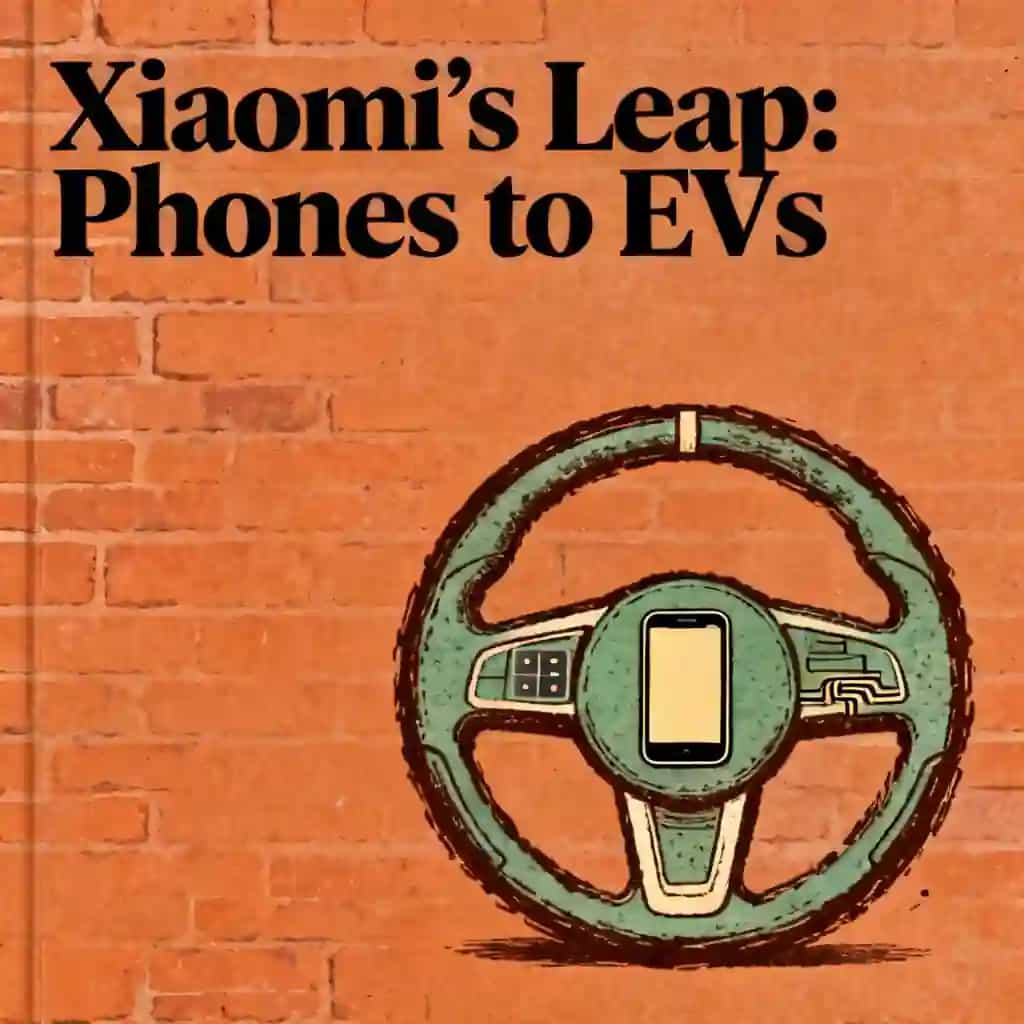
Rivian and the Smartphone on Wheels: RJ Scaringe on Autonomy
Explore RJ Scaringe's vision for Rivian and the shift toward the 'smartphone on wheels.' Learn why autonomous driving will be essential for cars by 2030.

Melhor citação de Rivian and the Smartphone on Wheels: RJ Scaringe on Autonomy
In the new world, the car is the operating system, and the metal is just the case for the computer.
Generated by Aditya
Transform the Rivian interview and RJ Scaringe's insights into a beginner-friendly audio lesson. Explain why cars are becoming 'smartphones on wheels' through the lens of AI, custom chips, and software-defined architecture. Cover the shift from rule-based systems to end-to-end neural networks, the role of LiDAR/radar/cameras, and the importance of vertical integration and data flywheels. Use storytelling, humor, and analogies (like Jarvis or Minecraft updates) to break down complex topics like Level 2-4 autonomy, zonal architecture, and the VW partnership. Preserve the provided 10-part structure and conclude with mental models, myth-busting, and a 10-year roadmap for the future of transportation. Source: 'By 2030, it'll be inconceivable to buy a car and not expect it to drive itself.'


Perguntas frequentes
RJ Scaringe, the founder and CEO of Rivian, uses the term 'smartphone on wheels' to describe a fundamental shift in the automotive industry. Rather than viewing vehicles as traditional mechanical machines, this concept treats the car as a software-driven device. This evolution moves away from clunky interfaces toward integrated electric vehicle software that allows for rapid progress in autonomy and connectivity, much like the transition from flip phones to modern iPhones.
According to Rivian CEO RJ Scaringe, the rate of progress in autonomous driving technology between now and 2030 will be on a significantly steeper slope compared to the previous five years. He predicts that by 2030, it will be 'inconceivable' for a consumer to purchase a new car that does not include an autonomous driving package or the capability to perform tasks like picking up a passenger from the airport.
The current state of vehicle software is often compared to a clunky VCR interface, which stands in stark contrast to the future of transportation. Rivian and RJ Scaringe are focused on closing this gap by treating the vehicle as a sophisticated technology platform. By prioritizing advanced software and self-driving capabilities, the industry is moving toward a future where cars are defined by their digital intelligence rather than just their physical features.
Criado por ex-alunos da Universidade de Columbia em San Francisco
"Instead of endless scrolling, I just hit play on BeFreed. It saves me so much time."


"I never knew where to start with nonfiction—BeFreed’s book lists turned into podcasts gave me a clear path."


"Perfect balance between learning and entertainment. Finished ‘Thinking, Fast and Slow’ on my commute this week."
"Crazy how much I learned while walking the dog. BeFreed = small habits → big gains."
"Reading used to feel like a chore. Now it’s just part of my lifestyle."

"Feels effortless compared to reading. I’ve finished 6 books this month already."
"BeFreed turned my guilty doomscrolling into something that feels productive and inspiring."

"BeFreed turned my commute into learning time. 20-min podcasts are perfect for finishing books I never had time for."
"BeFreed replaced my podcast queue. Imagine Spotify for books — that’s it. 🙌"

"It is great for me to learn something from the book without reading it."
"The themed book list podcasts help me connect ideas across authors—like a guided audio journey."
"Makes me feel smarter every time before going to work"
Criado por ex-alunos da Universidade de Columbia em San Francisco
"Instead of endless scrolling, I just hit play on BeFreed. It saves me so much time."
"I never knew where to start with nonfiction—BeFreed’s book lists turned into podcasts gave me a clear path."
"Perfect balance between learning and entertainment. Finished ‘Thinking, Fast and Slow’ on my commute this week."
"Crazy how much I learned while walking the dog. BeFreed = small habits → big gains."
"Reading used to feel like a chore. Now it’s just part of my lifestyle."
"Feels effortless compared to reading. I’ve finished 6 books this month already."
"BeFreed turned my guilty doomscrolling into something that feels productive and inspiring."
"BeFreed turned my commute into learning time. 20-min podcasts are perfect for finishing books I never had time for."
"BeFreed replaced my podcast queue. Imagine Spotify for books — that’s it. 🙌"
"It is great for me to learn something from the book without reading it."
"The themed book list podcasts help me connect ideas across authors—like a guided audio journey."
"Makes me feel smarter every time before going to work"
"Instead of endless scrolling, I just hit play on BeFreed. It saves me so much time."
"I never knew where to start with nonfiction—BeFreed’s book lists turned into podcasts gave me a clear path."
"Perfect balance between learning and entertainment. Finished ‘Thinking, Fast and Slow’ on my commute this week."
"Crazy how much I learned while walking the dog. BeFreed = small habits → big gains."
"Reading used to feel like a chore. Now it’s just part of my lifestyle."
"Feels effortless compared to reading. I’ve finished 6 books this month already."
"BeFreed turned my guilty doomscrolling into something that feels productive and inspiring."
"BeFreed turned my commute into learning time. 20-min podcasts are perfect for finishing books I never had time for."
"BeFreed replaced my podcast queue. Imagine Spotify for books — that’s it. 🙌"
"It is great for me to learn something from the book without reading it."
"The themed book list podcasts help me connect ideas across authors—like a guided audio journey."
"Makes me feel smarter every time before going to work"
"Instead of endless scrolling, I just hit play on BeFreed. It saves me so much time."
"I never knew where to start with nonfiction—BeFreed’s book lists turned into podcasts gave me a clear path."
"Perfect balance between learning and entertainment. Finished ‘Thinking, Fast and Slow’ on my commute this week."
"Crazy how much I learned while walking the dog. BeFreed = small habits → big gains."
"Reading used to feel like a chore. Now it’s just part of my lifestyle."
"Feels effortless compared to reading. I’ve finished 6 books this month already."
"BeFreed turned my guilty doomscrolling into something that feels productive and inspiring."
"BeFreed turned my commute into learning time. 20-min podcasts are perfect for finishing books I never had time for."
"BeFreed replaced my podcast queue. Imagine Spotify for books — that’s it. 🙌"
"It is great for me to learn something from the book without reading it."
"The themed book list podcasts help me connect ideas across authors—like a guided audio journey."
"Makes me feel smarter every time before going to work"