Rich Dad Poor Dad: Escaping the Rat Race
Struggling to get ahead despite working hard? Discover how shifting your mindset from employee to owner can turn your earnings into true wealth.
Melhor citação de Rich Dad Poor Dad: Escaping the Rat Race
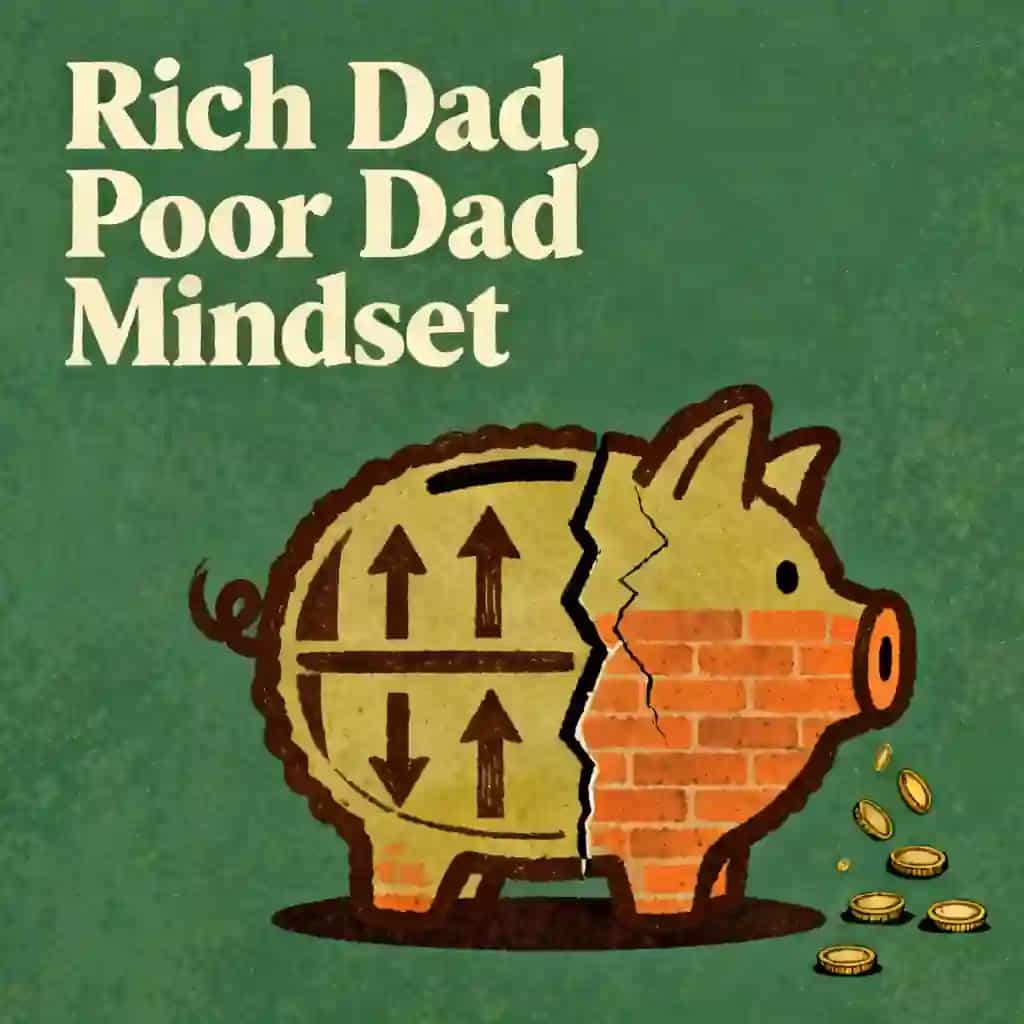
Financial freedom isn’t a product of how much you earn, but how you think about those earnings. One father worked for money; the other made money work for him.
Generated with BeFreed
An audio lesson about the book Rich Dad Poor Dad, covering its key ideas and takeaways.


Perguntas frequentes
According to the script, the distinction is simple: an asset puts money into your pocket, while a liability takes money out of your pocket. Many things people traditionally consider assets, such as a primary residence or a car, are actually liabilities because they require ongoing payments for mortgages, taxes, insurance, and maintenance. True assets include things like rental properties, stocks, bonds, or businesses that generate income without requiring your daily presence.
A house is generally considered a liability because it creates a constant outflow of cash. Unless a property is being rented out for more than the cost of its mortgage, taxes, and upkeep, it is not generating income. The script points out that the middle class often struggles because they buy larger homes as their salaries increase, which only raises their expenses and taxes, trapping them in a cycle of working harder to pay for a liability.
The tax system is structured differently for corporations than for individuals. Employees earn money, get taxed immediately, and then try to live on what remains. In contrast, a corporation allows owners to earn money, spend that money on legitimate business expenses—such as travel or certain meals—and then only pay taxes on the remaining profit. This allows the wealthy to use "pre-tax" dollars to fund aspects of their lives that employees must pay for with "after-tax" money.
This philosophy suggests that you should choose jobs based on the skills and systems you can master rather than the size of the paycheck. For example, taking a sales job to overcome a fear of rejection or joining the military to learn leadership provides "financial IQ" that can be used to build your own business later. The goal is to avoid becoming a hyper-specialized "cog in a machine" and instead learn enough about accounting, investing, markets, and law to own and operate the machine yourself.
The script explains that both the rich and the poor experience fear, but they handle it differently. Winners are inspired by failure and see it as a learning opportunity, much like falling off a bike while learning to ride. To move past financial fear, one must stop saying "I can't afford it," which shuts down the brain, and instead ask "How can I afford it?" This shift in questioning forces the mind to be creative and find new ways to generate wealth.
Criado por ex-alunos da Universidade de Columbia em San Francisco
"Instead of endless scrolling, I just hit play on BeFreed. It saves me so much time."


"I never knew where to start with nonfiction—BeFreed’s book lists turned into podcasts gave me a clear path."


"Perfect balance between learning and entertainment. Finished ‘Thinking, Fast and Slow’ on my commute this week."
"Crazy how much I learned while walking the dog. BeFreed = small habits → big gains."
"Reading used to feel like a chore. Now it’s just part of my lifestyle."

"Feels effortless compared to reading. I’ve finished 6 books this month already."
"BeFreed turned my guilty doomscrolling into something that feels productive and inspiring."

"BeFreed turned my commute into learning time. 20-min podcasts are perfect for finishing books I never had time for."
"BeFreed replaced my podcast queue. Imagine Spotify for books — that’s it. 🙌"

"It is great for me to learn something from the book without reading it."
"The themed book list podcasts help me connect ideas across authors—like a guided audio journey."
"Makes me feel smarter every time before going to work"
Criado por ex-alunos da Universidade de Columbia em San Francisco
"Instead of endless scrolling, I just hit play on BeFreed. It saves me so much time."
"I never knew where to start with nonfiction—BeFreed’s book lists turned into podcasts gave me a clear path."
"Perfect balance between learning and entertainment. Finished ‘Thinking, Fast and Slow’ on my commute this week."
"Crazy how much I learned while walking the dog. BeFreed = small habits → big gains."
"Reading used to feel like a chore. Now it’s just part of my lifestyle."
"Feels effortless compared to reading. I’ve finished 6 books this month already."
"BeFreed turned my guilty doomscrolling into something that feels productive and inspiring."
"BeFreed turned my commute into learning time. 20-min podcasts are perfect for finishing books I never had time for."
"BeFreed replaced my podcast queue. Imagine Spotify for books — that’s it. 🙌"
"It is great for me to learn something from the book without reading it."
"The themed book list podcasts help me connect ideas across authors—like a guided audio journey."
"Makes me feel smarter every time before going to work"
"Instead of endless scrolling, I just hit play on BeFreed. It saves me so much time."
"I never knew where to start with nonfiction—BeFreed’s book lists turned into podcasts gave me a clear path."
"Perfect balance between learning and entertainment. Finished ‘Thinking, Fast and Slow’ on my commute this week."
"Crazy how much I learned while walking the dog. BeFreed = small habits → big gains."
"Reading used to feel like a chore. Now it’s just part of my lifestyle."
"Feels effortless compared to reading. I’ve finished 6 books this month already."
"BeFreed turned my guilty doomscrolling into something that feels productive and inspiring."
"BeFreed turned my commute into learning time. 20-min podcasts are perfect for finishing books I never had time for."
"BeFreed replaced my podcast queue. Imagine Spotify for books — that’s it. 🙌"
"It is great for me to learn something from the book without reading it."
"The themed book list podcasts help me connect ideas across authors—like a guided audio journey."
"Makes me feel smarter every time before going to work"
"Instead of endless scrolling, I just hit play on BeFreed. It saves me so much time."
"I never knew where to start with nonfiction—BeFreed’s book lists turned into podcasts gave me a clear path."
"Perfect balance between learning and entertainment. Finished ‘Thinking, Fast and Slow’ on my commute this week."
"Crazy how much I learned while walking the dog. BeFreed = small habits → big gains."
"Reading used to feel like a chore. Now it’s just part of my lifestyle."
"Feels effortless compared to reading. I’ve finished 6 books this month already."
"BeFreed turned my guilty doomscrolling into something that feels productive and inspiring."
"BeFreed turned my commute into learning time. 20-min podcasts are perfect for finishing books I never had time for."
"BeFreed replaced my podcast queue. Imagine Spotify for books — that’s it. 🙌"
"It is great for me to learn something from the book without reading it."
"The themed book list podcasts help me connect ideas across authors—like a guided audio journey."
"Makes me feel smarter every time before going to work"