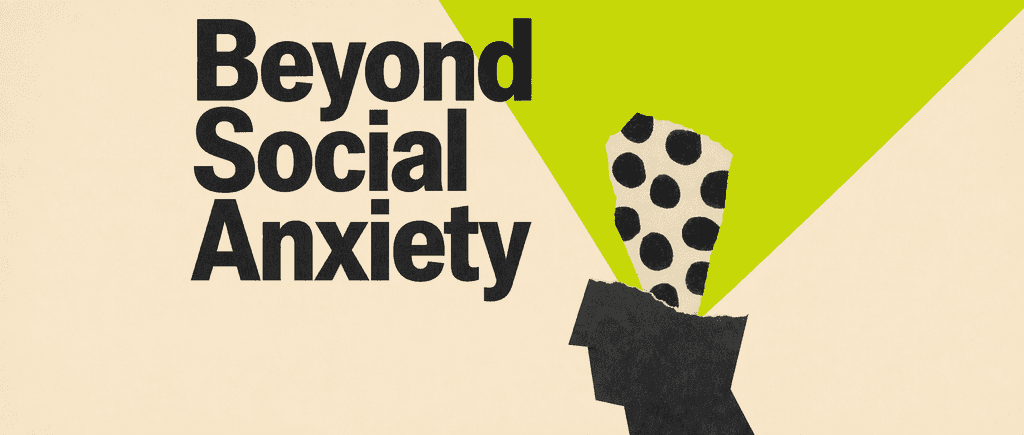
Rewiring the Social Brain: Overcoming Anxiety
Discover the neuroscience behind social anxiety and learn a clinical, step-by-step roadmap to dismantle your inner critic and build lasting confidence.

Melhor citação de Rewiring the Social Brain: Overcoming Anxiety
Social anxiety is not a character flaw; it’s a specific pattern of neural activation where your brain’s threat detection system treats a simple conversation like a life-or-death situation. Because of neuroplasticity, we can actually rewire those circuits by moving away from avoidance and toward engagement.
Generated by Trevor
Learn how to identify and overcome social anxiety.



Perguntas frequentes
A CBCF is essentially a personalized map of how an individual's social anxiety operates. It helps identify specific triggers, irrational beliefs, and "anxiety-reducing behaviors" or safety signals—like staying in one's room or avoiding eye contact. By mapping these patterns, a person can see how their "safety" habits actually keep the anxiety alive by preventing the brain from learning that the environment is safe.
Self-focused attention occurs when a person directs the majority of their mental processing power toward monitoring their own internal state, such as their heart rate, shaky hands, or perceived awkwardness. This creates a resource drain, leaving very little "bandwidth" for the actual conversation. By focusing so intensely on themselves, individuals often miss positive social cues from others, such as smiling or nodding, which reinforces the false belief that the interaction is going poorly.
Flooding involves jumping into a highly distressing situation all at once, which can often backfire and increase trauma. In contrast, hierarchical exposure uses a "fear hierarchy" or a ladder approach. A person starts with a low-stress task—like making eye contact with a cashier—and stays in that situation until their anxiety naturally drops. Once they habituate to that level, they move up to a more challenging rung, allowing the brain to systematically "unlearn" fear through a process called fear extinction.
Safety behaviors are subtle actions people use to protect themselves in social settings, such as checking a phone, rehearsing a coffee order, or avoiding eye contact. While these behaviors provide temporary relief, they prevent true recovery because the brain attributes the "survival" of the event to the safety behavior rather than the person's own capability. To rewire the brain, one must "drop" these behaviors to prove that the situation is safe even without these protective crutches.
The vagus nerve is the primary highway of the parasympathetic nervous system, which controls the body's "rest-and-digest" response. You can manually "hack" this nerve to calm the brain by practicing diaphragmatic breathing, specifically by making the exhale longer than the inhale (such as the 4-7-8 technique). This sends a direct biological signal to the brain that the threat has passed, helping to pull the brake on the "fight-or-flight" response.
Criado por ex-alunos da Universidade de Columbia em San Francisco
"Instead of endless scrolling, I just hit play on BeFreed. It saves me so much time."


"I never knew where to start with nonfiction—BeFreed’s book lists turned into podcasts gave me a clear path."


"Perfect balance between learning and entertainment. Finished ‘Thinking, Fast and Slow’ on my commute this week."
"Crazy how much I learned while walking the dog. BeFreed = small habits → big gains."
"Reading used to feel like a chore. Now it’s just part of my lifestyle."

"Feels effortless compared to reading. I’ve finished 6 books this month already."
"BeFreed turned my guilty doomscrolling into something that feels productive and inspiring."

"BeFreed turned my commute into learning time. 20-min podcasts are perfect for finishing books I never had time for."
"BeFreed replaced my podcast queue. Imagine Spotify for books — that’s it. 🙌"

"It is great for me to learn something from the book without reading it."
"The themed book list podcasts help me connect ideas across authors—like a guided audio journey."
"Makes me feel smarter every time before going to work"
Criado por ex-alunos da Universidade de Columbia em San Francisco
"Instead of endless scrolling, I just hit play on BeFreed. It saves me so much time."
"I never knew where to start with nonfiction—BeFreed’s book lists turned into podcasts gave me a clear path."
"Perfect balance between learning and entertainment. Finished ‘Thinking, Fast and Slow’ on my commute this week."
"Crazy how much I learned while walking the dog. BeFreed = small habits → big gains."
"Reading used to feel like a chore. Now it’s just part of my lifestyle."
"Feels effortless compared to reading. I’ve finished 6 books this month already."
"BeFreed turned my guilty doomscrolling into something that feels productive and inspiring."
"BeFreed turned my commute into learning time. 20-min podcasts are perfect for finishing books I never had time for."
"BeFreed replaced my podcast queue. Imagine Spotify for books — that’s it. 🙌"
"It is great for me to learn something from the book without reading it."
"The themed book list podcasts help me connect ideas across authors—like a guided audio journey."
"Makes me feel smarter every time before going to work"
"Instead of endless scrolling, I just hit play on BeFreed. It saves me so much time."
"I never knew where to start with nonfiction—BeFreed’s book lists turned into podcasts gave me a clear path."
"Perfect balance between learning and entertainment. Finished ‘Thinking, Fast and Slow’ on my commute this week."
"Crazy how much I learned while walking the dog. BeFreed = small habits → big gains."
"Reading used to feel like a chore. Now it’s just part of my lifestyle."
"Feels effortless compared to reading. I’ve finished 6 books this month already."
"BeFreed turned my guilty doomscrolling into something that feels productive and inspiring."
"BeFreed turned my commute into learning time. 20-min podcasts are perfect for finishing books I never had time for."
"BeFreed replaced my podcast queue. Imagine Spotify for books — that’s it. 🙌"
"It is great for me to learn something from the book without reading it."
"The themed book list podcasts help me connect ideas across authors—like a guided audio journey."
"Makes me feel smarter every time before going to work"
"Instead of endless scrolling, I just hit play on BeFreed. It saves me so much time."
"I never knew where to start with nonfiction—BeFreed’s book lists turned into podcasts gave me a clear path."
"Perfect balance between learning and entertainment. Finished ‘Thinking, Fast and Slow’ on my commute this week."
"Crazy how much I learned while walking the dog. BeFreed = small habits → big gains."
"Reading used to feel like a chore. Now it’s just part of my lifestyle."
"Feels effortless compared to reading. I’ve finished 6 books this month already."
"BeFreed turned my guilty doomscrolling into something that feels productive and inspiring."
"BeFreed turned my commute into learning time. 20-min podcasts are perfect for finishing books I never had time for."
"BeFreed replaced my podcast queue. Imagine Spotify for books — that’s it. 🙌"
"It is great for me to learn something from the book without reading it."
"The themed book list podcasts help me connect ideas across authors—like a guided audio journey."
"Makes me feel smarter every time before going to work"